

Sicily is the largest island in the Mediterranean Sea — 25.711 km² of layered Greek, Roman, Arab and Norman heritage anchored by Mount Etna, Europe’s highest active volcano at 3.357 m. From the baroque streets of Val di Noto (UNESCO) to the Greek temples of Agrigento, the food markets of Palermo, the volcanic slopes around Catania and the islands of the Aeolian archipelago, planning a trip to Sicily means choosing what not to miss. Based in Catania, we wrote this Sicily travel guide for 2026 to help you decide where to go, when to visit, how long to stay, and how to get around — plus the practical answers most guides skip.
Where is Sicily?
Sicily is an island in the Mediterranean Sea, separated from the toe of the Italian peninsula (Calabria) by the Strait of Messina — a crossing of just 3 km. Geographically it is the largest island in the Mediterranean, covering 25,711 km². Its closest mainland point is Tunisia, 137 km to the southwest. The two main cities are Palermo (capital, northwest) and Catania (second city, east coast), near Mount Etna, Europe’s highest active volcano. Taormina, Syracuse and Agrigento lie on the east and south coasts.
Why visit Sicily?
Sicily layers 2.500 years of Greek, Roman, Arab, Norman and Spanish history across a Mediterranean island roughly the size of Belgium, with nine UNESCO World Heritage sites, Europe’s tallest active volcano, world-class food, and 1.500 km of coastline. No other Italian region condenses so many distinct cultures and landscapes into a single trip.
Heading in spring? May is widely considered the best month to visit Sicily — see our Sicily in May guide for Sant’Alfio Trecastagni, Infiorata di Noto, INDA Greek Theatre opening, and Cantine Aperte.
Sicily is geographically closer to Tunisia than to Rome, and its history shows it. Greek colonists founded Syracuse in 734 BC, the Romans built the mosaic-floored Villa Romana del Casale (UNESCO) at Piazza Armerina, the Arabs brought citrus, rice and irrigation in the 9th century, the Normans laid down golden mosaics in the Cappella Palatina, and the Spanish Bourbons rebuilt the southeastern towns in late baroque after the 1693 earthquake. Each layer is still visible — often within a single afternoon’s drive.
The island offers nine UNESCO listings: the Valley of the Temples at Agrigento, the late baroque towns of Val di Noto (Noto, Modica, Ragusa, Scicli, Caltagirone, Catania, Militello, Palazzolo Acreide), Mount Etna, the Villa Romana del Casale, the necropolis of Pantalica, the Aeolian Islands, the Arab-Norman itinerary of Palermo + Cefalù + Monreale, plus Syracuse with Pantalica. Few destinations in Europe offer denser entity-rich travel for the same square kilometre.

Cayambe · CC BY-SA 4.0
Food is its own argument. Sicilian cuisine is distinct from mainland Italian — citrus, almonds, capers, anchovies, swordfish, eggplant, sweet-and-sour caponata, arancini, pasta alla Norma, cannoli, granita with brioche for breakfast, cioccolato di Modica, Marsala wines, Etna DOC reds. Restaurant prices average roughly 30% lower than in Rome or Milan. For an active food experience — market tour, kitchen session, full meal — see our guide to a Sicily cooking class.
When is the best time to visit Sicily?
The best time to visit Sicily is April to June and September to October: 22-28°C days, sea warm enough to swim, fewer crowds and shoulder prices. Avoid mid-July to mid-August (35-40°C peak heat, peak crowds, peak prices). November-March is mild on the coast (12-18°C) but rainier, with limited swimming and seasonal closures.
Travelling in winter? See our dedicated month guide for Sicily in February — Sant’Agata, twin Mardi Gras carnivals and Etna ski peak.
Sicily by season — when to go
| Season | Months | Avg high | Sea temp | Pros | Cons |
|---|---|---|---|---|---|
| Spring | April-June | 20-28°C | 17-22°C | Wildflowers, almond blossom, mild, Easter rites, low crowds till mid-May (see our Sicily in March and Sicily in April guides) | Sea cold in April-May, occasional spring rain |
| Summer | July-August | 30-38°C | 25-27°C | Beach days guaranteed, festivals, long evenings | Heat, crowds, peak prices, August closures |
| Autumn | September-November | 17-28°C | 20-25°C | Wine harvest, novello, ChocoModica, shoulder prices, soft light | Increasing rain from late October, shorter days |
| Winter | December-March | 13-18°C | 14-17°C | Quiet, mild coast, almond bloom in February, Easter low season | Some seasonal hotels closed, no swimming, rain |
Disclaimer: averages are typical multi-year values; verify forecasts close to your trip.
Spring (April-June): the sweet spot for first-timers
Wildflowers carpet the Iblei plateau and the Madonie hills, the almond trees flower around Agrigento in February-March, baroque towns are walkable, and Easter processions in Trapani, Enna and Caltanissetta rival those of mainland Spain. Late May and early June bring the first proper beach days with sea temperatures climbing past 20°C.
Summer (July-August): high season
Sicily in summer is the cliché — endless beach days, crowded Taormina, Aeolian ferries booked weeks ahead, sagre every weekend. Inland temperatures reach 38°C in Caltagirone and Enna; Palermo and Catania centres can feel oppressive at midday. Book everything 2-3 months ahead. Locals leave the cities for the coast, and many restaurants close for two weeks around Ferragosto (15 August).
Autumn (September-November): shoulder gold
September and October are arguably the best month-pair to visit Sicily: still-warm sea (24°C), 26°C days, vineyard harvest on Etna, fewer crowds, prices easing from mid-September. November turns rainier and cooler but adds All Saints’ Day, San Martino novello wine, and the ChocoModica chocolate festival. For deep dives see our Sicily in September guide for the warmest-sea harvest month, our Sicily in October guide and our Sicily in November guide.
Winter (December-March): quietest, mildest in Europe
Coastal Sicily holds 13-18°C through winter, with cold rain rather than freezing. Mount Etna gets snow above 1.500 m and the slopes open for skiing at Rifugio Sapienza (limited operations, 2 lifts). December brings Christmas markets in Catania and Taormina, presepi viventi (live nativity scenes) across Val di Noto, and the year’s quietest baroque towns — see our Sicily in December guide. February adds the early almond bloom around Agrigento and Catania’s Festa di Sant’Agata on 3-5 February, one of the largest religious festivals in Europe. Across winter accommodation prices run 30-50% below August, swimming is off the table, but archaeological sites are crowd-free and food trips at their most local. For a deep-dive on the spring shoulder month — almond blossom in Agrigento, San Giuseppe altars on 19 March, Holy Week processions in Trapani and Caltanissetta — see our Sicily in March guide.
How do you get to Sicily?
Most international visitors fly into Catania-Fontanarossa (CTA) for eastern Sicily or Palermo Falcone-Borsellino (PMO) for western Sicily. Both have direct routes from London, Manchester, Dublin, Frankfurt, Munich and major Italian cities. Ferries connect Sicily to Naples, Salerno, Genoa and the Calabrian coast.
Flying into Catania (CTA)
Catania-Fontanarossa is the busier of the two airports (~12 million passengers a year, 2024). It is the natural gateway to eastern Sicily — Etna, Taormina, Syracuse, the Val di Noto baroque towns and day trips inland. Direct routes operate year-round from London (Stansted, Gatwick, Luton), Manchester, Dublin, Frankfurt, Munich, Berlin, Paris and most major Italian cities. Ryanair and easyJet dominate the budget side. The airport is 7 km south of Catania centre with frequent Alibus service to the city centre and direct buses to Taormina, Syracuse and Messina (see our Catania airport to Taormina guide).
Flying into Palermo (PMO)
Palermo Falcone-Borsellino sits 35 km west of the city. It is the natural gateway to western Sicily — Palermo, Monreale, Cefalù, Trapani, Erice, Segesta, Selinunte. Routes are slightly thinner than Catania but still cover London, Dublin, Frankfurt, Brussels, Madrid, Barcelona and the major Italian cities. The Trinacria Express train runs the airport-to-Palermo Centrale line every 30 minutes (~1h, €6.50).
Ferry from mainland Italy
Three useful ferry routes connect Sicily to the mainland:
- Villa San Giovanni → Messina — 20 minutes, hourly, €15-25 per car. The natural choice if you’re driving down the boot of Italy or arriving by train (rail-ferry continues to Catania or Palermo).
- Naples → Palermo — overnight (10-11 hours), nightly, cabins ~€80-150. Tirrenia and GNV operate.
- Salerno → Palermo / Salerno → Messina / Genoa → Palermo — longer overnight crossings for travellers from central or northern Italy.
Should you fly into one airport and out of another?
Yes — for any trip longer than 7 days, an open-jaw flight (in CTA out PMO, or vice versa) avoids backtracking. Major car-rental companies offer cross-island drop-off; expect a one-way fee of €40-100 depending on company and season.
How long do you need in Sicily?
A meaningful first trip needs at least 7 days; 10-14 days let you cover both east and west without rushing. Three days only fits a single base (typically Catania + Etna + Taormina). Two weeks suit comprehensive west-to-east traverses including the Aeolian Islands.
Still deciding between Sicily and Sardinia for this trip? Our honest Sicily vs Sardinia comparison covers cost, beaches, food, UNESCO sites and transport, with a clear recommendation by trip type. If the real alternative is the Greek islands, start with our Sicily or Greece guide for the wider Mediterranean choice.
Travelling for a honeymoon? See our dedicated Italy honeymoon guide, which makes the case for Sicily as the unconventional pick versus Amalfi, Venice and Tuscany, with sample 7–14 day itineraries from a Catania base.
Sicily trip duration table
| Days | What you can realistically see | Best for |
|---|---|---|
| 3 days | Single base only — Catania + Etna + Taormina, or Palermo + Monreale + Cefalù | Long weekend, city-break travellers |
| 5 days | One half of the island — east (Catania, Etna, Taormina, Syracuse) or west (Palermo, Cefalù, Trapani, Segesta) | Short trip, focused depth |
| 7 days | Eastern Sicily loop with Val di Noto and one Agrigento day | First-time visitors, classic itinerary |
| 10 days | Full eastern half + Agrigento + Aeolian Islands day trip, or full western half + Palermo deep | Comfortable pace, single base move |
| 14 days | Comprehensive west-to-east traverse with 2-3 base cities and an Aeolian or Egadi island stay | Repeat visitors, immersive trips |
For a worked-out 7-day east-coast plan, see our complete Sicily itinerary in 7 days. For shorter formats, see our day trips from Catania guide — pair them with a 3-4 night base for a satisfying short trip.
Where to go in Sicily, by region
Sicily splits into four travel regions: eastern Sicily (Catania, Taormina, Etna, Syracuse), southeastern Sicily (Val di Noto baroque towns), western Sicily (Palermo, Cefalù, Trapani, Erice), and the outlying islands (Aeolian, Egadi, Pelagie). First-time visitors usually focus on east + southeast — they pack the highest UNESCO density and the most varied 7-day itinerary.

Radek Kucharski · CC BY 2.0
Sicily by region — at a glance
| Region | Highlights | Best base | Days needed |
|---|---|---|---|
| Eastern Sicily | Mount Etna, Taormina, Catania, Syracuse, Ortigia | Catania or Taormina | 4-5 |
| Southeastern Sicily (Val di Noto) | Noto, Modica, Ragusa Ibla, Scicli, Caltagirone | Catania or Ragusa | 2-3 |
| Southern Sicily | Valley of the Temples Agrigento, Villa Romana del Casale | Agrigento or day trip | 1-2 |
| Western Sicily | Palermo, Monreale, Cefalù, Trapani, Erice, Segesta, Selinunte, San Vito Lo Capo | Palermo or Trapani | 3-4 |
| Aeolian Islands | Lipari, Stromboli, Vulcano, Salina | Lipari or day trip | 2-4 |
| Egadi Islands | Favignana, Levanzo, Marettimo | Favignana | 1-2 |
Eastern Sicily — Catania, Etna, Taormina, Syracuse
The east coast is the densest mix of volcano, sea and culture in the island. Catania is Sicily’s second city, rebuilt in black-lava baroque after the 1693 earthquake; its Pescheria fish market is one of the most photogenic in Italy. Mount Etna rises immediately west, with cable-car access from Rifugio Sapienza at 1.910 m and guided tours up to the summit area at 3.000 m (see our hiking Mount Etna guide). Taormina, a cliff-top town 50 km north of Catania, hosts the most photographed Greek Theatre in the world with Etna in the background. Syracuse, an hour south of Catania, contains the Greek Neapolis Archaeological Park and the island of Ortigia with its Duomo built on top of a 5th-century-BC Athena temple. For depth see our guides on things to do in Catania, things to do in Taormina and Catania old town. If you’re choosing between cities, see Catania vs Palermo.

Benjamin Smith · CC BY-SA 4.0
Southeastern Sicily — Val di Noto baroque
The Val di Noto is a UNESCO-listed cluster of late baroque towns rebuilt on hilltops after 1693. Noto is the most architecturally dramatic, with a honey-coloured Corso Vittorio Emanuele lined by palazzi and a Cathedral facade that glows at sunset. Modica climbs a steep ravine and is famous for cold-pressed chocolate (try cioccolato di Modica). Ragusa Ibla is the postcard hilltop quarter, location for the Inspector Montalbano TV series. Scicli and Caltagirone add ceramic-staircase drama (Caltagirone’s 142-step Santa Maria del Monte staircase is tiled in ceramic majolica).
Southern Sicily — Agrigento and Piazza Armerina
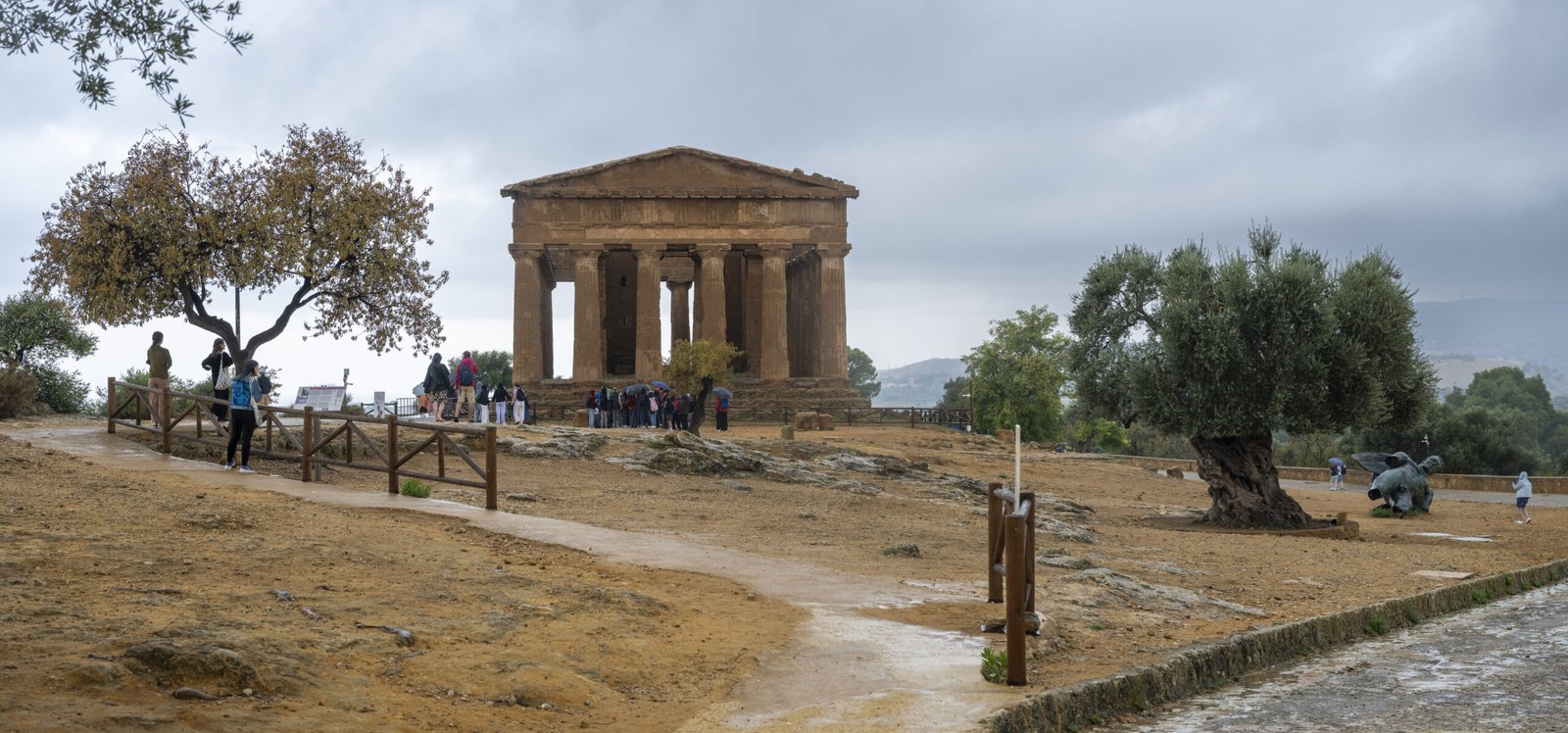
The Valley of the Temples at Agrigento is Sicily’s most internationally famous archaeological site: a 1.300-hectare park with seven Doric Greek temples built between 510 and 430 BC, including the near-complete Tempio della Concordia. Inland, the Villa Romana del Casale at Piazza Armerina holds the largest collection of Roman mosaic floors in the world (3.500 m² across 60 rooms). Both can be done as day trips from Catania (1.5-2 hours each way) or, more comfortably, with one overnight in Agrigento.
Cayambe · CC BY-SA 4.0
Western Sicily — Palermo, Cefalù, Trapani, Erice
Palermo is Sicily’s chaotic, fascinating capital — Arab-Norman cathedrals (Cappella Palatina, Monreale), Bourbon palaces, three historic markets (Ballarò, Capo, Vucciria) and the most varied street-food scene in Italy. Cefalù, an hour east, is a coastal town with a Norman cathedral and a long sandy beach. Trapani, on the western salt-pan coast, is the gateway to the Egadi Islands and to the medieval mountain town of Erice (744 m, reached by cable car). The Greek temple of Segesta sits alone on a hilltop in countryside; the temples of Selinunte form one of the largest archaeological parks in Europe.

M2m · Public Domain
Aeolian, Egadi and Pelagie Islands
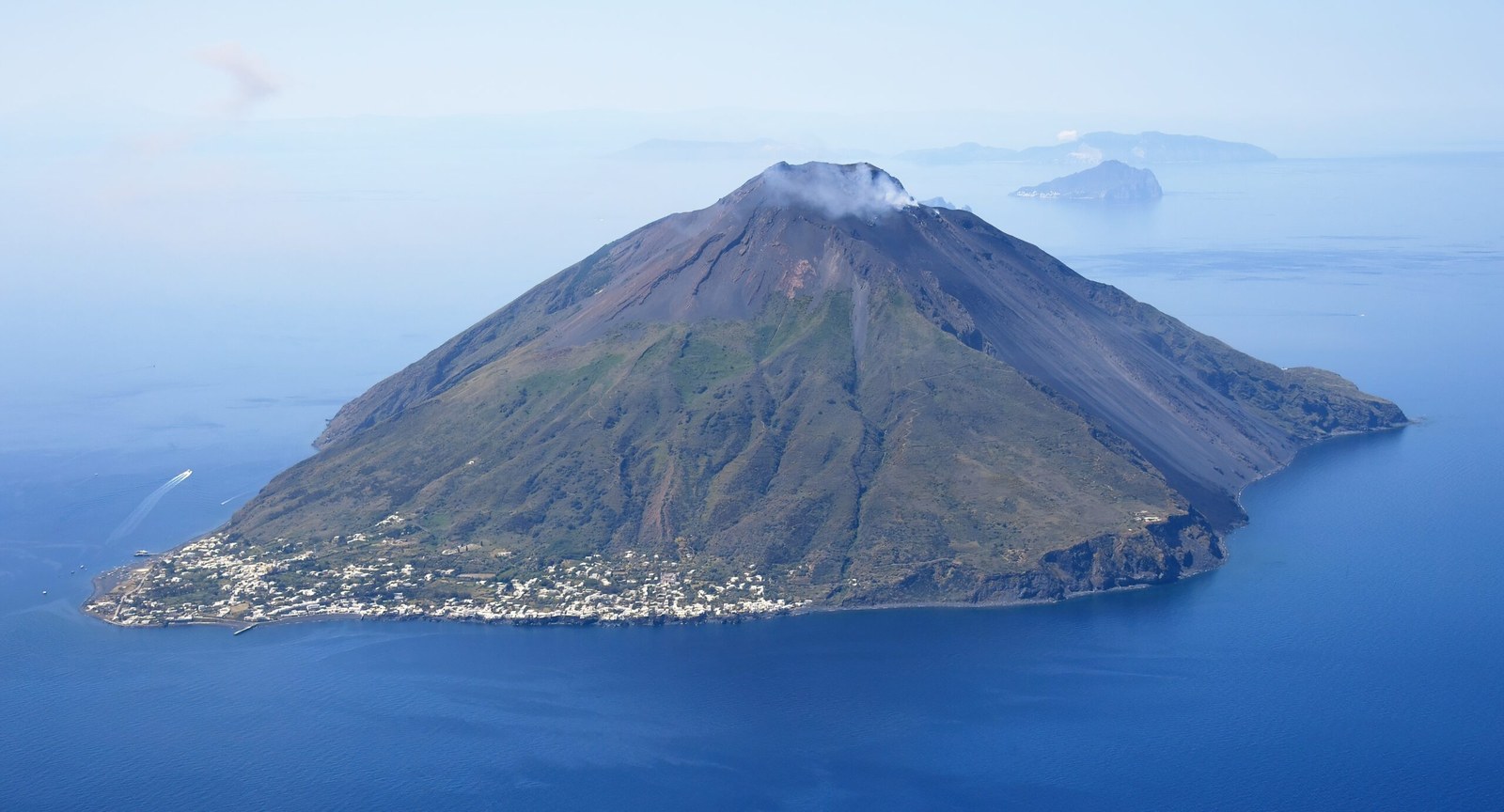
Three archipelagos float off Sicily’s coast. The Aeolian Islands (UNESCO) — Lipari, Stromboli, Vulcano, Salina, Panarea, Filicudi, Alicudi — are volcanic, with the still-active Stromboli erupting roughly every 20 minutes. Reach them by hydrofoil from Milazzo (1-3 hours). The Egadi Islands (Favignana, Levanzo, Marettimo) sit off Trapani — flatter, biking-friendly, with translucent water. The Pelagie Islands (Lampedusa, Linosa, Lampione) are far south, geographically African; Lampedusa’s Spiaggia dei Conigli regularly tops European beach rankings.
Carsten Steger · CC BY-SA 4.0
Where to stay in Sicily
Pick one or two base cities rather than moving every night. Best bases by trip type: Catania for eastern Sicily plus Etna and day trips, Palermo for western Sicily plus food, Taormina for slow luxury with an Etna view, and Syracuse / Ortigia for Greek heritage plus baroque towns. For a deep regional comparison see our best area to stay in Sicily guide.
Catania as a base
Catania is the most central base on the island — airport hub, train and bus connections to every major eastern destination, mild year-round climate (8°C winter low, 32°C summer high), and lower accommodation prices than Taormina or Palermo for the same comfort. From a Catania base you can reach Etna in 45 minutes, Taormina in 50, Syracuse in 60, Noto in 90 and Modica/Ragusa in two hours. See our where to stay in Catania guide.
Palermo as a base
Palermo suits travellers prioritising western Sicily, food and Arab-Norman heritage. From central Palermo you reach Monreale in 25 minutes by bus, Cefalù in an hour by train, and Trapani in two hours. The trade-off: distance from Etna and the eastern baroque circuit (4-5 hours by car or train).
Taormina as a base
Taormina is the slow-luxury option — limited (40.000-population peak summer, 11.000 year-round), pedestrian historic centre, hotels and apartments overlooking the Ionian and Etna. Prices run roughly 30-50% above Catania. Public transport into Taormina is good for the airport (direct bus) but thinner for inland day trips. See our where to stay in Taormina guide.
Syracuse / Ortigia as a base
The island of Ortigia is a magical base for travellers who want to walk everywhere — it is roughly 1 km long. Greek temple foundations, the Duomo on the Athena ruins, sea on three sides, dinner overlooking limestone facades. Distance penalty: Etna and Palermo are both 2+ hours away.
Apartment vs hotel
For trips of 5+ nights, an apartment beats a hotel on flexibility. A kitchen lets you cook with Pescheria fish or Etna vegetables, an apartment offers laundry for shoulder-season layers, and the per-night cost drops 30-50% versus mid-range hotels for couples or families. We do not list third-party hotels by name in this guide; a base-city apartment is our recommendation for any trip longer than four nights.
Can you visit Sicily without a car?
Yes, you can visit Sicily without a car if you stick to major cities and rely on trains and AST/SAIS buses — Catania, Taormina, Syracuse, Palermo and Cefalù are all comfortably reachable by public transport. No, if you want to explore the Val di Noto interior, the Madonie, smaller beaches or the Aeolian transfer points — those need a rental car.
The car-free Sicily itinerary
The classic car-free 7-day plan threads Catania → Taormina → Syracuse by train and bus, optionally adding Modica or Noto by Trenitalia regional service. Etna can be done car-free with the AST bus from Catania to Rifugio Sapienza (one daily round-trip in summer, more in shoulder season) or with a guided shore-pickup tour. Taormina connects to the airport via the direct AST or Etna Trasporti bus.
When you genuinely need a car
- Val di Noto inland circuit — Modica, Scicli, Caltagirone are not on the rail network and require multiple bus changes.
- Madonie and Nebrodi mountains — hiking trailheads, regional park villages.
- West-coast beaches and Riserva dello Zingaro — limited bus service.
- Salt pans, Marsala wineries, smaller archaeological sites (Segesta is bus-served but inconvenient).
- Aeolian transfer to Milazzo — train works but car is faster.
Daily car-rental rates run €25-45 in shoulder season, €50-90 in peak summer. Italian cities have ZTL (Zone a Traffico Limitato) restrictions in historic centres — see our parking in Catania guide for ZTL rules and parking strategies that apply across most Sicilian historic towns.
How do you get around Sicily?
Most visitors rent a car for flexibility (€30–50/day), especially for Val di Noto, the Madonie and western beaches. Trains cover the east coast well (Catania–Taormina–Messina, Catania–Syracuse–Noto). AST and SAIS buses reach Agrigento and inland towns. Ferries connect to the Aeolian, Egadi and Pelagie islands from Milazzo, Trapani and Porto Empedocle.
Each transport mode has a distinct sweet spot in Sicily — combining them often beats relying on a single mode for a 7-day trip.
Renting a car
The most flexible option, particularly for the Val di Noto, the western salt coast and the Madonie. Pick up at CTA or PMO airport. Italian motorways are toll-free in Sicily (a unique feature on the Italian peninsula). Watch ZTL signs in town centres — fines arrive months later. Park outside the historic walls and walk in.
Trenitalia trains
Sicily’s rail network is coastal and slow inland. The Catania-Messina-Taormina line and the Catania-Syracuse-Modica-Noto line are scenic Mediterranean rides at €5-15 per leg. Trains do not connect Catania to Palermo directly — you change at Messina (5h total). Inland railway service is sparse.
AST and SAIS buses
AST, SAIS and Etna Trasporti run the long-distance bus network. They reach destinations trains cannot — Etna refuges, Agrigento (3h Catania), Trapani, Cefalù from Palermo, the Val di Noto inland towns. Buses are cheap (€8-20 most legs) and reasonably punctual. Routes thin out on Sundays and bank holidays.
Ferries and hydrofoils
Sicily connects to its archipelagos by hydrofoil and ferry: Milazzo → Aeolian Islands (Liberty Lines, Siremar — 1-3 hours), Trapani → Egadi Islands (30-90 minutes), Porto Empedocle → Lampedusa (overnight, 9 hours). Reggio Calabria connects to Messina every 30 minutes. Hydrofoils are weather-sensitive in winter; check cancellations the day before.
What to eat and drink in Sicily
Sicilian food is its own cuisine, distinct from mainland Italian: arancini rice balls, pasta alla Norma (with eggplant and ricotta salata), caponata (sweet-and-sour aubergine), granita with brioche for breakfast, cannoli filled to order, swordfish involtini, fresh anchovies, and the most varied street-food markets in Italy. For Catania readers, jump to a Catania-only food deep-dive covering pasta alla Norma, granita-and-brioche, the Pescheria fish counter and the city’s only Michelin star.
Sicilian dishes worth seeking out
- Arancini (or arancine in Palermo) — fried saffron-rice balls stuffed with ragù, butter, ham-and-cheese or pistachio cream.
- Pasta alla Norma — Catania’s signature: tomato sauce, fried eggplant, basil, salty ricotta salata cheese.
- Caponata — sweet-and-sour aubergine stew with capers, olives, celery and a splash of vinegar.
- Pasta con le sarde — Palermitan pasta with fresh sardines, wild fennel, raisins and pine nuts.
- Couscous trapanese — fish couscous from Trapani, an Arab-North-African legacy.
- Granita — flavoured ice (lemon, almond, pistachio, coffee) eaten with brioche col tuppo for breakfast in summer.
- Cannoli — fried pastry tubes filled to order with sweetened sheep’s-milk ricotta. Never pre-filled.
- Cassata siciliana — sponge cake with ricotta, marzipan, candied fruit.
- Cioccolato di Modica — cold-processed chocolate inherited from Aztec techniques via Spanish rule.
- Pistachio of Bronte — DOP green pistachio from the village of Bronte on Etna’s western slopes; in everything from pesto to gelato.

Quinn Dombrowski · CC BY-SA 2.0
Street food and markets
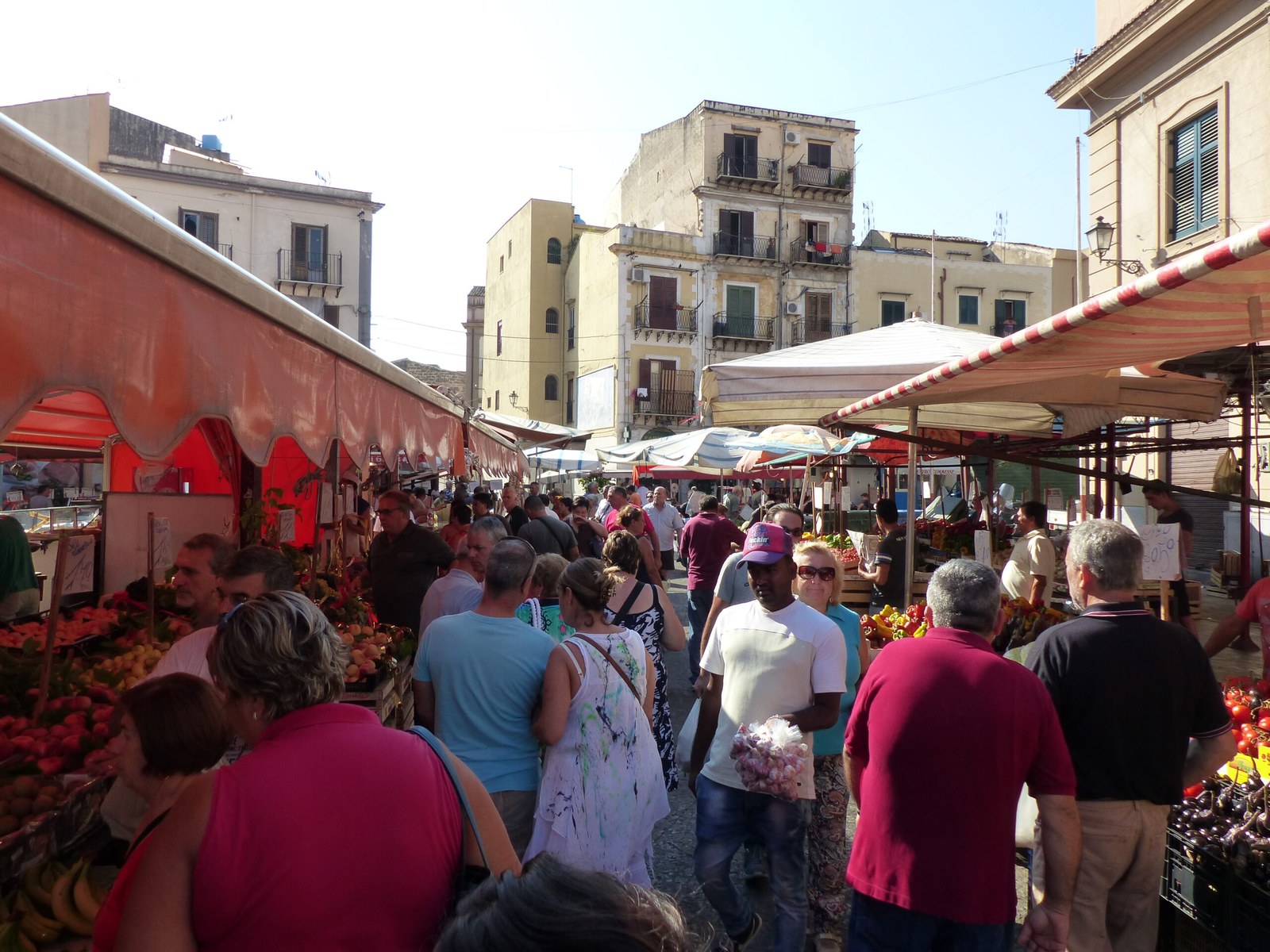
Palermo is the street-food capital of Italy — eat your way through Ballarò, Capo and Vucciria markets. Local specialities include panelle (chickpea fritters), sfincione (Palermitan pizza), arancine, pane ca’ meusa (spleen sandwich, an acquired taste). Catania’s Pescheria is the photogenic fish market with stalls of swordfish, sea-urchins and freshly caught anchovies, plus surrounding bars serving granita, arancini and Etna wines. Syracuse’s Ortigia market is smaller but excellent for cheese, capers and salted ricotta.
Benjamin Nunez Gonzalez · CC BY-SA 4.0
Sicilian wines
Sicily is one of Italy’s largest wine regions and one of the most exciting in Europe. Five main areas worth your time:
- Etna DOC — volcanic-soil reds (Nerello Mascalese, Nerello Cappuccio) and minerally whites (Carricante). The most internationally celebrated Sicilian wine in 2026.
- Marsala (Trapani) — fortified DOC wine, dry to sweet, with a 18th-century English-trade history.
- Cerasuolo di Vittoria DOCG — southeast Sicily’s only DOCG, blend of Nero d’Avola and Frappato.
- Nero d’Avola — Sicily’s flagship red grape, grown island-wide.
- Passito di Pantelleria — sweet wine from sun-dried Zibibbo grapes on the volcanic island of Pantelleria.
What fruit is Sicily known for?
Sicily is one of Europe’s richest fruit-growing regions. The island is famous above all for Arancia Rossa di Sicilia IGP (blood oranges grown around Catania and Etna, harvested January–March), fichi d’India (prickly pear cactus fruit, eaten from August to November), Mandorle di Avola (prized sweet almonds), and Limoni di Siracusa IGP (lemons grown year-round in the southeast). Find all four at any outdoor market—the Pescheria in Catania and Ballaro in Palermo are the best showcases.
For an Etna wine day from Catania see our Sicily wine tours guide.
Things to do in Sicily
The top experiences in Sicily are: climbing Mount Etna, exploring the Valley of the Temples at Agrigento (Greek temples, UNESCO), walking the baroque streets of Syracuse/Ortigia and Val di Noto, beach days near Cefalù or the Aeolian Islands, and street food tours in Palermo and Catania.
Sicily packs more variety per kilometre than any other Italian region. Below are eight experiences most worth planning a day around.
1. Climb Mount Etna
Europe’s highest active volcano (3.357 m). The standard route takes the cable car from Rifugio Sapienza to 2.500 m, switches to a 4×4 jeep up to 2.900 m, and an authorised volcanological guide leads the final walk to 3.000 m on weather-permitting days. Allow a half-day (4-5 hours from Catania return). Bring layers — summit can be 15°C cooler than the coast. See our hiking Mount Etna guide for routes and operators.
2. Walk the Greek temples
The Valley of the Temples at Agrigento, Selinunte, Segesta and the Neapolis archaeological park at Syracuse together hold the densest concentration of Greek architecture outside Greece. Selinunte alone is the largest archaeological park in Europe at 270 hectares. Visit early morning or late afternoon — midday Sicilian sun is unforgiving.
3. Tour the Val di Noto baroque towns
UNESCO listed eight late baroque towns of the Val di Noto: Noto, Modica, Ragusa, Scicli, Palazzolo Acreide, Caltagirone, Militello Val di Catania, and parts of Catania. A two-day loop from Catania or Syracuse works well — start with Noto, sleep in Modica, finish with Ragusa Ibla.
4. Beach day or boat tour
Sicily’s beaches range from white-sand San Vito Lo Capo in the west to volcanic black-sand Mascali on the eastern Etna coast. Isola Bella in Taormina is a postcard cove; La Plaja in Catania is an 18-km sandy stretch. The Aeolian and Egadi islands offer the clearest water. See our Sicily beach holiday guide for the full season-by-season breakdown.
5. Wine tasting on Etna
Etna DOC has become Sicily’s most internationally celebrated wine region. Cantine open to visitors include those at Passopisciaro, Solicchiata and Castiglione di Sicilia on the northern slope, and Trecastagni and Viagrande on the southern slope. Most offer a 60-90-minute tour of barrels and vines plus a 4-6 wine tasting (€25-50 per person). Book a driver — Etna roads twist and most cantine sit at 700-900 m.
6. Cooking class with a Sicilian nonna
Half-day cooking classes are widely available in Catania, Syracuse, Taormina and Palermo (€80-150 per person, market trip + 3-4 dish lesson + meal). Choose one led in a private home for the most authentic experience. Typical menu: arancini, pasta alla Norma, caponata, cannoli — variations with seasonal seafood or dessert focus available.
7. Day trips from your base
Sicily’s compact size makes for excellent day-trip options from a Catania or Palermo base. From Catania: Etna, Taormina, Syracuse, Noto, Modica, Ragusa, Aci Trezza. From Palermo: Monreale, Cefalù, Segesta, Scopello. See our day trips from Catania guide.
8. Honeymoon and slow-luxury experiences
Taormina at sunset, Etna by helicopter, the Aeolian Islands, a Pantelleria dammuso stay, a hot-air balloon over the Iblei plateau — Sicily delivers high-romance experiences without the Amalfi crowds or Tuscany cliché. See our Sicily honeymoon guide.
9. Family holidays with kids
Sicily works for first-time family holidays from spring through early autumn. East-Sicily Catania-base, no-car-needed mode, beach + volcano + Greek temples within an hour. See our Sicily family holiday guide for areas, when to go, and what to do with kids.
Sample Sicily itineraries
Below are skeleton itineraries by trip length. For full daily detail on the seven-day eastern loop, see our complete Sicily itinerary in 7 days.
3 days — Catania, Etna and Taormina
- Day 1: arrive CTA, Catania historic centre walk (Piazza Duomo, Pescheria, Via Etnea, Castello Ursino).
- Day 2: Mount Etna (cable car, 4×4 to 2.900 m), wine tasting on the way down.
- Day 3: Taormina (Greek Theatre, Corso Umberto), Isola Bella, return to CTA for evening flight.
7 days — eastern Sicily loop
- Days 1-3: Catania base (city, Etna, Aci Trezza day).
- Day 4: move to Syracuse / Ortigia (Greek Theatre, Duomo, lunch at the market, evening on Ortigia).
- Day 5: Val di Noto loop — Noto, Modica, Ragusa Ibla.
- Day 6: Taormina (Greek Theatre, Isola Bella) or Catania return for Etna.
- Day 7: Catania departure.
10 days — east plus Agrigento
As above, plus a two-day Agrigento side-trip after the Val di Noto loop (Valley of the Temples + Scala dei Turchi) and an extra Aeolian Islands day from Milazzo.
14 days — comprehensive west-to-east traverse
Open-jaw flight (in PMO out CTA). Days 1-4 Palermo + Monreale + Cefalù. Day 5 Trapani + Erice. Day 6 Segesta + Selinunte transit. Day 7 Agrigento. Day 8 Villa Romana del Casale + arrival in Ragusa. Days 9-10 Val di Noto. Day 11 Syracuse. Days 12-13 Catania + Etna. Day 14 Taormina + CTA flight.
Sicily travel tips
Italy uses the euro (€), plug type F/L (230V 50Hz), CET timezone (UTC+1, UTC+2 from late March to late October). EU/UK/US/Canadian/Australian travellers do not need a visa for stays under 90 days. Sicily is safe; standard urban precautions apply in Palermo and Catania centres.
Currency, cards and tipping
Italy uses the euro. Cards are accepted almost everywhere — even tiny pasticcerie. Tipping is not expected; rounding up restaurant bills by €1-3 is generous. Most restaurants charge a coperto (cover charge) of €1-3 per person, listed on the menu. ATMs (bancomat) charge €0-3 for international cards depending on issuer.
Language
Italian is the official language; Sicilian dialect is widely spoken among locals (closer to a separate language than a dialect — listen for it in markets). English is reasonably widespread in tourist areas (Taormina, central Catania, Ortigia, central Palermo) and rarer inland. A handful of Italian phrases — buongiorno, grazie, vorrei, il conto, per favore — go a long way.
Safety
Sicily is safe by European standards. Violent crime against tourists is rare. Pickpocketing in Palermo’s Ballarò and Capo markets and around Catania’s Stazione is the main concern — keep wallets in front pockets and bags zipped. Driving is the genuine challenge: Sicilian traffic, particularly in Palermo, runs by interpretation rather than rule.
Connectivity
4G/5G coverage is good along the coast and in major towns; patchy on Etna’s northern slope and inland Madonie. EU SIM and EU-tariff roaming work seamlessly. eSIM providers (Airalo, Holafly) cover Italy with no setup hassle. Apartments and most cafés offer free Wi-Fi.
When everything is closed
Small-town shops and many family-run restaurants close 13:00-16:30 (riposo) and on Sundays. Museums often close one weekday (typically Monday) and most are closed on 1 January, Easter Sunday, 25 December. August sees the Ferragosto closure (15 August) and many restaurants close 1-15 August in city centres while staff move to the coast.
What to pack
Year-round: comfortable walking shoes for cobblestones, sun protection, refillable water bottle, adapter. By season: linen and a light layer in spring/autumn, swimwear and a wide-brim hat in summer, a real waterproof and warm layer in winter. For Etna: closed-toe trekking shoes year-round, plus a fleece and wind-shell layer above 1.500 m. For a complete season-by-season packing list, read our guide on what to pack for Sicily.
Can I wear jeans in Sicily?
Yes — jeans are perfectly acceptable across Sicily in every context: cities, restaurants, markets and tourist sites. The one exception is places of worship: churches require covered shoulders and knees (carry a light scarf or pashmina, usually available to borrow at cathedral entrances). On beaches, normal swimwear applies. Cobblestone streets and uneven archaeological sites mean comfortable flat shoes matter far more than your choice of trousers.
For the height-of-summer view, our Sicily in August travel guide covers Ferragosto, the Madonna della Catena Aci Trezza, La Vara di Messina, the Aeolian peak season and how to handle the August heat.
For the early-summer shoulder with the Taormina Film Festival and the start of swimming season, see our Sicily in June guide; for the heat-bearable pre-Ferragosto window with the Festino di Santa Rosalia Palermo 14-15 July and the optimal Etna summit conditions, see our Sicily in July guide.
Frequently asked questions
Is Sicily safe for tourists?
Yes. Sicily is statistically one of the safer Italian regions for tourists; violent crime against visitors is rare. The most common nuisance is pickpocketing in Palermo’s central markets and around Catania’s main station. Take normal city precautions, do not flash valuables, keep bags zipped and front-facing in crowds. Solo female travel is straightforward; tourist areas are well-lit and busy until late.
Is Sicily expensive?
No. Sicily is one of the more affordable Italian regions. Restaurant prices average roughly 30% lower than in Rome or Milan, apartment rentals are typically 30-50% cheaper than mainland Italian equivalents, and Sicilian motorways are toll-free. Taormina is the one Sicilian outlier where prices match Amalfi or Como.
Do you need to speak Italian to visit Sicily?
No. English is reasonably widespread in tourist areas — Taormina, central Catania, Ortigia, central Palermo, the airports, the train and bus systems. A handful of basic Italian phrases is appreciated and useful inland, but you can complete a comfortable trip with English alone.
What is Sicily best known for?
Mount Etna (Europe’s highest active volcano), Greek temples (the Valley of the Temples at Agrigento, Selinunte, Segesta, Syracuse), late baroque towns (Val di Noto UNESCO), distinctive food (arancini, cannoli, granita, pasta alla Norma), Mediterranean beaches and a 2.500-year layered cultural heritage spanning Greek, Roman, Arab, Norman and Spanish rule.
Is Sicily good for a first trip to Italy?
Yes — but only if you accept that Sicily is its own destination, distinct from Rome-Florence-Venice. First-timers seeking a Roman / Renaissance / canal Italy should start mainland. First-timers seeking variety in seven days — volcano, beach, baroque, ancient Greek, layered food culture — find more here than in any other Italian region.
How is Sicily different from the rest of Italy?
Geographically closer to Tunisia than Rome, Sicily was independent under Greek, Roman, Arab, Norman, Hohenstaufen, Angevin, Aragonese and Spanish Bourbon rule before joining the unified Kingdom of Italy in 1861. The Sicilian dialect is closer to a separate language than to standard Italian. The cuisine reflects Arab and North-African influences absent in mainland Italy (citrus, almonds, couscous, the sweet-and-sour agrodolce tradition). Architecture layers Greek temples, Roman mosaics, Arab-Norman cathedrals and post-1693 baroque in ways no other Italian region condenses.
What is the best part of Sicily to visit?
For first-timers with 7 days, eastern Sicily — Catania, Etna, Taormina, Syracuse, Val di Noto — packs the highest UNESCO density and the most varied itinerary. With 10+ days, add Agrigento and one Aeolian or western Sicily leg. Western Sicily (Palermo, Cefalù, Trapani, Erice) is the natural focus for travellers prioritising food, Arab-Norman heritage and quieter beaches.
Where to stay in Catania while exploring Sicily
Catania is the most central base for exploring Sicily — airport hub, train and bus connections to every major eastern destination, mild year-round climate, and roughly 30-50% lower accommodation prices than Taormina or Palermo for the same comfort. From Catania you reach Etna in 45 minutes, Taormina in 50, Syracuse in 60, Noto in 90 and Modica or Ragusa in two hours.
For a 5+ night stay, an apartment in central Catania beats a hotel on flexibility — kitchen for Pescheria fish or Etna vegetables, laundry for shoulder-season layers, and the per-night cost drops 30-50% versus mid-range hotels for couples or families. Our three apartments in Catania sit in the historic centre, walking distance to the Cathedral, Pescheria, Via Etnea and Teatro Massimo Bellini, with a metro stop and the airport bus 5 minutes from the door. See our apartments in Catania →
For winter travel — Etna skiing, near-empty archaeological sites and the year’s deepest off-peak prices — see our Sicily in January travel guide.
The information in this guide was correct at the time of writing. Data can change from season to season without notice: before you travel, always check the official channels and websites for updates. We review this guide periodically, but the official channels are always the authoritative source. We also cannot guarantee that the suggested routes or the attractions described are always reachable or accessible: roads, trails and sites may be closed, damaged, altered or unsafe. Assessing the practicability and safety of itineraries and attractions always remains your own responsibility.