

Lipari is the largest and most populated of the seven Aeolian Islands — a volcanic archipelago in the southern Tyrrhenian Sea, off the north-east coast of Sicily, protected as a UNESCO World Heritage Site since 2000. Capital of the comune that administers the entire chain, the island is the natural base for travellers who want to combine ferries to Vulcano, Salina, Stromboli, Panarea, Filicudi and Alicudi with a town that actually lives twelve months a year. From its acropolis, crowned by the Castello di Lipari and the world-class Museo Archeologico Eoliano “Luigi Bernabò Brea”, the island stretches across 38 km² of pumice cliffs, pebble beaches and obsidian flows that have been quarried since the Neolithic. In Greek mythology, this is the home of Aeolus, keeper of the winds.
Lipari is the easiest Aeolian island to reach (30–60 minutes by hydrofoil from Milazzo) and the smartest base if you want more than one island in a single trip. Two to three days are enough for Lipari itself; five to seven let you use it as a hub for Vulcano, Salina and Stromboli. The headline sights are the Castello and museum, the Quattrocchi viewpoint and the Spiaggia Bianca pumice beach. From Catania it is a 2 h 15 connection door-to-port.
Is Lipari worth visiting?
Yes — and more so than any other single Aeolian island for first-time visitors. Lipari concentrates in one stop what the rest of the archipelago offers piecemeal: a walkable historic centre with bars, restaurants and shops open year-round; a fortified acropolis with one of the best archaeological museums in the Mediterranean; a coastline that mixes pumice cliffs, pebble beaches and sea stacks; and a port that connects to every other Aeolian within 90 minutes.
The honest counterpoint: Lipari is the busiest of the seven islands in July and August, when day-trippers from Milazzo and short cruise stops push the population from 12,800 residents to over 20,000. The beaches are mostly pebble or pumice — not the white sand of southern Sicily. And the night-time scene is modest by Sicilian standards; this is an island that goes to bed by 1 a.m. If you accept those terms, Lipari is the most efficient introduction to the Aeolian Islands you can plan from Catania.
What is Lipari famous for?
Four things, in roughly historical order:
- Obsidian and pumice: the island has been quarried since the Neolithic for obsidian — black volcanic glass used for blades across the western Mediterranean — and, more recently, for the white pumice that gave the northern coast its lunar landscape.
- The Aeolian Civilization: the fortified acropolis above Marina Corta hides one of the longest continuous archaeological sequences in Europe, from the Neolithic through Greek and Roman to Norman and Spanish periods.
- The Castello and the Museo Bernabò Brea: the citadel and its archaeological museum, named after the Genoese archaeologist who excavated it in the 1950s.
- Its role as the capital of the archipelago: Lipari town is the administrative seat of the comune that governs all seven islands, and the hub from which inter-island hydrofoils radiate.
Things to do in Lipari
An honest list of what most travellers actually do, in roughly the order they do it:
- Walk up to the Castello and spend two hours in the archaeological museum.
- Wander Marina Corta at golden hour for the apéritif before dinner.
- Drive or scooter to the Quattrocchi viewpoint for the postcard panorama with Vulcano.
- Swim at Spiaggia Bianca, Acquacalda or Valle Muria.
- Take a day trip to one of the other Aeolian Islands by hydrofoil.
- Walk through Canneto, the long pebble beach two kilometres north of Lipari town.
- Climb to Monte Pilato, the dormant volcano above Acquacalda whose 776 AD eruption created the pumice cliffs.
Three to four full days are needed to do all of this without rushing; one to two for a focused stay.
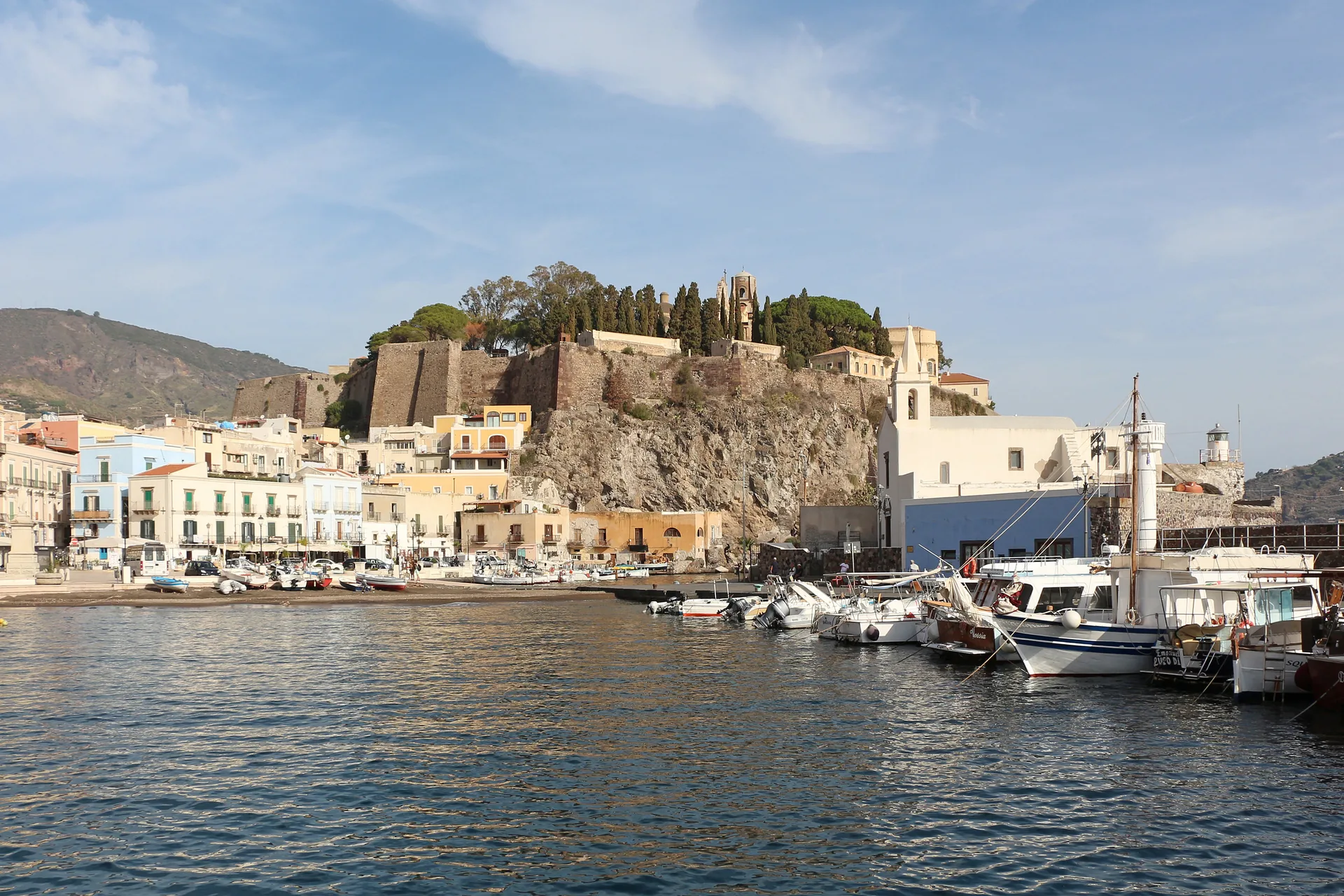
Castello di Lipari and the Bernabò Brea Museum
Bernard Gagnon · CC BY 4.0
- Location
- Via Castello 2, Lipari Maps
- Hours
- 09:00–19:30 (museum); summer extended to 21:00
- Essential fact
- Acropolis above Marina Corta; houses the Museo Archeologico Eoliano with one of the Mediterranean’s richest collections of ancient amphorae and obsidian tools.
- Price
- €6 (combined museum + park; €3 reduced)
The Castello di Lipari sits on a small acropolis directly above Marina Corta, fortified continuously since the Bronze Age. The Greek walls in opus quadratum, the Norman cathedral of San Bartolomeo, and the Spanish bastions added by Charles V in 1556 are all visible at the same time as you walk through the citadel — the layering is the point. Inside the perimeter, the Museo Archeologico Eoliano “Luigi Bernabò Brea” is considered one of the four or five most important archaeological museums in Italy for Mediterranean prehistory.
The museum is organised over six sections in four buildings: prehistoric Lipari, the smaller islands, the classical period, the underwater archaeology gallery (with cargo and amphorae from Aeolian shipwrecks), the volcanology section and the epigraphic park outside. The collection of Greek theatre masks and red-figure ceramics by the so-called Lipari Painter — a 4th-century BC workshop — is unique in the Mediterranean and the single best reason to spend two hours here. Allow half a morning.

Davide Mauro · CC BY-SA 4.0
Best beaches in Lipari
- Location
- Spiaggia di Porticello, SP180 98055 Maps
- Hours
- Always accessible
- Essential fact
- Pumice pebbles; 200 m long; turquoise water from white seabed. Access: 25-min coastal footpath from Canneto, or boat tour from Marina Corta.
- Price
- Free
Lipari’s coast is mostly pebble or pumice, not soft sand. The trade-off is clear water, dramatic cliffs and far fewer beach-club fees than mainland Sicily. The five beaches worth your time:
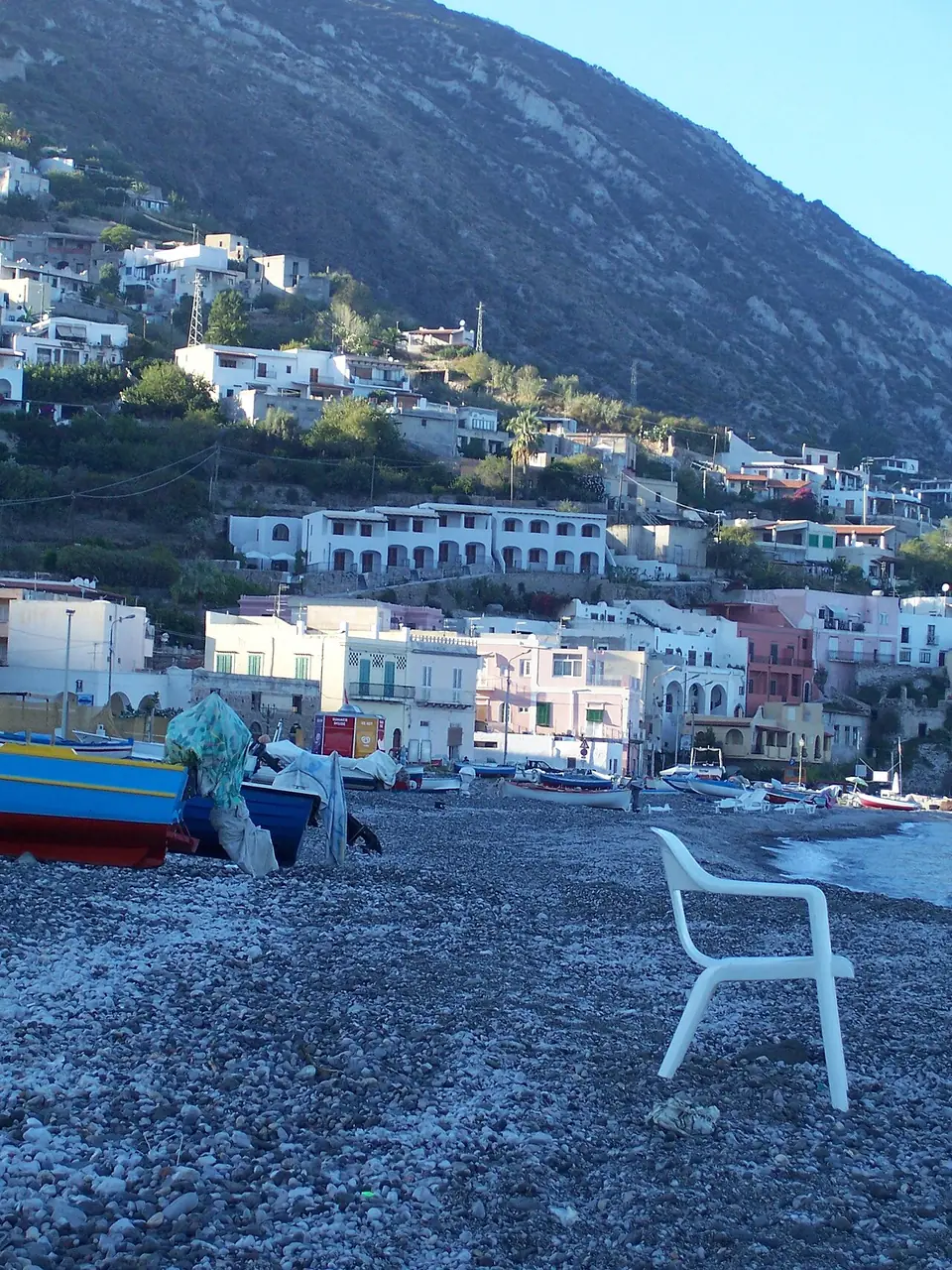
- Spiaggia Bianca (Porticello) — the iconic “white beach”, made of pumice flakes that turn the seabed turquoise. Pebbles to walk on but the water is the brightest in the archipelago. Reach it from Canneto by a 25-minute coastal path or by boat.
- Acquacalda — broad pebble beach in the north, backed by the white pumice cliffs of the closed quarries. Quieter than Spiaggia Bianca, often deserted in shoulder season.
- Canneto — the longest stretch on the island, two kilometres of dark pebble two kilometres north of Lipari town. Walkable from town along the coastal road; small village with seafood trattorias.
- Valle Muria — south-west coast, accessible only by boat or a steep 45-minute hike from the road. Wild and pebble; bring everything.
- Praia di Vinci (Vinci) — small rocky cove just north of Canneto with a flat rock platform; popular with locals.
Kritzolina · CC BY-SA 4.0
Marina Corta and Marina Lunga
Bernard Gagnon · CC BY 4.0
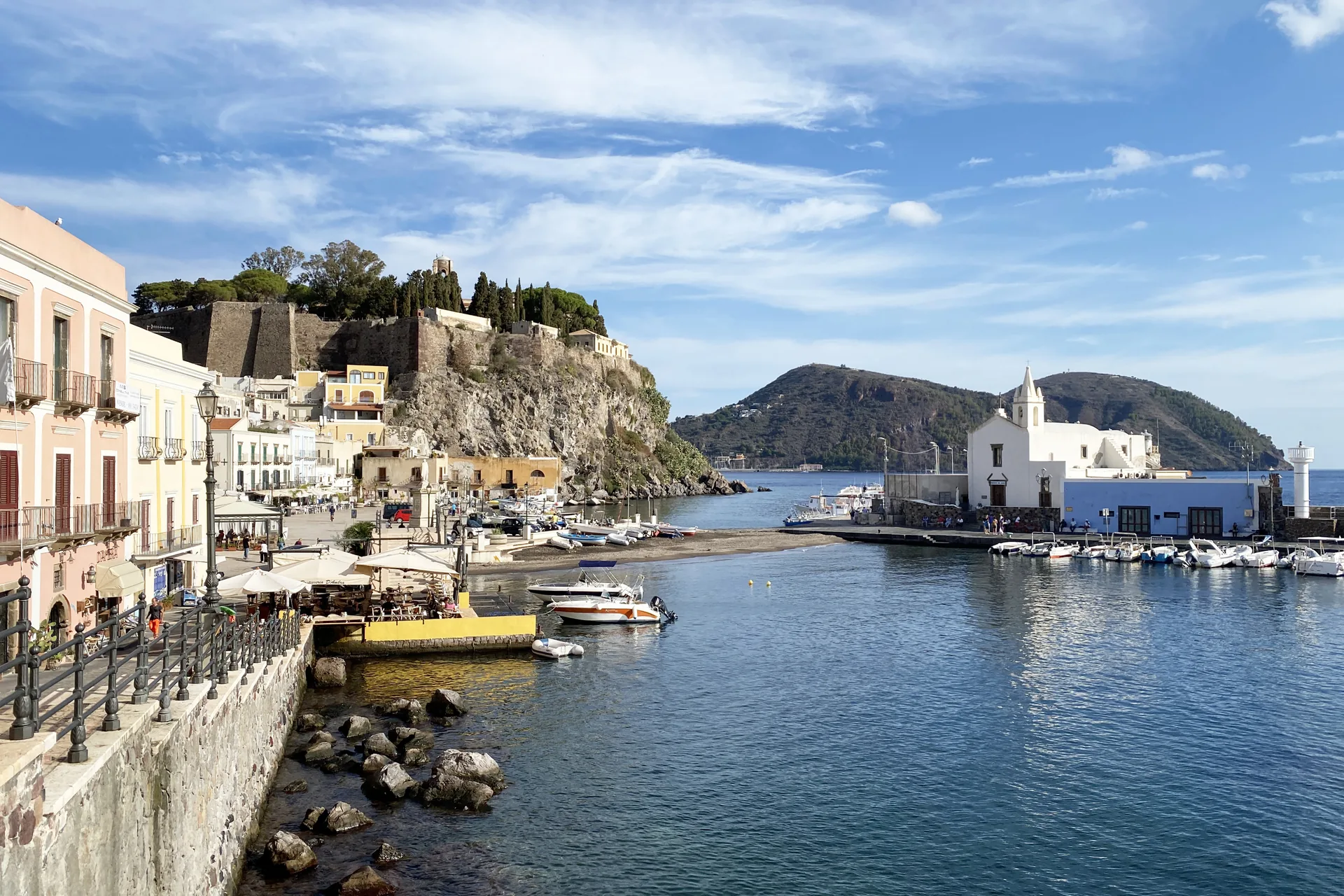
Lipari has two ports five minutes apart on foot, and knowing the difference saves an embarrassing wrong-port arrival. Marina Lunga, the larger commercial port to the north, handles the slow car ferries from Milazzo and Naples — this is where you arrive if you bring a car. Marina Corta, the smaller and more picturesque port directly below the Castello, is used by hydrofoils (aliscafi) and inter-island connections; this is also where most visitors disembark.
Marina Corta is the social heart of the town: a horseshoe of bars and restaurants around the small chiesa delle Anime del Purgatorio, alive from sunset through dinner. The apéritif here, looking up at the floodlit castle walls, is the single most photographed moment in Lipari.
Quattrocchi viewpoint and the pumice quarries
Markos90 · CC BY 2.0
- Location
- SP179 3, Lipari Maps
- Hours
- Always accessible
- Essential fact
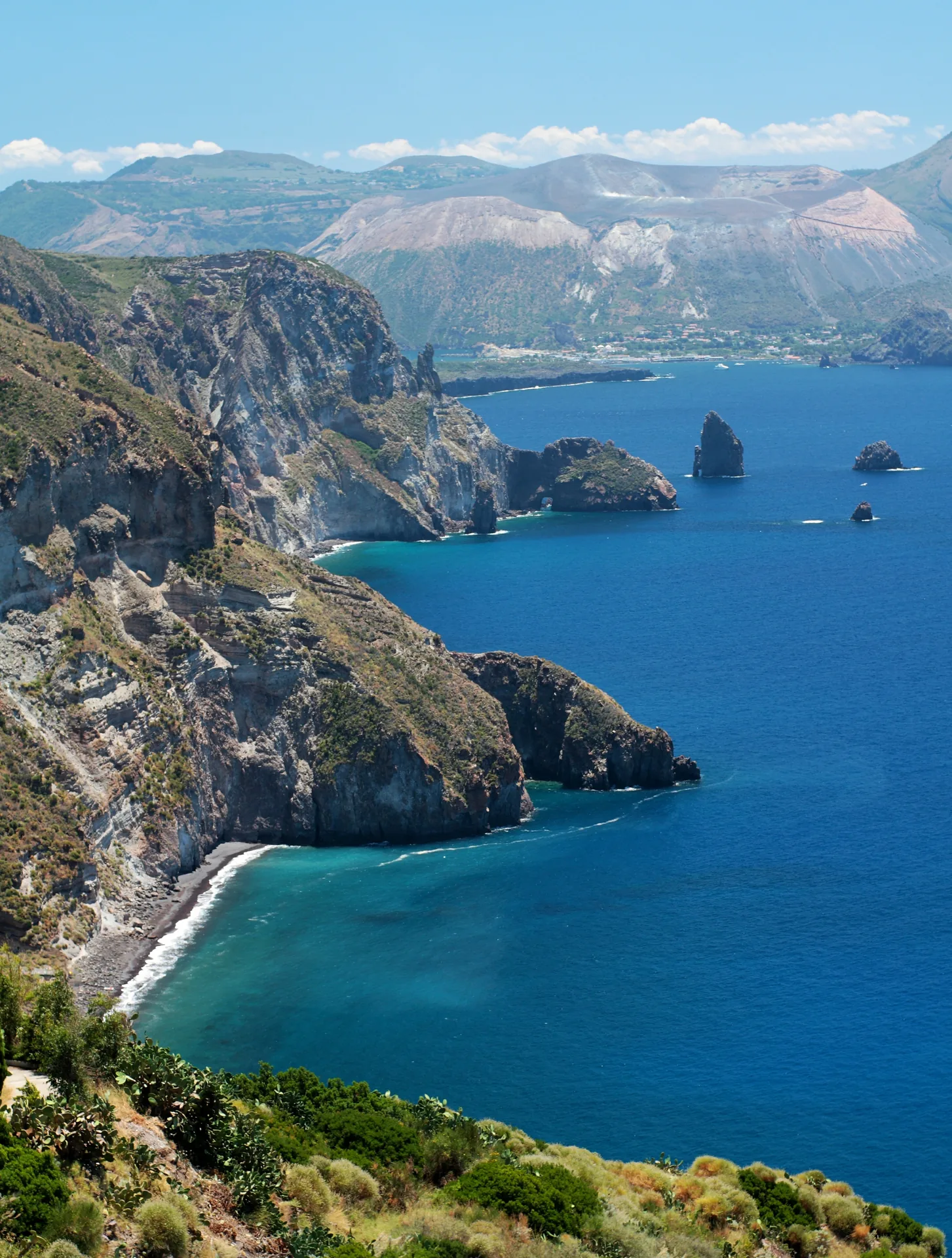
- Most-photographed Aeolian panorama: Faraglioni + Vulcano in single frame. Best light late afternoon (Vulcano backlit gold from west).
- Price
- Free
“Quattrocchi” — literally “four eyes” — is the lookout three kilometres south of Lipari town on the road to Pianoconte, named after a local family of innkeepers. It frames the postcard composition the island is sold on: the Faraglione di Pietra Lunga and Pietra Menalda sea stacks in the foreground, Vulcano’s fuming cone in the middle distance, and the Tyrrhenian opening westward beyond. Bus 1 from Lipari town stops here; by scooter or rental car you can park 200 metres downhill at a small layby.
From Quattrocchi the road continues west to Belvedere Quattropani, the higher viewpoint over Acquacalda and the closed pumice quarries — visible from below as the white scars in the cliffs. Pumice was mined here from the 19th century until 2007, when UNESCO and Italian regulators closed the operation to protect the World Heritage designation. The quarry buildings remain in place and are visible from Quattrocchi as well as from the sea.

AlMare · Public Domain
Day trips from Lipari to the other Aeolian Islands

Bernard Gagnon · CC BY 4.0
This is the reason most travellers choose Lipari as a base rather than Vulcano or Salina: every other Aeolian Island is within 90 minutes by hydrofoil. The table below shows realistic options for a single-day return, with departure times that allow at least 5 hours on the destination island.
| Destination | Duration (one way) | Day-trip feasible | What for |
|---|---|---|---|
| Vulcano | 10–15 min | Easy | Crater hike + Sabbie Nere beach (guide) |
| Salina | 30–45 min | Yes | Pollara beach, Malfa, Malvasia wineries |
| Panarea | 1 h | Yes | Cala Junco beach, prehistoric village, sea swims |
| Stromboli | 1 h 30 | Long but doable | Sciara del Fuoco sunset boat / volcano hike at dusk |
| Filicudi / Alicudi | 2 h+ / 3 h+ | Only Filicudi as long day | Hiking, swimming, escape from crowds |
The standard inter-island operator is Liberty Lines (hydrofoils), with Siremar serving slower car-ferry routes. Schedules thin to two or three departures per day from November to March; in July and August there are often hourly services on the Lipari–Vulcano–Salina triangle.
How many days do you need in Lipari?
It depends entirely on whether Lipari is the destination or the base.
| Time available | What it gets you | Best for |
|---|---|---|
| One day (day-trip from Milazzo or Vulcano) | Castello + museum + Marina Corta apéritif + one beach | Cruise stop or quick taste from the Sicilian mainland |
| Two to three days | All of Lipari at a relaxed pace + one full day-trip (Vulcano or Salina) | First-time visitors with limited time |
| Five to seven days | Lipari as base + 3–4 islands explored as day-trips | The Aeolian Islands the way most experienced travellers plan them |
If you have a week and want to see the archipelago properly, base yourself on Lipari and take hydrofoils outward. Sleeping on a smaller island like Stromboli or Panarea is wonderful for one or two nights but limits you to one inter-island route from there.
How to get to Lipari
There is no airport and no bridge: every visitor arrives by ferry or hydrofoil. The dominant route is from Milazzo, on the north coast of Sicily, 40 minutes by hydrofoil (Liberty Lines) or 90 minutes by car ferry (Siremar). Hourly departures all year, increasing in summer.
| Origin | Operator | Duration | Frequency (season) |
|---|---|---|---|
| Milazzo (Sicily) | Liberty Lines (hydrofoil) / Siremar (ferry) | 40 min / 1 h 30 | Hourly, all year |
| Messina | Liberty Lines (seasonal) | 1 h 40 | 1–2 daily, Jun–Sep |
| Reggio Calabria | Liberty Lines (seasonal) | 2 h | 1 daily, Jun–Sep |
| Palermo | Liberty Lines (seasonal) | ~4 h | 3–4 weekly, Jun–Sep |
| Naples (via Stromboli, Panarea, Salina) | SNAV / Liberty Lines (summer) | ~6 h | Daily, Jun–Sep |
If you bring a car, take the ferry to Marina Lunga; Lipari is one of the few Aeolians where private vehicles are allowed in summer (most others ban them). For a typical 2–4 day trip it is simpler and cheaper to leave your car in one of Milazzo’s port garages (€10–15 per day) and arrive on foot via hydrofoil at Marina Corta.
Schedule reliability is high April to October but degrades quickly in winter, when scirocco and northerly winds can cancel hydrofoils for 24–48 hours at a time. Check Liberty Lines and Siremar the day before departure in shoulder season.
Getting here from Catania
Catania is the practical gateway to Lipari for travellers flying in from the rest of Europe — the only Aeolian access via a major international airport. The end-to-end connection is approximately 2 h 15 from Catania Centrale to Marina Corta on Lipari, broken into two legs:
- Catania → Milazzo: 1 h 30 by road (155 km on the A18/A20 motorway). Options:
- Private transfer: €180–220 for up to 3 passengers, door-to-port. Best if you arrive late or want a guaranteed slot for the ferry.
- Bus: Giuntabus operates 4–6 direct services per day Catania Airport / Catania Centrale → Milazzo Port (€15, around 2 h 30 including stops).
- Rental car + parking: drive yourself and park at one of the secure Milazzo port garages (€10–15/day). Convenient if you plan to return to Catania.
- Milazzo → Lipari: 40 minutes by Liberty Lines hydrofoil from the same port (Marina Lunga commercial dock), arriving at Lipari Marina Corta. Departures every hour from 07:00 to about 19:30 in summer.
Aim to arrive in Milazzo at least 30 minutes before your hydrofoil. Read our regional guide for context, and for transfer logistics in general see the Catania Airport transfer guide (the road segment to Milazzo follows the same A18 corridor).
When to visit Lipari
The Aeolian sea reaches swimming temperatures (22–24°C) from late May, peaks in August (26–27°C) and stays warm through early October. The shoulder months — late May, June, September and early October — are the sweet spot: hydrofoils run on full summer schedules, accommodation is open, hiking is comfortable and the day-tripper crowds from Milazzo are a fraction of August. Avoid the second and third weeks of August unless you have booked accommodation months ahead.
From November to March some restaurants and most inter-island day-trip operators close. Ferry service is reduced to two or three departures per day from Milazzo and is more weather-vulnerable. The Castello and museum remain open all year. For a deeper month-by-month breakdown of Sicilian weather, see our Sicily-by-month sub-hub.
What does the name Lipari mean?
“Lipari” comes from the ancient Greek Lipara (Λιπάρα), meaning “rich” or “fertile” — a name applied in classical antiquity not only to this island but to the whole archipelago, which the Greeks called the Liparian Islands. The Roman geographer Strabo writes that the name reflected the volcanic soil’s fertility and the wealth derived from obsidian, sulphur and alum trade. The modern Italian name “Eolie” came later, from the mythological figure of Aeolus, king of the winds, whom Homer placed on a floating island in the Odyssey — a description scholars have long identified with Lipari or its smaller neighbour Stromboli.
Combine Lipari with Catania’s eastern coast
The most rewarding way to plan a Lipari trip from outside Italy is not to rush it. If you are flying into or out of Catania, give yourself two to three additional days on Sicily’s eastern coast either before or after the Aeolian leg — the contrast is the point. Lipari delivers volcanic islands and Greek archaeology in a maritime setting; the Catania coast adds a working city, the largest active volcano in Europe, Baroque architecture and beaches you can reach without a ferry.
A reasonable add-on circuit from a Catania base: half a day in Catania’s UNESCO old town, a full day on Mount Etna with summit-zone hike, half a day at Taormina with Isola Bella, an afternoon at the Cyclopean coast of Aci Trezza and Aci Castello, and a beach day at one of the eastern Sicily beaches. See our guides to things to do in Catania, things to do in Taormina and day trips from Catania for a usable itinerary.
For most visitors, two nights either side of the Aeolian segment is the right balance: enough time to see the eastern coast properly without diluting the island experience.
Where to stay: Lipari vs Catania base
On Lipari itself, the practical choice is between staying in Lipari town (Marina Corta or the old centre — walking distance to the port, restaurants and museum, but moderate noise around Marina Corta until midnight) and Canneto (2 km north, quieter, more residential, close to the longest beach but you need a scooter or the bus to reach the historic centre after dark). Acquacalda and the western villages are too isolated for a short stay without a car.
Use Catania as your Sicily base. If your trip is one to two weeks and you want to combine the Aeolian Islands with the rest of eastern Sicily, you do not need to move accommodation every two nights. A central base in Catania, fifteen minutes from the airport and ninety minutes from Milazzo, lets you take the ferry to Lipari for a one-or-two-night detour and return to the same apartment without re-packing. Self-catering apartments in Catania with washing machines and kitchens are particularly practical for this hub-and-spoke pattern — see our central Catania apartments if that matches your trip.
For more on the Aeolian archipelago, compare Lipari with the other six islands in our Aeolian Islands hub guide.
The information in this guide was correct at the time of writing. Data can change from season to season without notice: before you travel, always check the official channels and websites for updates. We review this guide periodically, but the official channels are always the authoritative source. We also cannot guarantee that the suggested routes or the attractions described are always reachable or accessible: roads, trails and sites may be closed, damaged, altered or unsafe. Assessing the practicability and safety of itineraries and attractions always remains your own responsibility.