
Catania sits on Sicily’s eastern coast with the Ionian Sea on one side and Mount Etna behind it, and within thirty minutes of the centre you can be swimming on golden sand, snorkelling between basalt sea stacks, or walking through a 2,000-hectare nature reserve at the mouth of the river Simeto. The best beaches near Catania aren’t all in one place — they’re spread along about 50 km of coast, north toward Taormina and south toward Syracuse, and each cluster has a different character. We run an apartment in the city centre and answer this question for guests almost every day, so here is the honest version: which beaches to pick, when to go, and how to get there without a car.
Beaches near Catania at a glance

Within a 30-kilometre radius of Catania you have four distinct coastlines. The city beaches (La Playa with 18 km of fine golden sand, San Giovanni Li Cuti with its black volcanic sand) are reachable on foot or by city bus. The Cyclops Riviera (Aci Trezza, Aci Castello), 10–15 km north, is rocky, dramatic and protected as a Marine Protected Area since 1989. The Acireale coast, 18–20 km north, runs below the Timpa lava cliff and links small fishing villages like Santa Tecla and Santa Maria La Scala. South of Catania the Simeto Oasis nature reserve (2,000 hectares, established 1984) gives way to long stretches of dark sand toward Agnone Bagni and Syracuse.
Most people overestimate how much they’ll drive in a day. If you’re staying in Catania’s old town for three or four nights, picking one beach per day — ideally combined with a meal at a fishing village — is more enjoyable than trying to tick five off a list. The sections below are organised geographically so you can match a beach to whichever direction you’re heading that day.
Is there a nice beach near Catania?
Yes. Within 30 minutes by car or bus you have three very different coastlines: 18 kilometres of fine golden sand at La Playa, the rocky Cyclops Riviera with its eight basalt sea stacks at Aci Trezza, and the cliffside villages south of Acireale. None of these is a postcard turquoise Caribbean beach — for that you’d go to San Vito Lo Capo (western Sicily, 4 hours away) or the Aeolian Islands. But for an active beach base with day-trip variety and a real city behind you, the Catania coast delivers.
The honest local answer: La Playa for an easy afternoon swim, Aci Trezza for the dramatic photo and good food, the Acireale villages when you want a quieter day. Below is how to pick.
| Day type | Pick | Surface | Why |
|---|---|---|---|
| Quick afternoon swim from the city | La Playa | Fine golden sand | Bus from centre in 15–20 min, lidos open until 19:00 |
| Family day with kids | San Marco di Calatabiano or Fondachello | Sand & pebbles | Shallow water 30+ m out, supervised lidos |
| Snorkelling and photographs | Aci Trezza (Cyclops Riviera) | Lava platforms | Marine Protected Area, clear deep water, sea stacks |
| Quiet swim away from crowds | Santa Maria La Scala | Rocks & pebbles | Tiny fishing hamlet, no lidos, 25 min drive |
| Nature walk plus a swim | Simeto Oasis | Light sand and dunes | 2,000-hectare reserve, bird-watching, river mouth |
City beaches: La Playa and San Giovanni Li Cuti
The two beaches inside Catania couldn’t be more different. La Playa is the long sandy stretch the locals head to with picnic coolers and folding chairs; San Giovanni Li Cuti is a tiny cove of black volcanic sand and lava rocks that sits inside an urban fishing harbour, three kilometres from the Duomo. Together they cover both the “I want to lie in the sun on sand” and the “I want a quick dip after sightseeing” use cases without leaving the city.
La Playa — the locals’ golden-sand beach

Gabriele Falco · CC BY 3.0
- Location
- Spiaggia della Plaia, Catania, Metropolitan city of Catania Maps
- Essential fact
- 18 km of fine golden sand along Viale Kennedy, with shallow water up to 30 m from shore. Mix of free stretches and 20+ lidos with sun beds and showers.
- Price
- Free
La Playa runs for 18 kilometres south of Catania’s port along Viale Kennedy, and it is the beach Catanians grow up on. The sand is fine and golden, the water shallow for the first 30 metres — ideal for kids who can’t swim yet — and the bottom is sandy without rocks or seaweed. Behind the lidos run palm trees and a long flat road that becomes a slow promenade on summer evenings. The northern end of Viale Kennedy has a generous free section where families set up early, around 8 in the morning, especially in July and August.
The lidos along La Playa are a Sicilian institution. Day rates of €15–25 for a sunbed, umbrella and shower access are normal, which is roughly half what you’d pay on Sardinia or the Amalfi Coast. Most have a bar serving a granita with brioche at breakfast and pasta at lunch — the simple fish pasta is usually good. Don’t expect Caribbean-clear water: the colour of the sea here is a deep Mediterranean blue, beautiful but not transparent.
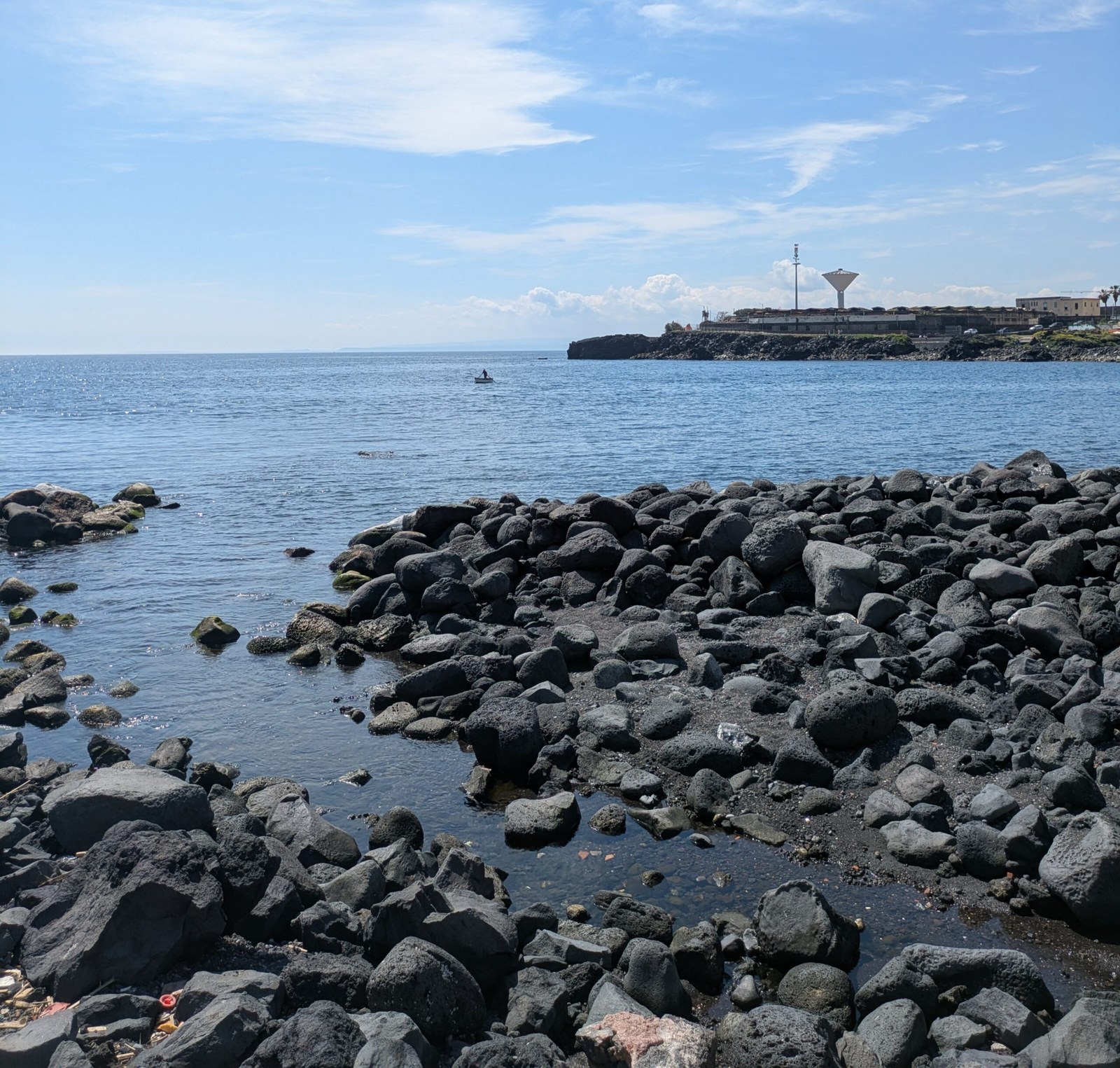
San Giovanni Li Cuti — black volcanic sand in the city centre
Auregann · CC BY-SA 4.0
- Location
- Via S. Giovanni Li Cuti, Catania Maps
- Essential fact
- Urban black-sand cove with lava rocks and a working fishing harbour, 3 km north of Catania Duomo.
- Price
- Free
If you have only a couple of hours and want to say you swam in Sicily, this is the answer. San Giovanni Li Cuti is a small cove of grey-black volcanic sand and dark lava rocks at the bottom of Via Sangiuliano, a thirty-minute walk from Piazza Duomo. Painted fishing boats are pulled up on the sand; nets dry in the sun. The water is deep within five metres of the shore and impressively clean for a place inside a port city. There are no lidos — bring a towel, a snorkel, and shoes you can walk on rocks in.
Locals come at sunset more than at noon, and the bars on the promenade above the cove are the best place to plan dinner. Two warnings: in July and August the cove gets very busy on weekends, and after a south wind (scirocco) the water can carry small pieces of debris from the port.
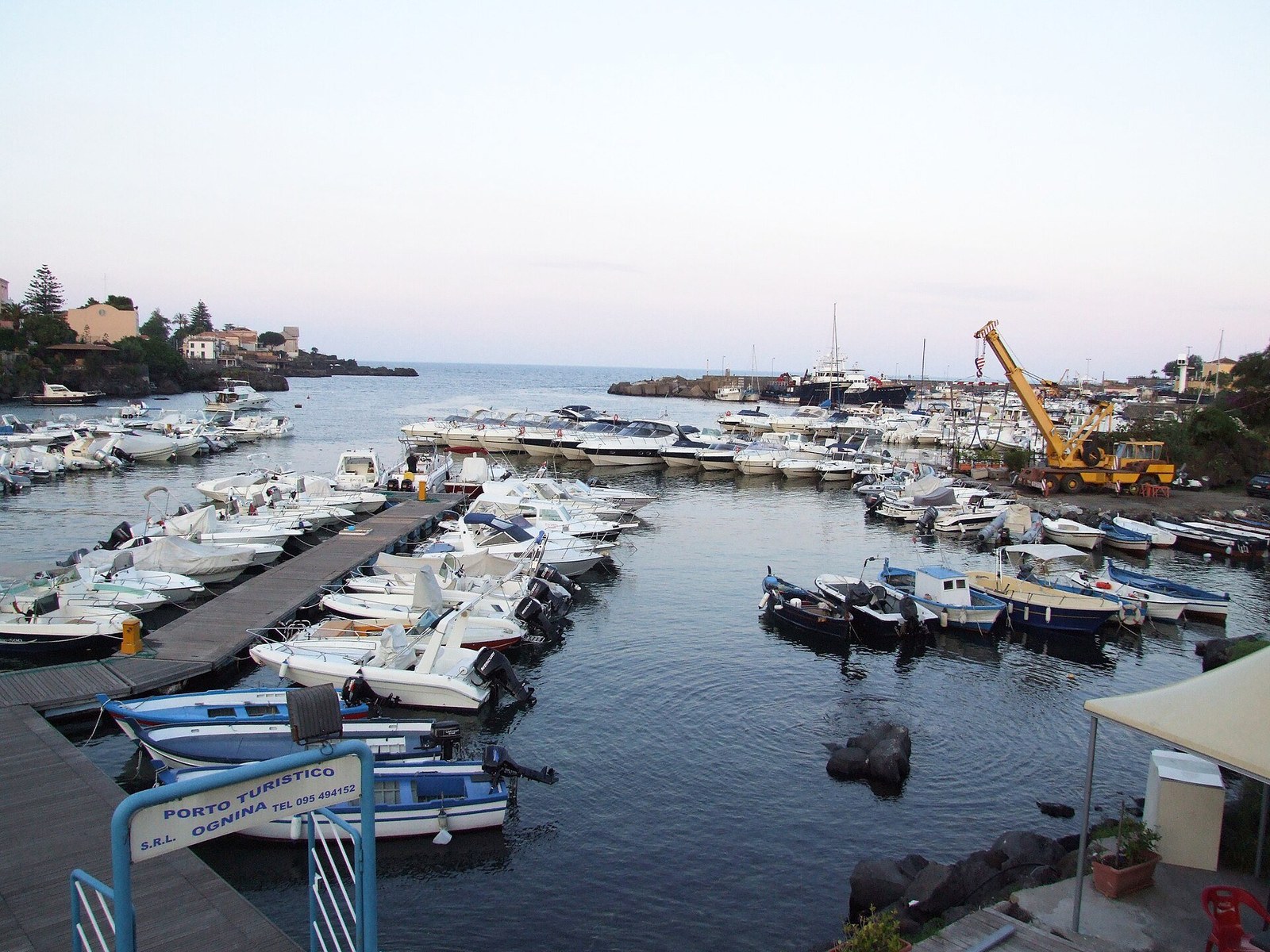
Ognina harbour — a quieter urban alternative
Auregann · CC BY-SA 4.0
Two kilometres further north sits Ognina, known to locals as Porto Ulisse. There is no proper beach here — you swim from low lava rocks and concrete platforms — but the small harbour with its fishing boats is one of the prettiest urban spots in the city. It is the place older Catanians come for an early-morning swim before work. Reachable on foot along the seafront or by city bus in 10 minutes.
The Cyclops Riviera: Aci Trezza and Aci Castello
The 15 kilometres of coast between Catania and Acireale is called the Cyclops Riviera (Riviera dei Ciclopi) because of the eight basalt sea stacks the Cyclops Polyphemus, according to Homer, hurled at Odysseus’s ship. It is the most dramatic and most photographed stretch of coast in eastern Sicily. There is no sand — the coast is black lava rock that drops straight into deep water — and the entire seabed has been a Marine Protected Area, the Area Marina Protetta Isole dei Ciclopi, since 1989. Two fishing villages, Aci Trezza and Aci Castello, sit a few kilometres apart and define the area.
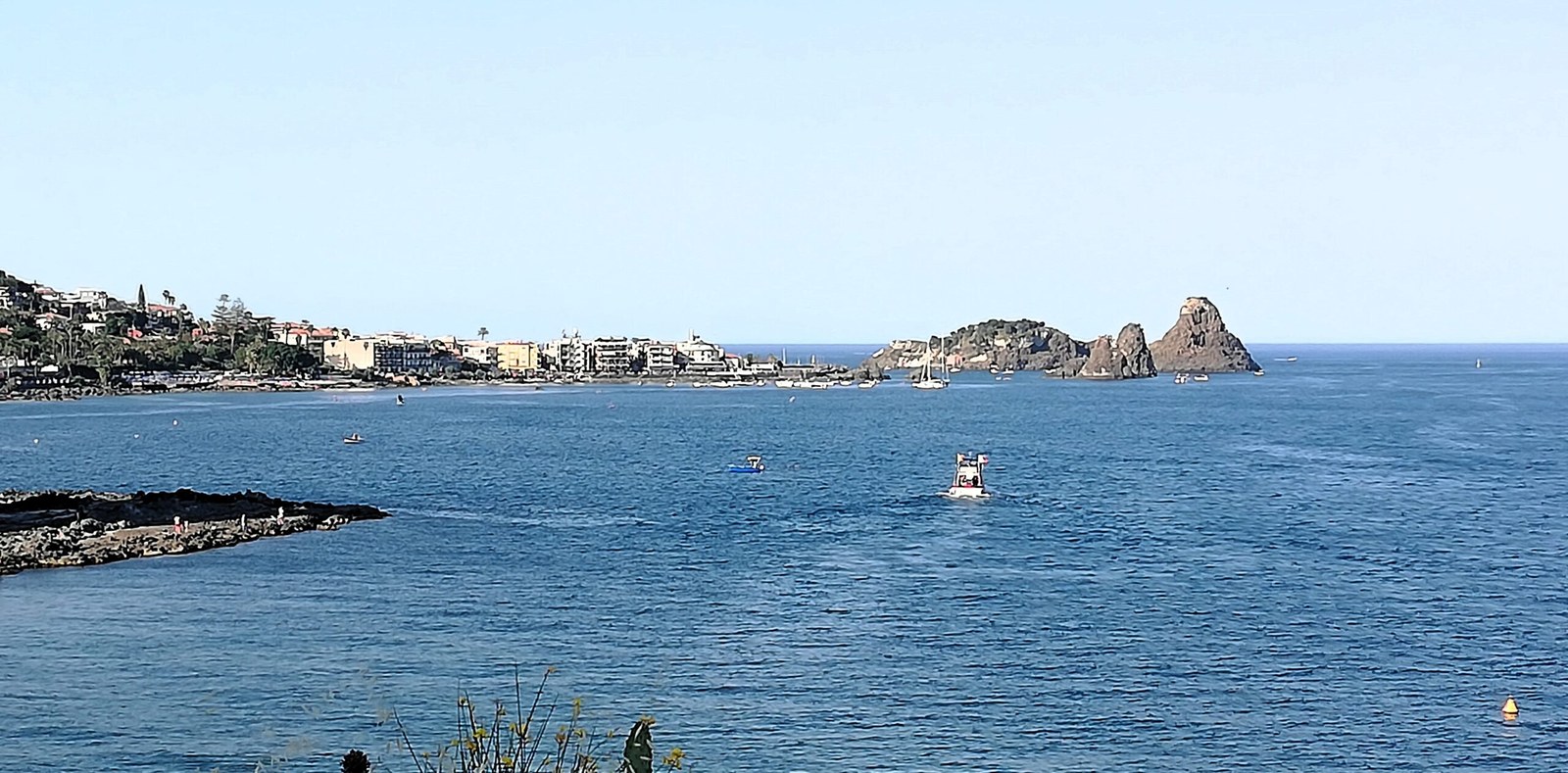
Aci Trezza — swimming among the Faraglioni
Effems · CC0
- Location
- Via Provinciale, 5D, Aci Castello Maps
- Essential fact
- Lava rocks and pebbles with eight basalt sea stacks of the Cyclops Marine Protected Area, 14 km north of Catania. Excellent snorkelling.
- Price
- Free
Aci Trezza is a working fishing village fourteen kilometres north of Catania. The waterfront is a small promenade where fishing boats are pulled up on the slipway, nets drying in the sun. Out in the bay, eight basalt sea stacks (the Faraglioni) rise from the water; the largest is over 70 metres tall. You swim from concrete platforms or low rocks — bring water shoes and a snorkel mask. The water is clear and deep, and on a calm day in early summer you’ll see grouper, sea bream and the occasional octopus on the rocks.
Several small operators run 60-minute boat tours around the stacks for €15–25 per person, departing from the harbour. The seafood restaurants along the waterfront serve the freshest fish in the area: try the raw sea urchin at the harbour stalls if you’re feeling brave, or order the fish of the day grilled at a sit-down place. Bus AST from Catania Centrale takes about 25 minutes; the village is small enough to walk through in 15.
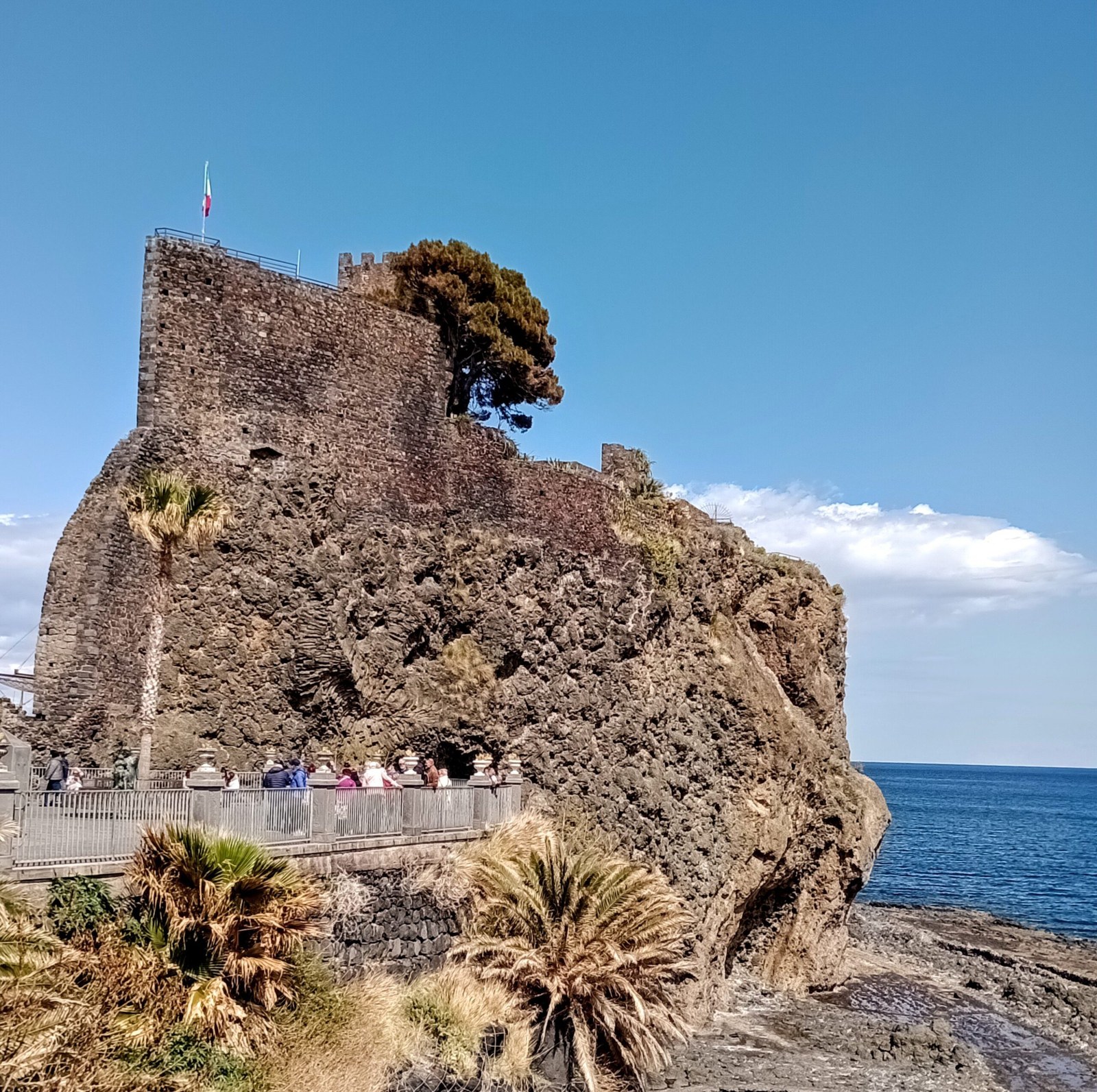
Aci Castello — rocky lava swims below the Norman castle
Jeanne Griffin · CC BY-SA 4.0
- Location
- Piazza Castello, Aci Castello Maps
- Essential fact
- Black lava platforms and a small pebble cove (Spiaggia delle Lavinaie) at the foot of the 11th-century Norman castle, 10 km north of Catania.
- Price
- Free
Four kilometres south of Aci Trezza, the village of Aci Castello takes its name from the squat black Norman castle that sits on a lava spur jutting into the sea. Built in the 11th century on a flow that, geologically, predates much of the surrounding coast, the castle is a small museum and a good viewpoint — ticket €4 — and the swimming below it is excellent. The platforms south of the castle have changing rooms and steps into deep water; on the north side the small pebble cove of Spiaggia delle Lavinaie is the only place along this stretch where you can actually walk into the sea from a beach.
Acireale’s coast: villages under the Timpa cliff
Cataniaan · CC BY-SA 4.0
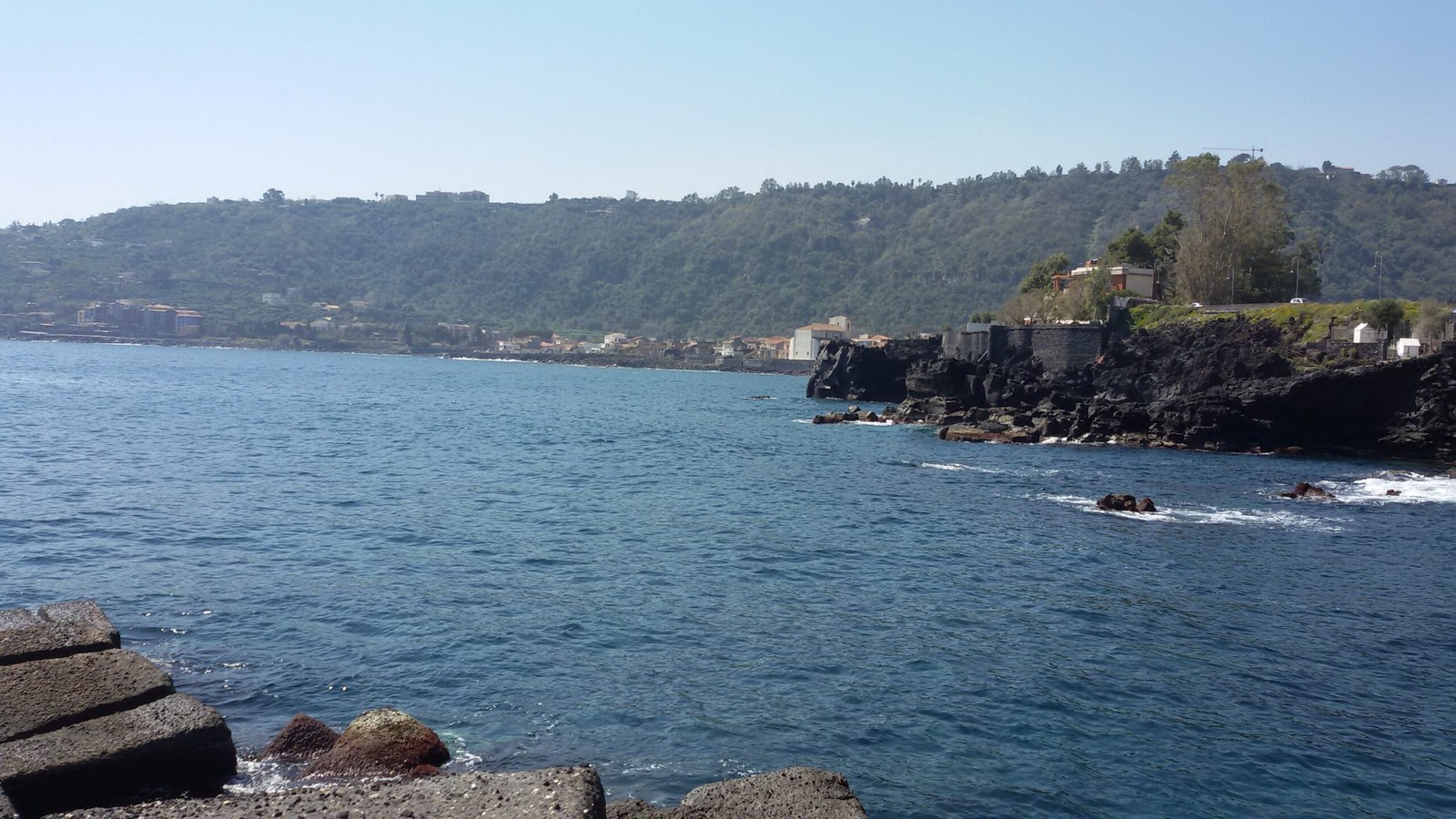
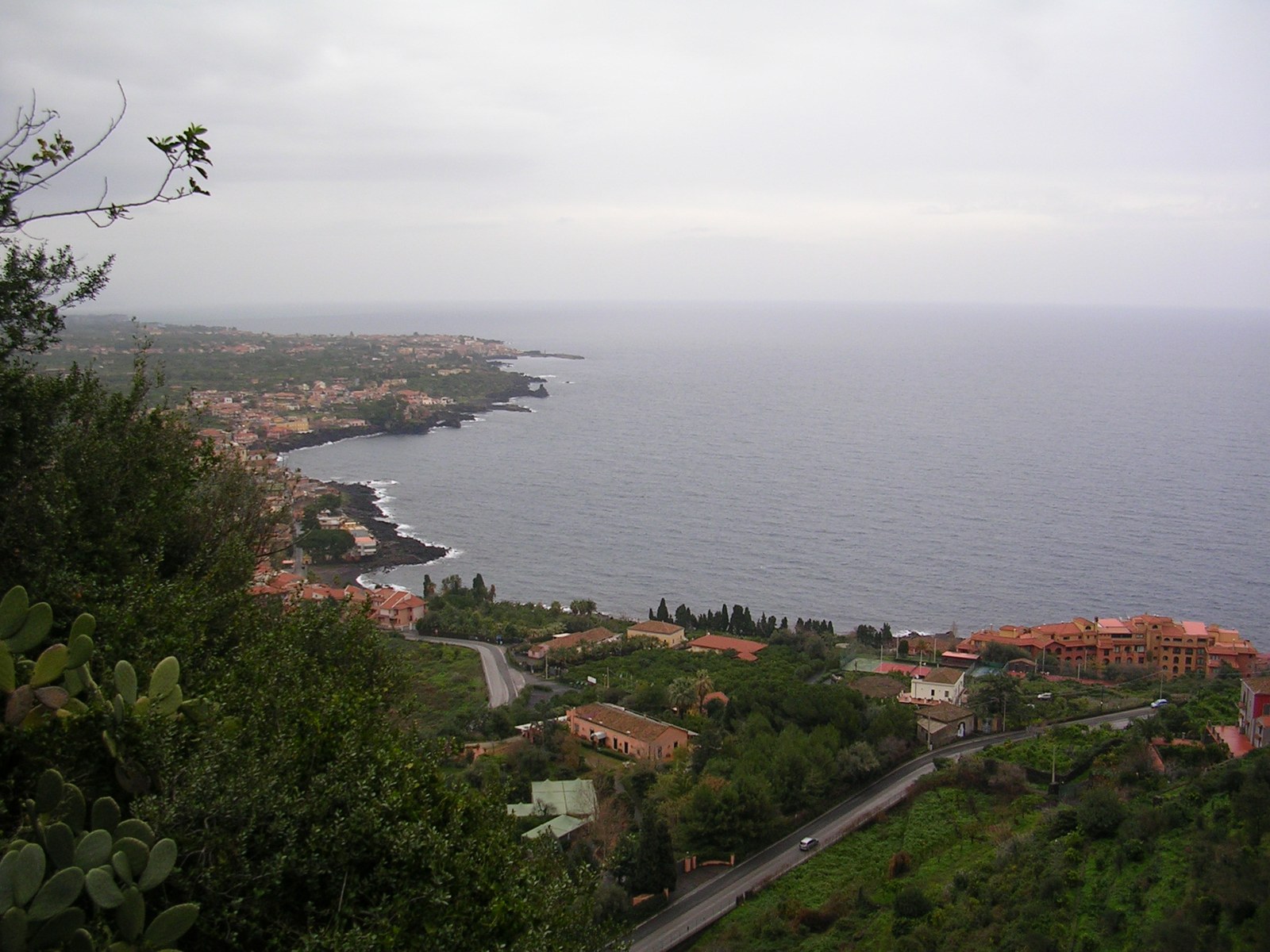
Five kilometres further north begins the territory of Acireale, a small baroque town better known for its carnival than for its sea. The coast here is shaped by the Timpa, a lava cliff over a hundred metres high that drops almost vertically into the Ionian. At its foot, three tiny fishing hamlets — Santa Tecla, Santa Maria La Scala and Capo Mulini — sit at the end of vertiginous switchback roads. None of them has a proper sand beach. What they have is the prettiest combination of rock-swimming, harbour scenery and fish restaurants on the coast.
Santa Tecla — 800 metres of lava rocks
Giuseppe ME · CC BY-SA 3.0
- Location
- Via Argenta 9, Acireale Maps
- Essential fact
- 800 m of public lava platforms with metal steps into deep water, a hamlet of Acireale 20 km north of Catania. Usually uncrowded even in August.
- Price
- Free
Santa Tecla is the closest of the three Acireale hamlets to Catania, twenty kilometres up the coast. The public platforms run for about 800 metres along the seafront, with steps and ladders cut into the lava so you can step straight into deep, clean water. There are a couple of family-run restaurants on the road behind the platforms — the kind where the fish is whatever came in that morning — and a small parking area at the southern end (one euro for half a day, indicative).
Santa Maria La Scala — the village under the Timpa
Two kilometres further north, a hairpin road descends 200 metres in barely a kilometre to Santa Maria La Scala, the smallest and most photogenic of the three villages. There is a tiny harbour, half a dozen restaurants and almost no beach — you swim from rocks — but the setting under the green Timpa cliff is striking. The easier way to arrive is to walk down from Acireale on the so-called Chiazzette, an old paved path of 247 steps cut into the cliff in the 17th century, then take a taxi back up. Allow two hours including a swim.
Capo Mulini — lidos and seafood
trolvag · CC BY-SA 3.0
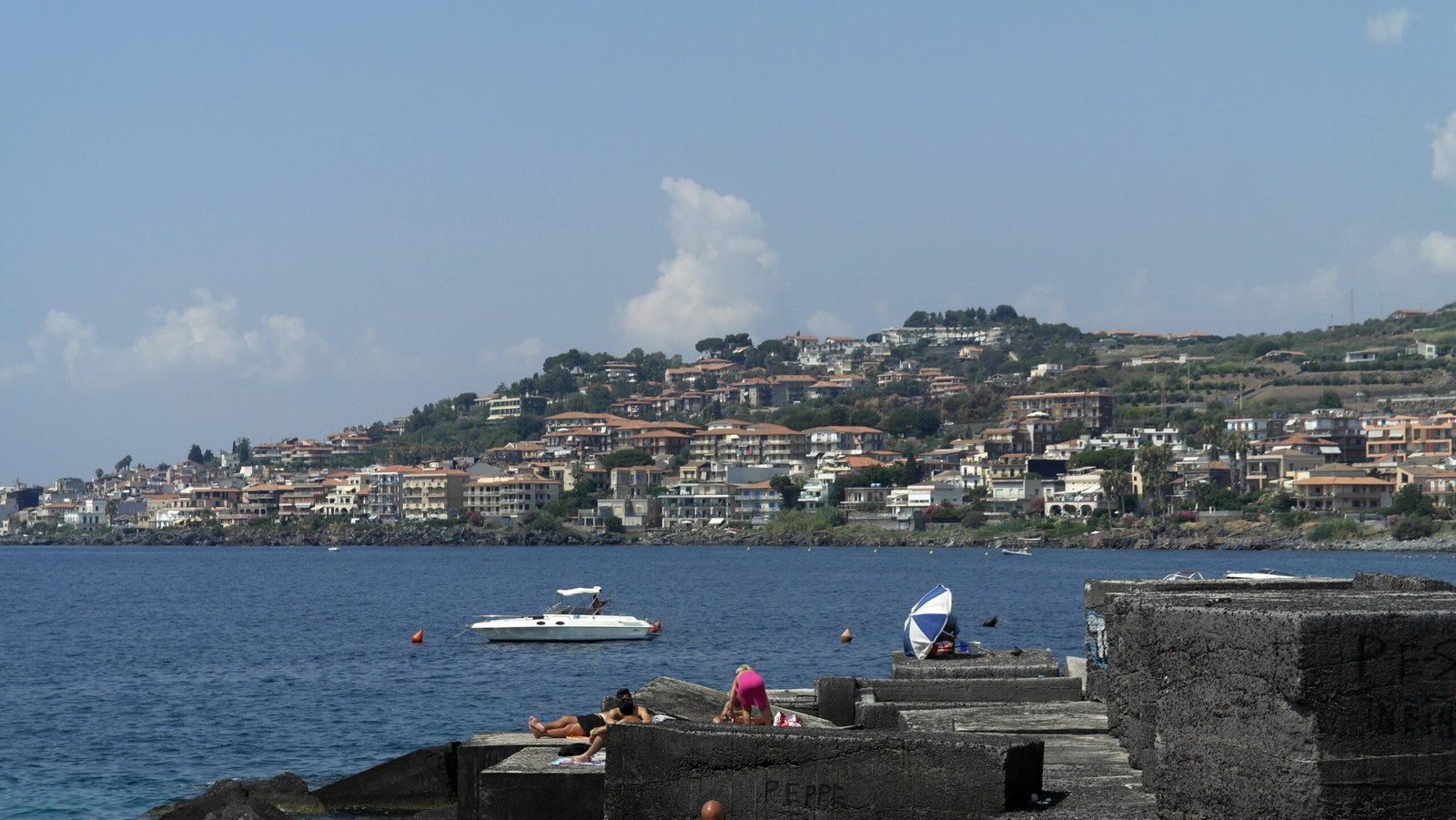
Capo Mulini, five kilometres south of Acireale, is the busiest of the three Acireale villages and the only one with proper lidos. The small harbour is rimmed with fish restaurants known for swordfish and pasta with sea urchin in season. Boat tours along the Timpa cliff coast leave from here in summer (€20–30 per person, indicative). The lidos here are a more relaxed alternative to La Playa if you’re already heading north.
South of Catania: the Simeto Oasis and Agnone Bagni
South of the airport the coast changes entirely. The lava ends, the cliffs disappear, and 25 kilometres of low sandy coast run all the way to Brucoli and the province of Syracuse. The two anchors of this stretch are the Simeto Oasis nature reserve at the river mouth and the long sandy beach of Agnone Bagni. Fewer tourists come down here — partly because the rough industrial fringe of the petrochemical plant near Augusta hides a coast that, beyond it, is genuinely quiet.
Simeto Oasis — 2,000 hectares of nature reserve
SDC20 · CC BY-SA 4.0
- Location
- SS 114 Orientale Sicula, Catania Maps
- Essential fact
- 2,000-hectare nature reserve (since 1984) at the Simeto river mouth, with light sand, dunes and flamingo birdwatching in spring and autumn.
- Price
- Free
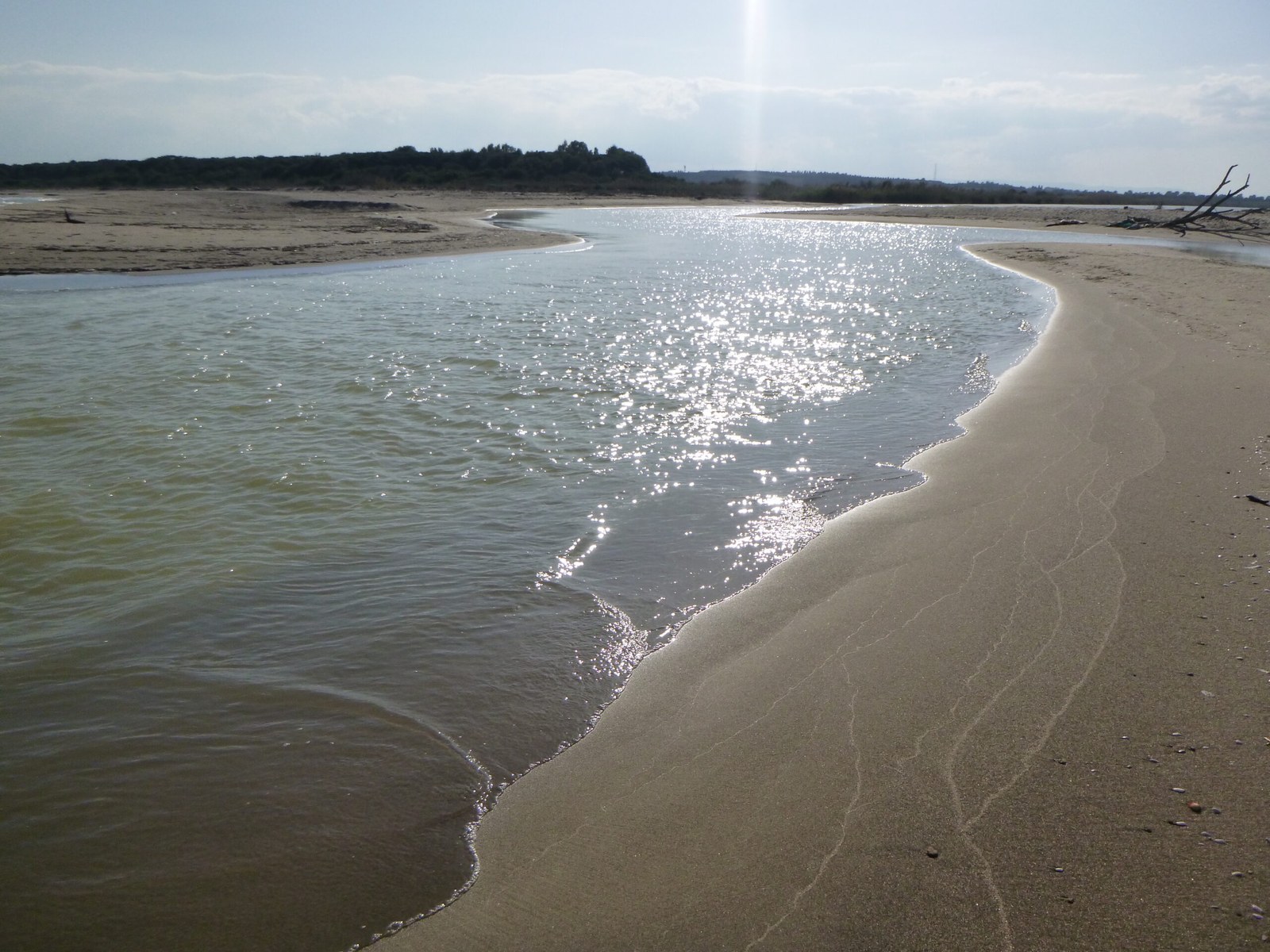
The Riserva Naturale Orientata Oasi del Simeto protects the last three kilometres of the river Simeto before it reaches the sea, plus a strip of dunes and brackish lagoons. Established in 1984, it covers around 2,000 hectares. The light sand beach at the river mouth is one of the few in eastern Sicily with proper dunes behind it; you reach it on foot, fifteen minutes through the reserve. There are no facilities, so bring water and shade. The currents at the river mouth can be deceptively strong — swim in the sea, not in the river. In autumn, flamingos stop on the lagoons during their migration; greater flamingos and herons are visible most of the year.
Agnone Bagni — dark sand on the road to Syracuse
Antony-22 · CC BY-SA 4.0
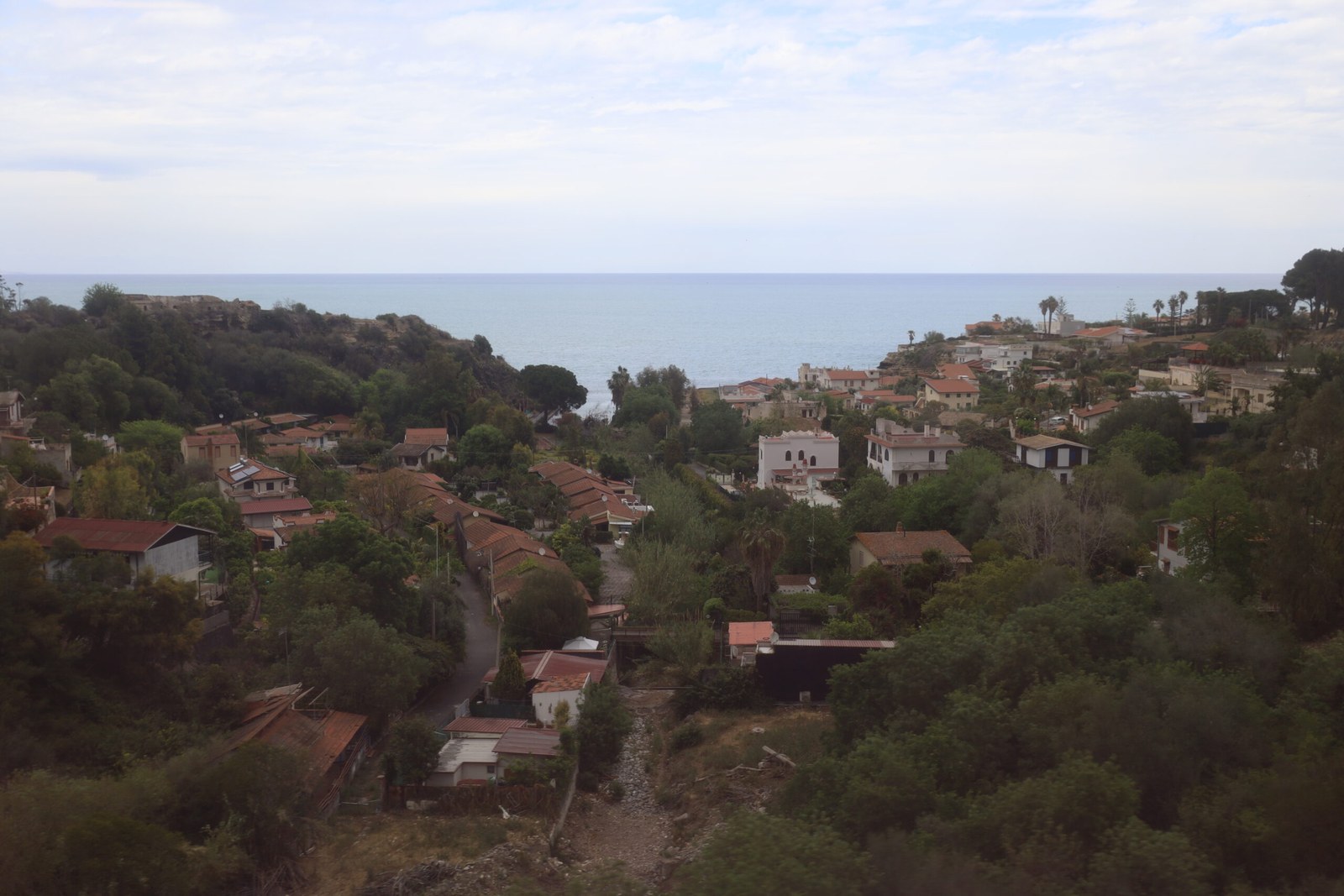
Twelve kilometres further south, Agnone Bagni is a long, wide beach of dark sand and very shallow water — you walk out 30 or 40 metres before it reaches your waist. The village behind the beach is a quiet summer colony of small houses, with a handful of lidos and family-run restaurants. It’s a good choice for a family day if La Playa is too busy; less practical without a car (the local bus from Catania takes over an hour and runs infrequently).
Brucoli — rocks and the Bagni della Maddalena (50 km bonus)
Strictly speaking Brucoli is in the province of Syracuse, not Catania, but it sits only 50 kilometres south of the city and is worth a mention. The village clusters around a narrow inlet that turns it into a natural fjord-like harbour; the swimming is from low rock platforms either side of the inlet. The nicest spot is the so-called Bagni della Maddalena, a 15-minute walk along the coast path from the village — tide pools cut into the limestone, deep clear water, and no facilities at all.
What are the best beach towns north of Catania?
Between Catania and Taormina, the four main beach towns on the Ionian coast are Pozzillo, Stazzo, Fondachello and San Marco di Calatabiano. None of them is the kind of resort town with branded hotels and beach clubs — they’re quiet seaside hamlets where Catanian families have second homes. The driving distance from Catania ranges from 25 to 40 kilometres.
Pozzillo — 400 metres of pebbles, 25 km
Pozzillo is the first beach town north of Acireale and the only one south of Taormina with a small fishing port still active. The “beach” is a 400-metre strip of grey pebbles between two harbour walls — not the prettiest stretch on this list, but the water is deep and clean and the half-dozen restaurants along the harbour serve excellent grilled fish at reasonable prices.
Fondachello and Marina di Cottone — light sand, locals’ weekends
Ciccioconti · CC BY-SA 3.0
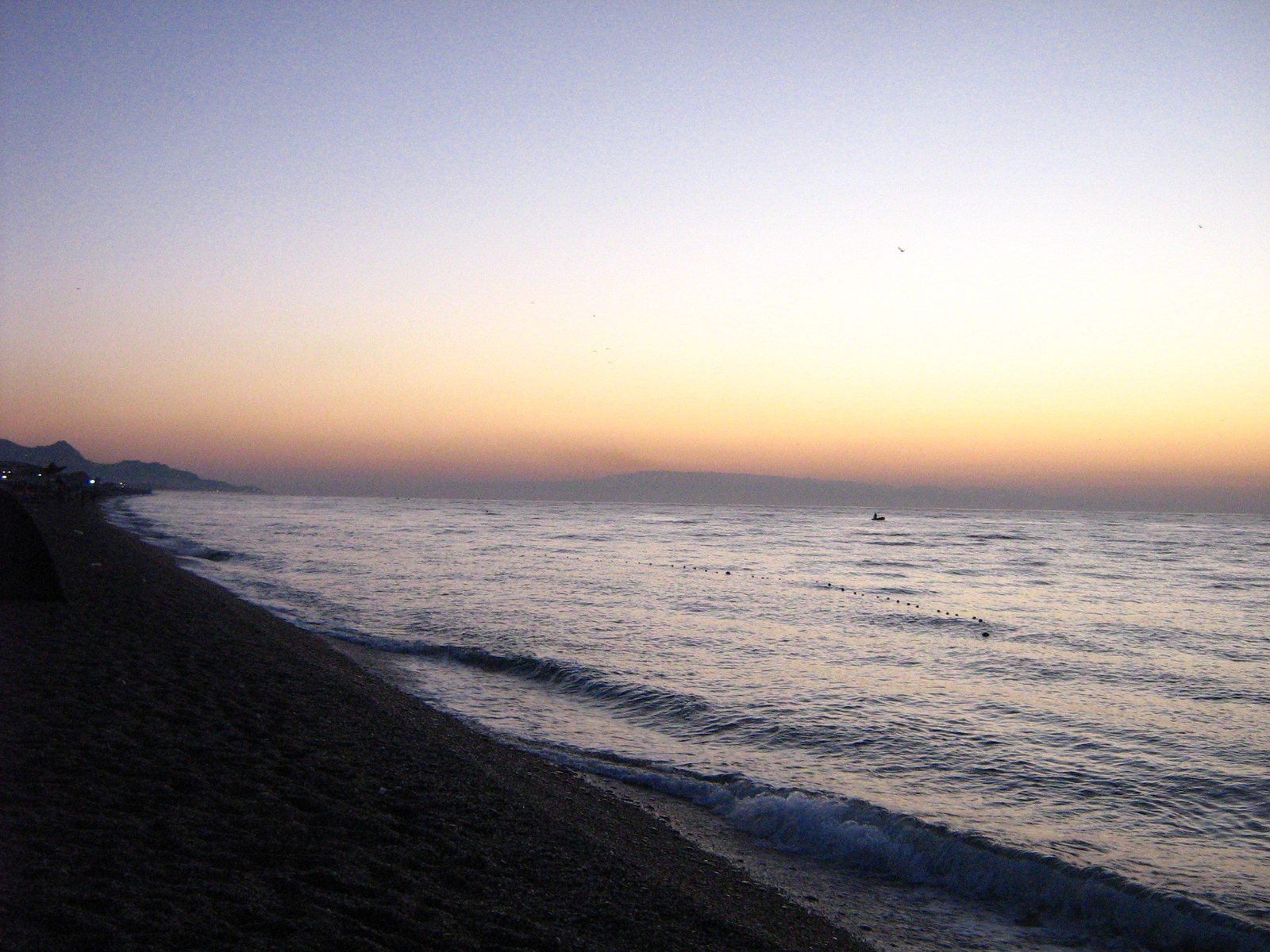
Fondachello, twenty-eight kilometres north of Catania in the municipality of Mascali, has three kilometres of light dark sand and very shallow water — a Catanian family weekend default. There are lidos on the south side and free sections in the middle. Marina di Cottone, immediately to the north, has even better dunes and a wide sandy beach, less developed than Fondachello.
San Marco di Calatabiano — where the Alcantara river meets the sea
Forty kilometres north of Catania, the long beach of San Marco di Calatabiano sits at the mouth of the Alcantara river. Dark sand mixed with pebbles, eucalyptus trees behind the dunes, very shallow water — one of the most natural-feeling beaches between Catania and Taormina. Lidos at either end, with a long free section in the middle. Excellent for kids.
Isola Bella, Taormina — a 40 km detour worth half a day
Forty-five kilometres north of Catania, below the cliff of Taormina, Isola Bella is the small island connected to the mainland by a thin pebble sandbar that emerges at low tide. It is the most famous beach image of eastern Sicily, included in the Marine Protected Area of Taormina, and on a calm summer day the water is the kind of green-turquoise you don’t see on the Catania coast. Don’t expect to be alone — combined with a half-day in Taormina, it’s a classic excursion but a busy one. Train from Catania to Taormina-Giardini station in 40 minutes (around €5), then bus down to the cove.
Are there free beaches in Catania, or only lidos?
Yes — in fact most of the coast near Catania is free. By Italian law, the first strip of every Italian beach must remain publicly accessible (the so-called spiaggia libera), and around Catania the free sections are generous: most of San Giovanni Li Cuti, all of the Cyclops Riviera rocks, all of Santa Tecla and Santa Maria La Scala, and large free stretches along La Playa, Agnone Bagni, Fondachello and San Marco di Calatabiano. Lidos coexist with free beaches — you pay only if you want a sunbed, an umbrella, a shower and bar service.
| Beach | Free | Lidos | Mixed | Services on free section |
|---|---|---|---|---|
| La Playa | Yes (north end of Viale Kennedy) | Yes | Yes | Showers, lifeguard in summer |
| San Giovanni Li Cuti | Yes | No | — | None |
| Aci Trezza | Yes | No | — | None |
| Aci Castello | Yes | No | — | Steps into water |
| Santa Tecla | Yes | No | — | Small parking |
| Capo Mulini | Yes (small section) | Yes | Yes | Restaurants |
| Fondachello | Yes | Yes | Yes | Showers |
| San Marco di Calatabiano | Yes | Yes | Yes | Showers |
| Agnone Bagni | Yes | Yes | Yes | Showers |
| Simeto Oasis | Yes | No | — | None (nature reserve) |
Sandy or rocky? How to choose the right beach
The Catania coast alternates between three distinct surfaces: fine golden sand south of the city and toward Syracuse, black volcanic pebbles in the urban centre, and rocky lava platforms along the Cyclops Riviera and the Acireale coast. The choice depends on whether you want easy swimming with kids (sand), a striking snorkelling spot (rocks) or a dramatic photograph and a fishing-village lunch (lava platforms).
| Beach | Surface | Kids | Snorkelling | Access |
|---|---|---|---|---|
| La Playa | Fine golden sand | Excellent | Poor | City bus or 25-min walk |
| San Giovanni Li Cuti | Black volcanic sand & rocks | Limited | Decent | Walk from centre |
| Aci Trezza | Lava platforms | No (deep water) | Excellent | AST bus 25 min |
| Aci Castello (cove) | Pebbles | OK | Good | AST bus 20 min |
| Santa Tecla | Lava platforms | No | Good | Car only |
| Santa Maria La Scala | Rocks | No | Good | Car or 247 steps |
| Capo Mulini | Sand & rocks | OK | Decent | Car |
| Pozzillo | Pebbles | OK | Decent | Train + walk |
| Fondachello | Light dark sand | Excellent | Poor | Car |
| San Marco di Calatabiano | Dark sand & pebbles | Excellent | Poor | Train + 10 min |
| Simeto Oasis | Light sand & dunes | Limited (currents) | Poor | Car + walk |
| Agnone Bagni | Dark sand | Excellent | Poor | Car |
Are the beaches near Catania good for kids?
Yes — the sandy beaches are excellent for kids, with very shallow water for the first 30–40 metres. The four best family picks are La Playa (city access, supervised lidos), San Marco di Calatabiano (dark sand, eucalyptus shade, river-mouth setting), the pebble cove at Aci Castello (calm water sheltered by the castle spur) and Fondachello (kilometres of shallow shore on a weekend-residential coast).
Three honest warnings for families. Jellyfish appear in late July and August along the whole eastern coast — not dangerous but unpleasant; the most common is the mauve stinger (Pelagia noctiluca). Check with the lido staff in the morning. Currents at the Simeto river mouth can pull surprisingly hard, especially after spring rain — the safe swim is in the sea, not in the river. Lifeguards are present in summer only at lido sections; on free beaches, supervise children directly. The Catania coast has a 24-hour lifeguard service number, 1530, run by the Coast Guard.
For infants, shade, sand access and a short transfer matter more than the longest beach list. See our Catania with a baby guide for La Playa timing, equipment and heat-safe planning.
What part of Sicily has the nicest beaches?
Eastern Sicily (the Catania–Syracuse coast) offers the most variety in a short drive — sandy beaches, rocky lava swims and a 2,000-hectare nature reserve all within thirty minutes. For postcard turquoise water and white sand, the names usually mentioned are San Vito Lo Capo on the western tip of the island, the Aeolian Islands off the northern coast, the Riserva di Vendicari and Calamosche between Syracuse and Noto, and Isola dei Conigli on Lampedusa. None of those is a day-trip from Catania — they require relocating, or at least an overnight stay.
The case for Catania as a beach base is different: not the prettiest single beach, but the most realistic mix of urban convenience and beach variety in a 30-minute radius. If you have only three or four days and want both Sicilian cooking and swimming, the Catania coast is the practical choice. If you can devote a week, our 5-day Sicily itinerary and island-wide beach guide cover how to combine Catania with a few days on the south-eastern coast for the nicest beaches.
When to go: sea temperature, crowds, weather
The swimming season on the Catania coast runs from late May to mid-October. June and September are the local favourites — warm sea, manageable air temperatures, less crowded lidos. July and especially August are the most crowded months, with daytime air highs of 32–35°C and weekend traffic on the coast roads.
| Month | Air °C (avg high) | Sea °C (avg) | Crowds | Tip |
|---|---|---|---|---|
| May | 24°C | 19°C | Empty | Lidos start opening mid-May |
| June | 28°C | 22°C | Light | Scirocco wind possible; locals’ favourite |
| July | 32°C | 25°C | Busy | First jellyfish |
| August | 33°C | 26°C | Very busy | Weekend traffic; book lidos ahead |
| September | 28°C | 25°C | Light | Best month: warm sea, empty lidos |
| October | 24°C | 22°C | Empty | Sea still swimmable until mid-month |
Getting to the beaches without a car
You can reach most of the beaches near Catania without renting a car, though a car gives you a lot more freedom on the rocky stretches. The transport options are AMTS city buses for La Playa and Ognina, AST regional buses for the Cyclops Riviera and Acireale, and the train for Fondachello, San Marco di Calatabiano and Taormina/Isola Bella.
La Playa. AMTS Line D runs from Piazza Borsellino (near the train station) along Viale Kennedy down to San Francesco La Rena from late May to mid-September, every 15 minutes from 05:00 to roughly midnight. Outside the summer line D season, the regular lines 607 and L-EX cover most of Viale Kennedy. Tickets €1.20 single, €3.50 day pass (indicative). Check the current timetable on amts.ct.it, the official AMTS site.
Aci Trezza, Aci Castello. AST buses leave from the bus terminal next to Catania Centrale station roughly every 30 minutes, with stops at Ognina, Aci Castello and Aci Trezza. The journey takes 20–30 minutes depending on traffic. Tickets €2.20 single (indicative). The last bus back in summer leaves around 22:30.
Acireale, Santa Tecla, Santa Maria La Scala, Capo Mulini. Take the Trenitalia regional train from Catania Centrale to Acireale (12–15 minutes, €2.50 indicative) then a local bus or taxi the last few kilometres to the seaside hamlet. For Santa Maria La Scala the most evocative arrival is on foot down the Chiazzette path from Acireale’s centre.
Fondachello, San Marco di Calatabiano, Isola Bella (Taormina). Trenitalia regional train from Catania Centrale to Mascali, Fiumefreddo di Sicilia or Taormina-Giardini station — 30–45 minutes — then walk or take a local bus. The Comune di Catania maintains a useful overview of the city’s beaches and access on comune.catania.it.
Where to park near the beaches
Parking at La Playa
Along Viale Kennedy you’ll find a mix of paid blue-line parking near the lidos (typically €1.50/hour, indicative) and free street parking further south toward the airport. Avoid yellow-line zones (reserved for residents or buses). In peak August weekends, arrive before 10:00 or take the bus.
Parking on the Cyclops Riviera
At Aci Trezza, the harbour car park fills up by mid-morning in summer; the larger paid area is at the southern entrance of the village. At Aci Castello, Piazza Castello has limited blue-line spots; better to park along Via Provinciale and walk down. Expect €1–1.50/hour or a €5 half-day flat fee at private lots, indicative.
Leave the car in the city and take the bus
If you’re staying in the centre, the simplest option for La Playa and the Cyclops Riviera is to leave the car at your apartment and take the bus. The combined return-trip cost (€2.40 for two AMTS rides, or €4.40 for two AST rides) is less than half a day of parking. For Santa Tecla, Fondachello, Agnone Bagni and the Simeto Oasis, however, a car is genuinely more practical.
Where to stay to reach the beaches easily
Staying in Catania’s old town gives you direct access to all four coastal clusters without changing base. La Playa is a 15–20 minute bus ride from Piazza Stesicoro; the Cyclops Riviera and Aci Castello are 25 minutes by AST bus; Acireale is 12 minutes by train. The same apartment lets you mix beach days with mornings at Catania’s baroque sights, the fish market and a meal of pasta alla Norma in the centre — without relocating.
If you’d rather book a base for the beaches, our apartments in Catania sit five minutes’ walk from Piazza Duomo and a short bus ride from La Playa. We’re happy to give you the practical version of this guide in person when you arrive.
The information in this guide was correct at the time of writing. Data can change from season to season without notice: before you travel, always check the official channels and websites for updates. We review this guide periodically, but the official channels are always the authoritative source. We also cannot guarantee that the suggested routes or the attractions described are always reachable or accessible: roads, trails and sites may be closed, damaged, altered or unsafe. Assessing the practicability and safety of itineraries and attractions always remains your own responsibility.