
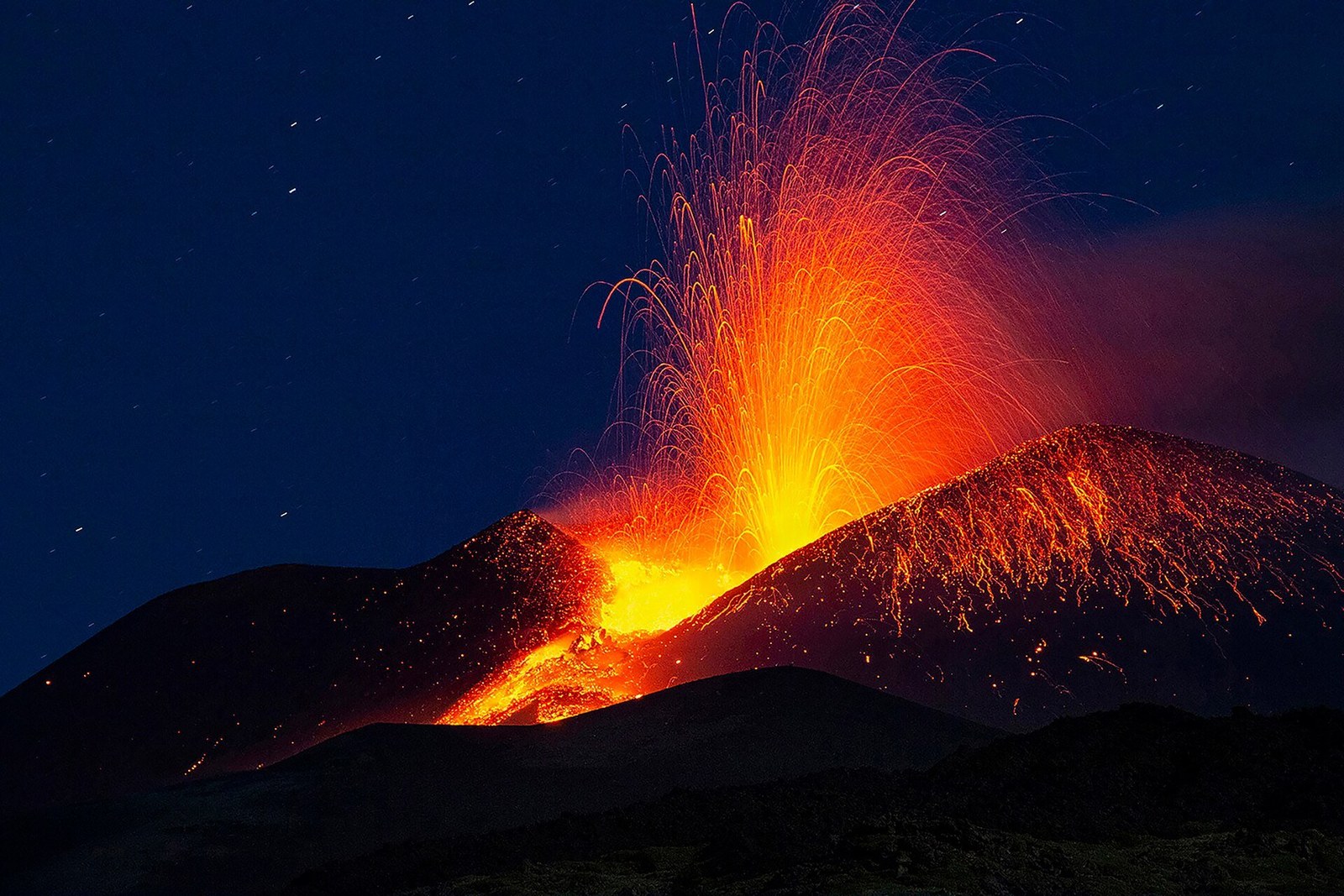
A Sicily 5-day itinerary works best when you pick one half of the island and stay put. We live in Catania and host guests visiting the east coast, so this plan keeps you in a single base on the foot of Mount Etna, with day-trips to Taormina, Syracuse and Ortigia, and the UNESCO baroque towns of the Val di Noto. Five days is enough to see the east coast properly — Europe’s biggest active volcano, two UNESCO sites, three baroque jewels and the Greek theatre of Syracuse — without changing accommodation, dragging suitcases between hotels, or driving on routes you don’t need.
This is the practical version: real prices in euros, train times that work, the ZTL truth no peer guide tells you, and a clear answer if you want to do it without a car. Numbers are verified May 2026 — verify before you travel (full disclaimer at the end). All distances assume Catania as your base.
Why base yourself in Catania for 5 days in Sicily?
Catania is the only east-coast base where Mount Etna, Taormina, Syracuse and the Val di Noto baroque towns are each a 30-90 minute trip away. With 5 days, single-base from Catania saves you 4-6 hours of hotel transfers and €200-400 in extra accommodation moves compared with a multi-base plan.
Sicily has two viable bases for a short trip: Catania (east coast) or Palermo (northwest). The two cover completely different sets of attractions, and trying to combine them in 5 days means 6+ hours of driving across the island plus two hotel changes — which kills the trip. The east-coast base is also the clear winner for first-timers because it concentrates three of the four UNESCO World Heritage Sites you’ll likely have heard of (Etna, Syracuse with Pantalica, Val di Noto), plus the most photographed view in Sicily, the Teatro Antico di Taormina with Etna behind it.
From Catania Fontanarossa Airport (CTA), the city centre is 7 km — a 15-minute taxi (€25 fixed) or a 25-minute Alibus ride (€4). Compare this with Palermo Punta Raisi, which is 30 km from the centre. Once in Catania, the geography of a 5-day trip becomes simple: Etna sits on your doorstep, Taormina is 50 minutes by train, Syracuse is 65 minutes, and even the farthest baroque town (Ragusa Ibla) is 90 minutes by car. Single-base means a place to actually unpack, restaurants you start to know by name on day 3, and one set of keys for the whole trip.
| Destination | By car | By train | UNESCO? |
|---|---|---|---|
| Mount Etna (Rifugio Sapienza) | 50 min | n/a — bus AST | Yes (2013) |
| Taormina | 50 min | 50 min, €4.60 | No |
| Syracuse / Ortigia | 65 min | 65 min, €7.30 | Yes (2005) |
| Noto | 90 min | 2 h 5 min via Syracuse | Yes (2002) |
| Modica | 2 h 5 min | 2 h 50 min | Yes (2002) |
| Ragusa Ibla | 1 h 50 min | 3 h 10 min | Yes (2002) |
If your trip is 7 days or more, the calculus changes — at that length you can fold in Agrigento or even cross to Palermo without losing the day. For ideas, see our 7-day Sicily itinerary.
Day 1 — Catania: Baroque streets, fish market, Etna views
Use Day 1 to settle in. Catania’s old town is compact, walkable in half a day, and built almost entirely from black lava stone after the 1693 earthquake. Aim for Piazza del Duomo by 10:00, the fish market by 11:30, lunch on Via Etnea, and end the day on the rooftop of the Monastero dei Benedettini for sunset over Etna.
Catania is a UNESCO-listed late-baroque city rebuilt after the catastrophic 1693 earthquake destroyed most of southeast Sicily. The black-and-white architecture (lava plus pale Syracuse limestone) is unmistakable, and the city centre is almost entirely flat — easy to cover on foot.
Lucarelli · CC BY-SA 3.0
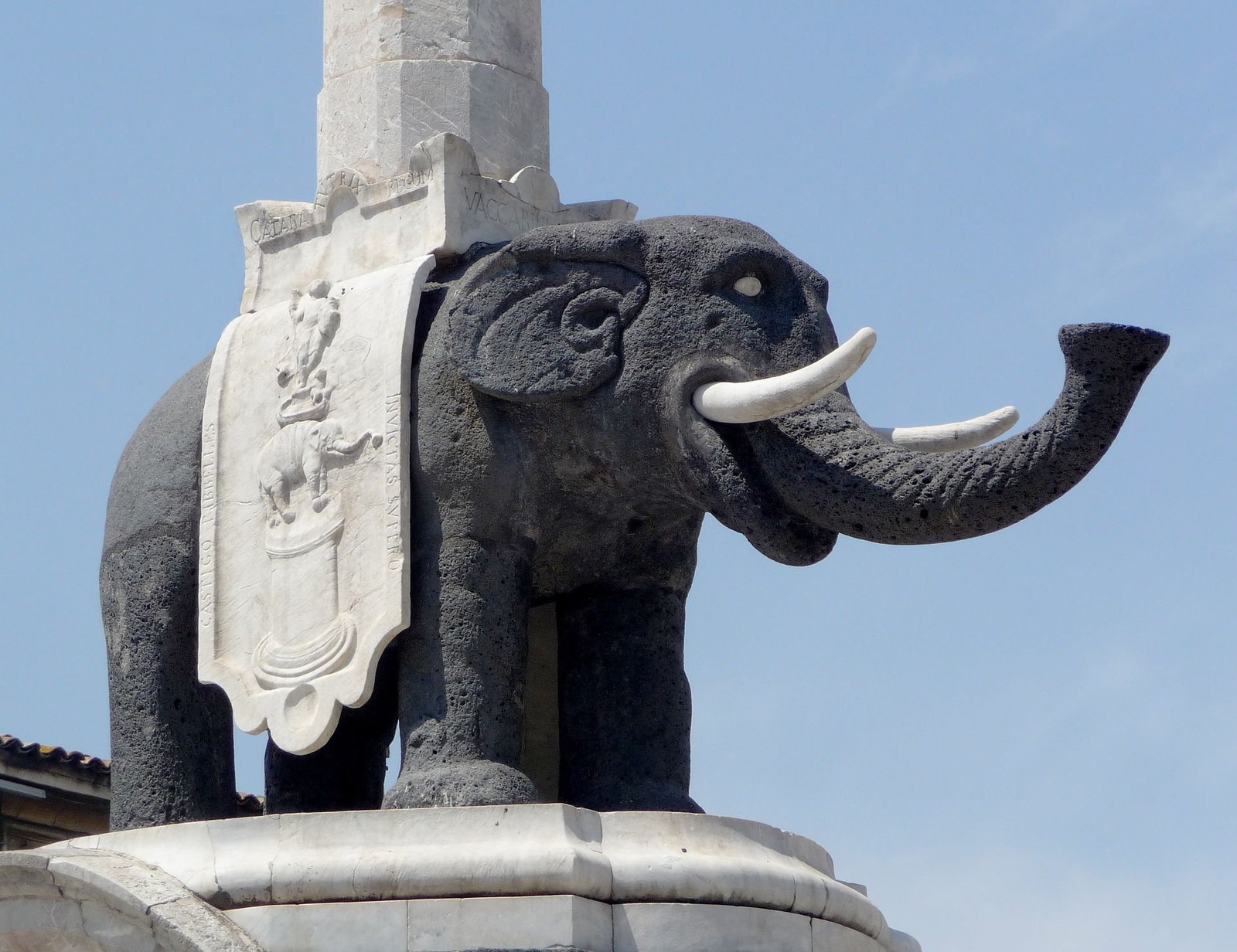
Piazza del Duomo and the Elephant Fountain
- Location
- Piazza del Duomo, Catania Maps
- Essential fact
- Elephant fountain by Vaccarini, 1736 — the Roman basalt elephant (U Liotru) is repurposed and serves as Catania’s symbol
- Price
- Free
Start at Piazza del Duomo, where the elephant fountain (U Liotru, Catania’s symbol) sits in front of the Cathedral of Sant’Agata. The piazza is the geographic heart of the old town and the natural launchpad for everything in the centre. The cathedral itself, dedicated to the patron saint Agatha, holds the relics that fill the city for the February 3-5 festival.
A Pescheria fish market
- Location
- Piazza Alonzo di Benedetto, Catania Maps
- Essential fact
- Open-air fish market behind Piazza Duomo — the loudest, most theatrical in Sicily, Mon–Sat mornings
- Signature dish
- Pasta with sea urchin (ricci); spaghetti alla Norma at adjacent trattorie
- Price
- Free
Two minutes downhill from the piazza is A Pescheria, Catania’s open-air fish market — the loudest, most theatrical market in Sicily. Vendors shout, swordfish are split open in front of you, and the surrounding alleys are lined with stalls of citrus, olives, sun-dried tomatoes and capers from the Aeolian Islands. Don’t try to buy anything to take away unless you have a kitchen; do try a glass of seltz e limone or an arancino at one of the kiosks on the edge.
For lunch, walk five minutes north to Via Etnea, the city’s main artery. This kilometre-long pedestrian street runs uphill from Piazza Duomo to the Bellini gardens, lined with baroque churches (Collegiata, San Biagio), gelaterie and aperitivo bars. Order a pasta alla Norma (the namesake dish, Catanese: tomato, fried aubergine, ricotta salata, basil) at any traditional trattoria with a queue. If cooking interests you more than sightseeing for an afternoon, a half-day Sicily cooking class from Catania with a market visit at La Pescheria fits Day 3 perfectly.
Monastero dei Benedettini and the rooftop
- Location
- Piazza Dante Alighieri 32, Catania Maps
- Site
- monasterodeibenedettini.it
- Essential fact
- Second-largest Benedictine complex in Europe, built over the 1669 Etna lava flow (visible under glass floors); UNESCO 2002
- Price
- €9–12 (guided tour)
Spend the afternoon at the Monastero dei Benedettini di San Nicolò, one of the largest Benedictine monasteries in Europe and now part of the University of Catania. The complex sits over a buried Roman house and the 1669 lava flow — you can walk on the petrified lava under glass floors. The rooftop terrace gives the best view in the city of Mount Etna, especially at golden hour.
If you have energy left, the Castello Ursino (built 1239 by Frederick II, now the civic museum) is 10 minutes south of Piazza Duomo and worth a 45-minute look. End the day with aperitivo on Via Santa Filomena or Via Crociferi. For a deeper Catania day, see our guide to things to do in Catania.
Day 2 — Mount Etna: Cable car, craters and lava fields
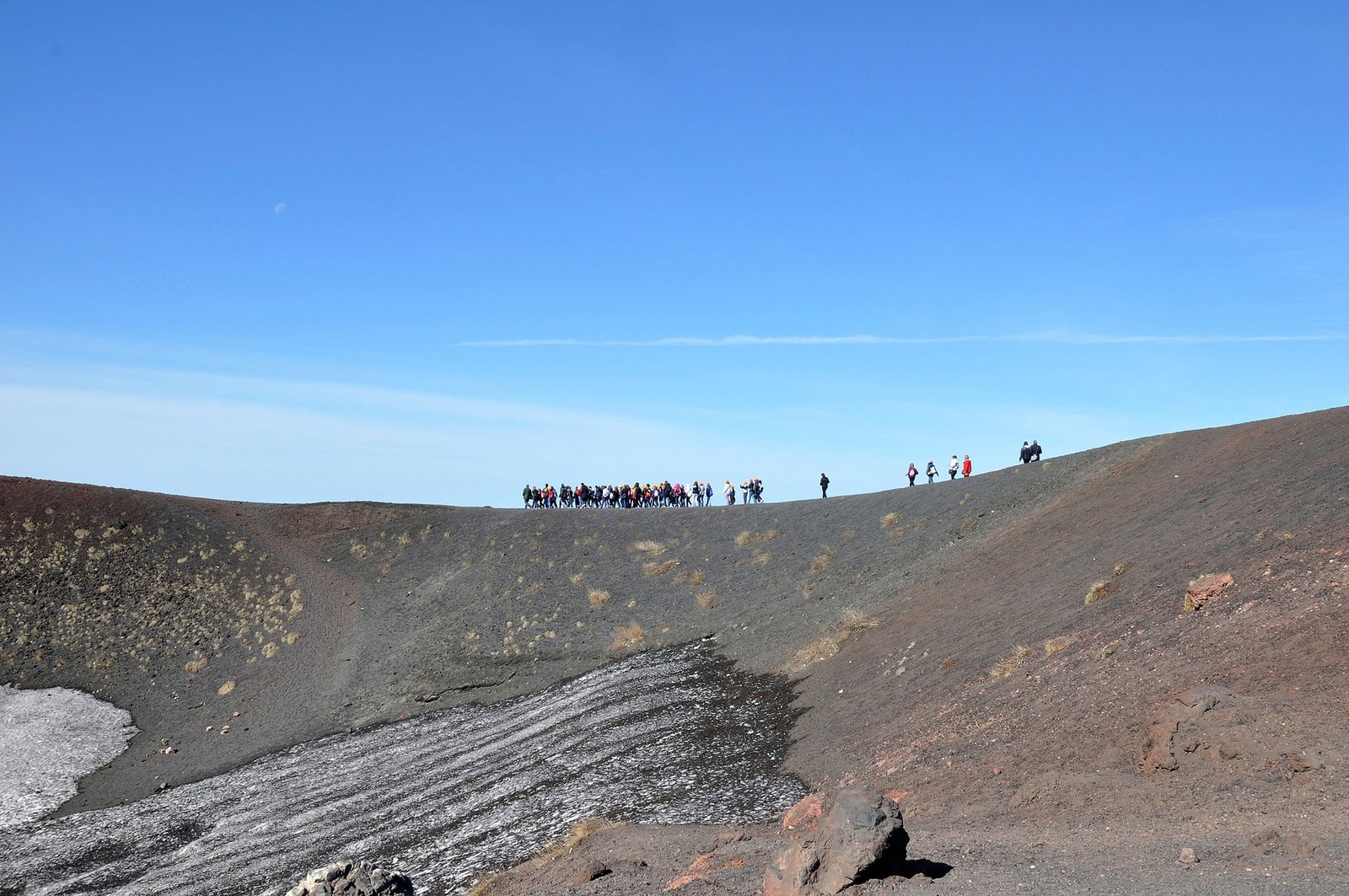
The standard Etna day is the south side from Catania: drive or bus 50 minutes to Rifugio Sapienza (1.910 m), take the Funivia dell’Etna cable car (€30 round trip) to 2.500 m, then a 4×4 jeep with a guide (€60-80) up to 2.900 m. Free option: walk the Crateri Silvestri at the base — flat, 30 minutes, lava fields included.
Mount Etna rises to 3.357 metres and is Europe’s highest active volcano, with 2.700 years of recorded eruptions and four summit craters. It has been a UNESCO World Heritage Site since 2013. The mountain has two access sides: the south side from Catania (Rifugio Sapienza) and the north side from Linguaglossa (Piano Provenzana). Both work for a day trip — pick by what you want from it.
Walter Isack · CC BY-SA 3.0
| Option | Reaches | Cost (per person) | Duration | Fitness |
|---|---|---|---|---|
| Crateri Silvestri only (free walk) | 1.900 m | €0 (parking €3) | 30 min walk | Easy |
| Cable car only | 2.500 m | €30 round trip | 2 h on top | Easy |
| Cable car + 4×4 jeep + guide | 2.900 m | €60-80 | 4-5 h total | Moderate |
| Full guided 4×4 from Catania | 2.900 m | €70-110 (transfer included) | full day | Easy-moderate |
| DIY hike to summit craters | 3.000+ m (with authorised guide) | €90-130 | full day | Demanding |
The south side from Rifugio Sapienza is faster from Catania (50 minutes drive) and has the cable car to 2.500 m, the most photographed lava fields, and the easy free walk around the Silvestri craters at the base. The north side at Piano Provenzana (1 h 30 from Catania) is wilder, with pine forest, the 2002 lava flow that destroyed the ski resort, and 4×4 jeep tours up to 2.800 m. North side is quieter but means a longer drive; south side is busier but more efficient for one day.
Rifugio Sapienza and the Funivia dell’Etna
- Location
- Piazzale Rifugio Sapienza, Nicolosi Maps
- Site
- rifugiosapienza.com
- Essential fact
- Cable car base station at 1.910 m; Funivia dell’Etna operates since 1962, rebuilt after 2002 eruption
- Price
- €30–67 (cable car + 4WD)
Pack: closed shoes (no sandals — lava sand cuts), three layers (the summit can be 15°C colder than Catania), sunglasses, water, sunscreen, a hat. Even in August it can be 5°C at 2.900 m. Lunch at the rifugi at the base is fine but pricey (€18-25) — many guests bring a panino from Catania.
Crateri Silvestri: the free option
- Location
- Via Catania, Nicolosi Maps
- Essential fact
- Twin craters formed in the 1892 eruption, perfectly preserved; paved trail loop 30–45 min from the cable car base
- Price
- Free
If you don’t drive, see the no-car section below — a guided Etna day-tour from Catania (€40-80 with cable car) is the simplest fix.
Day 3 — Taormina: Greek theatre, Isola Bella, panoramic terrace
Take the train. Catania-Taormina is 50 minutes for €4.60 — driving means dealing with the Taormina ZTL plus €15-25 parking. From Taormina-Giardini station the local shuttle bus is €1.90 to the centre. Plan: Teatro Antico in the morning, lunch on Corso Umberto, swim at Isola Bella in the afternoon, return Catania by 19:30.
Taormina sits on a rocky terrace 250 metres above the Ionian Sea, looking south toward Mount Etna. It is the most photographed town in Sicily and has been since the Grand Tour. The centre — Corso Umberto, Piazza IX Aprile, Piazza del Duomo — is pedestrian, compact, and walkable end to end in 30 minutes. The two unmissable stops are the Teatro Antico (with Etna in the backdrop) and Isola Bella (the small offshore island connected by a sandbar at low tide).
Teatro Antico di Taormina
- Location
- Via Teatro Greco 1, Taormina Maps
- Site
- parconaxostaormina.com/taormina/teatro-antico-taormina
- Essential fact
- 3rd-century BC Greek theatre, rebuilt by Romans, with Etna framed in the proscenium; hosts Taormina Arte summer concerts
- Price
- €15
The Teatro Antico (3rd century BC, Greek foundation, Roman superstructure) is the icon. The view down onto the bay of Naxos with Etna behind is the picture you’ve already seen — go early or late to avoid the cruise-ship coach groups. Allow 60-90 minutes.
Piazza IX Aprile: the panoramic terrace
- Location
- Piazza 9 Aprile 6, Taormina Maps
- Essential fact
- Named after the 1860 Garibaldi proclamation announcing Sicilian unification; chequerboard floor is the most photographed terrace in Sicily
- Price
- Free
From the Teatro Antico, walk Corso Umberto downhill for window-shopping (Sicilian ceramics, almond paste, marzipan fruits), pause at Piazza IX Aprile for the panoramic terrace and the chequerboard floor, and continue to Porta Catania at the south end. For lunch, skip the cruise-ship traps on Corso Umberto and walk one block off it — Vico Floresta or Salita Branco have small trattorie with proper Sicilian fare and half the price.
Isola Bella and the cable car descent
- Location
- Isola Bella Maps
- Essential fact
- Nature reserve islet in Mazzarò bay, connected to the mainland by a sandbar at low tide; donated to Sicily in 1990
- Price
- Free — €4 (reserve entry)
After lunch, descend to Isola Bella: from Piazza Sant’Antonio take the cable car (€3 round trip, every 15 minutes) down to Mazzarò, then walk 5 minutes south to the beach. The island itself is a nature reserve (€4 entry) you can wade across to at low tide; the public beach has rented loungers (€15-25/half day) or stones to lay your towel on. If you want to add a beach day closer to base, our guide to the best beaches near Catania covers La Playa and the Ionian coast options within 30 minutes.
Optional add-on: Castelmola, the medieval village 530 m above Taormina, accessible by 25-minute uphill walk or local bus. Famous for its almond wine bars and 360-degree views, but only worth it if your legs and time allow. For a full breakdown see things to do in Taormina.
Day 4 — Syracuse and Ortigia: Greek temples and an island heart
Train Catania-Syracuse 65 minutes for €7.30. Spend the morning at the Parco Archeologico della Neapolis (€17, the Greek Theatre and Ear of Dionysus) on the mainland, then walk or bus 25 minutes to the Ortigia island for lunch and the afternoon. Return Catania by 19:30.
Syracuse was once the most powerful city in the ancient Mediterranean — Cicero called it “the greatest Greek city and the most beautiful of all” in his prosecution of Verres. The modern city has two parts: the Parco Archeologico della Neapolis on the mainland (Greek Theatre, Ear of Dionysus, Roman Amphitheatre) and the Ortigia island, the historic baroque heart connected by two short bridges. Together they earned UNESCO listing in 2005 (along with the Pantalica necropolis inland).
Rosaria Privitera Saggio · CC BY-SA 4.0
Parco Archeologico della Neapolis
- Location
- Via Luigi Bernabò Brea, Siracusa Maps
- Site
- parchiarcheologici.regione.sicilia.it/siracusa-eloro-villa-tellaro-akrai
- Essential fact
- Greek Theatre (5th century BC) seats 15.000 and hosts the classical drama festival May–June; includes the Ear of Dionysus cave
- Price
- €17
The Greek Theatre (5th century BC) is one of the largest in the ancient world, seating 15.000, and hosts the annual classical drama festival every May-June (worth checking dates if you’re traveling in that window). Steps away is the Ear of Dionysus (Orecchio di Dioniso), a 23-metre limestone cave with a near-perfect echo, named by Caravaggio in 1608 for its ear-like shape. The Roman Amphitheatre is at the back of the park. Allow 2-2.5 hours.
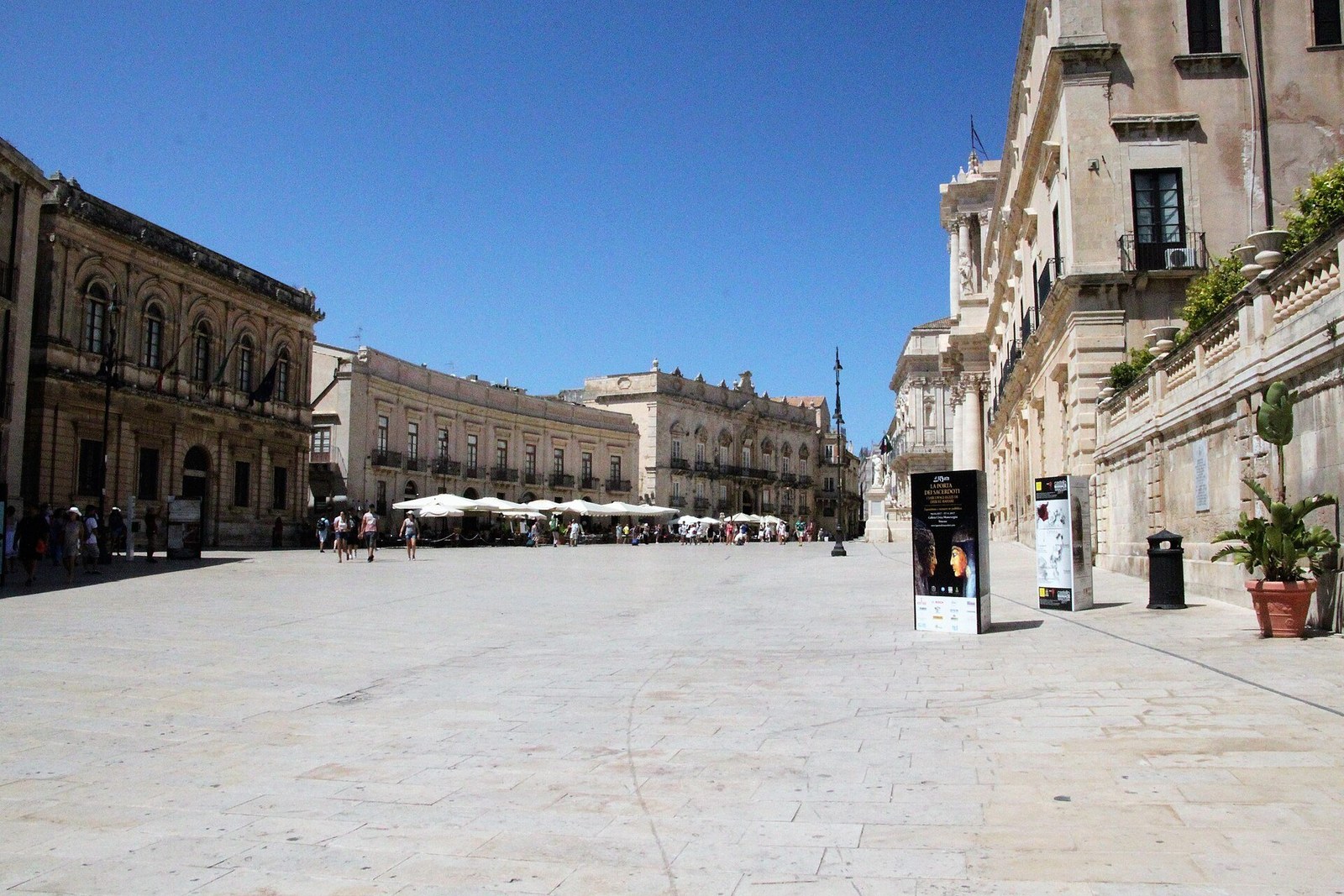
Piazza Duomo Ortigia: temple inside a cathedral
- Location
- Piazza Duomo, Siracusa Maps
- Essential fact
- Cathedral built into the 5th-century BC Doric Temple of Athena, with original columns still visible in the side walls
- Price
- Free — €2 (cathedral entry)
For lunch head to Ortigia. The island is 1 km long and 700 m wide, and its main piazza — Piazza Duomo — is one of the most beautiful squares in Italy. The Cathedral incorporates the columns of the original 5th-century BC Temple of Athena (still visible in the side walls). The Greek temple was directly converted to a Christian church in the 7th century, then dressed in baroque facade after the 1693 earthquake — a stack of three civilizations on one footprint.
Fonte Aretusa and the Ortigia seafront
- Location
- Largo Aretusa, Siracusa Maps
- Essential fact
- Natural freshwater spring on Ortigia’s seafront; only papyrus grove in Europe outside Egypt
- Price
- Free
The rest of Ortigia is for walking. Don’t miss the Tempio di Apollo (oldest Doric temple in Sicily, 6th century BC) at the entrance to the island, the Fonte Aretusa (a natural freshwater spring on the seafront with papyrus growing in it — a botanical curiosity in Italy), and the seafront promenade for a late-afternoon swim at Forte Vigliena. End the day with aperitivo on the Lungomare di Levante, then catch the 19:30 train back to Catania.
Day 5 — Val di Noto: Three baroque jewels in one day
Day 5 is the ambitious one — three UNESCO baroque towns in one car day from Catania. Drive Noto first (90 min, 1.5 h there), then Modica (35 min more), then Ragusa Ibla (25 min more), back to Catania 90 min. About 5 hours of driving total. Worth it: this is southeast Sicily’s UNESCO triad and the chocolate capital of Italy.
The Val di Noto is a UNESCO World Heritage Site (2002) covering 8 late-baroque towns rebuilt after the 1693 earthquake on a unified architectural plan — sandstone facades, monumental staircases, theatrical squares. In a 5-day east-coast itinerary you can fit the three best in one ambitious day: Noto, Modica, Ragusa Ibla. Going by car is essential here — public transport between the three towns is slow (the train via Syracuse adds 90 minutes) and connections are sparse. If you don’t drive, the practical answer is a guided day-tour from Catania (€60-90 per person, see no-car section).
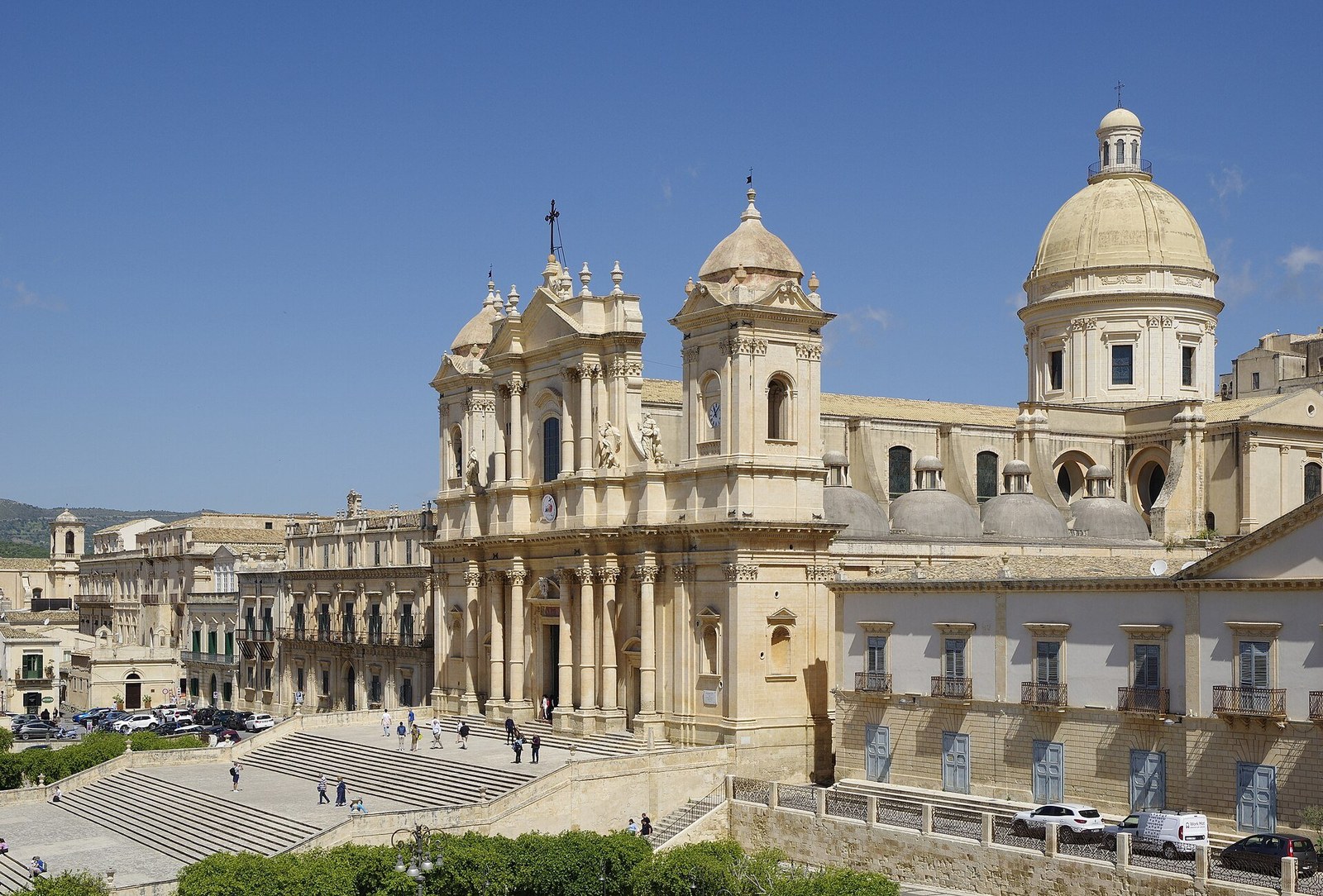
Berthold Werner · CC BY-SA 4.0
Noto Cathedral and Corso Vittorio Emanuele
- Location
- Piazza del Municipio, Noto Maps
- Essential fact
- Late-baroque cathedral 1703–1776; dome collapsed in 1996 and was fully rebuilt by 2007. UNESCO Val di Noto
- Price
- Free (campanile €3)
Start at Noto, 90 minutes south of Catania on the A18-SS115. The town’s main street, Corso Vittorio Emanuele, runs for 1 km between three monumental piazzas. The Cathedral (San Nicolò, 1703-1776) is the photogenic centrepiece — a sandstone facade that glows pale gold in afternoon light, with a wide staircase leading up to it. Allow 2 hours including coffee at Caffè Sicilia (almond granita with brioche is the local breakfast tradition).
Antica Dolceria Bonajuto and Modica chocolate
- Location
- Corso Umberto I 159, Modica Maps
- Site
- bonajuto.it
- Essential fact
- Historic chocolatier in Modica producing cold-processed granular chocolate by an Aztec method introduced by the Spanish
- Signature dish
- Cold-processed Modica chocolate, vanilla and chilli classic flavours
- Price
- €2–4 (per bar)
Drive 35 minutes west to Modica, the chocolate capital of Sicily. The town is built across a deep ravine, with two cathedrals on opposite sides (San Pietro lower, San Giorgio upper) and the historic Antica Dolceria Bonajuto in the centre. Modica chocolate is unique in Europe: cold-processed, granular texture, made by an Aztec method introduced by the Spanish in the 16th century. A bar costs €2.50-4. Lunch in Modica — try scacce (folded ricotta-and-vegetable flatbread, the Modicano street food).
Ragusa Ibla and the Duomo di San Giorgio
- Location
- Salita Duomo 1, Ragusa Maps
- Essential fact
- Baroque masterpiece by Rosario Gagliardi (1738–1775) with convex facade and three-tier campanile; UNESCO Val di Noto
- Price
- Free
Last stop: Ragusa Ibla, 25 minutes northwest. The lower old town of Ragusa sits on a hilltop and is one of the most cinematic small towns in Sicily — the BBC Inspector Montalbano series filmed here for nearly two decades. The centrepiece is Duomo di San Giorgio, baroque masterpiece by Rosario Gagliardi (1738-1775), with its convex facade and three-tier campanile. Walk down through the medieval streets to the Giardino Ibleo for the panoramic view over the Ibleo valley.
From Ragusa Ibla, the drive back to Catania is 90 minutes via the SS194. Aim to leave by 17:30 to be back by 19:00 — the day is intense, plan dinner late (Catania trattorie open 20:00). Skip if you’re tired: drop Modica or Ragusa Ibla and take it slower at Noto.
Can I do this Sicily 5-day itinerary without a car?
Yes for 4 of the 5 days. Catania, Taormina and Syracuse all work by train (€4.60-7.30, 50-65 minutes). Mount Etna needs a guided day-tour from Catania (€40-80, cable car included). The Val di Noto day is the only real challenge — book a one-day car rental (€40-60) or a guided day-tour (€60-90 per person).
Sicily’s east-coast railway, run by Trenitalia, connects Catania Centrale to Taormina-Giardini (50 minutes, €4.60), Syracuse (65 minutes, €7.30), and Noto (1 h 35, €9.10) without changes. Trains run roughly every hour from 06:00 to 21:00. So days 1, 3, and 4 of this itinerary work entirely by train. Day 2 (Etna) has no direct public transport from Catania to the cable car — the AST bus from Catania Centrale to Rifugio Sapienza runs once a day (08:15 there, 16:30 back, €6.60 each way), which is awkward. The simpler answer is a half-day or full-day guided tour from Catania, which costs €40-80 with cable car included and includes the round-trip transfer.
Day 5 (Val di Noto) is the awkward one without a car. The train from Catania to Modica is 2 h 50 with a change at Syracuse, and onward to Ragusa adds another 35 minutes. To do the full Noto-Modica-Ragusa triangle by public transport would take both ends of the day in transit. Two practical alternatives:
- Rent a car for one day only — €40-60 from Catania airport or Catania Centrale, picked up the morning of Day 5, returned the same evening. The cleanest option.
- Book a guided day-tour from Catania — usually €60-90 per person, includes round-trip coach plus 1.5 hours in each town, sometimes with chocolate tasting in Modica. Tour operators run these daily in season (April-October).
- Compromise — by train, do Noto only (the most accessible), spend a full day there instead of three towns rushed.
If you decide on a one-day rental, the Catania airport rental desk is open 07:00-23:00 and you can pick up at 07:30, drive Day 5, and return by 19:30 the same day for the lowest one-day rate.
When is the best time for a 5-day Sicily trip?
April-June and September-October are the sweet spot for a 5-day Sicily itinerary — mild weather (18-26°C), Etna trekkable, sea swimmable from May, fewer crowds in Taormina, and prices 30-40% below August peak. July-August work too but expect 35-40°C inland and triple the crowds. November-March is low-season Sicily — empty Taormina, Etna under snow (skiable Dec-Mar), 50% lower prices.
| Month | Avg high (Catania) | Crowds | Etna access | Sea swim |
|---|---|---|---|---|
| April | 20°C | Low | Snow above 2.000 m, cable car open | Cold (16°C) |
| May | 24°C | Medium | Full access | Yes (19°C) |
| June | 28°C | Medium-high | Full access | Yes (22°C) |
| July | 32°C | High | Full access (early start) | Yes (25°C) |
| August | 33°C | Peak | Full access (early) | Yes (27°C) |
| September | 28°C | Medium | Full access | Yes (25°C) |
| October | 23°C | Low-medium | Full access until late month | Marginal (22°C) |
| November-March | 15°C avg | Lowest | South side often closed for wind | No |
Specific months covered in detail: Sicily in March, April, May, October, November. August warning: Catania can be 38-40°C, Taormina is overrun by cruise-ship coaches by 10:30, and Etna afternoon thunderstorms are common — start everything by 07:30 in this month.
Can you really see Sicily in 5 days?
Yes, but only one half. Five days is enough for either the east coast (this itinerary) or the northwest from Palermo, never both — the island is 25.711 km² and crossing it by car is 3-4 hours each way. The east coast from Catania is the higher-ROI choice for first-timers: three UNESCO sites in one trip plus Europe’s biggest active volcano, all reachable in single-base day trips.
The honest framing: Sicily is the largest island in the Mediterranean, larger than Belgium, and a “complete” Sicily trip with both coasts plus Agrigento, the Aeolian Islands, and the western tip needs at least 10 days. With 5 days you make a strategic choice. Choose the east coast if you want to see Etna, two of the three big UNESCO baroque sites (Syracuse and Val di Noto), Greek archaeology, and the Taormina view. Choose the northwest if Palermo’s Arab-Norman heritage and the western beaches (Cefalù, San Vito Lo Capo) are your priorities. Trying both means seeing neither.
What this 5-day east-coast plan deliberately skips: Agrigento (Valley of the Temples, 2.5 h drive each way from Catania — fold in only with 7+ days), Aeolian Islands (need their own dedicated trip, 1 h ferry from Milazzo plus the islands themselves), Palermo and Monreale (a different Sicily, deserves its own 4-5 days), and Trapani / Erice / San Vito Lo Capo (the western salt route).
Where to park in Catania during your 5-day trip
Catania has a ZTL (limited traffic zone) covering the entire historic centre, active 08:00-20:00 weekdays — non-residents must park outside it. Best paid lots near the centre: Parcheggio Sanzio (€15/day), Parcheggio Stesicoro (€18/day), Parcheggio Borsellino (€22/day with covered access). Free street parking exists outside the ZTL (white lines): Porto area, north of Bellini gardens.
Catania ZTL: when active and what to avoid
The Catania ZTL “Centro Storico” is active Monday-Friday 08:00-20:00 and covers the area roughly bounded by Via Etnea east, Via Plebiscito south, Via Sangiuliano-Crociferi west, and the Bellini gardens north. ANPR cameras photograph licence plates entering — the fine is €83 plus 2 points (or €120+ for non-EU plates with administrative fees). Weekend access is unrestricted. Hotels with parking inside the ZTL pre-register guest plates with the Comune; rentals don’t. Source: ordinanza Comune di Catania, current as of 2026.
Free street parking (white lines)
Outside the ZTL, white-line parking is free but limited. The reliable zones for a multi-day stay:
- Porto area — Via Cardinale Dusmet and the streets behind, 10-15 min walk to Piazza Duomo
- North of Bellini gardens — Via Sant’Euplio, Via Catullo, 12-min walk to Via Etnea
- Piazza Spedini — west of Via Etnea, 15 min walk to centre
Paid blue-line parking
Blue lines are paid 08:00-20:00 weekdays, free at night and Sundays. Tariff €0.50-1.00 per hour, max 3 hours typical. Pay via the AMT app (Catania transit operator) or street meters with coins. For a 5-day trip blue-line parking adds up; multi-storey lots are better value.
Covered and multi-storey lots (>50 spaces)
For a multi-day stay, the cleanest option is a covered lot. Reliable choices walking distance from Piazza Duomo:
- Parcheggio Sanzio (Via Sanzio, 250 spaces, €15/day, covered, 8 min walk to Duomo) — best for old-town visitors
- Parcheggio Stesicoro (Piazza Stesicoro, 220 spaces, €18/day, partially covered) — best for Via Etnea shopping
- Parcheggio Borsellino (Via Borsellino, 350 spaces, €22/day, fully covered) — best for arrivals from north / Etna excursions
Which lot for which itinerary day
Day 1 (Catania) and Day 5 (Val di Noto, late return): Parcheggio Sanzio. Day 2 (Etna): leave Catania early, lot near hotel. Day 3 (Taormina by train) and Day 4 (Syracuse by train): leave the car at Sanzio for the day — stations are walking distance. If you’re driving the whole 5 days for any reason, Parcheggio Borsellino is closest to the SS114 north exit (toward Taormina-Etna).
Airport-to-centre and back
Catania Fontanarossa (CTA) is 7 km from the old town. Three options: Alibus shuttle (€4 single, every 25 min, 25 min ride, terminus Stazione Centrale), fixed-fare taxi (€25 to centre, 15 min), SS114 self-drive if you have a rental from arrival. For a deeper Catania parking deep-dive see where to park in Catania.
Where to stay in Catania for 5 days
Five days is the sweet spot for a single-base east-coast trip — long enough that hotel rotations would be wasteful, short enough that the cost of one good central place stays reasonable. The historic centre — bounded by Piazza Duomo, Via Etnea, the Pescheria market and the Castello Ursino — is where you want to be: walking distance to dinner, the train station for Taormina and Syracuse, and the Alibus stop for the airport.
We host guests in this exact area year-round. If you’d like a quiet, light-filled apartments in Catania with a kitchen for breakfast, a washing machine for end-of-trip laundry and the Pescheria market five minutes away, that’s what we do.
The information in this guide was correct at the time of writing. Data can change from season to season without notice: before you travel, always check the official channels and websites for updates. We review this guide periodically, but the official channels are always the authoritative source. We also cannot guarantee that the suggested routes or the attractions described are always reachable or accessible: roads, trails and sites may be closed, damaged, altered or unsafe. Assessing the practicability and safety of itineraries and attractions always remains your own responsibility.