
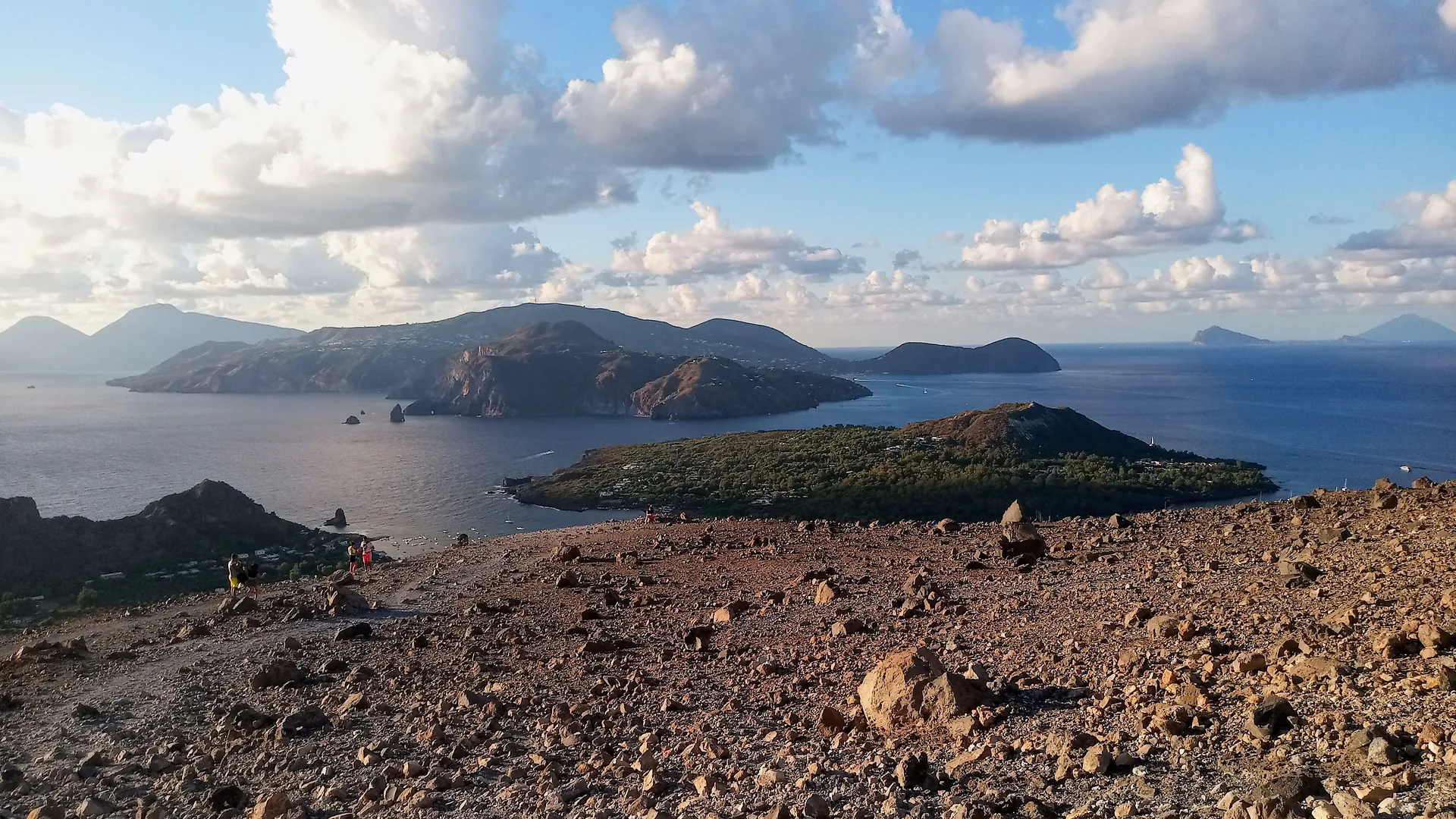
The Aeolian Islands are a volcanic archipelago of seven main islands off the northern coast of Sicily — Lipari, Vulcano, Stromboli, Salina, Panarea, Filicudi and Alicudi — collectively recognised as a UNESCO World Heritage Site since 2000. The Greeks named them after Aeolus, the keeper of the winds in the Odyssey, and the volcanic forces that built them are still very much alive: Stromboli erupts every twenty minutes, and Vulcano’s Gran Cratere steams continuously. Each island has a distinct character, from the chic exclusivity of Panarea to the off-grid wildness of Alicudi, and choosing the right one is the single biggest decision when planning an Aeolian Islands holiday.
This guide is a decision-support hub: skim the contents below, then pick the section that answers your most pressing planning question first.
Which Aeolian island should I visit?
- For a first visit or short trip — Lipari (ferry hub, most services).
- For a day trip from Sicily — Vulcano (closest, 45 min from Milazzo) or Lipari.
- For an active volcano experience — Stromboli (night summit hike) or Vulcano (Gran Cratere).
- For food, wine and slow travel — Salina.
- For wild and off-grid — Filicudi or Alicudi.
If you only have one or two days, choose Lipari — it is the largest island, the ferry hub of the archipelago, and the one with the most restaurants, beaches and museums in easy reach. If you want active volcanism, go to Stromboli for the night-time eruption hike or Vulcano for the steaming crater and sulphur mud baths. For slow travel and food, choose Salina; for chic minimalism, Panarea; for wilderness, Filicudi or Alicudi.
| Island | Best for | Day trip? | Signature feature |
|---|---|---|---|
| Lipari | First visit, base logistics | Yes (limited) | Archaeological museum + town |
| Vulcano | Day trippers, volcano fans | Yes | Gran Cratere + sulphur mud baths |
| Stromboli | Active volcano experience | No (overnight) | Sciara del Fuoco eruptions |
| Salina | Food, wine, slow travel | No | Malvasia DOC + capers of Pollara |
| Panarea | Chic, no-cars summer scene | Yes | Cala Junco + Prehistoric village |
| Filicudi | Diving, secluded coves | No | Grotta del Bue Marino |
| Alicudi | Off-grid, hiking | No | No roads, mule paths only |
Lipari — the capital
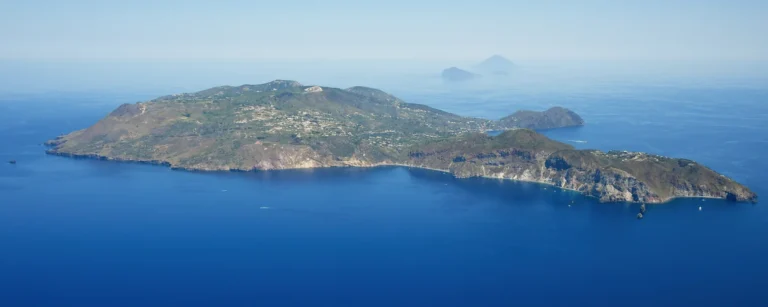
The largest and most populated island (about 11,000 residents), and the only one with a hospital and a wide range of services. Lipari town wraps a Norman-era citadel built on a Greek acropolis, home to the Aeolian Archaeological Museum (one of the most important in the Mediterranean for obsidian and Neolithic finds). Beaches on the east coast — Canneto, Spiaggia Bianca — are pebbly white from pumice tailings. Best for first-timers and as a logistical base. Reach by hydrofoil from Milazzo in about an hour. See our full guide to Lipari, the largest Aeolian Island for the Castello and museum, beaches, ferries from Milazzo and Catania, and how to use it as your archipelago base.
Vulcano — the steaming island
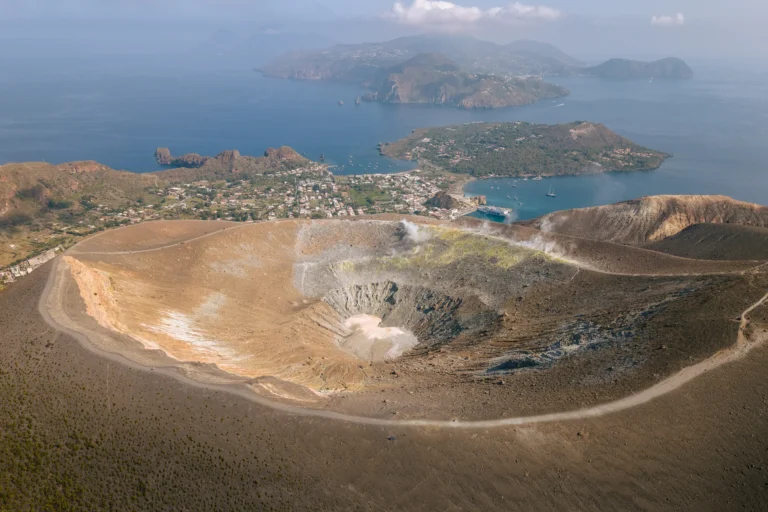
The closest island to Sicily (20 minutes from Milazzo by hydrofoil) and the most day-trip-friendly. The Gran Cratere della Fossa is an easy 45-minute hike to a rim that fumes sulphur over the whole archipelago. The famous open-air sulphur mud pool was closed for safety in 2020 and has remained restricted; current visits centre on the crater, the black beach at Sabbie Nere and the spectacular sea-stacks at Vulcanello. Day-trip from Catania is realistic via Milazzo (about 2h transfer + ferry). See our full guide to Vulcano Sicily for the crater hike, ferry timings and where to stay.
Stromboli — the lighthouse of the Mediterranean
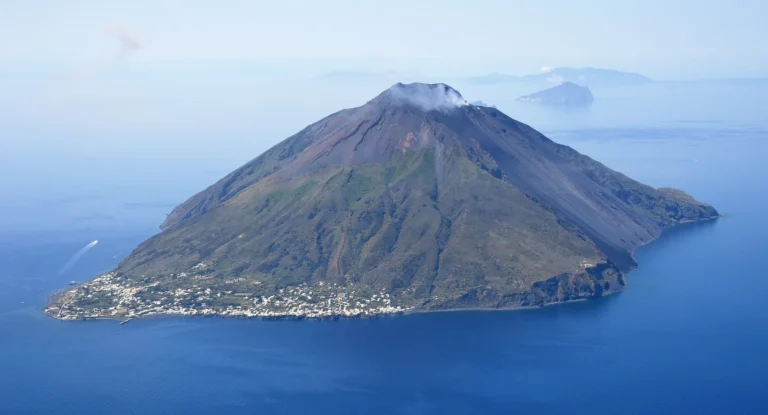
An almost-perfect volcanic cone rising 924 m from the sea, in continuous mild eruption for the past 2,000 years — sailors have used its glow as a natural lighthouse. The flagship experience is the night ascent to the summit with a licensed guide (currently capped at 400 m by the civil-protection ordinance, with the full summit hike subject to seasonal authorisation). Boat tours circle the Sciara del Fuoco after dark to watch lava bombs hit the sea. Requires at least one overnight; not a day-trip island. See our full guide to Stromboli island for the Sciara del Fuoco, the regulated hike and how to get there from Catania.
Salina — the green one
The greenest and second-largest island, with two extinct volcanic cones rising to 962 m — the highest point in the archipelago. Famous for Malvasia delle Lipari DOC sweet wine and the capers of Pollara, the village where the 1994 film Il Postino was shot. Best for travellers who want to slow down, drink small-producer wine and eat well — Salina concentrates the densest cluster of acclaimed restaurants of the Aeolian Islands. Reachable in 1h30 from Milazzo.
Panarea — the smallest and chicest
Just 3.4 km² and almost car-free: residents and visitors move by electric golf-cart or on foot. From late June to early September, Panarea becomes the social hub of the archipelago, with a jet-set crowd anchored offshore. Outside the high season it returns to a quiet fishing village. Don’t miss Cala Junco, one of the most photographed coves of the Mediterranean, and the Bronze Age village of Capo Milazzese. Reachable in 2h from Milazzo. See our full guide to Panarea island for Cala Junco, Basiluzzo and how to get there.
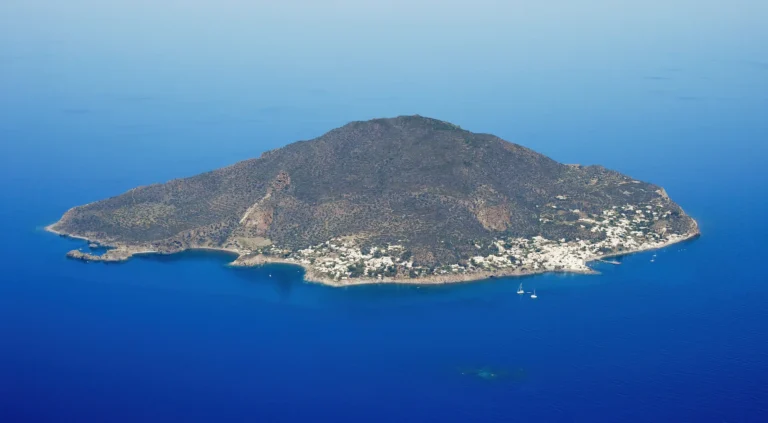
Filicudi — for divers and the curious
Off the well-trodden circuit, Filicudi is favoured by divers and travellers looking for solitude. The Grotta del Bue Marino sea cave is the headline boat-tour stop, and the Faraglione La Canna — a 71-metre sea-stack — is a recognised geological landmark. Footpaths lead to the prehistoric village of Capo Graziano. Limited accommodation; book months ahead in summer.
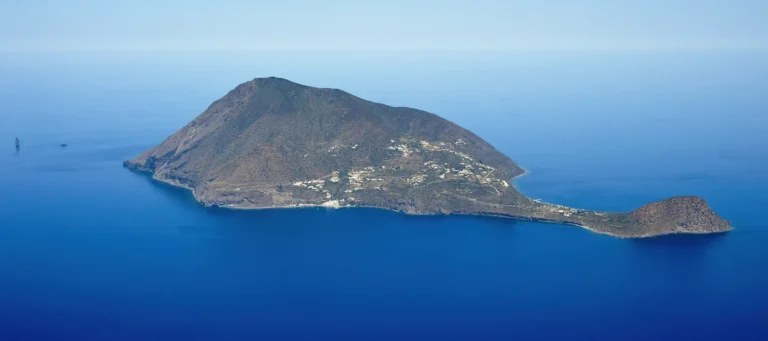
Alicudi — the wildest
The westernmost and least developed of the seven. No roads, no cars, no street lighting; about 100 year-round residents, mules instead of taxis. Power arrived only in the 1990s. A single path of 700 stone steps climbs from the small port to the summit ridge. Choose Alicudi only if you actively want to disconnect — there is one hotel, a handful of B&Bs and exactly one shop.
Are the Aeolian Islands worth visiting?
Yes — for travellers who value active volcanism, slow rhythms and a different Sicily than the mainland tourist trail, the Aeolian Islands are one of the highlights of the Mediterranean. UNESCO listed the archipelago in 2000 specifically for its volcanic geology, and the islands’ near-permanent eruptive activity (Stromboli + Vulcano) is unique in continental Europe.
The honest counterpoint: getting there is slow (only Milazzo, Naples seasonal, and a few Sicilian ports run ferries) and prices in July–August are high. The sweet spot is May–June and September, when the sea is warm but ferries still run on full schedule. Skip if you only have three days for Sicily — better to focus on Catania, Taormina and Etna instead.
How do you get to the Aeolian Islands?
Ninety per cent of arrivals are by ferry from Milazzo, the historic port on Sicily’s north-east coast. Milazzo is about 1h30 by direct bus from Catania Airport (operated by Giuntabus / Etna Trasporti, multiple daily departures) or about 40 minutes from Messina central station. Two operators run the routes: Liberty Lines for fast hydrofoils (aliscafi) and Siremar for slower car-ferries (traghetti).
| Route from Milazzo | Hydrofoil | Car ferry | Frequency in season |
|---|---|---|---|
| Vulcano | ~45 min | ~1h30 | Hourly |
| Lipari | ~1h | ~2h | Hourly |
| Salina | ~1h30 | ~3h | Every 2h |
| Panarea | ~2h | ~4h | Daily, 5–7× |
| Stromboli | ~2h15 | ~5h | Daily, 4–6× |
| Filicudi / Alicudi | ~2h30 / 3h | ~3h / 4h | Daily, 1–2× |
Alternative ports: Naples runs seasonal hydrofoils (SNAV) direct to Stromboli, Panarea, Salina and Lipari from June to September — useful if you arrive from Rome or further north. From Messina, Palermo and Reggio Calabria there are limited routes, generally less convenient than Milazzo. Schedules and prices change every season; check Liberty Lines and Siremar directly before booking.
When is the best time to visit?
The window runs from late April to mid-October, when ferries operate on full schedule and the sea is warm enough to swim. May, June and September are the sweet spots — sea 21–25 °C, fewer crowds, prices below peak. July and August are reliably hot (28–33 °C inland, sea 25–27 °C) but ferries are booked weeks ahead and accommodation prices double on Lipari, Salina and Panarea. Winter sees ferry frequencies cut sharply and many island restaurants close. For a deeper month-by-month breakdown of Sicilian climate, see our Sicily by month guide.
Do you need a car on the Aeolian Islands?
On most islands, no — and on some it is impossible. Panarea, Stromboli, Filicudi and Alicudi are effectively car-free: residents use electric carts, scooters or boats. Lipari and Salina are the only islands with a real road network, and a small rental car or scooter is useful if you want to reach beaches and viewpoints away from the main town — both islands also have local buses. Day-trippers from Sicily can park their vehicle in Milazzo (paid lots near the port, ~€12/day in season) and continue as foot passengers; bringing a car on the ferry to the smaller islands is rarely worth the cost and complication.
Where to stay: islands vs Catania base
If you can spend three nights or more in the archipelago, the most rewarding choice is to stay on the islands themselves. Lipari works as a base for visiting Vulcano, Salina and Panarea by hydrofoil. Salina rewards travellers who want to slow down and eat well. Stromboli needs at least one overnight to do the eruption hike. Panarea is expensive in summer and quiet outside it; Filicudi and Alicudi require advance booking.
If your trip is shorter, or the Aeolian Islands are one stop in a wider Sicily itinerary, the practical alternative is to use Catania as your Sicilian base and day-trip to Vulcano or Lipari from Milazzo. Catania has the largest airport in eastern Sicily, fast bus connections to Milazzo (1h30), and lets you combine the Aeolian Islands with Etna, Taormina and the Baroque towns of the south-east on the same trip. We rent three apartments in Catania in the historic centre, a 5-minute walk from the Cathedral and the Pescheria fish market — useful if you want to keep the wider Sicily option open.