
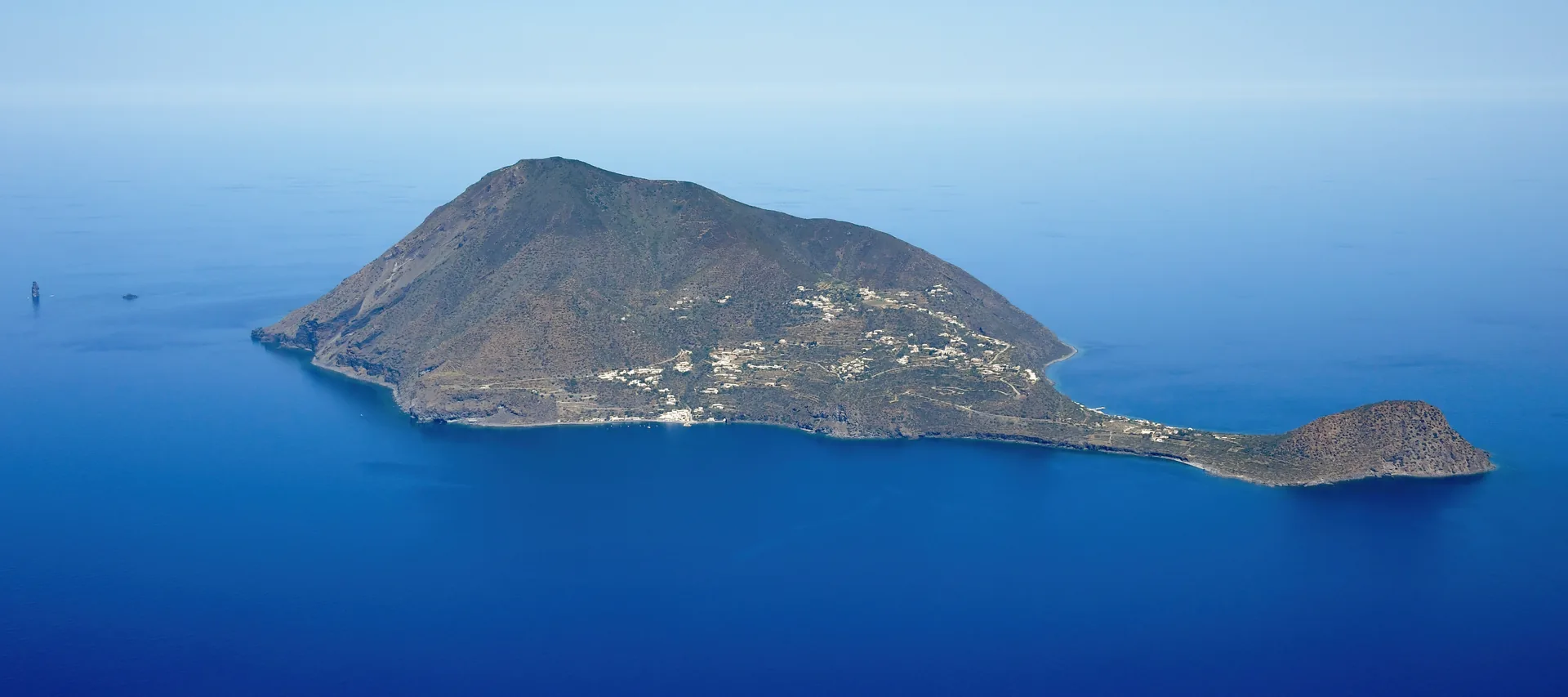
Filicudi Island is the second most remote of Sicily’s seven Aeolian Islands, rising from the Tyrrhenian Sea 46 kilometres west of Lipari and barely 10 kilometres east of Alicudi. Part of a UNESCO World Heritage Site since 2000, this small volcanic island in the Province of Messina is defined by towering sea stacks, a submerged Bronze Age shoreline, and waters so clear they feel invented. If the other Aeolians offer a holiday, Filicudi offers an escape.
Is Filicudi worth visiting?
Yes — if you value silence, pristine water, and a landscape that looks the same as it did fifty years ago. Filicudi has no nightclubs, no resort hotels, no airport, and no cars beyond a handful of scooters. What it does have is the Grotta del Bue Marino, a cathedral-like sea cave once inhabited by Mediterranean monk seals, the 71-metre rock tower of La Canna, a Bronze Age village site that predates ancient Rome by a thousand years, and some of the best snorkelling in the Mediterranean.
Visitors who arrive expecting Lipari or Salina leave disappointed. Those who arrive expecting solitude, geology, and underwater clarity leave converted. The island rewards slow travellers: walkers, divers, kayakers, and anyone who considers a book on a terrace a full day’s programme. Day-trippers from Lipari can cover the essentials in a few hours, but one or two nights unlock the island properly.
Is Filicudi in Sicily?
Yes. Filicudi is one of the seven Aeolian Islands, an archipelago administered as part of Sicily’s Province of Messina in southern Italy. The island sits roughly 47 kilometres north-east of the island of Alicudi and about 46 kilometres west of Lipari, the archipelago’s capital. Together with the other six islands — Lipari, Vulcano, Salina, Panarea, Stromboli, and Alicudi — it forms a UNESCO World Heritage Site inscribed in 2000 for its exceptional volcanic geology and biodiversity.
Filicudi covers just 9.5 square kilometres and rises to 773 metres at the summit of Monte Fossa delle Felci. Its permanent population hovers around 200 residents spread across three small hamlets: Filicudi Porto, Pecorini a Mare, and Rocche Ciauli. Like the rest of the Aeolian Islands, it is formed by submarine volcanic activity and remains geologically active, though not in an eruptive sense.
What to do on Filicudi?
Filicudi’s activities are defined by its terrain: volcanic rock above the waterline, extraordinary marine life below it. The four things most visitors do are:
- Snorkel or dive the Grotta del Bue Marino — the island’s signature experience. Boat excursions from Filicudi Porto take you around the northern coast to the cave and its surrounding rock gardens. Visibility regularly exceeds 30 metres.
- Circumnavigate the island by boat — a 2–3 hour loop that visits La Canna, the Scoglio di Montenassari, the Perciato arch, and the Grotta del Bue Marino in one go. The most efficient way to see all the key formations.
- Hike to Monte Fossa delle Felci — a steady 2–3 hour walk from Filicudi Porto through fern-covered terraces. No guide required. The summit at 773 metres offers a 360-degree view of the archipelago on clear days.
- Explore Capo Graziano — the Bronze Age settlement on the headland above the port. A short scramble from the harbour rewards you with pottery shards, house foundations, and views that explain exactly why prehistoric settlers chose this spot.
Salvo Cannizzaro · CC BY-SA 3.0
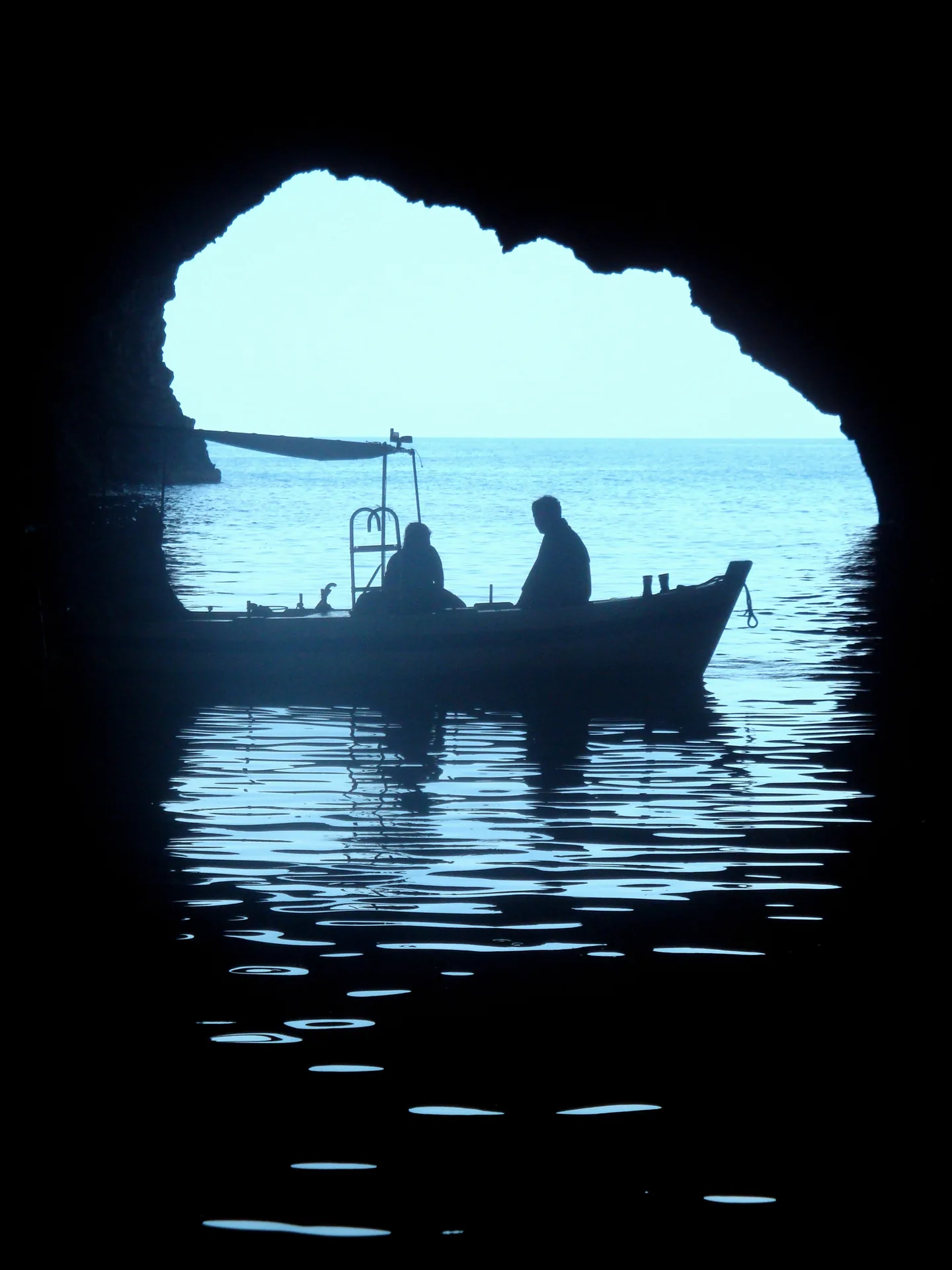
Grotta del Bue Marino: the monk seal cave
- Location
- Isola di Filicudi, Lipari Maps
- Hours
- Best by boat in the morning, May-October
- Essential fact
- Sea cave on Filicudi’s northern coast, usually reached by boat from Filicudi Porto.
- Price
- €25-40 pp
The Grotta del Bue Marino — “cave of the monk seal ox” — takes its name from the Mediterranean monk seal (Monachus monachus), which used these lava cavities as a nursery until the mid-twentieth century. Today the monk seal is functionally extinct across the Aeolians, but the cave complex remains one of the most spectacular snorkelling and diving destinations in the central Mediterranean.
The main chamber opens at sea level, accessible by boat and by swimming. Inside, sunlight filters through underwater entrances, illuminating posidonia meadows, sea fans, grouper, and schools of bream at depths of 5–20 metres. A secondary lower chamber requires freediving to 12–15 metres. Local operators run daily excursions from Filicudi Porto (typically May through October); prices and schedules vary by season — check with your accommodation on arrival for current operators and rates.
La Canna and the offshore stacks
Wolfgang H. Wögerer · CC BY 3.0
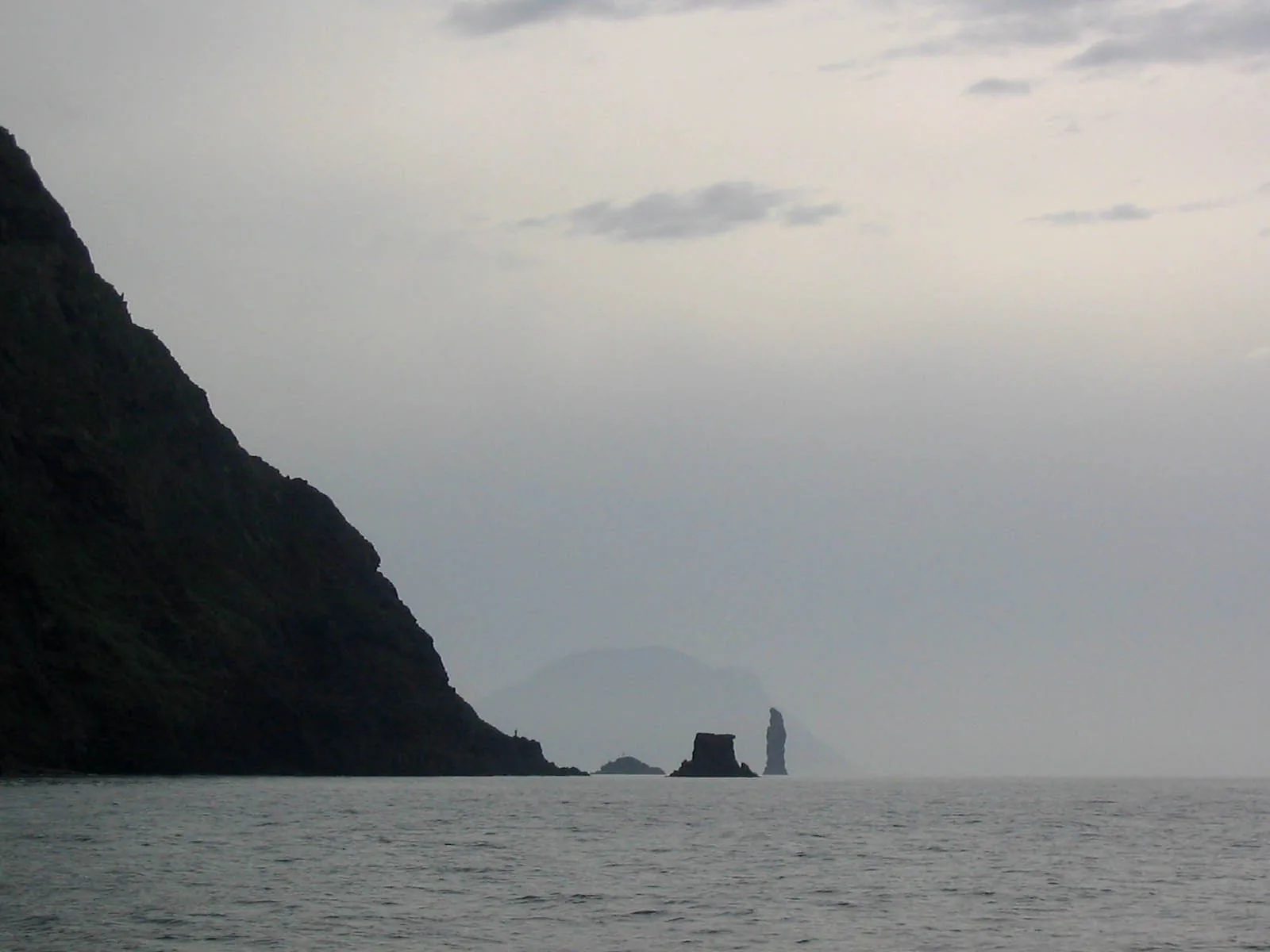
La Canna is a 71-metre volcanic spire rising vertically from the sea off Filicudi’s north-eastern coast. It is the most photographed feature of the island and one of the most dramatic geological formations in the Aeolian archipelago. The stack is the eroded remnant of an ancient volcanic vent and is surrounded by a cluster of smaller formations: the Scoglio di Montenassari to the north-east, the Perciato arch on the island’s western face, and the low reef of Lo Zucco Grande offshore.
The best way to see La Canna is from a circum-island boat trip. No landing is possible on the stack itself. In calm conditions, snorkellers can explore the underwater base of the formation, where the rock continues steeply for another 30–40 metres below the surface. The combination of La Canna, the Grotta del Bue Marino, and the Perciato arch forms a standard three-stop boat excursion lasting 2–3 hours.
Capo Graziano: Bronze Age village on the headland
The promontory of Capo Graziano, jutting south of Filicudi Porto, was settled by a Bronze Age culture around 2,000–1,500 BC. The site gives its name to the “Capo Graziano culture” — a distinct prehistoric phase of the Aeolian Islands documented across the archipelago but best preserved here. Stone house foundations, pottery sherds, and evidence of obsidian trade (Lipari was the Mediterranean’s primary obsidian source) are visible on the headland.
The main finds — ceramics, tools, and bone fragments — are displayed at the Museo Archeologico Eoliano Luigi Bernabò Brea in Lipari, which remains the best place to contextualise what you see at Capo Graziano. The walk to the headland from the port takes about 15–20 minutes along a clear path. No admission, no fencing, no crowds.
How do I get to Filicudi, Italy?
Getting to Filicudi requires a ferry or hydrofoil — there is no airport. The two main mainland gateways are Milazzo (the primary Aeolian port, 90 km east of Palermo) and Palermo. From Sicily, the most common approach is via Milazzo, which is itself reachable by train from Catania (approximately 2h 30 min) or by road. Prices and exact schedules change seasonally — check Liberty Lines or Siremar directly for current timetables.
| Route | Type | Duration (approx.) | Operator |
|---|---|---|---|
| Milazzo → Filicudi | Hydrofoil | 2 h 30 min | Liberty Lines |
| Milazzo → Filicudi | Ferry | 4 h | Siremar |
| Lipari → Filicudi | Hydrofoil | 1 h 15 min | Liberty Lines |
| Palermo → Filicudi | Hydrofoil | 3 h 30 min | Liberty Lines (summer) |
| Catania → Milazzo → Filicudi | Train + Hydrofoil | ~5 h total | Trenitalia + Liberty Lines |
The three hamlets: Filicudi Porto, Pecorini and Rocche Ciauli
GerritR · CC BY-SA 4.0
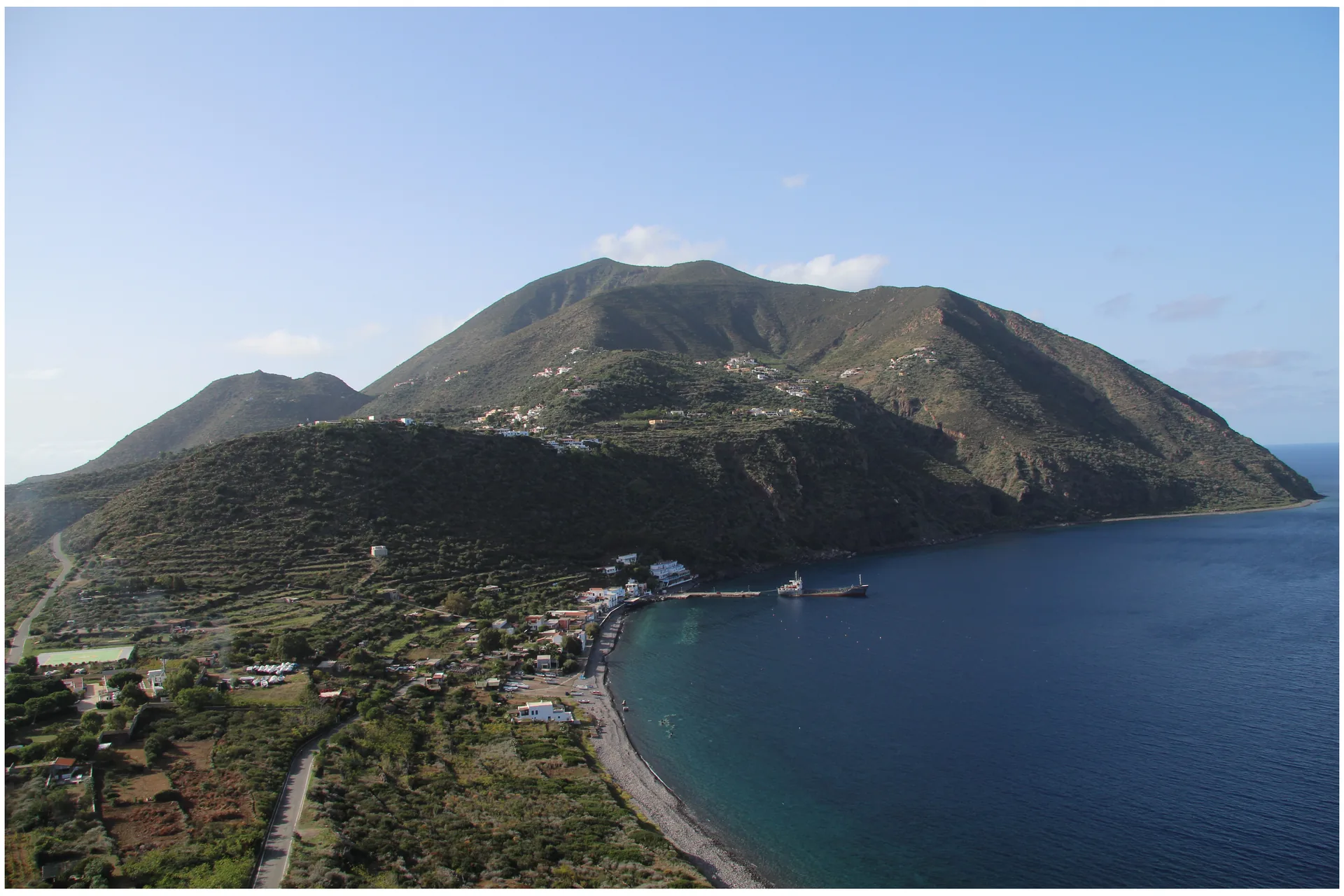
Filicudi has no single centre. Life distributes itself across three small clusters on the island’s south and south-eastern coasts. Filicudi Porto is the main landing point, with the ferry dock, a handful of restaurants and bars, and most accommodation. The port area sits on a small lava shelf at sea level and is where boat excursions depart.
Pecorini a Mare, a 25-minute walk south-west along a coastal track, is the most photogenic of the three settlements — a clutch of fishermen’s houses on a rocky inlet with the best natural swimming on the island. Rocche Ciauli, higher up on the south-eastern slope, is more scattered and primarily residential. There are no cars on Filicudi beyond the occasional agricultural vehicle and a few scooters — walking or boat are the default modes of transport between hamlets.
When to visit Filicudi
May, June, and September are the ideal months. The sea is warm enough for snorkelling (22–26 °C), hydrofoil schedules run at near-summer frequency, and the island is not yet at its capacity of two or three dozen tourists. July and August bring higher temperatures (30 °C and above), stronger Tramontane and Maestrale winds that can cancel departures for a day or two, and the island’s closest approximation to a crowd — perhaps a hundred visitors on the busiest summer days.
October is beautiful for hiking and geology; the sea begins to cool but is still swimmable. November through April sees the island revert to its wintering residents. Most restaurants and rooms close entirely. Ferry frequency drops to a few sailings a week on the Milazzo–Siremar line. Worth attempting only for those who genuinely want the island to themselves and can tolerate logistical uncertainty.
Filicudi belongs to the same Aeolian archipelago as Lipari, the archipelago’s capital, Vulcano’s sulphur lagoon, Panarea’s chic coves, and Stromboli’s volcanic fireworks. All are covered in our Aeolian Islands guide.
Where to stay in Catania
Catania is the most practical base for reaching the Aeolian Islands by public transport. The city is 2 h 30 min from Milazzo by train — the main gateway port for hydrofoils and ferries to Filicudi. If you want a central, comfortable place to stay before or after your island adventure, browse our apartments in Catania right in the historic centre.
The information in this guide was correct at the time of writing. Data can change from season to season without notice: before you travel, always check the official channels and websites for updates. We review this guide periodically, but the official channels are always the authoritative source. We also cannot guarantee that the suggested routes or the attractions described are always reachable or accessible: roads, trails and sites may be closed, damaged, altered or unsafe. Assessing the practicability and safety of itineraries and attractions always remains your own responsibility.