

Sicily in October is the island’s best-kept shoulder-season secret. Daytime temperatures average 24°C (75°F), the sea sits at 22-23°C warm enough to swim until mid-month, and you’ll find roughly 30-40% lower prices on flights and apartments compared with August. The vendemmia (grape harvest) on Mount Etna is in full swing, the Ottobrata Zafferanese celebrates Etna’s autumn produce every Sunday, and crowds at the Valley of the Temples, Taormina’s Greek Theatre and the baroque towns of Modica and Ragusa Ibla drop sharply. This complete guide covers weather week-by-week, October events, where to go, what to pack, realistic costs, and where to stay if you want to use Catania as your base for east-Sicily day trips.
For year-round context beyond October — best time, regions and how to plan — see our complete Sicily travel guide.
What is the weather like in Sicily in October?
Jeanne Griffin · CC BY-SA 4.0
Sicily in October has average daytime highs of 24°C (75°F), nights around 17°C (63°F), sea temperature 22-23°C, roughly 8 rainy days across the month with 35-70 mm total rainfall, humidity 60-70% (down from 75-85% in August), and 11 hours of daylight at the start of the month dropping to 10 by 31 October.
Off-season alternative? If October timing doesn’t fit, February delivers a different kind of quiet — our Sicily in February guide covers Sant’Agata Catania, twin Mardi Gras carnivals, and Etna ski peak.
Spring instead of autumn? If October timing doesn’t suit, May runs warmer with longer days and four cultural anchors — our Sicily in May guide covers Sant’Alfio Trecastagni, Infiorata di Noto, INDA opening, and Cantine Aperte.
The month splits cleanly in two halves. The first two weeks still feel like late summer along the Ionian and southern coasts: t-shirt weather by day, light layers in the evening, and a warm sea that invites a swim. From around 18-20 October the first proper Atlantic fronts can reach the island, bringing scattered showers (rarely persistent), cooler nights and the first need for a real jacket inland and at altitude.
Sicily October weather table — 4 weeks × 4 regions
| Week | East coast (Catania, Taormina, Syracuse) | West coast (Palermo, Trapani) | Inland (Caltagirone, Enna) | Etna altitude (1.500-2.000 m) |
|---|---|---|---|---|
| 1-7 Oct | 26°C / 19°C, sea 24°C, sun | 26°C / 19°C, sea 23°C, sun | 23°C / 14°C, sun | 15°C / 7°C, sun |
| 8-14 Oct | 25°C / 18°C, sea 23°C, mostly sun | 25°C / 18°C, sea 23°C, sun | 22°C / 13°C, partly cloudy | 13°C / 5°C, mostly sun |
| 15-21 Oct | 23°C / 17°C, sea 22°C, occasional shower | 23°C / 17°C, sea 22°C, occasional shower | 20°C / 11°C, partly cloudy | 11°C / 3°C, partly cloudy |
| 22-31 Oct | 21°C / 15°C, sea 21°C, scattered rain | 21°C / 15°C, sea 21°C, scattered rain | 18°C / 9°C, scattered rain | 8°C / 1°C, possible early snow above 2.000 m |
Disclaimer: values are typical multi-year averages (2020-2025) compiled from regional meteorological data; conditions vary year on year. Verify a 7-day forecast close to your trip.
Can you swim in October in Sicily?
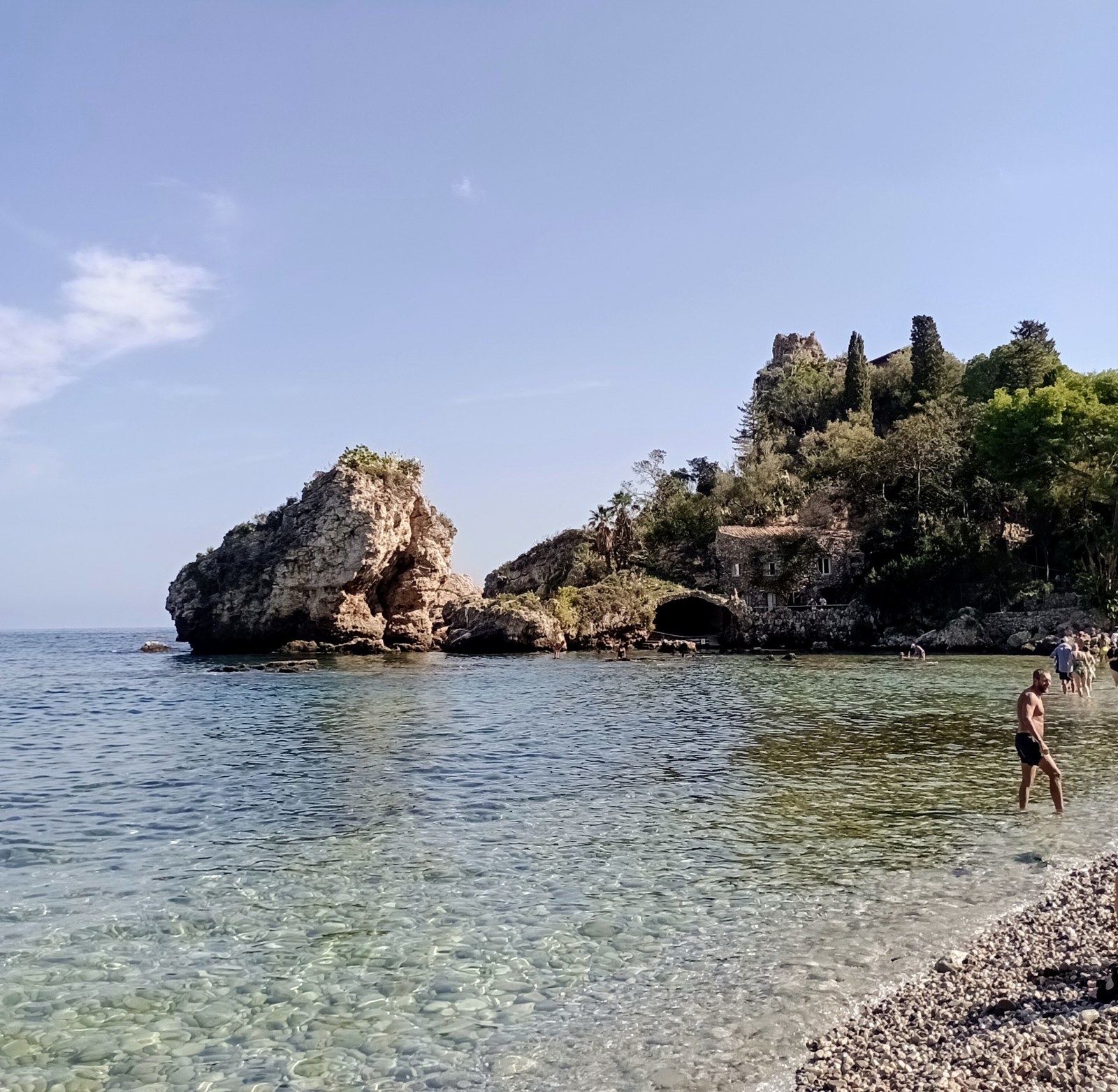
Yes. The sea around Sicily warms slowly through summer and cools just as slowly: in early October it sits at 23-24°C, dropping to 21-22°C in the last week. Most Italians stop swimming after Ferragosto (15 August) for cultural reasons, not thermal ones — the water is comfortable to a northern-European visitor through about 20 October. The Ionian coast beaches around Taormina (Isola Bella, Mazzarò), Catania (La Plaja), and the south-east (Fontane Bianche, Marina di Ragusa) are your best bets. Mountain-facing west-coast spots cool slightly faster.
Will it rain a lot in Sicily in October?
No, October is not a rainy month by northern-European standards. Expect roughly 8 rainy days spread across the month, totalling 35-70 mm, mostly in the second half. Showers are usually short and convective rather than all-day grey. Pack a light packable raincoat and you’ll cover the worst-case days without it ruining a single beach morning.
Moleskine · CC BY-SA 4.0
What is the wettest month in Sicily?
November is the wettest month in Sicily, averaging 80-120 mm of rainfall and 12-14 rainy days — roughly twice October’s totals. October, by contrast, sits at 35-70 mm and around 8 rainy days, mostly concentrated in the second half. December and February follow November for rainfall, while July and August average just 1-2 rainy days per month. For travel purposes, October sits comfortably in the drier half of the Sicilian calendar — wetter than summer but considerably drier than the November-to-February wet season. If you travel in the first two weeks of October you are statistically more likely to see sun than rain.
Is Sicily warm in October?
Yes — Sicily is warm in October by any European standard. Daytime highs average 24°C (75°F) across the lowlands, peaking near 26°C in the south-east (Ragusa, Syracuse) and dropping to 20°C in inland mountain towns and to single-digit °C above 2.000 m on Etna.
Hottest regions in October
The south-east coast — Ragusa, Syracuse, Marina di Modica — holds the warmest October temperatures on the island, often touching 27-28°C in the first week. Catania and the eastern coast follow closely (sea-tempered climate). The Trapani-Marsala west coast is similar to the east in temperature but slightly windier.
Coolest regions in October
Etna slopes above 1.500 m drop to single-digit nights from mid-month. The Madonie and Nebrodi mountain ranges in northern Sicily, and inland Enna and Caltagirone, see daytime highs around 20°C and chillier nights around 10-12°C. If you plan an Etna or Madonie hike, pack layers and gloves for the second half of the month.
How hot is Sicily in October compared to summer?
Roughly 10°C cooler than August by day, sea about 5°C cooler, humidity 15-20 percentage points lower, crowds halved, and prices 30-40% lower.
| Metric | July | August | October |
|---|---|---|---|
| Day temperature avg (lowlands) | 32°C | 34°C | 24°C |
| Night temperature avg | 22°C | 24°C | 17°C |
| Sea temperature avg | 26°C | 27°C | 22-23°C |
| Humidity | 70-80% | 75-85% | 60-70% |
| Rainy days | 1 | 1 | 8 |
| Daylight hours | 14 | 13 | 11 → 10 |
| Tourist crowd index (relative) | 9/10 | 10/10 | 4-5/10 |
| Apartment price index (vs August = 100) | 95 | 100 | 60-70 |
The trade-off is straightforward: October swaps two extra hours of sunshine and reliably hot nights for cooler, drier days, half the crowds, and a noticeably lighter bill.
Matteo Magnano di San Lio · CC BY-SA 4.0
Should you visit Sicily in October?
Yes, October is one of the best months to visit Sicily — especially if your priorities are food, culture, hiking, photography or value. It is less ideal if your trip is built entirely around long beach days from late October onward.
Pros of visiting Sicily in October
- Cooler hiking weather — Etna, Madonie, Nebrodi, Etna foothills become genuinely pleasant rather than punishing
- Crowd-free archaeology — Valley of the Temples, Taormina’s Greek Theatre, Villa Romana del Casale, Selinunte feel half-empty after 15 October
- Harvest season — vendemmia on Etna, first olive pressing late month, sagre across the island
- Shoulder pricing — flights -30%, apartments -25-40%, car rental -40% versus August
- Sea still swim-warm — through about 20 October on the east coast
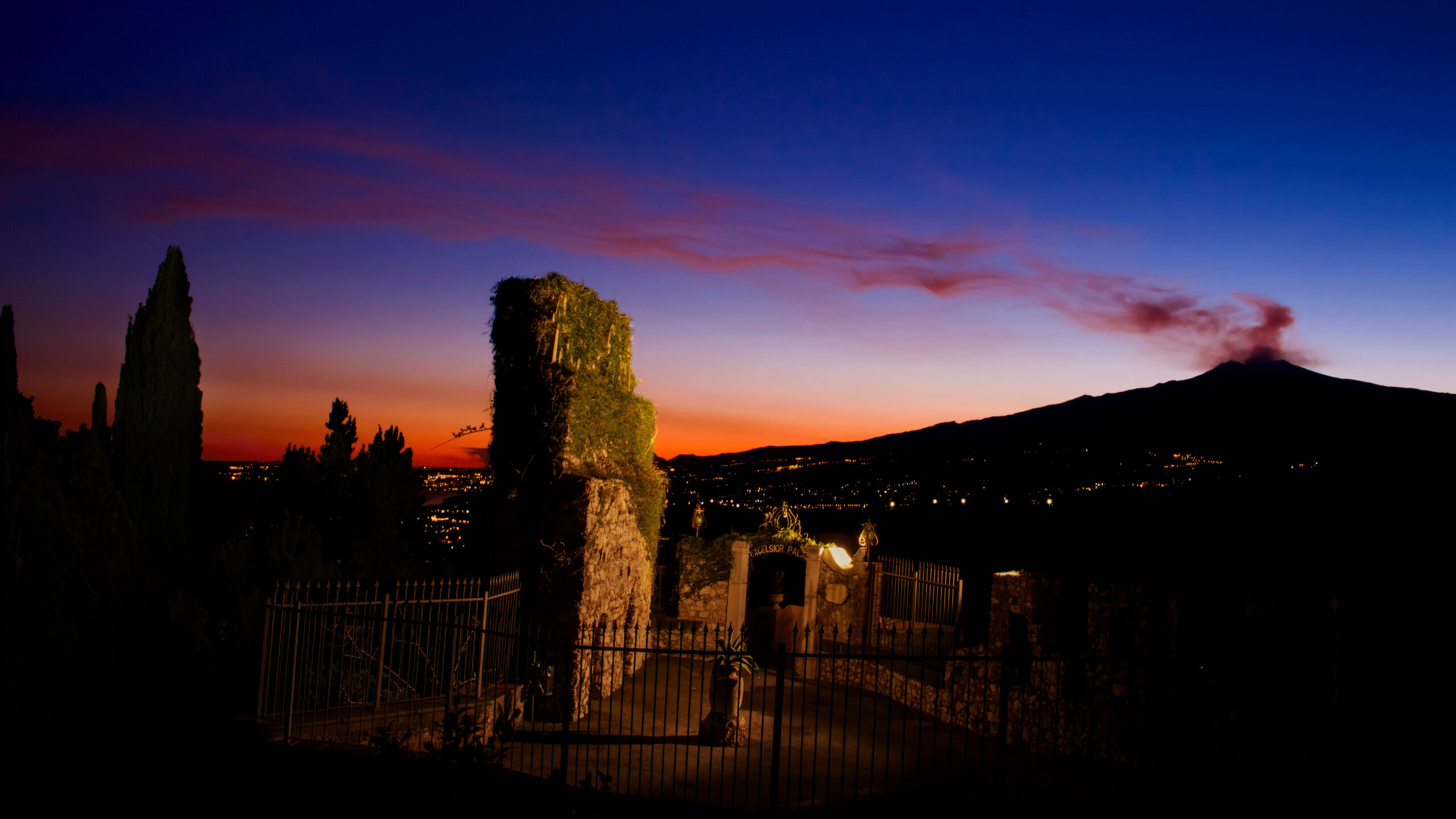
- Long-form sunsets — the late-light colour palette over Etna and Ortigia is at its best
Cons of visiting Sicily in October
- Shorter days — 11 hours of daylight at the start of the month, 10 by the end (one full hour less than August)
- Some seasonal operators close after 31 October — beach lidos, certain ferry routes to the smaller islands, some Aeolian connections reduce frequency
- Rain is possible — 8 days on average, though rarely all-day
- Cooler nights inland — pack a real jacket if you plan baroque-towns evenings
October events and festivals in Sicily

trolvag · CC BY-SA 3.0
October is the most concentrated month of food and harvest sagre in Sicily. The calendar overlaps with the vendemmia on Etna, the first olive oil pressings, and the chocolate-making season in Modica. Below are the eight events most worth planning around.
Ottobrata Zafferanese (Zafferana Etnea)
Held every Sunday in October in the small Etna town of Zafferana, the Ottobrata is the largest autumn-produce festival on the island. The five Sundays each celebrate a different harvest: grapes, honey, apples, mushrooms, and chestnuts. Stalls fill the historic centre, with tastings, traditional crafts, music, and producers from Etna’s south slope. Free entry, parking near the town requires arriving before 10:30. Reachable from Catania in about 45 minutes by car.
Chocomodica / Eurochocolate Modica
Modica’s chocolate festival runs over four days at the end of October (typically the last weekend), celebrating the town’s 400-year tradition of cold-processed chocolate-making inherited from Aztec techniques via Spanish rule. Expect tastings, live chocolate sculpture, masterclasses, and food-and-wine pairings throughout the historic baroque centre. Modica is a UNESCO Late Baroque town in its own right — combine the festival with a walk along Corso Umberto, the Duomo di San Giorgio and the Duomo di San Pietro.
BrandedChannels · CC BY 4.0
Sagra dei Funghi Castelbuono (Madonie Park)
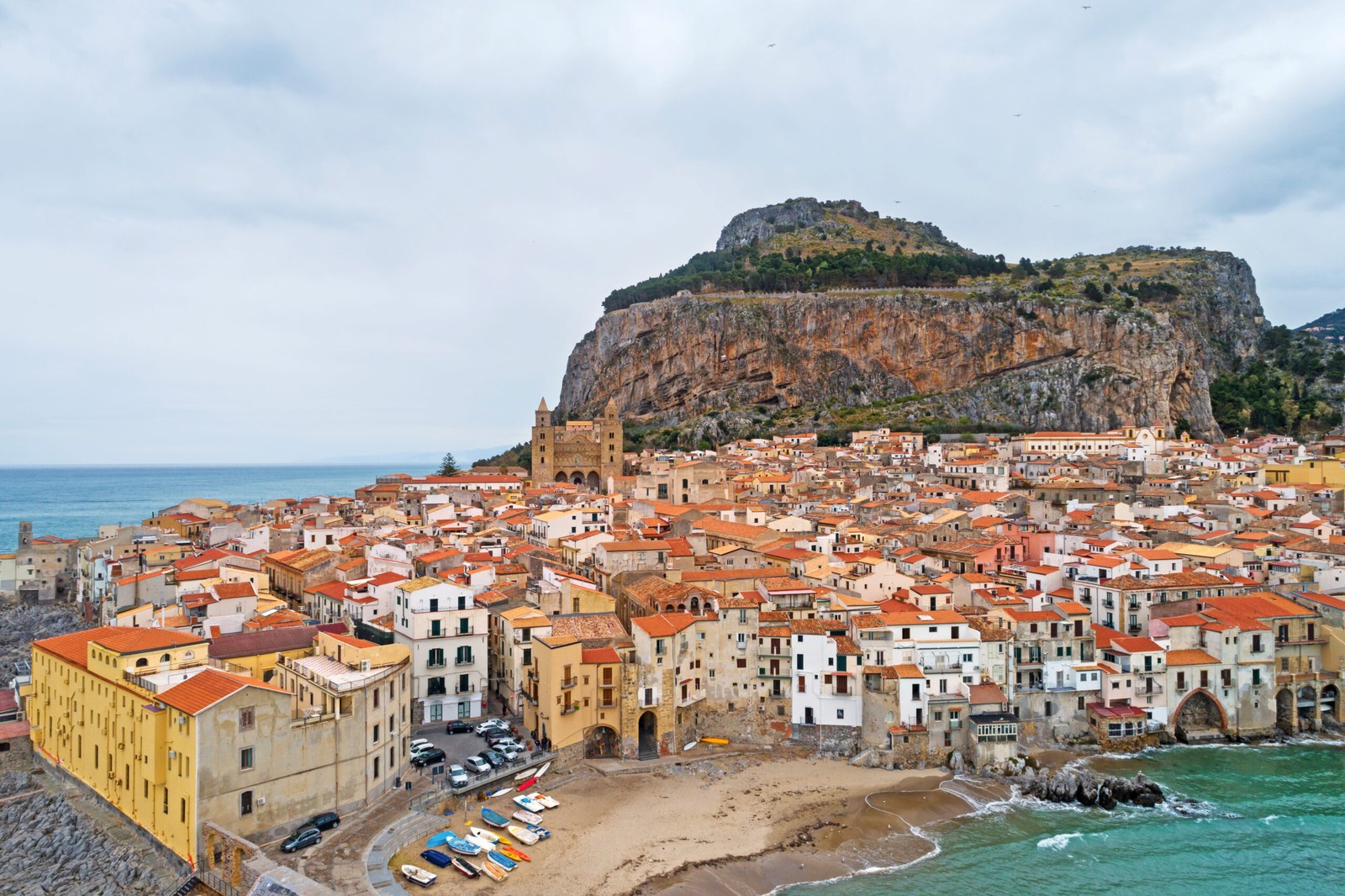
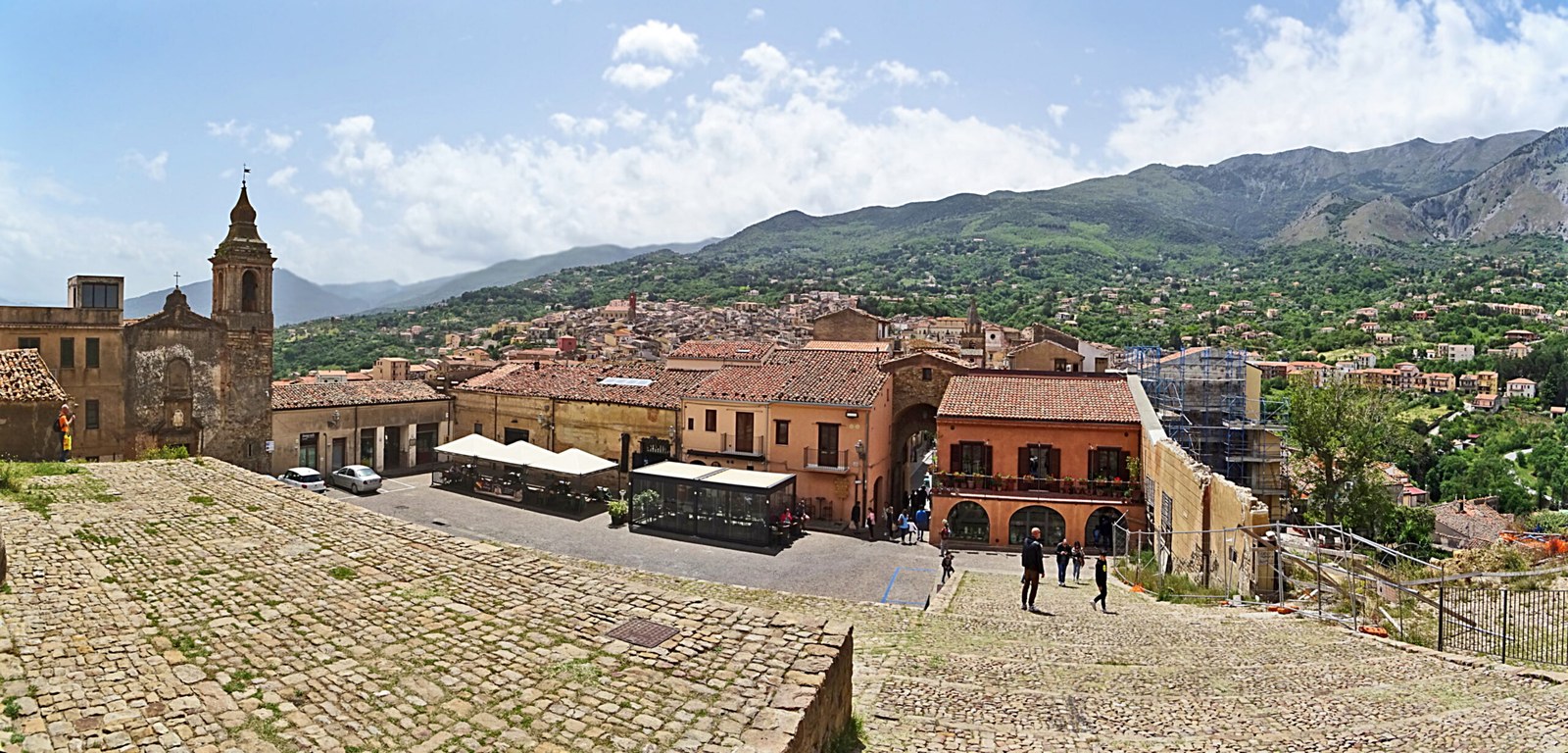
Castelbuono, in the heart of the Madonie Regional Natural Park, hosts a mushroom festival typically mid-October with guided foraging walks into the surrounding beech and oak forests. The town itself is a beautifully preserved medieval centre dominated by the Ventimiglia Castle. Worth pairing with a Madonie hike (Pizzo Carbonara loop) or a side trip to nearby Cefalù for the contrast of mountain and coast.
Pequod76 · CC BY-SA 4.0
Vendemmia on Mount Etna
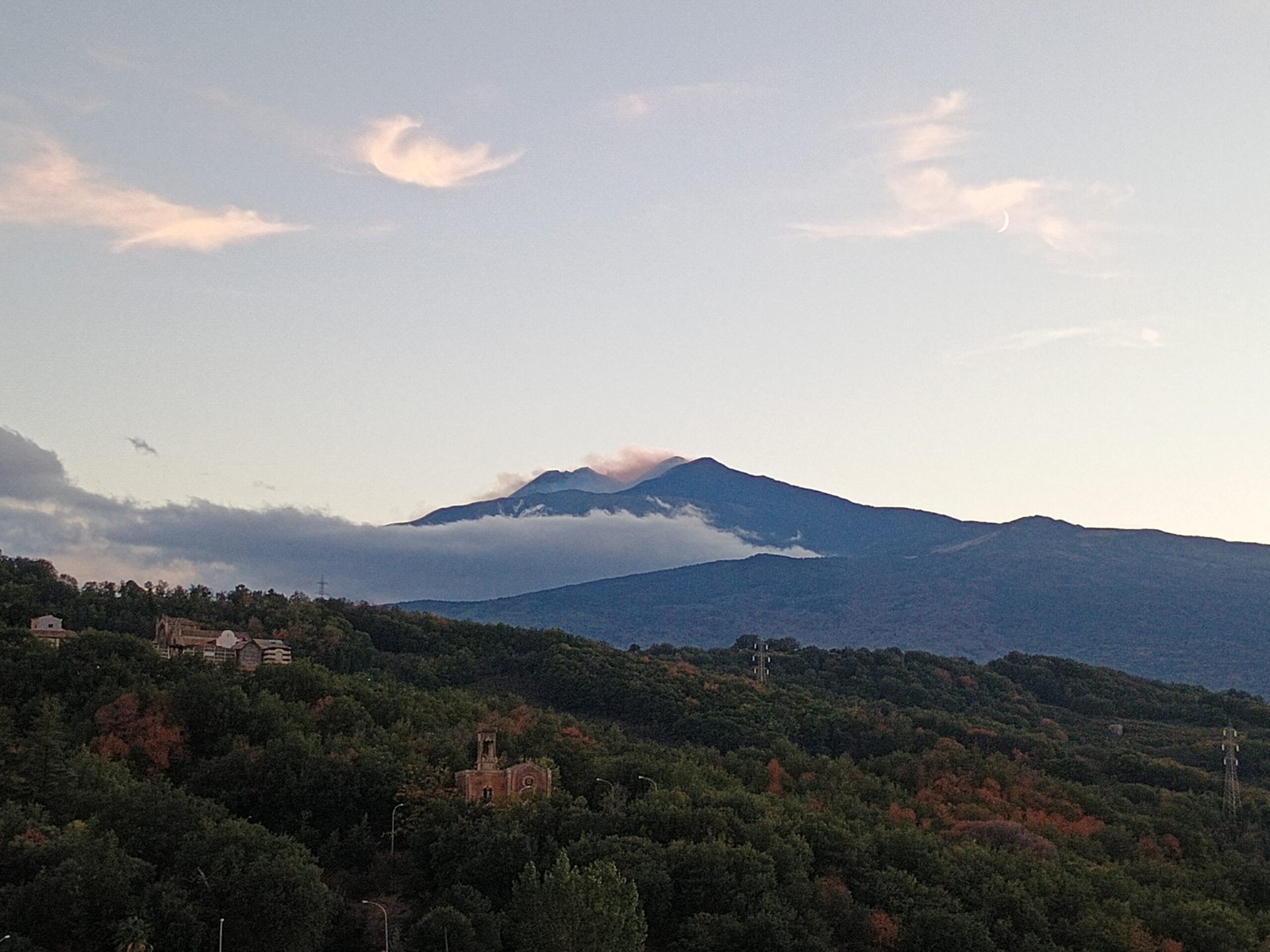
Grape harvest on Etna runs from late September to late October, depending on altitude and varietal. The contrade of Passopisciaro, Castiglione di Sicilia, Linguaglossa on the north slope and Milo, Trecastagni, Zafferana on the south slope are the heart of the action. Many cantine (Pietradolce, Graci, Planeta Sciaranuova, Murgo, Tenuta delle Terre Nere, Passopisciaro) open to visitors with tastings, vineyard walks and lunches — booking required. For deeper context on planning a wine day, see our guide on Sicily wine tours and Etna wineries from Catania, or our Sicily in September guide for the white-grape harvest peak in the last two weeks of September.
Sagra del Pistacchio Bronte
Bronte, on Etna’s western slope, is the home of the protected Pistacchio Verde di Bronte DOP. The pistachio festival runs from the last week of September into the first week of October, biennially in years ending in even or odd numbers depending on the harvest cycle. Stalls in the historic centre sell pistachio pesto, ice cream, biscuits and cured meats; growers explain the two-year alternation that gives Bronte pistachios their concentrated flavour.
Cous Cous Fest San Vito Lo Capo
Held at the very tip of the north-west coast, the Cous Cous Fest bridges late September and early October (typically the first weekend of October) and celebrates the cross-Mediterranean tradition of couscous, with chefs from across the Maghreb, Sicily, Greece and Levant cooking and competing. The setting — the sandy crescent of San Vito Lo Capo backed by Monte Monaco — is one of Sicily’s best beaches and stays warm enough for a swim during the festival.
Sagra del Miele Sortino (Siracusa province)
Sortino, north of Syracuse on the Hyblean plateau, hosts the Sagra del Miele typically in the first week of October. The town’s beekeeping tradition dates back to Greek and Roman times; the festival showcases varietal honeys (orange-blossom, eucalyptus, thyme), honey pastries, and beekeeping demonstrations. Combinable with a half-day in Syracuse and Ortigia.
Le Vie dei Tesori (multi-city, Sicily-wide)
One of October’s quieter gems: Le Vie dei Tesori opens normally inaccessible private palaces, courtyards, libraries and historic buildings across multiple Sicilian cities (Palermo, Catania, Modica, Trapani, Caltanissetta, Sciacca and others) on weekends throughout October and the first half of November. Tickets are inexpensive (typically €4-6 per visit, multi-visit cards available) and guided by local volunteers and university students. A unique way to see the inside of buildings that are otherwise locked the other 11 months of the year.
Beyond the calendar above, October sees scattered sagre in many smaller towns: chestnut festivals (Mezzojuso), prickly pear (San Cono in Catania province), olive oil opening days (Castelvetrano, Chiaramonte Gulfi), Nebrodi truffle (Capizzi). The regional tourism board (visitsicily.info) keeps a running calendar.
Best places to visit in Sicily in October
East Sicily (Catania-Taormina-Syracuse-Etna corridor + Val di Noto baroque towns) is the most rewarding October destination thanks to mild coastal weather, harvest-season events, and crowd-free baroque towns. The west (Palermo, Trapani, San Vito Lo Capo) is excellent on the first half of the month; the inland Madonie shines for hiking.

AndreaCT78 · CC BY-SA 2.0
East Sicily priority — Catania, Taormina, Syracuse, Val di Noto
Catania works as the natural October base: airport with direct UK and Irish flights, coastal climate that buffers cold inland nights, and a 1-hour radius that covers Etna, Taormina, Syracuse-Ortigia, Modica, and the Acireale coast. The historic centre (Via Etnea, Piazza del Duomo, the elephant fountain, the fish market Pescheria) is at its best in late-light October sun. Taormina in October is what Taormina was meant to be: the Greek Theatre and Corso Umberto without the August crush, sea still swim-warm at Isola Bella, and the Carretti Siciliani parade every Friday in October. Syracuse and Ortigia add a second baroque-and-Greek dimension; the INDA classical theatre season at the Teatro Greco continues into the autumn programme. For a structured east-coast itinerary see our Sicily itinerary 7 days from Catania.
Val di Noto baroque towns crowd-free
The UNESCO Late Baroque towns of Noto, Modica, Ragusa Ibla, Scicli, Catania (lower town) and Caltagirone are designed for walking — and October is the right temperature for it. Honey-coloured limestone façades, courtyards and staircases that bake unbearably in August become visit-able all afternoon. Pair a Modica day with the Chocomodica festival; a Ragusa Ibla day with the panoramic sunset from Santa Maria delle Scale.
Ludvig14 · CC BY-SA 4.0
Beach days (first half of October)
Through about 20 October you can still combine a half-day cultural visit with a swim. The best Ionian options are Isola Bella (Taormina), the Cyclops Rocks at Aci Trezza, the sandy stretch of La Plaja (Catania), and further south Marina di Ragusa, Fontane Bianche (Syracuse), and the protected Vendicari nature reserve beaches. On the west coast, San Vito Lo Capo stays warm through the Cous Cous Fest. For a longer-form beach guide see our Sicily beach holiday guide, which covers October swim-friendly temperatures explicitly.
Etna hiking — the best month of the year
October is arguably the single best month to hike Mount Etna: clear visibility, no summer haze, daytime temperatures of 11-15°C at 1.500-2.000 m, no risk of summer heat exhaustion, and the first foliage colour starting to appear in the chestnut and birch zones. The standard south-slope routes from Rifugio Sapienza (Crateri Silvestri, Schiena dell’Asino) are open and uncrowded; the north-slope routes from Piano Provenzana are equally pleasant. Above 2.500 m an authorised guide is required year-round. Pack layers — temperatures at the summit drop to single digits and below from mid-month.
ErwinMeier · CC BY-SA 4.0
Inland: Madonie and Nebrodi parks
If your priority is hiking and food, the Madonie Regional Natural Park (centred on Castelbuono) and the Nebrodi Park (Cesarò, San Fratello) are at their seasonal peak in October. Mushroom hunts, beech forests turning russet, and a network of trails (Pizzo Carbonara, Monte San Salvatore) that are quiet and well-marked.
Which part of Sicily is most beautiful?
Beauty in Sicily is subjective, but in October the east has a clear practical edge. The Val di Noto baroque corridor — Noto, Modica, Ragusa Ibla, Scicli — is at its most photogenic: warm afternoon light on honey-coloured limestone, empty piazzas, and the smell of woodsmoke from open bar doors. Taormina paired with the Ionian coast is the postcard answer: the Greek Theatre framing Etna above a still-blue sea, reachable without August crowds. For landscape over architecture, the Etna north slope in late October — Linguaglossa, Randazzo, Bronte — offers autumn foliage, pistachio-green hillsides, and volcanic black soil vineyards in harvest. The west delivers its own version via Palermo’s Monreale Cathedral mosaics and the Greek temples at Agrigento and Selinunte, crowd-free all afternoon.
What to do in Sicily in October
Beyond the headline destinations, the activity lineup in October leans into harvest, hiking, and crowd-free culture.
Harvest experiences — wine and olive oil
The vendemmia on Etna offers the chance to visit working cantine during their busiest month. Several producers (Pietradolce, Tenuta delle Terre Nere, Murgo, Planeta Sciaranuova) run vineyard walks, hand-harvest demonstrations, and tastings paired with lunch — bookable directly. From late October the first olive oil pressings begin in towns like Castelvetrano (Nocellara del Belice DOP) and Chiaramonte Gulfi (Iblei DOP), where some frantoi (mills) host tastings of the just-pressed extra virgin.
Shoulder-ideal hiking
October temperatures (11-21°C in the mountains) suit multi-day hiking better than summer. Beyond Etna and Madonie, consider the Riserva dello Zingaro coastal trail in the north-west (open and uncrowded), the Nebrodi high pastures, and the Iblei gorges (Cava Grande del Cassibile near Syracuse, Cava d’Ispica near Modica) for a scenic canyon walk.
Snorkelling and diving
Water visibility on the Ionian and around the Aeolian Islands is at its best in October — summer plankton has cleared and water is still warm. The Plemmirio Marine Reserve south of Syracuse, the Ciclopi Marine Reserve at Aci Trezza, and Capo Milazzo are top sites. Operators continue running guided dives until early November. If you’re also considering a beach day around Catania, our guide to near Catania beaches covers La Playa, Aci Trezza and the options by transport.
Crowd-free archaeology
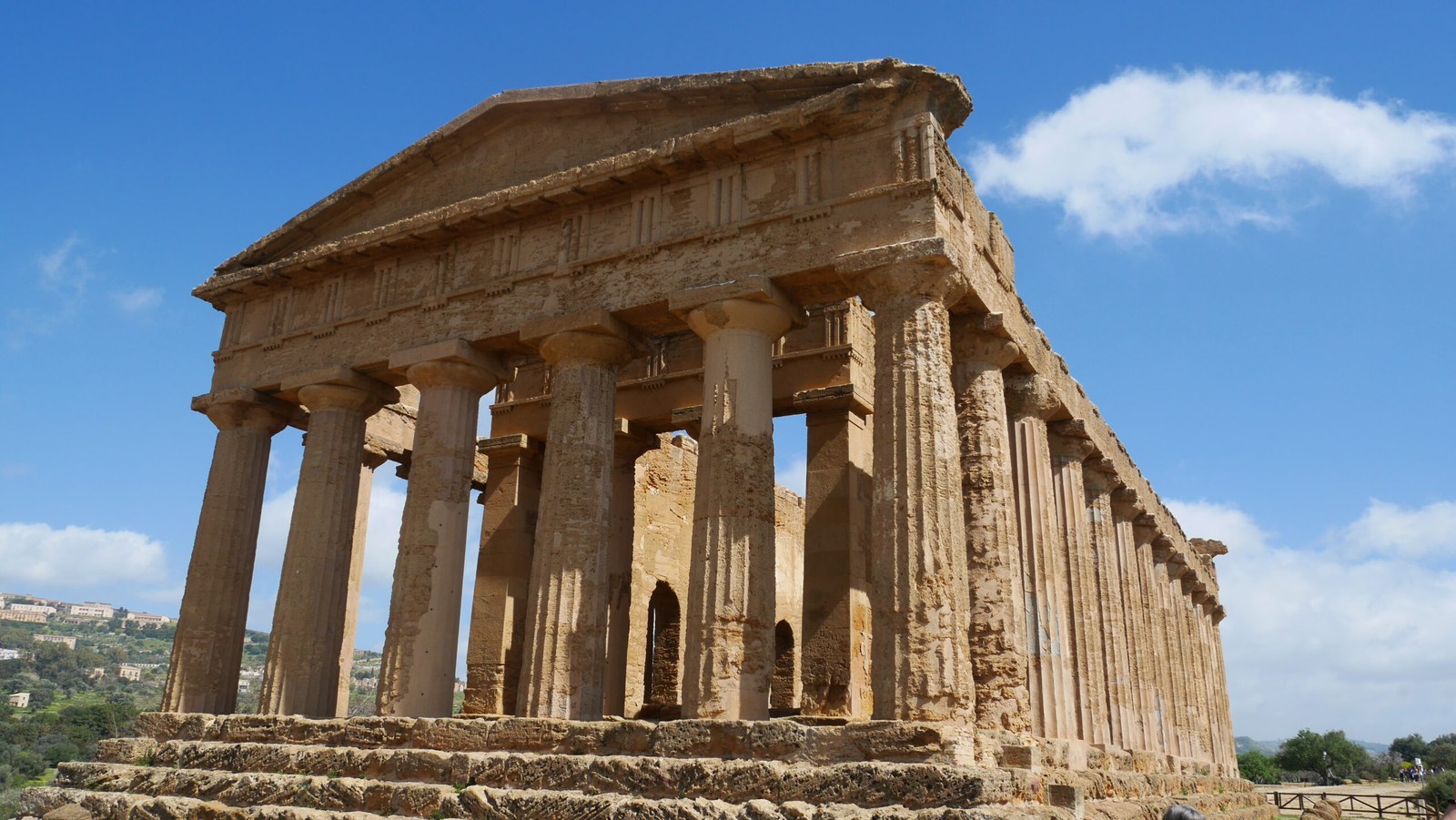
The Valley of the Temples (Agrigento), the Greek Theatre at Syracuse, the Roman Villa del Casale at Piazza Armerina, the Selinunte archaeological park and the Segesta temple all become genuinely pleasant in October — daytime is comfortable for walking the open sites, and visitor numbers drop to a fraction of August. Tickets remain the same; queues do not.
Food tours and cooking classes
October is harvest time, so food-focused experiences peak: Catania street food walks (Pescheria, arancini, cipollina, granita), Modica chocolate workshops, Etna wine-and-cheese pairings. Many operators reduce frequency from November, so October is a sweet spot.
What should you pack for Sicily in October?
Layers — short-sleeves and shorts for daytime coast (first half of month), a light jumper and packable jacket for evenings, walking shoes for baroque-town cobbles, swimwear for the sea (until ~20 October), and proper hiking gear with warm layers if you plan Etna or Madonie.
- Daytime: 2-3 short-sleeve tops, lightweight trousers or shorts, breathable shirt for sun
- Evening: long-sleeve top + light jumper or fleece (mandatory inland and after 18 October coast)
- Outerwear: packable raincoat (waterproof, hood) — covers the 8 likely rainy days
- Swimwear: first half of the month essential; second half optional
- Footwear: sturdy walking shoes (cobbled baroque streets are uneven), one pair smart-casual for evening dinners, hiking boots if Etna/Madonie
- Sun: sunglasses, sunscreen SPF 30+ (UV index in October still 5-6 midday), wide-brim hat
- Etna specific: warm hat, gloves, fleece, windproof shell — temperatures at the summit can drop below freezing from mid-month
- Adapter: EU type C/F sockets, 230V
How much does a Sicily October holiday cost?
A couple’s 7-day October trip from the UK to east Sicily typically runs £1.150-£1.700 per person on the mid-tier end (versus £1.700-£2.500 in August), with the largest savings on apartment accommodation (-25-40%) and car hire (-40%). Restaurant prices are essentially the same; some menus actually improve with seasonal autumn produce.
| Item (couple, 7 days, mid-tier) | October 2026 | August 2026 (for comparison) | October savings |
|---|---|---|---|
| Flights (return, UK-Catania) | £140-200 pp | £200-300 pp | -30% |
| Apartment (2 adults, central Catania, 7 nights) | £420-700 total | £700-1.100 total | -25-40% |
| Car rental (compact, 7 days) | £180-280 total | £300-450 total | -40% |
| Petrol + tolls | £60-90 | £60-90 | — |
| Food (€35-50 pp/day across mix of trattoria + casual) | £170-240 pp | £170-240 pp | — |
| Experiences (Etna guide, wine tour, Greek Theatre tickets) | £120-180 pp | £120-180 pp | — |
| Total per person | £1.150-1.700 | £1.700-2.500 | ~30-35% |
Where the savings really compound is the apartment line: in October a centrally located Catania apartment that asks £150/night in August is typically £80-100/night, for the same property — and stay length of 5-10 nights amplifies the gap. Self-catering also lets you cook seasonal produce from the harvest-time markets, which is part of the October pleasure.
Where to stay in Sicily in October
Pick a single central base over moving every two nights; in October a serviced apartment beats a hotel for cost, comfort on a rainy evening, and laundry capacity for outdoor wet gear; Catania is the most logistically efficient base for east Sicily, with Syracuse-Ortigia or Palermo as alternatives if your itinerary skews south or west.
Why an apartment beats a hotel in October
Three October-specific reasons:
- Rainy-evening comfort. An apartment with a sofa, kitchen and dining table is a different proposition from a single hotel room when one of the eight likely rainy evenings falls during your stay. You can cook a market dinner with autumn produce, open a bottle of Etna Rosso, and not feel cooped up.
- Laundry for outdoor gear. If you hike Etna, Madonie or the Iblei gorges, a washing machine is a non-trivial advantage — wet boots, sweaty layers and rain-soaked shells need somewhere to dry. Almost no hotel offers in-room laundry; almost every apartment does.
- Cost over a 5-10 night stay. The shoulder-season price gap between hotels and apartments widens further in October. A 7-night stay in a 50-60 m² apartment in central Catania often runs £80-100/night for two adults; an equivalently located 3-star hotel double room runs £100-130/night, and dinner-out is mandatory.
Best base cities for October
Catania is the primary east-Sicily base: airport with direct UK/Irish flights, central Mediterranean climate that mediates cold inland nights, and a 1-hour driving radius that reaches Etna, Taormina, Syracuse, Modica and the Acireale coast. The historic centre (Via Etnea spine, Piazza del Duomo with the Liotru elephant fountain, the Pescheria fish market, San Berillo nightlife district) is genuinely walkable and pleasant in October.
Syracuse-Ortigia works for a south-east-skewed itinerary (Val di Noto + Vendicari + Cava Grande), with the bonus of staying on the historic island. Palermo is the right base if your trip is west-side weighted (Monreale, Mondello, Cefalù, Segesta, Trapani) and wants to combine with the Cous Cous Fest. Taormina works for a slow week with no car, though logistics for everything beyond Etna and the Ionian coast are tighter.
Catania as October base — why it works
The case for Catania in October is straightforward:
- Central location: 45 min to Taormina, 60 min to Syracuse, 90 min to Modica/Ragusa, 75 min to Etna’s south slope
- Coastal climate buffer: milder evenings than inland — useful at the end of October when interior towns drop to 9-11°C at night
- Airport on doorstep: 7 km from the historic centre — relevant when shoulder-season flights still favour Catania over Palermo
- Walkable historic centre: Via Etnea, Piazza Duomo, Pescheria, Castello Ursino, Teatro Massimo Bellini — all within a 25-minute walk of each other
- Food density: the Pescheria market for harvest-season produce, plus arancini, cipollina, granita year-round
If you want a central, well-equipped apartment within walking distance of Piazza Duomo and Via Etnea — with proper kitchen, washing machine and the option of a 3-night minimum in shoulder season — you can browse our three units at apartments in Catania for October 2026.
How to get to Sicily in October
Two international airports serve Sicily: Catania-Fontanarossa (CTA) on the east coast and Palermo-Falcone Borsellino (PMO) on the north-west. For an east-Sicily trip, Catania is the obvious choice; for west-Sicily, Palermo. A small third airport, Comiso (CIY), serves the south-east with limited direct UK flights.
Flights from the UK and Ireland
October flight prices typically run 30% lower than August. From the UK, Catania has direct flights from London (Gatwick, Luton, Stansted, Heathrow), Manchester, Bristol, Edinburgh and East Midlands. From Ireland, Dublin has direct routes; smaller regional airports require a connection. Carriers include Ryanair, easyJet, Wizz, Vueling, ITA Airways, and British Airways. Expect £140-200 per person return for a mid-week October booking made 6-8 weeks ahead.
Arriving and getting around
Catania airport is 7 km from the historic centre; the AMT Alibus runs every 25 minutes (€4 single, ~25 minutes), or a taxi is a fixed €25. For day trips, a rental car is recommended unless you’re staying in Taormina without leaving the corridor. Be aware of ZTL (limited traffic) zones in historic centres — Taormina, Syracuse-Ortigia, Catania, Modica, Ragusa Ibla all have them, and the cameras work. For parking strategy in Catania (where ZTL applies and street parking is paid), see our where to park in Catania guide.
Sicily in October is one of the best months for family holidays — half-term-friendly, beach window still open, sightseeing temperatures comfortable. See our Sicily family holiday guide for the wider audience-specific take.
For the high-summer alternative two months earlier, see our Sicily in August guide — Ferragosto, the Aeolian Islands at peak, La Vara di Messina, the Madonna della Catena Aci Trezza, and Etna at altitude.
For the high-summer months see our Sicily in June guide (Taormina Film Festival mid-June, swimming season begins) and our Sicily in July guide (Festino di Santa Rosalia, Etna summit cool, sea 24-26°C).
Frequently asked questions about Sicily in October
Is the sea warm enough to swim in October in Sicily?
Yes, through about 20 October. The sea around Sicily averages 22-23°C in October, dropping from 23-24°C in the first week to 21°C in the last. The east coast (Catania, Taormina, Syracuse) and south-east (Marina di Ragusa, Fontane Bianche) hold heat slightly longer than the west.
Does it rain a lot in Sicily in October?
No. October averages 8 rainy days and 35-70 mm of rain across the month, mostly in the second half. Showers are usually short rather than all-day, and rarely disrupt sightseeing. A packable raincoat covers the worst case.
Is Sicily empty in October?
Not empty, but visibly quieter — the tourist crowd index is roughly 4-5/10 in October versus 10/10 in August. Major sites (Valley of the Temples, Taormina Greek Theatre, Ortigia) feel visit-able rather than mobbed; baroque towns and inland parks are very quiet.
Which is the warmest part of Sicily in October?
The south-east coast — Ragusa, Syracuse, Marina di Modica, Marzamemi — averages 1-2°C warmer than the rest of the island, with daytime highs touching 27-28°C in the first week. The east coast (Catania, Taormina) is a close second.
Is October a good time to visit Mount Etna?
Yes — arguably the single best month. Daytime temperatures at 1.500-2.000 m are 11-15°C, visibility is at its annual best (no summer haze), the first foliage colour appears in the chestnut and birch zones, and crowds drop significantly versus August. Pack proper layers — temperatures at the summit can drop below freezing from mid-month, and an authorised guide is required above 2.500 m.
What is the difference between Sicily in October and September?
September is essentially summer with smaller crowds: 27-29°C by day, sea 25°C, no rain. October is true shoulder season: 24°C by day, sea 22°C, occasional rain in the second half, more events (Ottobrata, Chocomodica, Vendemmia), and 25-30% lower prices than September.
How does October compare to November or December in Sicily?
November is autumn proper: 19°C by day, sea 20°C, 11 rainy days, with the harvest finale (olio novello, San Martino, ChocoModica) and shoulder prices roughly 10-15% below October. See our Sicily in November guide for the full breakdown. December is the deepest off-peak window of the year (outside the Dec 19-Jan 6 Christmas surge): 16°C by day, sea 17°C, Christmas markets and Santa Lucia in Syracuse, with apartment prices 40-60% below August. See our Sicily in December guide for the festive season detail, or our Sicily in March guide for the spring shoulder with almond blossom in Agrigento, or our Sicily in April guide for the Easter and Holy Week peak.
Can I visit the Valley of the Temples in October?
Yes, October is one of the best months. The site is fully open, daytime temperatures (24-26°C) make walking the long open path comfortable, and visitor numbers drop to a fraction of August. Mornings or late afternoon for the best light on the Temple of Concordia.
Should I book accommodation in advance for Sicily in October?
Yes, but you have more flexibility than in summer. October availability for centrally located apartments is usually open 4-6 weeks ahead, versus 3-4 months for August. Booking earlier secures the best apartments at the lowest October rates — most listings publish dynamic shoulder pricing that increases as availability shrinks.
For a deeper winter visit — Etna ski season, blood-orange peak and the Sant’Agata countdown — see our Sicily in January guide.
The information in this guide was correct at the time of writing. Data can change from season to season without notice: before you travel, always check the official channels and websites for updates. We review this guide periodically, but the official channels are always the authoritative source. We also cannot guarantee that the suggested routes or the attractions described are always reachable or accessible: roads, trails and sites may be closed, damaged, altered or unsafe. Assessing the practicability and safety of itineraries and attractions always remains your own responsibility.