
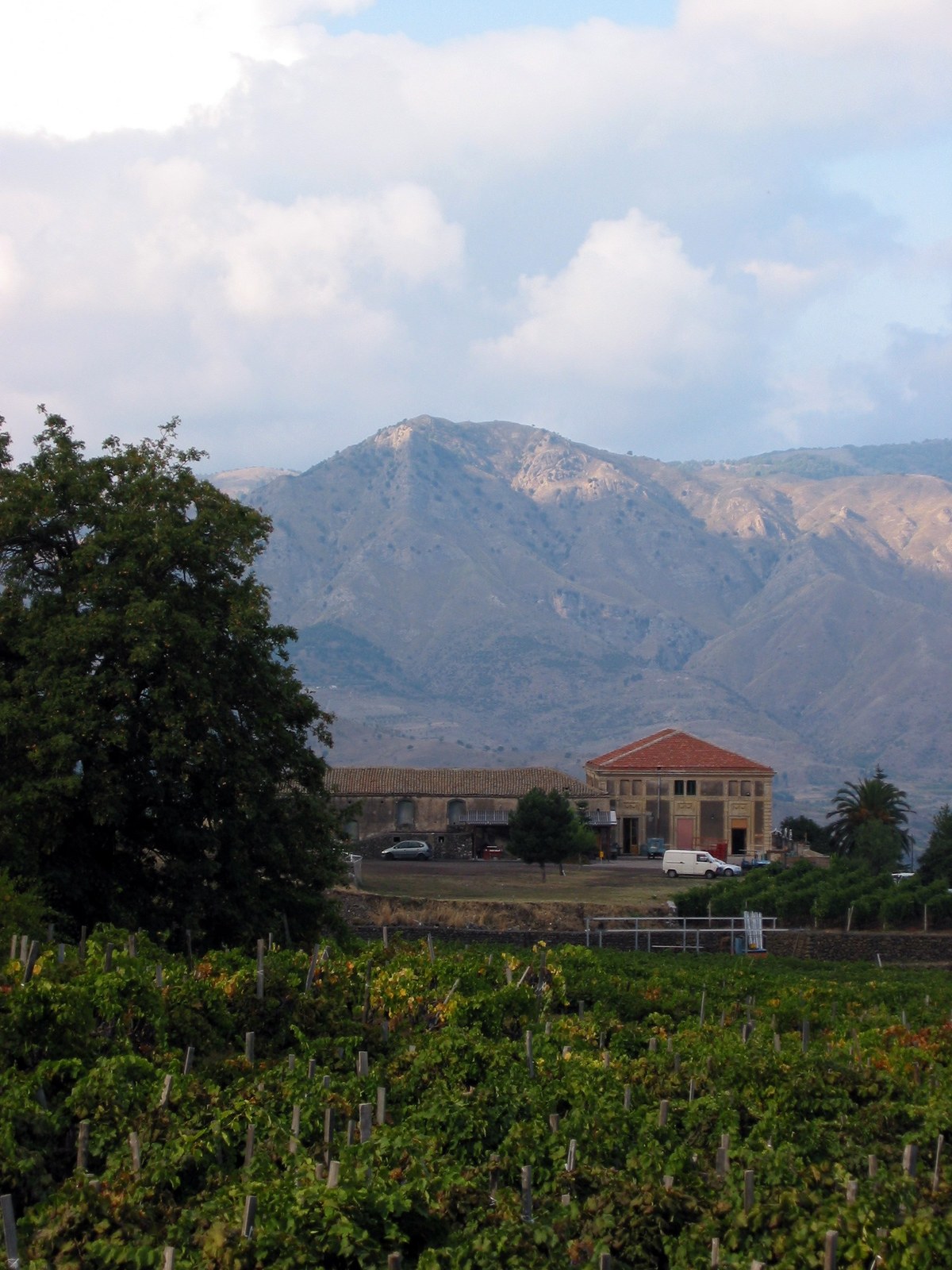
Mount Etna is the world’s only active-volcano wine region. Grapes grow in black sciara soil at 400 to 1,100 metres altitude, on a mountain that has been a UNESCO World Heritage Site since 2013 and the Etna DOC appellation since 1968. This guide covers the ten producers worth a day trip from Catania, the four ways to get to them, what a tasting actually costs in 2026, and whether to book directly with the winery or via a platform like Viator or GetYourGuide. Nerello Mascalese, Carricante, contrada system, vendemmia timings — all explained without wine-snob jargon, because a good Sicily wine tour rewards curiosity more than prior expertise.
For broader trip planning beyond wine — when to visit, where to go and how long to stay — see our Sicily travel guide.
What makes Etna wines unique?
Etna is Europe’s highest active volcano and the only wine appellation in the world built on an erupting mountain. Vines sit on terraces of cooled lava between 400 and 1,100 metres, a vertical range that lets the same producer bottle a crisp 1,000-metre Carricante white and a structured 600-metre Nerello Mascalese red from plots a few kilometres apart. Three technical elements give Etna wines a signature no one else can copy: volcanic soil, indigenous grapes, and the contrada cru system.
Cantine Aperte in May? The last Sunday of May opens around 150 Sicilian wineries for free tastings, with the densest concentration on Etna DOC — see our Sicily in May guide for the festival window and pairings.
Elemaki · CC BY-SA 4.0
Volcanic soil: sciara, sand and lapilli
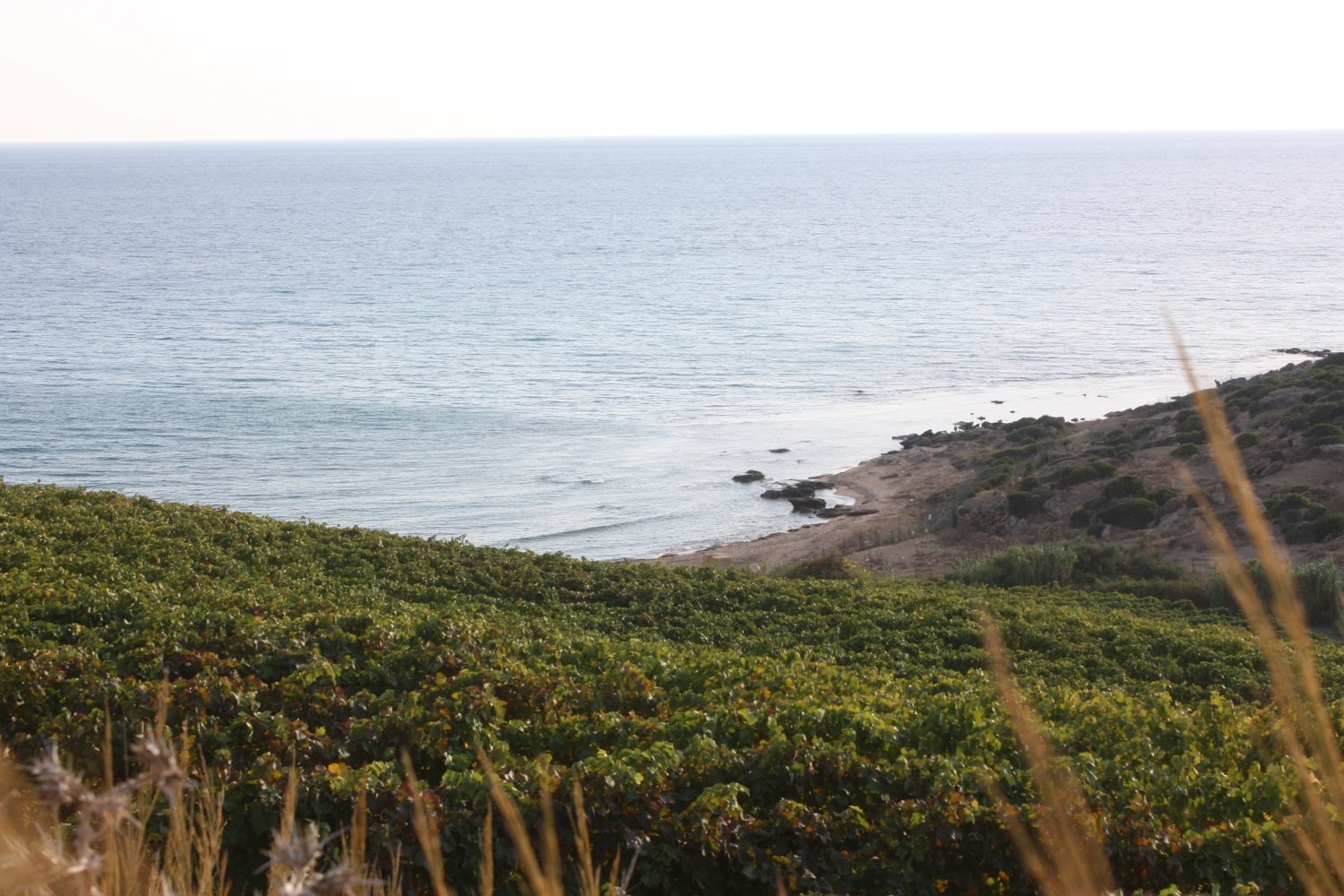
The topsoil on Etna is a mosaic of three volcanic components: black sciara (broken lava rock), coarse sand, and lapilli (pea-sized pumice thrown during eruptions). This blend drains fast, holds daytime heat, and releases it slowly at night — a combination that pushes sugars up while keeping acidity razor-sharp. The mineral imprint is unmistakable: a smoky, graphite edge that wine writers from Decanter routinely flag as “volcanic minerality”. It is not a marketing phrase. Plant a Chardonnay on sciara and it tastes like Etna; plant it on limestone and it tastes like Burgundy.
Indigenous grapes: Nerello Mascalese, Nerello Cappuccio, Carricante
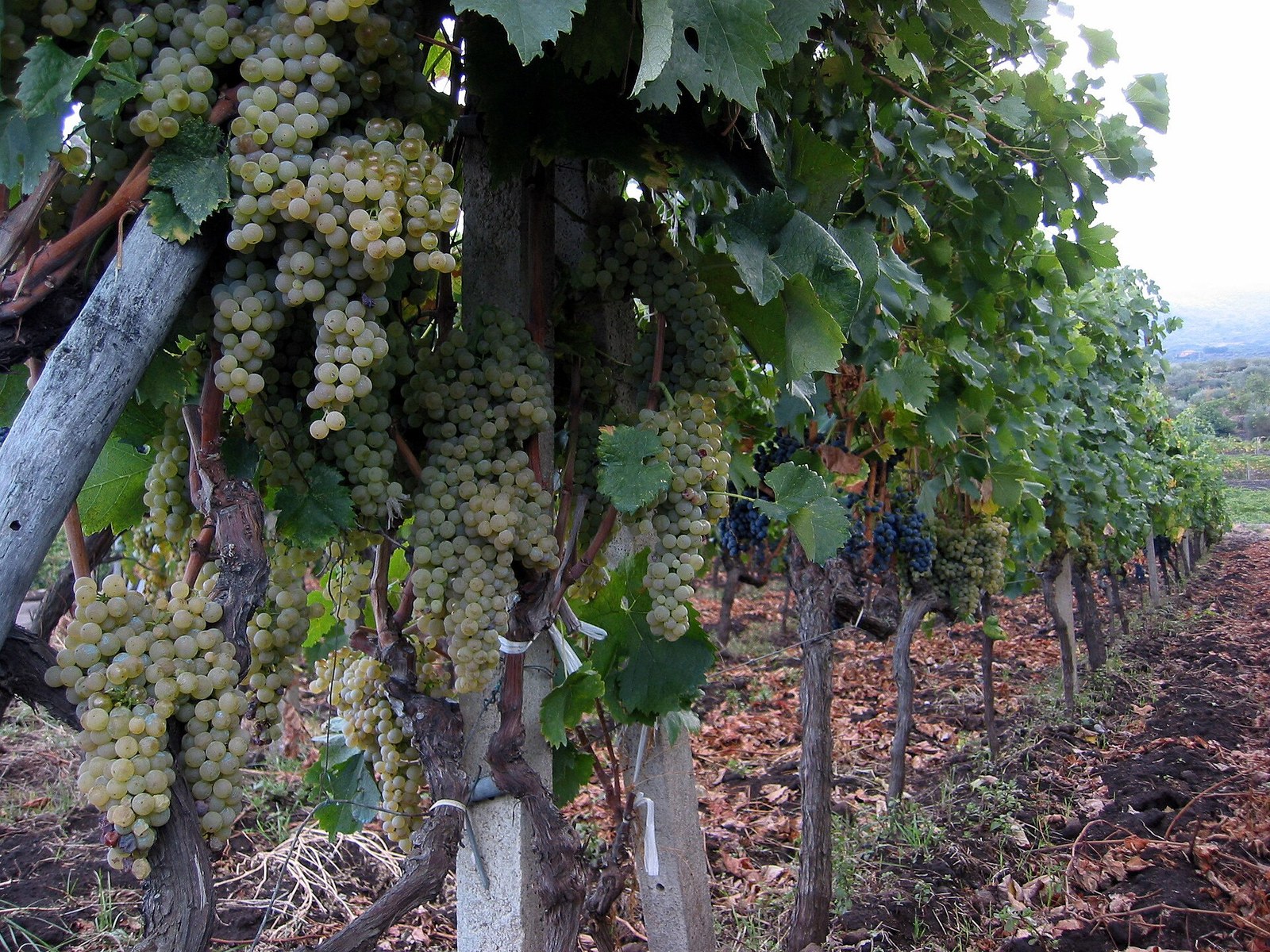
Three grape varieties dominate the mountain. Nerello Mascalese is the flagship red — light in colour, high in acidity, often compared to Nebbiolo or Pinot Noir, with a transparency that lets the volcanic soil speak. Nerello Cappuccio is the blending partner: darker, fleshier, used in small percentages to add colour and texture to Etna Rosso. Carricante is the white: one of Italy’s most structured autochthonous whites, with vineyards climbing to 1,100 metres on the east slope and a dedicated sub-zone, Etna Bianco Superiore, reserved for pure Carricante from the commune of Milo.
The contrada system: Etna’s cru
Where Burgundy has climats and Barolo has MGA, Etna has contrade — named micro-zones that reflect a specific altitude, aspect, and lava flow. Over 130 contrade are recognised on the mountain. A handful are now wine-lover landmarks: Passopisciaro, Feudo di Mezzo, Sciaranuova, Santo Spirito, Guardiola. Serious producers often bottle single-contrada wines side by side, letting you taste three versions of the same grape farmed within 500 metres of each other.
Is Etna the best wine region in Sicily?
Etna DOC, established in 1968, consistently earns the highest international scores among Sicilian appellations — its Nerello Mascalese reds regularly appear in Wine Spectator and Decanter top selections. That said, Sicily has seven recognised wine regions: Marsala, Nero d’Avola country (Noto, Pachino), Passito di Pantelleria, Cerasuolo di Vittoria DOCG and others. For travellers staying in Catania, Etna is the only one reachable as a half-day trip (30 minutes to the south slope); the others require an overnight or a long-day commitment.
North Etna vs South Etna wineries: which should you visit?
North Etna (around Randazzo, Passopisciaro, Castiglione di Sicilia and Linguaglossa) is cooler, higher, and home to most of the cult contrada-focused estates. South Etna (around Viagrande, Trecastagni, Milo and Santa Venerina) is the historic heart of the appellation — larger, long-established wineries, the original Etna DOC territory, and the closest wineries to Catania. Most travellers visit both slopes on separate days; committed wine enthusiasts spend two full days on the north and one on the south.
Neil Weightman · CC BY 2.0
| Criterion | North Etna | South Etna |
|---|---|---|
| Main grapes | Nerello Mascalese — structured reds | Carricante — historic whites (Etna Bianco Superiore DOC in Milo) |
| Altitude range | 600-1,000 m | 400-800 m |
| Climate | Cooler, marked diurnal range | Warmer mornings, sea-breeze influence |
| Landmark contrade | Passopisciaro, Feudo di Mezzo, Sciaranuova, Guardiola | Milo (Carricante pure), Trecastagni, Viagrande |
| Winery size | Mostly boutique — 20-80 ha typical | Mix of historic large (Benanti, Murgo) and small family estates |
| Drive time from Catania | 50-60 min | 25-35 min |
| Price positioning | Premium reds, collector-focused | Wider range — entry-level to historic single-vineyard |
| Scenery | Rugged lava fields, pine forests, Castiglione skyline | Softer terraces, Ionian sea views, Mount Etna from below |
If you have only one day and want breadth, pick the south slope: shorter drive, more Carricante, Benanti alone offers exposure to all four Etna sub-zones. If you want depth and have two days, dedicate one to the north slope contrada-hopping.
Which Etna winery should you visit first?
For first-timers, Benanti is the single best introduction to Etna wines. Founded in 1988 and based in Viagrande on the south slope, it is the only producer with vineyards on all four Etna slopes (north, south, east, west) and offers a tasting range that walks you through the entire appellation in one sitting. If Benanti is fully booked or you want a specific angle, match the winery to your priority:
- First wine tour, want the full picture → Benanti (south, Viagrande)
- Best panoramic views over Etna → Gambino Vini (south, Linguaglossa area)
- Natural-wine, minimal-intervention → Graci (north, Passopisciaro)
- Contrada-by-contrada deep dive → Passopisciaro (Vini Franchetti) (north)
- Contemporary design, art on site → Pietradolce (north, Solicchiata)
- Historic estate, Italian Grand Tour energy → Barone di Villagrande (since 1727, Milo)
- Sparkling wine (Etna Brut) → Murgo (south, Santa Venerina)
- No car, short on time, shuttle from Catania → Etna Urban Winery (closest to the city, pick-up at Piazza Stesicoro)
Whichever you pick, book 24-48 hours ahead in shoulder season and 1-2 weeks ahead during the September vendemmia window. Most Etna estates do not accept walk-ins — this is not Tuscany, and tasting-room staff are often also the winemaker’s family.
Top 10 Etna wineries for a day trip from Catania
Ten producers worth the drive, selected for a mix of historical importance, quality, accessibility from Catania, and English-speaking hospitality. Coordinates and Google Maps pins are in the map below this section.
1. Benanti (South, Viagrande)
- Location
- Via Giuseppe Garibaldi 361, Viagrande Maps
- Site
- benanti.it
- Essential fact
- The historic DOC pioneer, revived by Giuseppe Benanti in the late 1980s. The only producer with vineyards on all four Etna slopes — a single tasting covers the entire appellation.
- Price
- €30–60 pp
The historic DOC pioneer. Giuseppe Benanti revived Etna viticulture in the late 1980s when the appellation was near collapse; today his sons run a tightly curated portfolio that includes single-vineyard Carricante from Milo (Pietra Marina), Nerello Mascalese from multiple contrade, and a rare Rovittello cru. Tastings are the most structured on the mountain — excellent first stop to build a mental map.

Megan Mallen · CC BY 2.0
2. Planeta Sciaranuova (North, Castiglione di Sicilia)
- Location
- Contrada Sciara Nuova, Castiglione di Sicilia Maps
- Site
- planeta.it/esperienze/sciaranuova/?utm_source=google&utm_medium=organic&utm_campaign=gbp&utm_content=website-button
- Essential fact
- Sicily’s most internationally recognised wine brand. The Etna outpost sits on lava from the 1614 eruption; in summer it hosts the Sciaranuova Festival, open-air theatre in the vineyard amphitheatre.
- Price
- €40–70 pp
Planeta is the most internationally recognised Sicilian wine brand and its Etna outpost sits at contrada Sciaranuova, on lava from the 1614 eruption. In summer, the estate hosts the Sciaranuova Festival, an open-air theatre event in the vineyard amphitheatre — worth timing a trip around if you’re visiting in July or August.
3. Graci (North, Passopisciaro)
Alberto Aiello Graci makes some of Etna’s most sought-after contrada-specific reds with minimal intervention in the cellar. The estate sits in Passopisciaro’s contrada Arcuria, with vines on multiple expositions; tastings feel closer to a winemaker conversation than a commercial visit.
4. Passopisciaro — Vini Franchetti (North, Passopisciaro)
- Location
- Contrada, Via Guardiola, Passopisciaro Maps
- Site
- vinifranchetti.com/it/passopisciaro
- Essential fact
- Founded by Andrea Franchetti, this estate formalised the contrada cru concept on Etna. A flight of all five single-contrada bottlings side by side is one of the clearest demonstrations of terroir in Italy.
- Price
- €50–80 pp
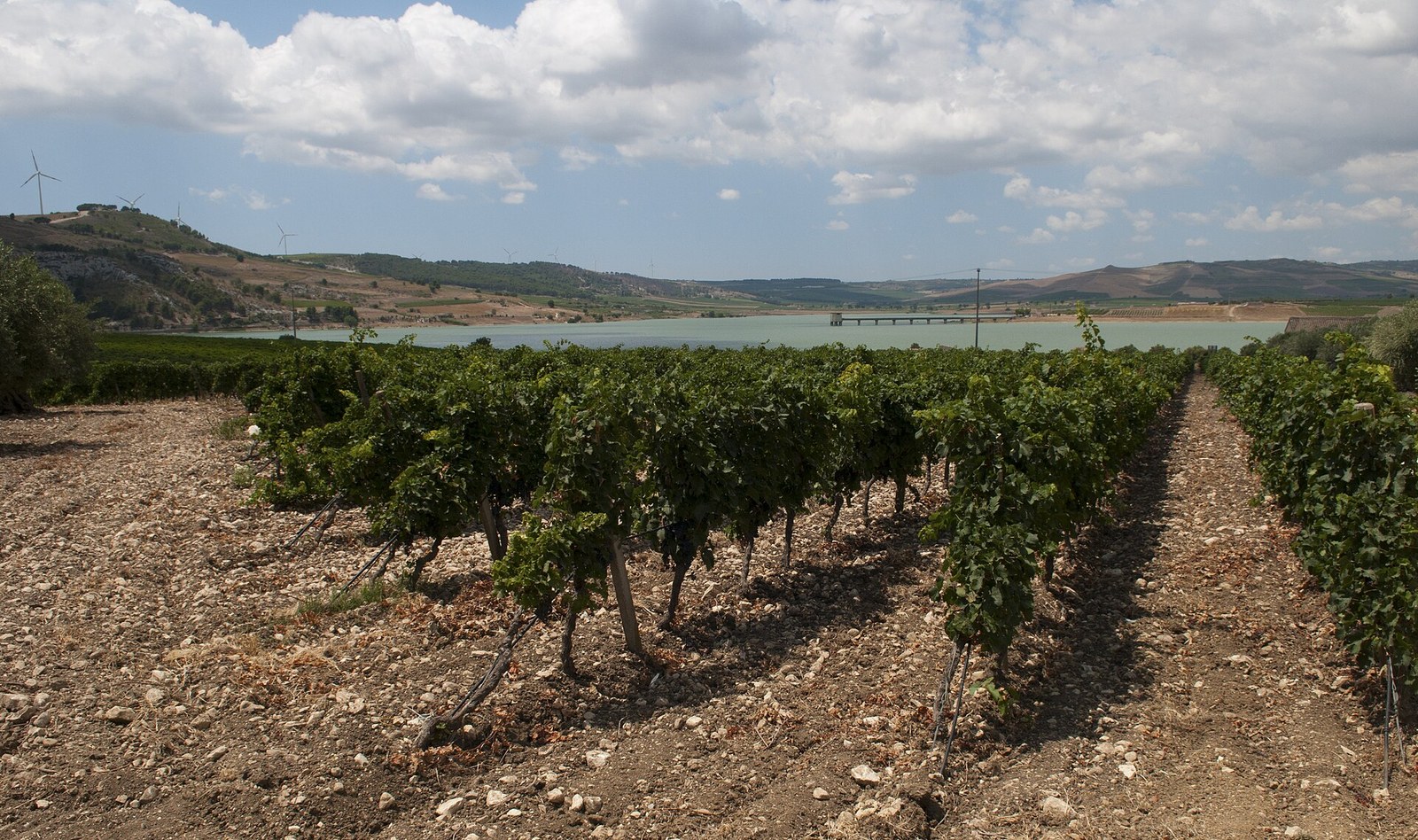
Founded by Andrea Franchetti (Tenuta di Trinoro in Tuscany), Passopisciaro formalised the contrada cru concept on Etna with separate bottlings from Contrada R (Rampante), S (Sciaranuova), C (Chiappemacine), G (Guardiola), and P (Porcaria). A flight of the five side by side is one of the clearest demonstrations of terroir in Italy.
Planetawine · CC BY-SA 4.0
5. Pietradolce (North, Solicchiata)
- Location
- SS120 174, Solicchiata Maps
- Site
- pietradolce.it
- Essential fact
- The best-dressed winery on Etna: sleek contemporary architecture, rotating art exhibits, and a serious wine programme. The Barbagalli single-vineyard Etna Rosso is among the mountain’s top rated reds.
- Price
- €40–65 pp
Pietradolce is the best-dressed winery on Etna: sleek architecture, contemporary art (rotating exhibits), and a serious wine programme. The Barbagalli single-vineyard Etna Rosso is consistently among the mountain’s top rated reds. Good option if you want the visual-cultural dimension alongside the wine.
6. Tenuta delle Terre Nere (North, Randazzo)
- Location
- Contrada, Strada Comunale Calderara, snc, Randazzo Maps
- Site
- tenutaterrenere.com
- Essential fact
- Marco de Grazia’s estate pioneered Etna wine exports to the US. The ‘Prephylloxera’ bottling comes from pre-1880 ungrafted Nerello Mascalese vines — among the oldest working vines in Europe.
- Price
- €40–70 pp
Marco de Grazia’s estate pioneered the export of Etna wines to the United States in the 2000s. The “Prephylloxera” bottling comes from pre-1880 ungrafted Nerello Mascalese vines — among the oldest working vines in Europe.
7. Murgo (South, Santa Venerina)
The Murgo family pioneered metodo classico sparkling wine from Nerello Mascalese on Etna in the early 1990s. Their Brut and Brut Rosé are the best-value traditional-method sparklings in Sicily and pair beautifully with the Pescheria seafood you’ll eat back in Catania.
8. Gambino Vini (South/panoramic, Linguaglossa area)
- Location
- Contrada Petto Dragone, Linguaglossa Maps
- Site
- vinigambino.it
- Essential fact
- One of the most photographed views on Etna — a lunch terrace facing the volcano’s north face. The food offer is farm-to-table and seasonal; lunch upgrade available (€60–90 pp with food).
- Price
- €30–70 pp
Gambino has one of the most photographed views on Etna — a lunch terrace facing the volcano’s north face. The food offer is serious (farm-to-table, seasonal), which makes this an ideal mid-day stop on a two-winery itinerary.
9. Barone di Villagrande (South, Milo)
- Location
- Via del Bosco 25, Milo Maps
- Site
- villagrande.it
- Essential fact
- Founded in 1727, the oldest continuously operating estate on Etna and the only winery in Milo — the sole Etna Bianco Superiore DOC sub-zone, reserved for pure Carricante.
- Price
- €40–70 pp
Founded in 1727, Villagrande is the oldest continuously operating estate on Etna and the only winery in Milo — the sole Etna Bianco Superiore DOC sub-zone, reserved for pure Carricante. An on-site agriturismo makes this a natural overnight option for wine-focused trips.
10. Etna Urban Winery (Catania-closest)
- Location
- Via Catira 40, San Gregorio di Catania Maps
- Site
- etnaurbanwinery.it
- Essential fact
- The closest working winery to Catania city centre, with shuttle pick-up from Piazza Stesicoro. Not a traditional rural estate, but the logistics are unbeatable for a half-day experience.
- Price
- €35–75 pp with food
The closest working winery to Catania city centre, with a shuttle pick-up from Piazza Stesicoro for their sunset tour — ideal for visitors without a car or short on time. Not a traditional rural estate, but the wines are well made and the logistics are unbeatable for a half-day experience.
Etna wineries map
The map below plots all ten wineries (teal pins, numbered 1-10 to match the list above) plus Catania and the six hub towns on each slope (amber pins). Use it to plan drive times and cluster two or three wineries in a single day.
How do you get to Etna wineries from Catania?
Catania sits 25-35 minutes from South Etna wineries and 50-65 minutes from North Etna contrade. The main road combination is SS120 (state road around the volcano) plus the A18 motorway (Catania–Messina). Four practical options, each with trade-offs.
Kasper2006 · CC BY-SA 4.0
| Mode | Cost (2026) | Duration round-trip | Flexibility | Group size | Best for |
|---|---|---|---|---|---|
| Private driver + guide | €200-350 total (1-4 pax) | Full day, door to door | High — custom itinerary | 2-4 | Couples, wine enthusiasts, no driving |
| Shared minivan tour | €80-130 pp (Viator/GYG) | 7-9 hrs fixed | Low — set itinerary | 6-16 | Solo travellers, budget, first-timers |
| Self-drive (rental) | €50-80/day + fuel + tasting fees | Full day, own pace | High — pick your stops | Up to 5 | Drivers, flexibility, couples sharing driving |
| Circumetnea Wine Train | €30-50 pp ticket + wine events | Half or full day, scheduled | Low — fixed route | Group experience | Train lovers, scenic ride, light tasting |
| Taxi (emergency) | €60-80 one way | Per leg | None — return arranged separately | 1-4 | Last-resort, no Uber in Sicily |
Private driver with tastings
The most common choice for couples and wine-focused travellers. A local driver-guide picks you up at your Catania apartment, builds the itinerary around your preferences (north vs south, lunch at winery, crater stop), and handles all contact with the wineries. Pros: zero logistics, bilingual guide usually included, drink freely. Cons: highest absolute cost.
Shared small-group minivan tour
Viator and GetYourGuide both sell shared minivan tours that pick up in central Catania, visit two wineries, include lunch at one, and return by early evening. Tours are vetted, English-guaranteed, and often include 24-hour free cancellation — ideal for solo travellers or couples who prefer a fixed programme.
Self-drive (rental car)
Renting a car opens the entire mountain and lets you combine wineries with villages, craters, or beaches on the same day. The practical caveats: Catania’s ZTL (restricted traffic zone) in the old town closes to non-residents most of the day, so park outside the ZTL and walk in — our Catania parking guide covers every option. Rental on Etna is also a chance to drive the SP92, the most spectacular road on the south slope.
Circumetnea Wine Train
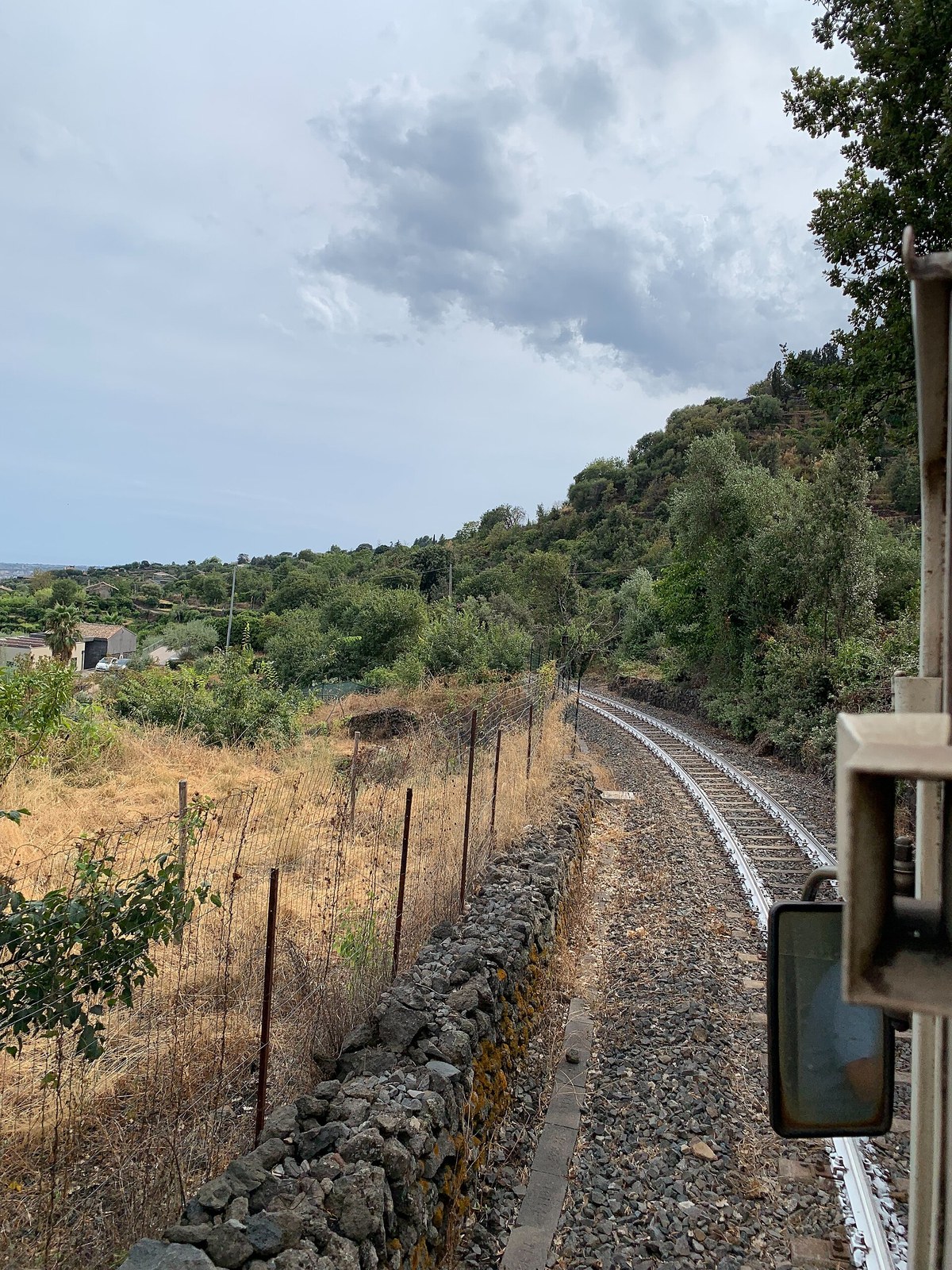
The Ferrovia Circumetnea is a narrow-gauge railway built in the 1890s that circles the volcano. A dedicated Wine Train service runs on select days with tastings onboard and stops at two north-slope villages (Randazzo and Linguaglossa). Slower than a car but scenic — good choice for a half-day if you already know Catania and want a leisurely taste of the mountain.
Should you book direct or via Viator and GetYourGuide?
Direct booking saves 15-30% and gives you more time with the sommelier; platforms win on instant confirmation, flexibility and English-language guarantee. Most travellers end up using both — direct for the wineries they care about most, platform for the day-tour backbone. Here’s the comparison, criterion by criterion.
| Criterion | Direct (email/phone cantina) | Viator / GetYourGuide | Private driver (agency) |
|---|---|---|---|
| Typical price | Lowest (no platform fee) | 15-25% mark-up vs direct | Highest absolute |
| Cancellation policy | Varies — often 24-48h notice, sometimes non-refundable | 24h free cancellation standard | Agency policy, usually 48h |
| Language guarantee | Not guaranteed — ask on booking | English-language tours flagged upfront | Bilingual guide usually included |
| Flexibility (custom itinerary) | Full — email the estate directly | Fixed packaged programme | Full — build the day with the driver |
| Group size control | You decide — often solo/couple possible | Shared groups 6-16 pax | Your group only (1-4) |
How to book direct: a 3-step pattern
- Find the contact page on the winery’s website (all ten estates listed above publish an email or a tasting-booking form).
- Email 24-48 hours ahead (1-2 weeks for peak season September-October). Include: date, time preference (most estates run morning 10:30-12:00 and afternoon 15:00-17:00 slots), number of guests, language request, any mobility or dietary needs.
- Confirm the day before. A short email or WhatsApp reconfirmation avoids a wasted drive — Etna weather can close roads unexpectedly in winter and harvest weeks can overflow the calendar.
If you want the wineries on our top-10 list but prefer a single seamless booking, Viator and GetYourGuide both sell vetted third-party driver-guide services that book direct on your behalf and wrap the experience in platform protections.
What does a typical Etna wine day look like?
The classic Etna wine day is 2-3 wineries, lunch at one of them, and an optional crater stop in the afternoon. Trying to squeeze four wineries into a single day is a rookie mistake — you lose the conversation with each winemaker, and the afternoon tasting lands on a palate that has already seen 12 wines. Here’s the pattern we recommend to our apartment guests.
- 09:00 — Leave Catania. Coffee and granita con brioche before departure if you stay near Piazza del Duomo.
- 10:30-12:00 — First winery (structured tasting). Start with the most technical producer — Benanti, Passopisciaro, Barone di Villagrande. Palate is fresh, attention is high.
- 12:30-14:30 — Lunch at a second winery. Gambino, Barone di Villagrande, or an agriturismo near Randazzo. 2-3 wines paired with 3-4 courses. Slow down.
- 15:30-17:00 — Third winery (optional) or Etna crater stop. If the palate is still with you, a shorter, informal tasting. If not, drive up to Rifugio Sapienza (south slope, 50 min from Viagrande) for a cable-car ride and crater walk.
- 18:30-19:30 — Return to Catania. Sunset over the Ionian Sea from the motorway’s Aci Castello exit is free, and worth the 5-minute detour.
Two wineries is the sweet spot. Three is ambitious. Four is for sommeliers.
How much does an Etna wine tour cost in 2026?
An Etna tasting typically costs €29-70 per person (average €49.50), with food pairings adding €35-65. Full-day private driver tours run €110-200 pp (pick-up, guide, lunch, tastings included); shared minivan tours €80-130 pp. Self-drive is cheapest in absolute terms (rental €50-80/day plus fuel and tasting fees) but adds the cost of a designated driver or a sober-driver swap. Prices are 2026 guidance; confirm directly with the winery or operator when booking.
Elemaki · CC BY-SA 4.0
| Experience | Low tier | Mid tier | Premium tier |
|---|---|---|---|
| Winery tasting only (per person) | €29 | €45-55 | €60-70 |
| Tasting + food pairing (per person) | €35 | €50 | €65 |
| Winery lunch (3-4 courses, per person) | €40 | €60 | €80+ |
| Private driver full day (total 1-4 pax) | €200 | €280 | €350 |
| Shared minivan tour (per person) | €80 | €100 | €130 |
| Rental car (per day, economy) | €50 | €65 | €80 |
Budget example — couple, one wine day, mid tier. Shared minivan (€100 pp × 2 = €200) including two tastings and lunch ⇒ all-in €200 for two. Same day self-drive: rental €65 + fuel €15 + two tastings €50 pp = €180 — marginal savings, more work. Private driver full day: €280 + tastings €50 pp × 2 = €380 — premium but unmatched flexibility.
When is the best time for Etna wine tours?
Around 11 November — St. Martin’s Day / San Martino — Etna cantine open for the first novello tastings of the year, the very first young wine of the harvest. Late October through early November is also when grapes from the highest contrade (Pietramarina at 1.000 m) are still being picked, so a wine day can include the harvest finale itself. For full late-autumn context see our Sicily in November and Sicily in December guides.
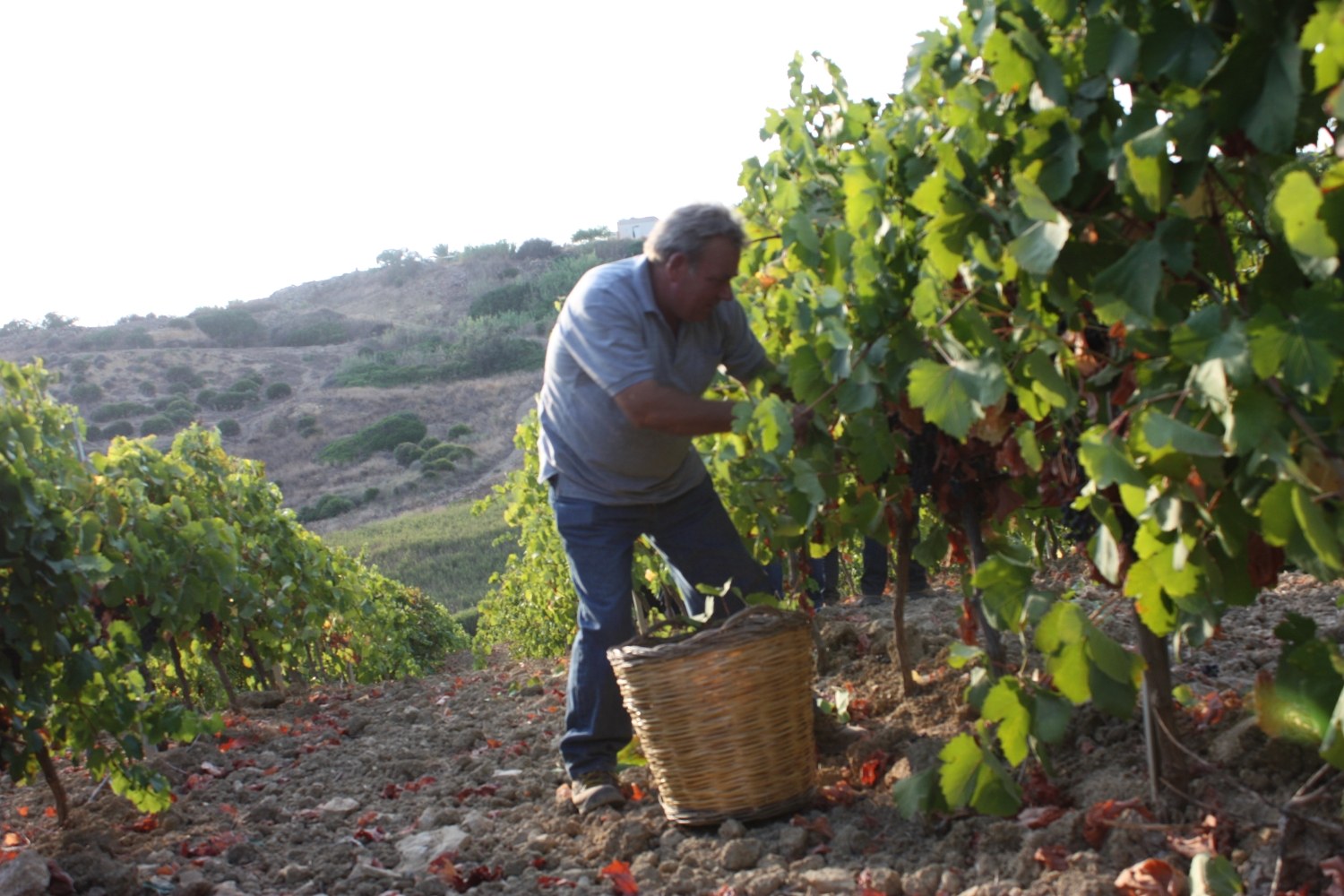
May-June and September-October are the sweet spot for Etna wine tours. Mild weather, green vineyards, shoulder-season pricing, and producers in the cellar available for serious tastings. Vendemmia (harvest) runs late September to mid-October: the most atmospheric time — you’ll see picking in the vineyards and taste the previous vintage still on the lees — but book at least two weeks ahead as wineries prioritise harvest logistics over tasting rooms.
- May-June: long days, warm but not hot, vines in full leaf, tasting rooms not yet busy. Best month to combine wine with beaches.
- Mid-September to mid-October: vendemmia, warmest sea of the year, golden light. Book 2 weeks ahead for weekends — for the broader month context see our Sicily in September guide.
- Late October-November: olive harvest layer, cooler evenings, fewer visitors, some tasting rooms move indoors — cosy but logistics-sensitive.
- July-August: south-slope wineries hot below 800 m; north-slope estates (600-1,000 m) retain a comfortable microclimate. Peak prices, book well ahead.
- December-April: smallest calendar, some estates closed Monday-Wednesday. Upside: intimate indoor tastings, occasional Etna snow in the background — surreal photography. For the spring window (almond blossom and Easter), see our Sicily in March and Sicily in April guides.
If you can choose only one window, make it late September: vendemmia is in full swing, the sea is still 25°C, and Catania has shed the August crowds.
Beyond wine: Sicily food experiences to pair
The most natural pairing for an Etna wine afternoon is a morning hike on the same volcano. Our guide to hiking Mount Etna before wine tasting covers easy half-day routes (Crateri Silvestri loop, Schiena dell’Asino) you can do before lunch, leaving the afternoon free for the wineries above.
Etna wine is only half the gastronomy story. Catania and the slopes of the volcano host several experiences that pair naturally with a wine day — some on the same day, others on a rest day in between. A good wine trip leaves room for at least one. A Sicily cooking class on the slopes — with Etna DOC pairings and dishes built around Bronte pistachio — is the natural day-after add-on to a tasting.
- Sicilian cooking classes — family-run schools in Catania and farmhouse courses at Etna agriturismi teach pasta alla Norma, arancini, and fresh seafood from the Pescheria. Half-day format, ideal on a non-wine day. (We’re preparing a dedicated Sicily cooking class guide — linked from here when published.)
- Street food tours in Catania — the Pescheria fish market, arancini at historic fryshops, cipollina pastries, granita con brioche, and cannoli filled to order. Two-hour walking tours, typically €40-60 pp.
- Olive oil tastings — the Nocellara Etnea cultivar grows alongside vines; several Etna estates double as olive oil producers with vertical tastings of early-harvest vs late-harvest oils.
- Pistachio di Bronte DOP — the small town of Bronte, on Etna’s west slope, produces one of Italy’s most celebrated slow-food DOP products. Pistachio festival in late September overlaps with vendemmia.
Can you combine Etna wine tours with other Sicily experiences?
Etna wine pairs naturally with the rest of eastern Sicily. A few combinations travellers consistently rate as worth the extra driving:
- Wine + Etna crater day — morning at a south-slope winery (Benanti or Barone di Villagrande), lunch, afternoon at Rifugio Sapienza for cable-car to 2,500 m. See our Etna from Catania guide (IT) for crater logistics.
- Wine + Taormina — a north-slope day out of Passopisciaro ends well in Taormina for sunset and dinner (20 minutes down from Linguaglossa). See things to do in Taormina.
- Wine + Ortigia — technically possible but tight: pick one short south-slope winery in the morning, then drive south for a late lunch in Ortigia. Better as two separate days from a Catania base.
- Wine on a honeymoon — a wine day is one of the canonical Day 4 options in our Sicily honeymoon itinerary.
- Wine on a 7-day Sicily itinerary — our 7-day Sicily plan fits an Etna wine day on Day 5 between baroque towns and the Ionian coast.
Where to stay for Sicily wine tours
Catania is the most practical base for Sicily wine tours. You’re 25-35 minutes from south-slope wineries, 50-65 minutes from the north-slope contrade, and — crucially — close enough to drive back after a late lunch tasting without losing half the afternoon to motorway time. Staying at an on-site agriturismo is romantic in theory but strands you in a single sub-zone: perfect for one night, limiting for a whole trip.
Alessandro Farese · CC BY-SA 3.0
An apartment in central Catania gives you a kitchen to store the bottles you buy (cantina purchases compound fast on multi-day trips), a private terrace for an evening tasting of what you picked up earlier, and walking distance to the Pescheria market for seafood pairings. Our three apartments — Etna, Ionio and Zagara — sit inside the baroque old town at Via Santissima Trinità 71, a 5-minute walk from Piazza del Duomo.
See our apartments in Catania for Etna day trips — three central units, local host, flexible 2-5 night stays.
Frequently asked questions
Do Etna wineries speak English?
Most of the wineries on our top-10 list offer English-language tastings, though quality varies by estate size. Benanti, Planeta, Passopisciaro, Pietradolce, Tenuta delle Terre Nere and Etna Urban Winery are reliably bilingual. At smaller family estates (Graci, Murgo), English is good but not guaranteed every day — ask when booking.
Can I visit Etna wineries without booking?
Rarely. Unlike Tuscany or Bordeaux, Etna wineries are not set up for walk-ins — tasting-room staff are often also the winemaker’s family, and slots are limited to 2-3 groups at a time. Always email 24-48 hours ahead (1-2 weeks in harvest season). Etna Urban Winery is the main exception, with regular scheduled slots.
Can I buy wine directly and ship it home?
Yes. Most estates ship within the EU; a growing number ship to the UK, USA, Canada, Australia and Japan via a specialised logistics partner (typically €40-80 for a 6-bottle case within Europe, more for long-haul). Confirm at the end of your tasting — the estate will quote shipping and handle customs paperwork.
Is it safe to drink and drive on Etna?
Italy’s legal blood-alcohol limit is 0.5 g/l, which in practice means tasting-spittoon or designated driver for anyone planning a multi-winery day. If you self-drive, use the spittoons (all estates provide them — no one is offended), swap drivers between cantine, or hire a driver for the heavy-tasting day. Police checks on the SS120 are not unusual during weekends.
Which Etna winery is best for a first-time visitor?
Benanti. It’s the only producer with vineyards on all four Etna slopes, which means a single tasting covers the mountain’s full range: a crisp Milo Carricante, a structured Passopisciaro Nerello, and the rare Rovittello cru. The estate is 25 minutes from Catania and the tasting team is used to guiding newcomers through the Etna vocabulary.
Should I do a wine tour from Catania or from Taormina?
From Catania, unless you’re specifically based in Taormina for other reasons. Catania is 25-35 minutes from south-slope wineries; Taormina adds 20-30 minutes to every drive. The north-slope wineries (Passopisciaro, Randazzo) are roughly equidistant, but south-slope options are considerably closer from Catania.
What’s the difference between Etna Rosso and Etna Bianco?
Etna Rosso is a DOC red made primarily from Nerello Mascalese (minimum 80%) with up to 20% Nerello Cappuccio. Etna Bianco is the DOC white, minimum 60% Carricante with Catarratto allowed. Etna Bianco Superiore is a stricter sub-DOC, minimum 80% Carricante, only from the commune of Milo on the east slope. Rosso is the flagship style; Bianco Superiore is the most age-worthy.
The information in this guide was correct at the time of writing. Data can change from season to season without notice: before you travel, always check the official channels and websites for updates. We review this guide periodically, but the official channels are always the authoritative source. We also cannot guarantee that the suggested routes or the attractions described are always reachable or accessible: roads, trails and sites may be closed, damaged, altered or unsafe. Assessing the practicability and safety of itineraries and attractions always remains your own responsibility.