
Catania sits at the foot of Mount Etna (also easily reached on a day trip to Etna from Taormina), Sicily’s 3.357-metre active volcano, and wears the shadow of the mountain into every black-stone street. Rebuilt in Baroque after the 1693 earthquake, the historic centre is now a UNESCO World Heritage Site around Piazza del Duomo and the Cathedral of Sant’Agata.
For trip timing and flights, use our Catania holiday guide. For food, transport and neighbourhoods, start with our Catania tourism guide. This page focuses on what to do.
We live in Catania and write this guide for the people who stay with us: what to see, what to skip, what most visitors miss. No filler, no “hidden gems” — just the honest version from people who live here.
Below: the 13 things genuinely worth your time in Catania, how to handle Mount Etna, day trips to the Ionian coast, food that defines the city, five mistakes tourists keep making, and practical answers to the questions we get asked every week.
For baroque squares, churches, castles, markets and views organised by type, see our Catania must-see sights companion guide.
New to Catania? Start with our guide to where Catania is — covering its east-coast location, 2,700-year history, and how to get here.
What to do in Catania?
The essential things to do in Catania, Sicily are: climb Mount Etna, explore the UNESCO Baroque centre around Piazza del Duomo, browse La Pescheria fish market, walk Via Etnea to the Benedictine Monastery of San Nicolò l’Arena, visit Castello Ursino, eat pasta alla Norma at a trattoria, and time the Sant’Agata festival (3–5 February). Add a day trip to Aci Trezza, Aci Castello and Acireale on the Ionian coast for a 2-day itinerary. For travellers who want to cook rather than only eat, see our guide to a Sicily cooking class — format, area and what you actually cook. For an action-led overview, see our action-led guide to what to do in Catania covering one-hour walking routes, half-day plans and nighttime options.
Is Catania worth visiting?

Nicolas Chadeville via Wikimedia Commons · CC BY-SA 4.0
If you’re still weighing Catania against the other Sicilian capital, our Catania vs Palermo: which to choose guide compares both cities on history, food, beaches, day trips and base-cost — useful before you commit to either airport for your trip.
Catania is worth visiting for its Baroque UNESCO architecture, Mount Etna on the horizon, Sicily’s best street food, and prices 30–40% lower than Taormina or Palermo. It’s raw, lived-in, and unapologetic. If you want polished tourism, go to Taormina. If you want the real Sicily, start here. For a deeper look at the trade-offs — including the grit, the safety questions and how Catania compares to Palermo — read our honest take on whether Catania is worth visiting.
Four reasons Catania earns its place on any East Sicily itinerary:
- UNESCO Baroque — the historic centre, rebuilt from black lava stone and white limestone after 1693, is part of the Val di Noto World Heritage Site.
- Mount Etna at the door — the volcano is a 30-minute drive away. No other European city has an active 3.357-metre volcano as its backyard.
- Street food capital — arancini, pasta alla Norma, granita con brioche, seltz al limone. You can eat well for €15 a day.
- Affordable — an apartment, lunch, two coffees and a gelato run 30–40% cheaper than in Taormina or Palermo city.
Arriving by sea? Our Catania cruise port guide covers walkability to Piazza Duomo, shore excursions to Etna and Taormina, and 4 to 9-hour itineraries. The honest caveat: Catania isn’t polished. Traffic is loud, some corners are rough, and the Porta Uzeda side can look tired. That’s part of what makes it real. The short answer: yes, and probably for longer than you planned.
Which city is nicer, Palermo or Catania?
Palermo is grander, more monumental, and better connected internationally; Catania is more compact, more lived-in, and the better base for East Sicily day trips (Etna, Taormina, Siracusa). Palermo suits culture-first travellers; Catania suits active visitors who want a volcano at the door. If you only go to one, base your choice on where you are flying and where your day trips lead.
For a full side-by-side comparison across history, food, nightlife, beaches, and day trips, see our Catania vs Palermo guide.
How long do you need in Catania?
If you prefer a guided walking route through the historic centre with exact distances between stops and a dedicated map, our walking guide to Catania’s old town (baroque historic centre) sequences ten landmarks from Piazza del Duomo to Villa Bellini in a single 2-3 hour loop.
Two full days in Catania cover the essentials: one day for the historic centre and the fish market, one for Mount Etna. Add a third day if you want beaches, Taormina, or a slower pace. One day is enough for a cruise stopover but you’ll miss the volcano.
| Time | What fits | Best for |
|---|---|---|
| 1 day | Piazza del Duomo, La Pescheria, Via Etnea, lunch, Chiesa della Badia rooftop | Cruise stopover, quick flybys |
| 2 days | The above + a Mount Etna day trip | Most travellers — the sweet spot |
| 3 days | + Taormina OR Ionian coast OR Siracusa | Balanced first Sicily trip |
| 4–5 days | Catania as a full East Sicily base | Slow travel, families, returning visitors |
We recommend two nights minimum. A single day makes you rush the historic centre and skip Etna, which is the single thing most visitors wish they’d seen. Three nights turns Catania into a proper base for East Sicily — you can add Taormina, Siracusa, or the Riviera dei Ciclopi as half-day trips without repacking.
If you’re planning a full week in the region, see our 7-day East Sicily itinerary for a structured route from Catania to Syracuse, Noto, Taormina, and Etna.
The 10 must-see things to do in Catania
Catania’s essentials are walkable in a single loop inside the historic centre: Piazza del Duomo, the fish market, the Benedictine Monastery, Via Etnea, and three or four Baroque churches. The 10 below are all in the city centre; the Mount Etna day trip, Etna wine country, and the Ionian coast are covered in the dedicated sections that follow.
1. Piazza del Duomo and the Cathedral of Sant’Agata
Pymouss via Wikimedia Commons · CC BY-SA 4.0
- Location
- Piazza del Duomo, Catania Maps
- Essential fact
- Heart of Catania and starting point of any visit, with the Cathedral of Sant’Agata, the Fontana dell’Elefante and the Palazzo degli Elefanti.
- Price
- Free
Piazza del Duomo is the heart of Catania and the starting point for everything. The square holds the Cathedral of Sant’Agata (rebuilt after the 1693 earthquake on Norman 1078 foundations), the Fontana dell’Elefante (the city’s symbol, a Roman lava elephant carrying an Egyptian obelisk), and the Palazzo degli Elefanti town hall.
Come first thing in the morning, before the cruise-tour crowds and the sun baking the black stone. The square is quiet around 8:00, busy by 10:30, chaotic by noon. Sit with a coffee at one of the cafes on the east side and watch the Baroque facade fill with light.
Inside the cathedral, walk to the right transept for the chapel of Sant’Agata (the patron saint, relics kept under silver), and to the south side to find the tomb of the composer Vincenzo Bellini, who was born in Catania in 1801.
2. La Pescheria, Catania’s morning fish market
Italo Greco via Wikimedia Commons · CC BY 2.0
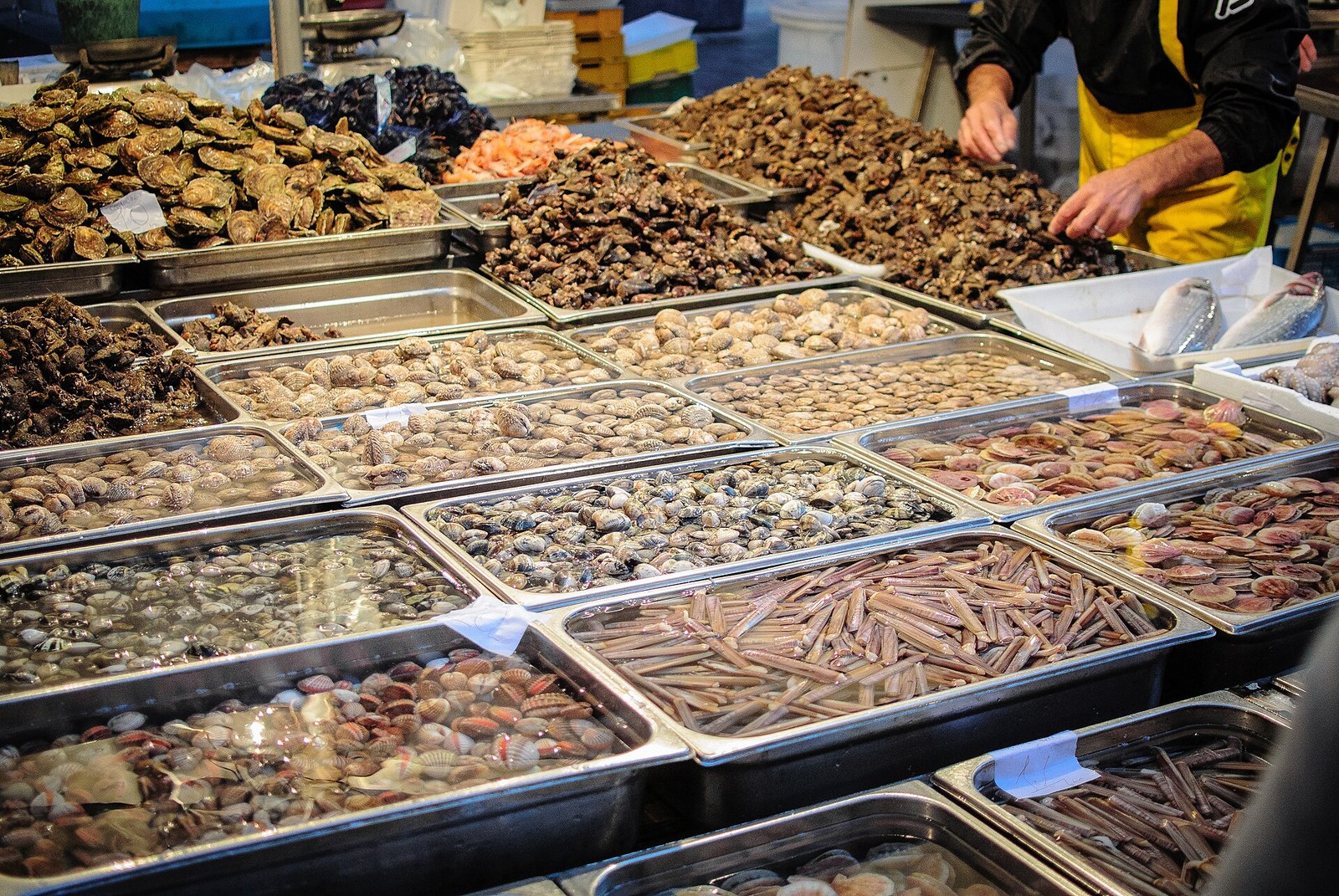
Just off Piazza del Duomo, through an arch under the Porta Uzeda, La Pescheria is Catania’s historic fish market — loud, wet, colourful, and absolutely essential. It has worked this corner since the 19th century. Swordfish split on marble slabs, buckets of octopus, baskets of sea urchins, the yelling of venditori.
Come between 7:30 and 11:00 to see it at full throttle. By 13:00 it’s over. Watch where you step (wet stone, fish blood) and keep wallets in front pockets. Photography is fine but ask before close-ups of faces.
The market spills into Piazza Pardo with adjacent stalls for vegetables, cheese, and bread. Grab a breakfast granita from one of the bars around the corner, then loop back through the Piazza del Duomo. Monday to Saturday; closed Sunday. For the deeper version — entry points, photo etiquette, the Stanley Tucci backstory and where to eat the catch right after — see our complete guide to La Pescheria.
3. Via Etnea and Catania’s Baroque heart
Pasquale Relvini via Wikimedia Commons · CC BY-SA 4.0
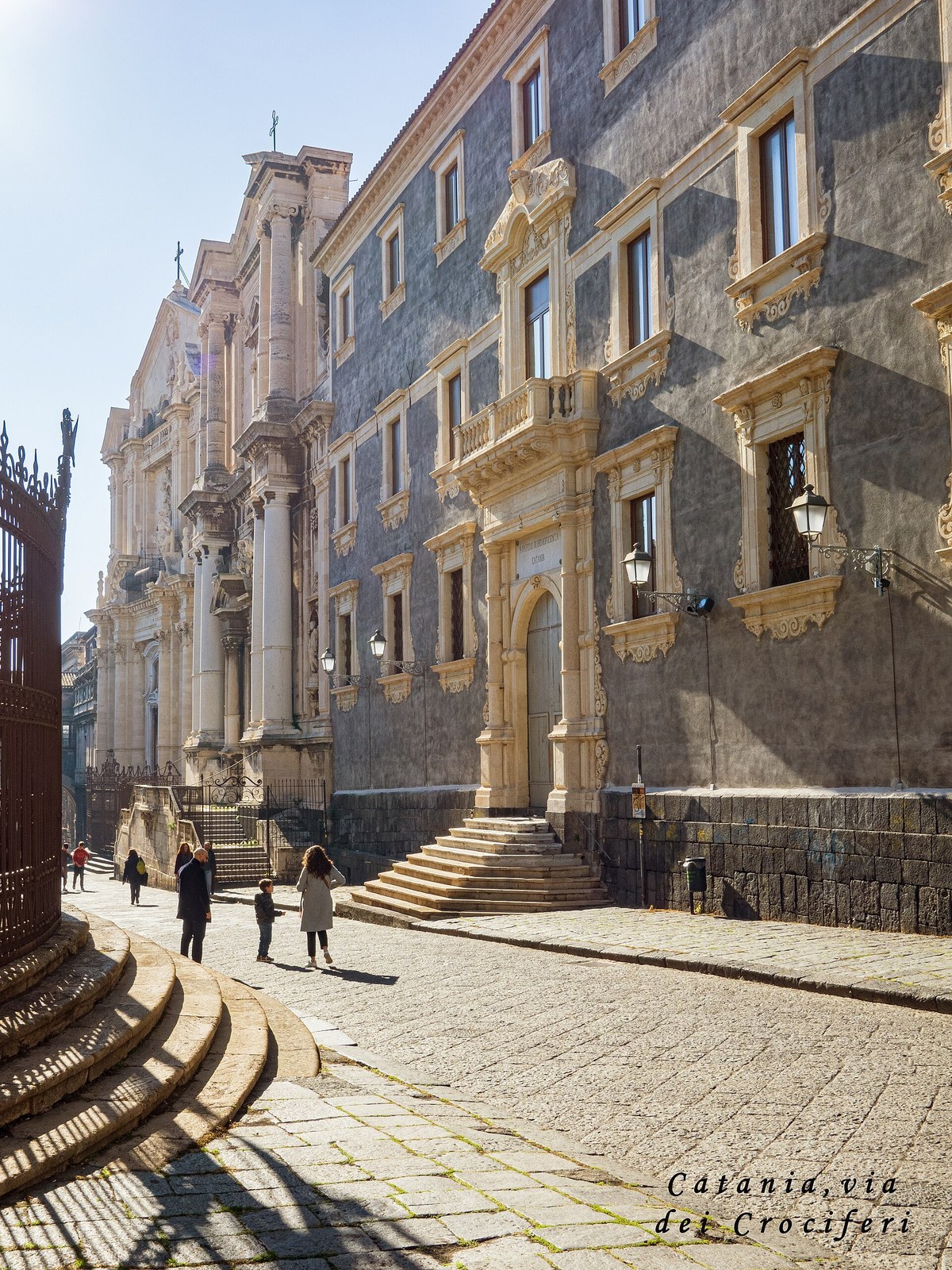
Via Etnea runs three kilometres due north from Piazza del Duomo, pointing straight at Mount Etna. On a clear morning the volcano frames the end of the street like a backdrop. The black-and-white Baroque facades along it — lava stone with limestone highlights — are the unique look of 18th-century Catania.
The two-block detour you shouldn’t miss is Via dei Crociferi, running west off Via Etnea near Piazza Stesicoro. In 200 metres it packs four major Baroque churches: San Benedetto, San Francesco Borgia, San Giuliano, and the Collegiata. The whole street is a UNESCO showcase.
Walk the section from Piazza del Duomo up to Villa Bellini (the city’s 19th-century public garden, a good 20-minute shade break), then turn around. The stretch beyond is more commercial and less interesting.
4. The Benedictine Monastery of San Nicolò l’Arena
- Location
- Piazza Dante Alighieri 32, Catania Maps
- Site
- monasterodeibenedettini.it
- Essential fact
- One of the largest monastic complexes in Europe, UNESCO site, today part of the University of Catania.
- Price
- €10
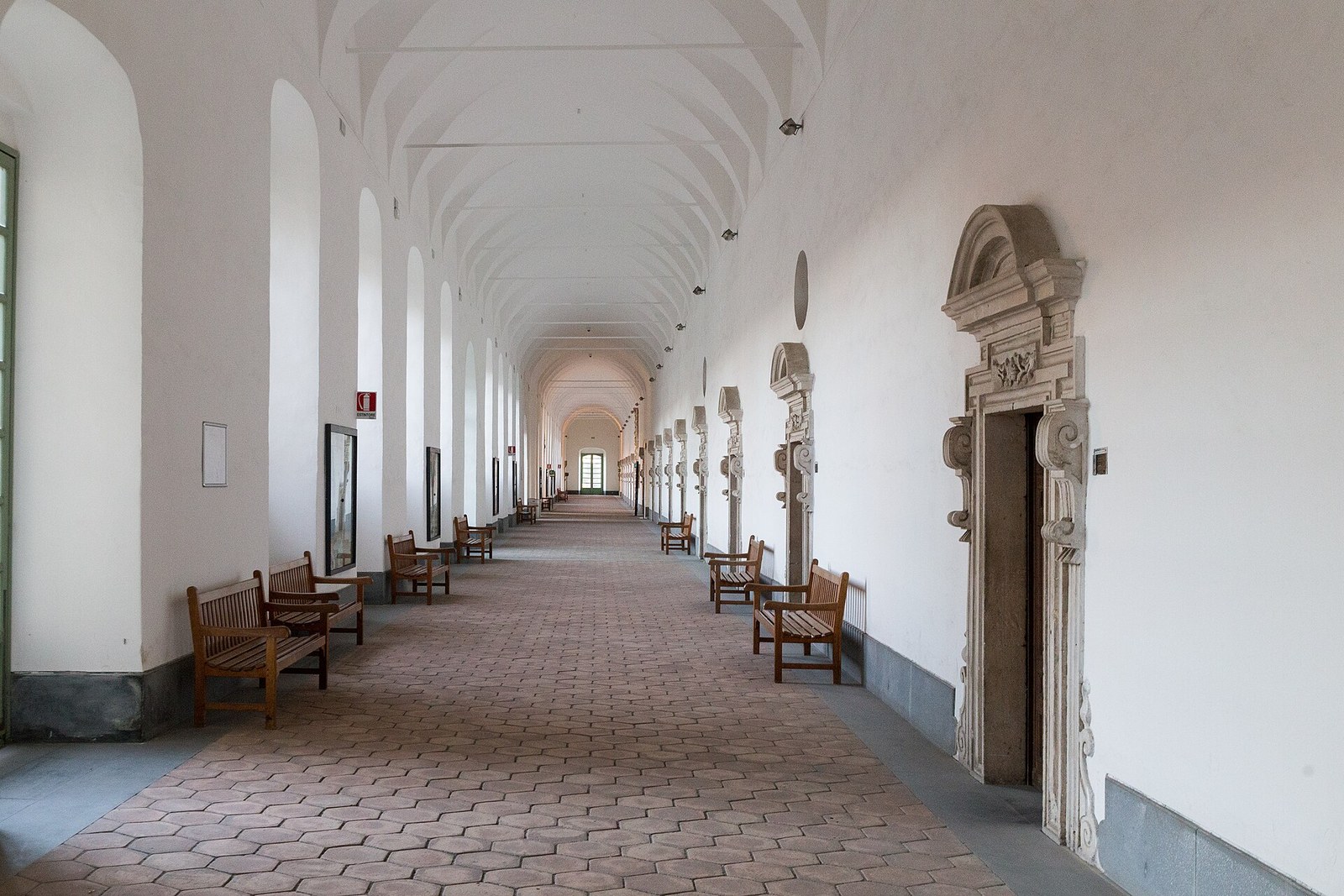
The Benedictine Monastery of San Nicolò l’Arena is one of the largest monastic complexes in Europe — over 100.000 square metres, second only to Mafra in Portugal. It’s a UNESCO site and today houses part of the University of Catania.
The only way to see it properly is on a guided tour. The “Officine Culturali” run hour-long visits that take you into the cloisters, the refectory, the kitchens (buried under solidified lava from the 1669 eruption), and up onto the roof terrace. The church next door (San Nicolò) is vast, austere, and has a working 18th-century meridian line on the floor.
5. Climb Chiesa della Badia for the best views of Catania
Lucarelli via Wikimedia Commons · CC BY-SA 3.0
- Location
- Via Vittorio Emanuele II 182, Catania Maps
- Essential fact
- Vaccarini’s late-Baroque church (1767) behind the Cathedral; narrow stone stairs lead to a dome viewpoint over Piazza del Duomo.
- Price
- €3
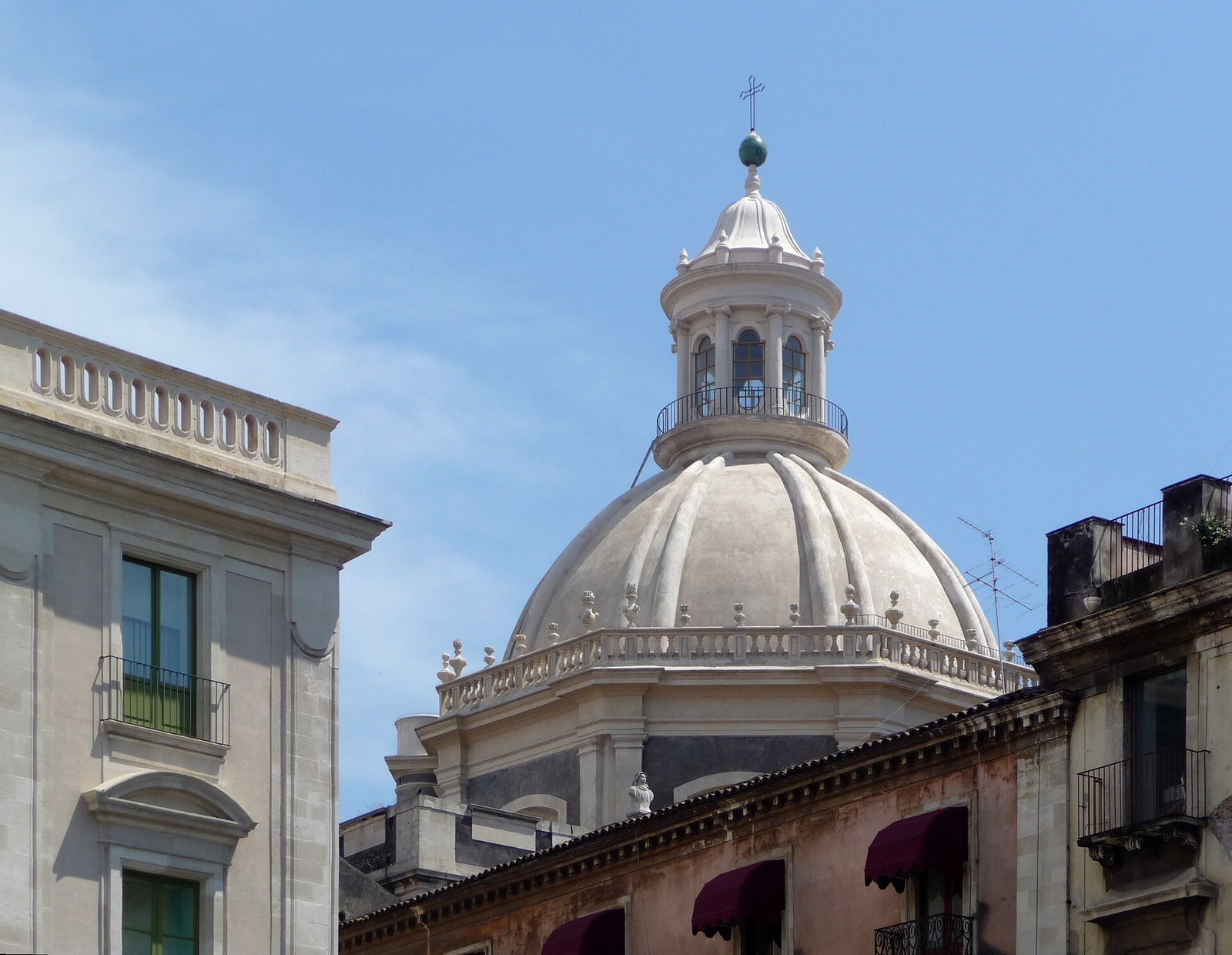
The Chiesa della Badia di Sant’Agata, designed by Giovanni Battista Vaccarini and completed in 1767, sits just behind the Cathedral. Most visitors walk past the small entrance without realising that for €3 they can climb the narrow stone stairs to the dome.
At the top, a slim balcony around the cupola gives a 360° view: down Via Etnea to Mount Etna (usually smoking), east across the rooftops to the Ionian Sea, south over the harbour, and right down onto Piazza del Duomo. On a clear afternoon it’s the best free-ish view in the historic centre.
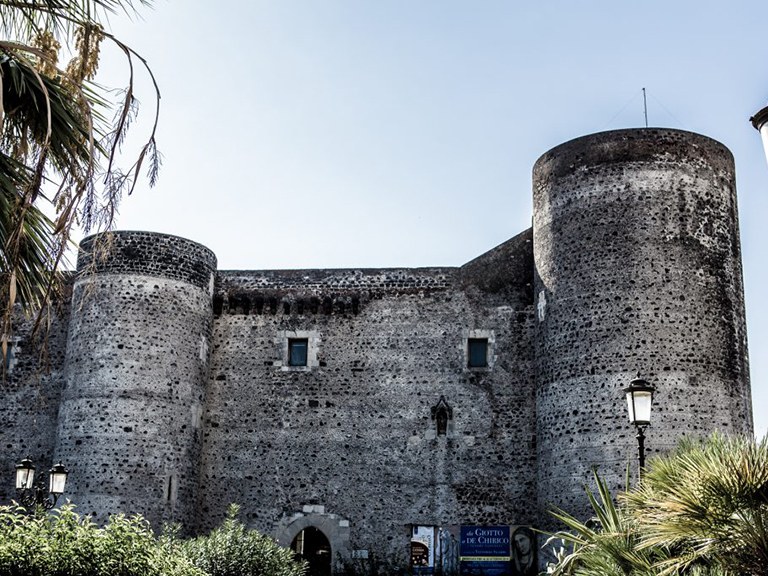
6. Castello Ursino: skip or visit?
Sicilianmagpie via Wikimedia Commons · CC BY-SA 4.0
- Location
- Piazza Federico di Svevia 21, Catania Maps
- Site
- comune.catania.it/la-citta/culture/monumenti-e-siti-archeologici/musei/museo-civico-castello-ursino
- Essential fact
- Frederick II’s 13th-century fortress, stranded inland after the 1669 lava flow; today houses the Museo Civico.
- Price
- €6 (free first Sunday)
Castello Ursino was built between 1239 and 1250 under Frederick II as a coastal fortress. After the 1669 eruption the lava flow pushed the coastline 1 km out, leaving the castle stranded inland — a quirk of Catania geology. Today it houses the Museo Civico.
Here’s the honest take: the castle from outside is striking (ten minutes of walking around it is enough), but the interior museum is mixed. The medieval section is worth 30 minutes if you’re into that period; the 18th–20th-century art is skippable. Unless you’re an archaeology or castle enthusiast, the outside view + a quick walk around the walls is plenty.
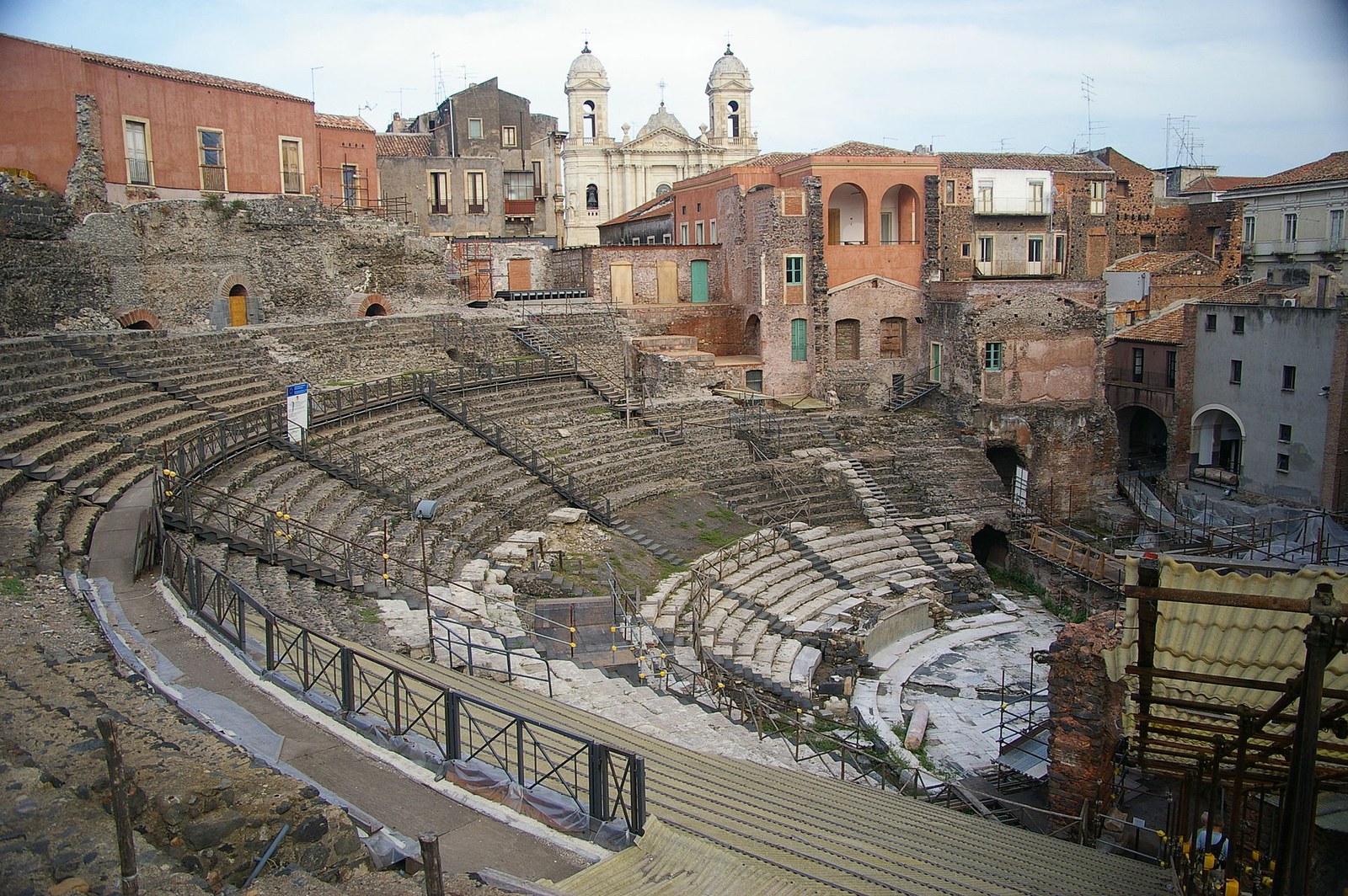
7. Teatro Romano di Catania
Louisvhn via Wikimedia Commons · Public domain
- Location
- Via Vittorio Emanuele II 266, Catania Maps
- Essential fact
- Greek-Roman theatre from the 2nd century BC, half-buried by later apartment buildings just 400 m from Piazza del Duomo.
- Price
- €6 (combined with Anfiteatro Romano)
The Teatro Antico di Catania — a Greek-Roman theatre built in the 2nd century BC and rebuilt by the Romans — is one of Sicily’s strangest archaeological sites, in Via Vittorio Emanuele II about 400 m from Piazza del Duomo: a theatre half-buried by later apartment buildings. You walk in from a narrow doorway and find yourself standing where 7.000 spectators sat, looking at the orchestra, the columns, and a balcony of residential flats above the ancient tiers.
Next to it sits the Odeon, a smaller covered theatre for rehearsals and recitations. Casa Liberti, the antiquarium, displays finds from the site. The whole visit is short but quirky — a Catania-specific moment where you realise the modern city just grew on top of the ancient one.
8. Pasta alla Norma and Catania’s street food
8w9d via Wikimedia Commons · CC0
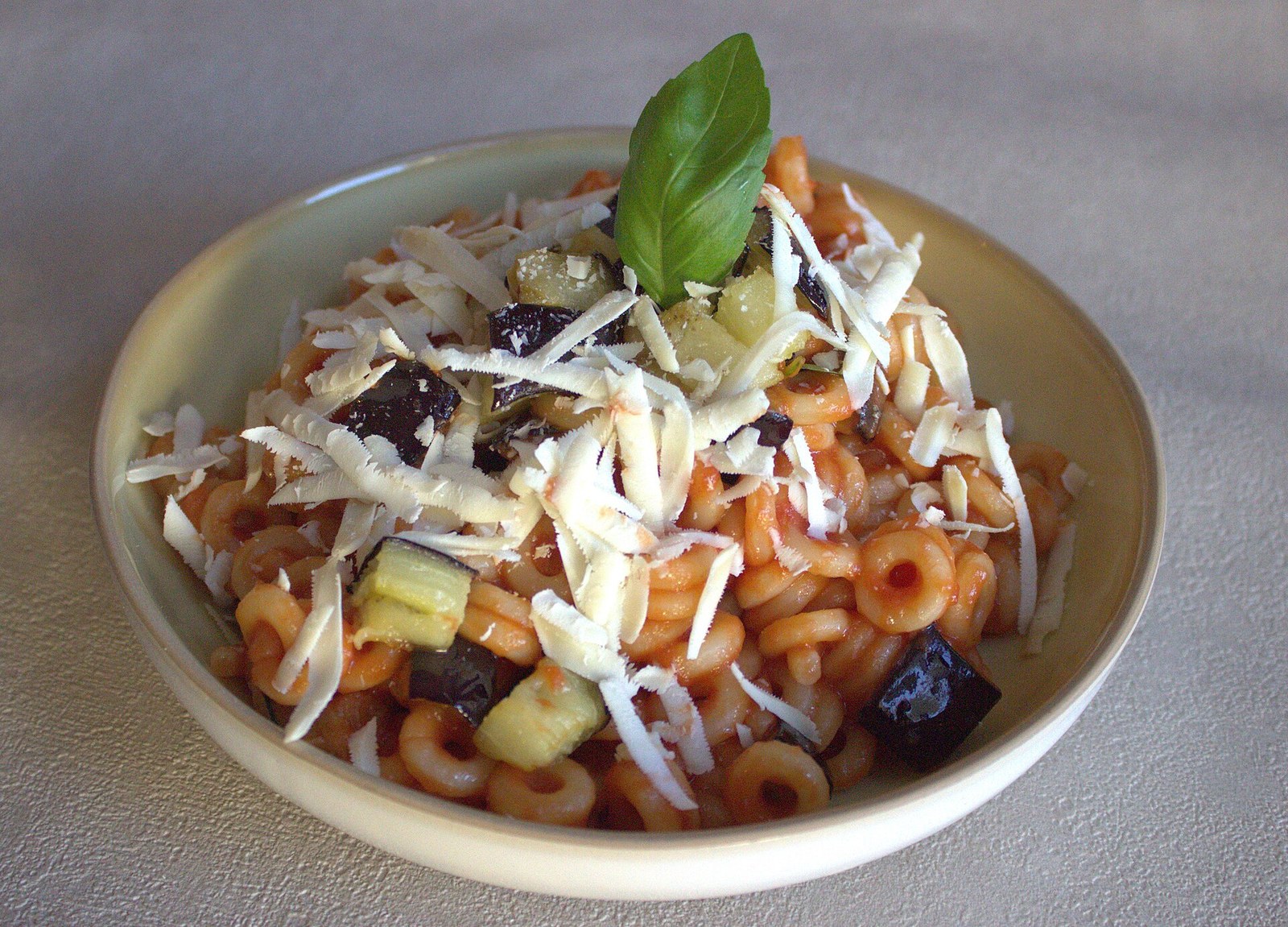
Pasta alla Norma is Catania’s signature pasta: tomato sauce, fried eggplant, basil, and grated ricotta salata. The name is a tribute to local composer Vincenzo Bellini and his opera “Norma” (1831) — the dish was described as “as sublime as a Bellini aria.”
Pair it with Catania’s street-food repertoire: arancini (stuffed fried rice balls — Catania goes pointed, Palermo goes round), cartocciata and scacciata (stuffed flatbreads), granita con brioche for breakfast (lemon, almond, or coffee), and the summer classic seltz al limone (lemon-salt soda).
Where to eat: the side streets off Via Etnea and around Piazza Teatro Massimo, not the restaurants with multilingual plastic menus on Piazza del Duomo. A rosticceria lunch with arancino, water, and coffee runs €6–8. A proper trattoria dinner €20–30 per person.
9. The Roman Amphitheatre of Piazza Stesicoro
In the middle of Piazza Stesicoro, halfway up Via Etnea, an excavated pit reveals the remains of the Roman Amphitheatre — one of the largest in the ancient Roman Empire, capacity 15.000. Most of it is still buried under the modern city, but what you can see from street level is striking: the stone arches, the passageways, the scale.
No ticket, no queue — you just stop at the railing and look down. Five minutes. Combine with a coffee in Piazza Stesicoro and a glance at the Bellini monument in the middle of the square.
10. The Sant’Agata festival (3–5 February)
Effems via Wikimedia Commons · CC BY-SA 4.0
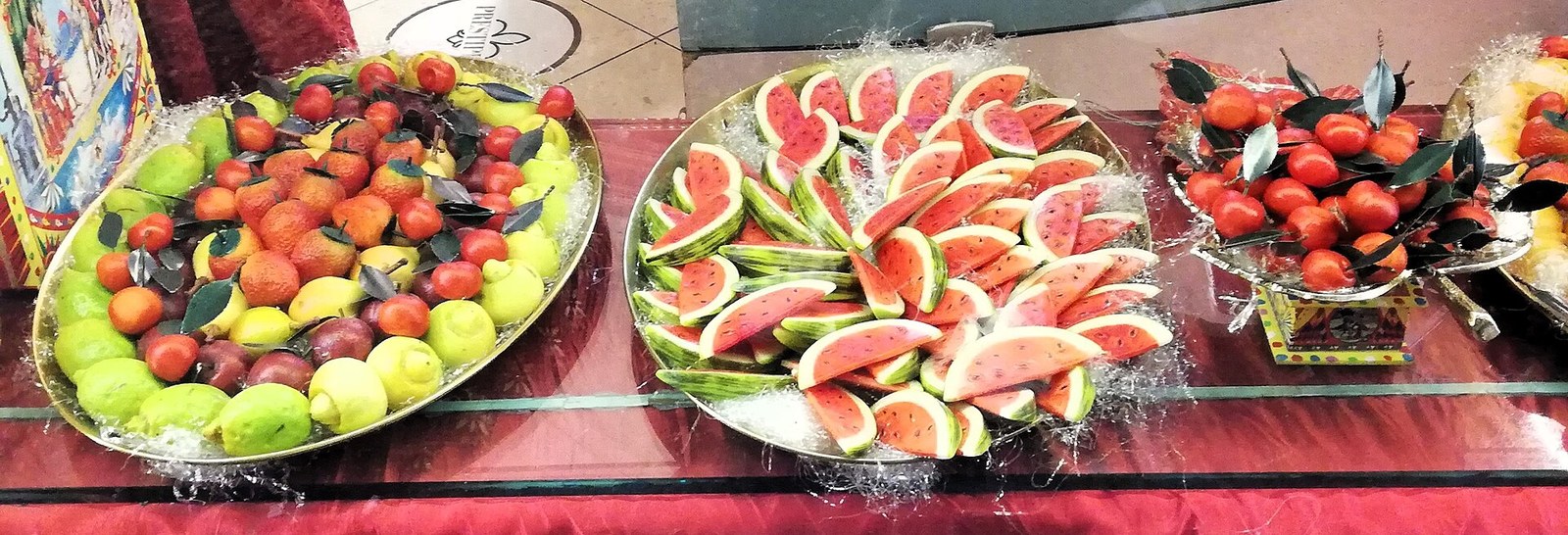
If you happen to be in Catania between 3 and 5 February, don’t miss the Festa di Sant’Agata — one of the world’s largest religious festivals, up to one million attendees. Devotees in white saccu tunics pull the fercolo (silver reliquary of the patron saint) through the city for 24 hours at a stretch, with fireworks, candelore processions, and chaotic street crowds.
Practical heads-up: the city is rammed, many shops and restaurants close, and accommodation triples in price. Book months ahead if you want to come for the festival. If you’re avoiding it but happen to be here during that window, plan to be elsewhere on 5 February — the centre is impassable.
Mount Etna from Catania: how to choose a tour
Want the full hike instead of just the tour summary? Our dedicated hiking Mount Etna guide covers all five routes by difficulty — from the family-friendly Crateri Silvestri loop to the guided summit ascent — with cable car costs, the AST 8:15 bus schedule, and the 2,800 m altitude rule.
Into Etna wine? Read our dedicated guide to Sicily wine tours and Etna wineries from Catania — top 10 producers, transport, 2026 costs.
Mount Etna is a 30-minute drive from Catania. The four most common options: half-day jeep + crater walk (€40–60), sunset tour (€50–80), full-day guided hike to 2.900 m (€70–120), and self-drive to Rifugio Sapienza (€0 + funivia €50). Pick by how high you want to go and how much time you have.
| Option | Duration | Price range | Altitude reached | Best for |
|---|---|---|---|---|
| Half-day jeep + craters | 4 h | €40–60 | 2.000 m | First-timers, families, short stays |
| Sunset tour | 4–5 h | €50–80 | 2.000 m | Couples, photographers |
| Full-day guided hike | 8–10 h | €70–120 | 2.900–3.000 m | Fit travellers, adventurous |
| Self-drive + funivia | flexible | €50 (lift) | 2.500 m | DIY, budget, flexibility |
What you see on the mountain depends on altitude. The Silvestri craters (2.000 m, accessible without a guide) are extinct secondary cones you can walk around in 40 minutes — impressive lava fields, small craters, views down to Catania. The Sapienza Refuge parking area is where most tours start.
Above 2.700 m you must go with a licensed guide (Guide Alpine Etna Sud or Etna Nord). The funivia (cable car) takes you from 2.000 to 2.500 m; above that, 4×4 jeeps or walking. The main summit craters at 3.300 m are accessible only on full-day guided hikes, and only when seismic activity permits.
Etna wine country: wineries on the volcano’s slopes
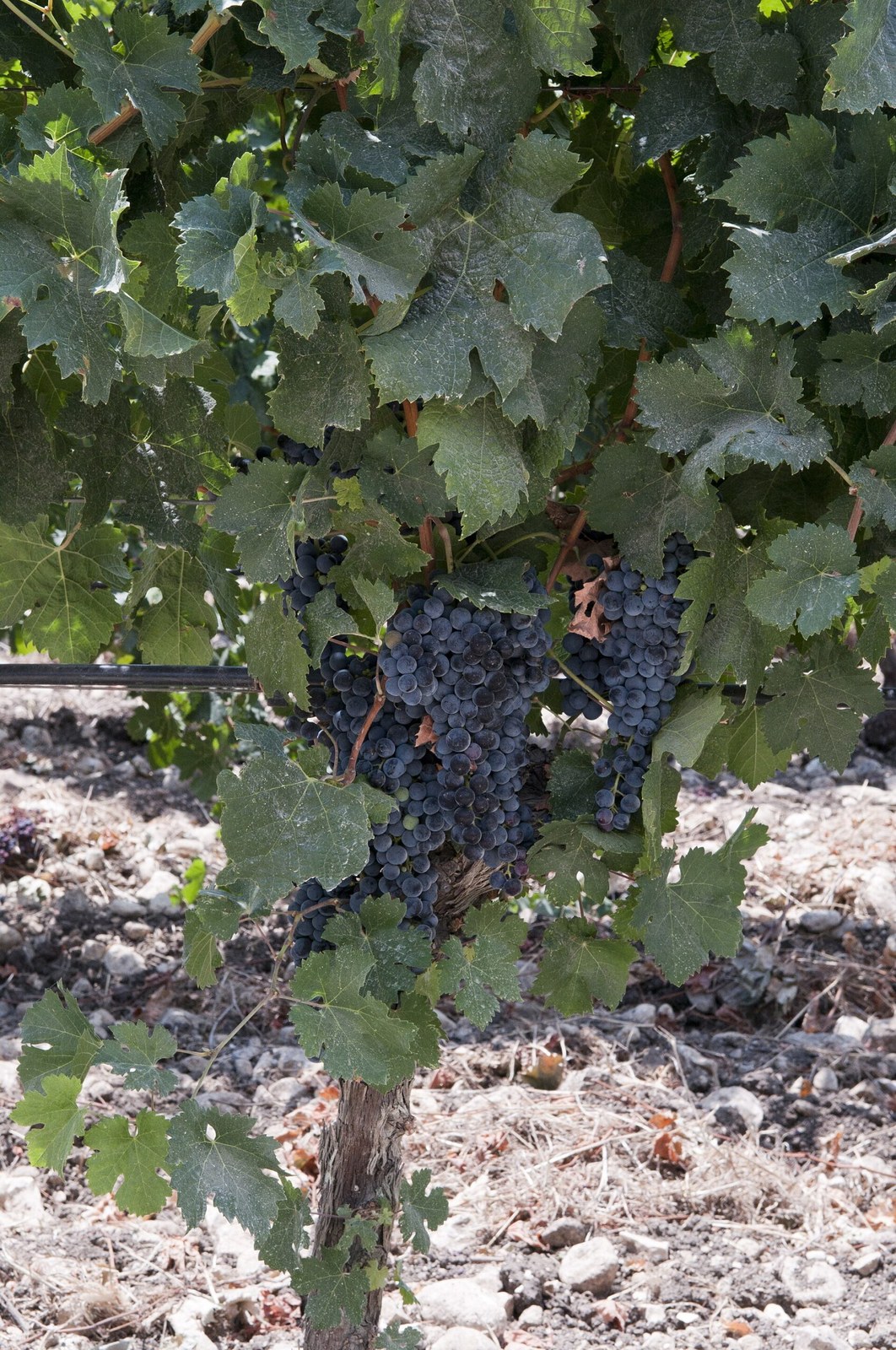
Michal Osmenda from Brussels, Belgium via Wikimedia Commons · CC BY-SA 2.0
The Etna DOC wine region has become one of Italy’s most talked-about in the last two decades. Vineyards sit between 400 and 1.000 m on the volcano’s black slopes — the same lava soil, cool nights, and elevation give wines a kind of mineral sharpness you don’t find elsewhere.
Two varieties to know: Carricante (the native white — citrus, salt, ageable) and Nerello Mascalese (the red — light-bodied, compared to Burgundy pinot noir by many critics). You can visit wineries on the north slope (around Randazzo, Linguaglossa, Castiglione di Sicilia) as a half-day trip.
Practical info — most wineries offer tastings by appointment (€15–30 per person, 1–2 hours, often with snacks). Some Etna tours combine craters and winery in one day — good value if you want both. Book via a local operator or the winery website.
Weather is unpredictable year-round. Snow on Etna November to May. Wind can be brutal. Bring a windproof layer even in August — it’s 10°C cooler at 2.000 m than at sea level. Closed shoes mandatory. For Taormina-based travellers, see our Taormina guide for day-trip options from there too.
Day trip to the Ionian coast: Aci Trezza, Aci Castello and Acireale
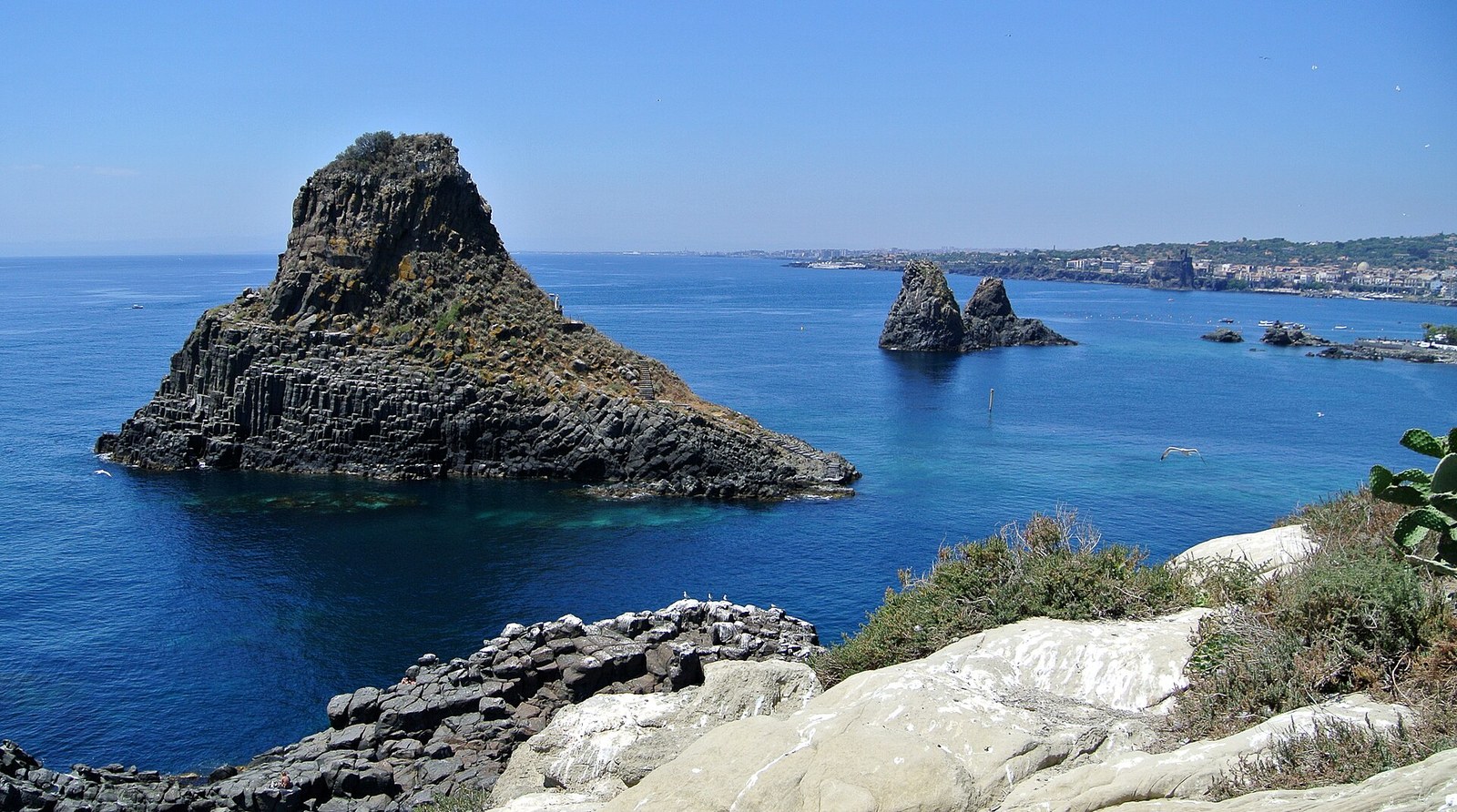
Wilson44691 via Wikimedia Commons · CC0
Aci Trezza and Aci Castello are the closest seaside towns to Catania — 15 minutes by bus or car along the Ionian coast. Expect black-lava shores, clear water, seafood trattorias, and the Cyclops Islands (Faraglioni) rising from the sea. This is the easiest half-day escape from the city.
Aci Trezza is a fishing village turned weekend town, with a small harbour, a pedestrian lungomare, and half a dozen waterfront trattorias. Come for lunch, walk to the end of the pier for the best view of the Faraglioni, swim off the rocks if it’s summer. The setting is right out of Verga’s 1881 novel “I Malavoglia,” which is set here. For a full picture of sand and lava options around the city, see our guide to the beaches near Catania.
Aci Castello, 1 km south, has the striking Norman castle perched on a black basalt promontory. €4 entry, great 360° panorama. A short harbourside walk connects the two villages. Combined, this is a solid 3–4 hour coastal half-day.
Does Catania have a beach? Yes: Playa di Catania, 10 minutes from the centre, is a 2 km sandy beach with free sections and attrezzati lidos. Not the most scenic water in Sicily but perfectly swimmable and convenient. For a full beach itinerary, see our Sicily beach guide.
Push 7 km further north and you reach Acireale, a Baroque town built on lava flows from a 17th-century Etna eruption. Its Cattedrale di Santa Maria Annunziata and the Basilica dei Santi Pietro e Paolo on Piazza Duomo rival Catania’s own facades, and the Carnevale di Acireale (February) is one of Sicily’s most theatrical. Public bus AST from Catania Stazione Centrale takes 30–40 minutes; if you are driving, take SS114 along the coast.
Catania food tours: from Pescheria market to street-food walks
If you ask seasoned travellers where to book a Sicily food tour, Catania is on every shortlist — and usually at the top. The geography helps: La Pescheria, the city’s 19th-century fish market, sits a hundred metres behind Piazza del Duomo, surrounded by the bakeries, fryers and granita bars that built Sicilian street-food culture. A morning in Catania gives you what an afternoon in Taormina or a half-day in Palermo cannot — a working market, baroque architecture and small producers all within walking distance. If food drives your day in town, our short list of Sapio and thirteen other Catania kitchens covers Michelin, Bib Gourmand, family trattoria and pasticceria stops.
Most Catania food tours follow one of three formats. A two-hour Pescheria market tour with a local guide costs roughly €55–75 and includes tastings of swordfish carpaccio, marinated anchovies, ricotta cannoli and granita with brioche; book the 8:30 or 9:00 slot — by 11:30 the market thins out fast. A three-hour Catania street-food tour stretches further, adding arancini, cipollina pastries and horse-meat sandwiches along Via Etnea and Via Plebiscito; expect €65–90 with a glass of Etna Bianco at the close. A full-day food and wine tour uses Catania as base for an Etna winery lunch — the most expensive option (€120–160) but the only one that combines volcano scenery with DOC tastings.
Two practical notes. The Pescheria runs Monday to Saturday — Sunday tours are walking-only, no live market. And every reputable operator insists on cash at tasting stalls, so bring €20–30 in small notes even if the tour itself is paid online. If you would rather skip the guided format, our Catania accommodation guide lists the apartments closest to the market — staying within a five-minute walk of Pescheria is the single biggest difference between “I tried street food” and “I built my whole trip around it”.
Other things to do in Catania (beyond the top 10)
If you have a third day, three more sights round out the city without forcing you onto a bus.
Orto Botanico di Catania
The Orto Botanico di Catania, run by the Universita degli Studi di Catania since 1858, sits a 5-minute walk from Via Etnea and holds the largest collection of Sicilian endemic flora — including 2,000 species and a Mediterranean palm garden grown on lava soil. Open Mon–Fri 9:00–13:30, free entry. Quietest mid-morning.
Parents planning these green stops with an infant can use our practical guide to Catania with a baby for pushchair surfaces, carrier decisions, feeding breaks and a low-stress city rhythm.
Teatro Massimo Bellini
Catania’s opera house, named after composer Vincenzo Bellini and inaugurated in 1890, is one of Sicily’s two grand lyric theatres (the other is Teatro Massimo in Palermo). Even if you skip a performance, the box office will let you peek into the red-and-gold horseshoe auditorium during off-hours; the season runs October to May.
Day trip to Taormina and Isola Bella
From Catania, Taormina is a 50-minute train ride (Trenitalia, €4.30 one-way) or a 1-hour drive along the A18. The clifftop town pairs the Greek-Roman theatre with views of Etna and the Ionian Sea, and below it sits Isola Bella, a tiny nature reserve island connected to the mainland by a sand bar. Allow a full day if you want both town and beach.
What is Catania famous for?
Catania is famous for four things: Mount Etna looming over the city, Sicilian Baroque (rebuilt after the 1693 earthquake, UNESCO World Heritage), the world’s largest religious festival for patron saint Sant’Agata, and a street-food culture built on arancini, pasta alla Norma, and granita con brioche.
Baroque from the 1693 earthquake
On 11 January 1693, one of the deadliest earthquakes in European history destroyed Catania almost entirely. The rebuild, driven by the architect Giovanni Battista Vaccarini among others, produced the black-and-white Sicilian Baroque unique to Catania: lava stone from Etna as the dark material, white limestone from Siracusa as the contrast. The historic core is part of the Val di Noto UNESCO inscription (2002) with seven other southeastern towns.
Street food that defines Sicily
Catania is Sicily’s street-food capital. Six things to try: arancino (pointed in Catania, not round as in Palermo), pasta alla Norma, cartocciata (stuffed brioche pocket), granita con brioche (breakfast, lemon or almond or coffee), seltz al limone (lemon-salt soda, specific to this city), and pane cunzato (dressed bread with oil, tomato, anchovy). Prices are low — €3–5 per item.
Sant’Agata, one of the world’s biggest festivals
The Festa di Sant’Agata (3–5 February) draws up to one million people each year — statistically one of the top three Catholic festivals on earth, alongside Easter in Seville and Corpus Christi in Cusco. The patron saint’s silver fercolo is pulled through the city by devoti in saccu, white tunic-clad devotees, with fireworks and the towering candelore wood sculptures.
Literary and musical Catania
Composer Vincenzo Bellini (1801–1835) was born here — his opera “Norma” gives the pasta its name. Novelist Giovanni Verga (1840–1922), father of Italian verismo, set “I Malavoglia” in Aci Trezza just up the coast. Writer Vitaliano Brancati is the 20th-century chronicler of Catania’s moods.
What not to miss in Catania: 5 essentials
What’s worth seeing in Catania?
The five sights worth seeing in Catania are: Piazza del Duomo and the Fontana dell’Elefante, La Pescheria fish market (open until 13:00), Via dei Crociferi with its four UNESCO Baroque churches, the Monastero dei Benedettini di San Nicolò l’Arena (Europe’s second-largest monastery), and a view from Etna on a clear day. Together they cover the city’s identity: volcanic stone, Baroque grandeur, daily market life, and the volcano that made it all possible.
With more time, add Castello Ursino, Teatro Massimo Bellini, and the rooftop of Chiesa della Badia di Sant’Agata for the panoramic view over the city and sea.
If you only have one day in Catania, don’t miss five things: Piazza del Duomo at sunrise, the fish market before 11:00, a granita con brioche by 10:00, a Baroque church on Via dei Crociferi, and Mount Etna on the horizon from the Chiesa della Badia rooftop. Together they give you the sound, taste, stone, and scale of the city in about six hours.
- Piazza del Duomo before 9:00 — empty square, golden light on the lava-stone facades, a coffee at the cafe on the east side.
- La Pescheria between 8:00 and 11:00 — loudest, most alive. Go before the market empties.
- Granita con brioche — lemon or almond, before lunch. The single most Catania thing you can eat.
- Via dei Crociferi — 15 minutes walking the two pedestrian blocks with four Baroque churches.
- Chiesa della Badia rooftop at sunset — Etna one side, the sea on the other, Piazza del Duomo below. €3 well spent.
Is Catania safe and walkable?
Catania is safe, walkable, and flat in the historic centre — the main sights fit inside a 2 km loop. Watch for traffic (pedestrian-priority is a suggestion, not a rule), pickpockets in crowds at La Pescheria, and the ZTL traffic-restricted zone if you’re driving. Night-time in the historic centre is generally fine; avoid Librino and San Berillo vecchio after dark. For the full breakdown see is Catania safe.
Walking the centre: Piazza del Duomo, La Pescheria, Via Etnea, Via dei Crociferi, Monastero Benedettini, Teatro Romano, Castello Ursino — all within 15 minutes of each other. No need for public transport in the historic core.
Public transport: AMT buses run throughout the city (€1 a ride, €2.50 day pass), and a single metro line (Catania Metro) runs from Stesicoro up along Via Etnea. Taxis at ranks run €6–10 for city-centre distances. The Alibus shuttles between Fontanarossa airport and the centre (€4, 20 minutes).
Parking: the historic centre is ZTL-restricted during the day (7:00–22:00). Don’t drive into the centre unless your accommodation has a permit. The cheapest city-centre parking is the Movida Park (21:00–02:00 overnight rate) and various paid parking areas on the periphery. For a full breakdown, see our parking guide for Catania.
5 mistakes tourists make in Catania
The most common Catania mistakes are avoidable: visiting the fish market at noon (it’s over by 13:00), driving into the ZTL, eating on Piazza del Duomo for dinner, skipping Etna because “it’s too far,” and treating Catania like a half-day stopover. Do any of these and you miss the city. Here’s the honest list.
- Arriving at La Pescheria at noon — the fish market is over by 13:00. Go between 8:00 and 11:00 or skip it.
- Driving into the ZTL without a permit — automatic €80 fine via camera. Use Movida Park or leave the car at your accommodation.
- Eating dinner on Piazza del Duomo — multilingual menus + buttadentro waiters = 40–60% markup for the same food served one street back. Walk two blocks off the main square.
- Skipping Mount Etna because it “looks far” — it’s 30 minutes by car to 2.000 m. Every guest who skips Etna regrets it.
- Treating Catania as a half-day stopover — you can’t. The historic centre alone needs six hours. Give it two nights minimum or accept that you’re just flying through.
FAQ: common questions about visiting Catania
Are there unusual places to see in Catania beyond the must-sees?
Yes — once you’ve done Piazza del Duomo, Pescheria and Via Etnea, the city rewards anyone willing to step off the obvious axis. The Terme Achilliane three metres below the cathedral square, the rooftop of Chiesa della Badia, the converted-refinery quarter at Le Ciminiere, and the patron-saint relics inside Sant’Agata al Carcere are all 5–15 minute walks from the main loop. For a curated list of unusual places to see in Catania, see our companion guide.
How do you get from Catania airport to the city centre?
The Alibus shuttle runs every 25 minutes, €4 one way, 20 minutes to Piazza Stesicoro in the centre. Taxis run €25–35 flat rate. To continue to Taormina, see our Catania airport to Taormina guide.
Is Catania expensive?
No. Catania is 30–40% cheaper than Taormina or Palermo city. Budget roughly €80–100 per day for a couple excluding accommodation: coffee €1, street-food lunch €6–8, trattoria dinner €20–25 each, aperitivo €5–8, taxi €8. Museums €6–10 each, Etna half-day tour €40–60 per person.
What’s the best month to visit Catania?
May or September: warm weather (22–26°C), clear light, reasonable crowds, all terraces open. April and October work too if you accept slightly cooler evenings. Avoid July–August unless you tolerate 35°C heat and high prices. February is the festival month (Sant’Agata 3–5) but comes with the biggest crowds.
Can you visit Catania and Taormina in one day?
Yes, but tight. Taormina is 50 minutes north by train or car. The classic combo is morning in Catania (Piazza del Duomo, Pescheria, granita), afternoon and sunset in Taormina. See our Taormina guide for what to prioritise once you arrive.
Where do you park in Catania?
The ZTL historic centre is no-go during the day without a permit. Use Movida Park, paid street parking (strisce blu) outside the ZTL, or accommodation with included parking. Full breakdown: parking in Catania.
Is Catania better than Palermo for a first Sicily trip?
Depends what you want. Catania is smaller, more walkable, closer to Etna and the Baroque east (Siracusa, Noto, Taormina). Palermo is three times the size, with Norman-Arab architecture, better monuments per square km, and a bigger Sicily presence. Both are worth visiting — first-time Sicily travellers often pair Catania (3 nights) with Palermo (3 nights) for a full island picture.
Where to stay in Catania
The best base is the historic centre, within walking distance of Piazza del Duomo and Via Etnea. If you want a quieter stay within five minutes of everything, our apartments in Catania sit on Via Santissima Trinità, halfway between the Cathedral and Villa Bellini — a quiet residential street that puts you in the Baroque heart without the noise of Via Etnea. For a full area-by-area comparison of neighbourhoods (historic centre, Ognina, Playa, San Berillo), see our Catania neighbourhoods guide.
Catania isn’t polished. It’s raw, loud, and alive in a way that Taormina and Syracuse — both beautiful — are not. That’s the point. Come for the volcano, stay for the food, leave with a different idea of what southern Italy actually looks like. Planning more of Sicily? See our 7-day East Sicily itinerary or our Sicily beach guide.
Doing Catania with kids? The Pescheria fish market in the morning, Villa Bellini gardens in the afternoon, and a half-day Etna jeep tour cover most ages. The wider Sicily-with-family picture is in our Sicily family holiday guide.
Catania at night
Many of the attractions on this list sit inside the same old-town triangle that carries Catania’s bar-hopping scene after dark. If you want to read the evening counterpart to this daytime guide, our Catania nightlife guide covers the movida piazzas (Piazza Teatro Massimo, Piazza Università, Piazza Bellini and the San Berillo district), aperitivo timing, the best bars and clubs, and how to get home safely.
Beyond the city: once you have covered the central highlights, the surrounding region opens up. See our best day trips from Catania (full guide) — Mount Etna, Taormina, Syracuse, the Val di Noto Baroque towns, Aci villages, and more, all reachable as day trips.
For the Ferragosto context — Pescheria closed 13-19 August, Aci Trezza Madonna della Catena 12-14 August, beaches and lidos at peak — see our Sicily in August guide.
For the early-summer shoulder month see our Sicily in June guide (Taormina Film Festival, U Fistinu di San Giovanni Galermo Catania 24 June, sea 21-24°C) and our Sicily in July guide (Festino di Santa Rosalia Palermo 14-15 July, Pescheria still operational, Etna summit at 8-18°C, sea 24-26°C).
The information in this guide was correct at the time of writing. Data can change from season to season without notice: before you travel, always check the official channels and websites for updates. We review this guide periodically, but the official channels are always the authoritative source. We also cannot guarantee that the suggested routes or the attractions described are always reachable or accessible: roads, trails and sites may be closed, damaged, altered or unsafe. Assessing the practicability and safety of itineraries and attractions always remains your own responsibility.