

Sicily in January is when the island belongs to the locals. Coastal days settle around 14°C (57°F), Mount Etna wears a white cap above 1.500 m, and the only crowd at the Valley of the Temples is a handful of school groups. From La Befana on January 6 to the build-up of Carnevale di Acireale and the patron-saint thunder of Sant’Agata on February 3-5, this is the island’s quiet-then-loud season. Etna’s Rifugio Sapienza and Piano Provenzana ski stations are the only place in Italy where you can carve a slope with the Mediterranean in view. Based in Catania, January is our city’s quietest month before Sant’Agata wakes it up — here’s exactly what to expect.
January splits into three windows. The first week still carries Christmas atmosphere through La Befana on January 6 (Italian Epiphany, public holiday); the middle weeks from January 7 to 25 are the quietest of the year and the cheapest, with winter sales (Saldi Invernali) opening on Via Etnea and Via Maqueda; the last week sees almond trees first to bloom in the Valley of the Temples and Acireale ramp up its Carnival workshops. Pack layers for 13-15°C coastal days and 5-9°C nights, a rain shell for the 8-10 expected wet days, and proper insulation if Etna skiing is on the plan.
What is the weather like in Sicily in January?
Sicily in January averages 14°C (57°F) by day and 7°C (45°F) at night on the coast, with sea temperatures around 15°C (59°F) and roughly 8-10 rainy days per month. Inland and at altitude it is markedly colder — Etna above 1.500 m sees daily lows below freezing and reliable snow. Sirocco episodes from North Africa can briefly push coastal highs to 20°C (68°F). Sunshine averages 5-6 hours per day and daylight runs from 9.5 hours on January 1 to 10.4 hours on January 31.
Looking ahead? Once January closes, the next month brings the centerpiece of the Sicilian winter calendar — see our Sicily in February guide for Sant’Agata, Carnevale di Acireale Mardi Gras, and the Sciacca 400th anniversary.
Looking past winter? Four months on from January, May brings the year’s first long-daylight stretch with the Infiorata flower carpet and Cantine Aperte — see our Sicily in May guide for the spring window.
The month is among the wettest of the year alongside November and December, with 65-90 mm of rainfall typically falling in shorter convective episodes rather than long fronts. Coastal Catania, Taormina and Syracuse sit firmly in jacket-and-jumper range with mild afternoons; Palermo and the Tyrrhenian coast run a degree warmer thanks to the Tyrrhenian’s gentler weather; inland Enna (931 m) and Caltagirone drop close to freezing at night. Etna foothills run 5-8°C cooler than Catania at the same hour. The Tramontana from the north can occasionally bring snow flurries to the inland hills; the Sirocco from the south can lift coastal highs by 5-7°C for two or three days at a time.
Sicily January weather table — 4 weeks × 4 regions
| Week | East coast (Catania, Taormina, Syracuse) | West coast (Palermo, Trapani) | Inland (Caltagirone, Enna) | Etna altitude (1.500-2.000 m) |
|---|---|---|---|---|
| 1-7 Jan | 14°C / 7°C, sea 15°C, mixed | 15°C / 8°C, sea 15°C, mixed | 10°C / 3°C, mixed | 0°C / -4°C, snow likely |
| 8-14 Jan | 13°C / 6°C, sea 15°C, rainy | 14°C / 7°C, sea 15°C, rainy | 9°C / 2°C, rainy | -1°C / -5°C, snow |
| 15-21 Jan | 14°C / 7°C, sea 14°C, mixed | 15°C / 8°C, sea 14°C, mixed | 10°C / 3°C, mixed | 0°C / -4°C, snow |
| 22-31 Jan | 15°C / 8°C, sea 14°C, almond preview | 16°C / 9°C, sea 14°C, brighter | 11°C / 4°C, mixed | 1°C / -3°C, snow |
Disclaimer: values are typical multi-year averages compiled from regional meteorological data; conditions vary year on year. Rain in January falls in 1-3-day fronts with weather windows of 4-6 dry days between them. UV stays low — index 3 at peak — though fair skin still benefits from SPF 15 on snow-reflective Etna. The east coast (Catania-Taormina) tends to be drier than the Tyrrhenian; the south-east (Marina di Ragusa, Vendicari) is the driest part of the island in January.
Will it rain in Sicily in January?
Yes, more than in any other month alongside November-December. Expect roughly 8-10 rainy days, totalling 65-90 mm, with the wettest stretch usually in the second week. Showers are short and convective rather than steady all-day grey, and weather windows of 4-6 dry days are typical. The east coast (Catania-Taormina) tends to be drier than the Tyrrhenian; the south-east (Marina di Ragusa, Vendicari) is the driest part of the island in January. Pack a foldable rain jacket and a small umbrella; both pay for themselves.
Can you swim in Sicily in January?
Only if you are cold-tolerant. Sea temperatures average 14-16°C, dropping to a low of 14°C by month-end. Most beach lidos are closed; the open coast is unsupervised. Local cold-water swimmers (and the New Year’s Day plunge tradition in Aci Trezza, Mondello and Taormina) keep the practice alive, but most travellers will find it uncomfortable without a wetsuit. Scuba diving operators run year-round on the east coast (Riviera dei Ciclopi, Aci Castello) with 5 mm or 7 mm wetsuits.
How does Sicily compare to mainland Italy in January?
Sicily averages 5-7°C warmer than Rome in January and 8-10°C warmer than Milan, with twice as many sunshine hours as the Po Valley (which spends most of January in fog). Coastal Sicily compares with southern Spain (Almería, Malaga) on temperature, and with the Greek Peloponnese on rain. The Amalfi Coast is colder and wetter; Tuscany and Umbria are firmly in winter; the Dolomites are deep ski season. For the broader picture see our Sicily travel guide.
How cold is Sicily in January?
Mild on the coast, properly cold inland. Daytime peaks average 13-15°C on the coast, with cold snaps occasionally pushing nights to 3-4°C in Catania and Palermo and to -1 to 1°C at altitude inland (Enna, Petralia, Castelbuono). Sirocco days can briefly push coastal highs to 18-20°C. Etna at 2.000 m runs -2 to 2°C by day, with snow on the ground from December through March in a typical year.
Which part of Sicily is warmest in winter?
The warmest part of Sicily in winter is the eastern coast — Catania and Taormina average 14–15°C (57–59°F) by day in January, sheltered from the north wind and sitting at the island’s lower southeastern latitude. The western coast (Palermo, Trapani) runs 12–13°C. Inland plateaus (Enna, Caltagirone) drop to 8–12°C. Above 1.500 m on Mount Etna daytime highs stay below 5°C and overnight frost is the norm from December through February.
Practically: if warmth is the priority, base in Catania or Taormina for the mildest daily temperatures and the most sunshine hours on the east coast. Palermo is a close second and is slightly wetter on average. The islands (Aeolians, Egadi) run similar coastal temperatures but ferry schedules are reduced in January.
Is January a good time to visit Sicily?
Yes — if you trade beach for culture, skiing, and quiet streets. January gives you Etna with snow, the Valley of the Temples nearly empty, Carnevale Acireale build-up, blood-orange season at peak, and 35-50% off August accommodation. The trade-off: 8-10 rainy days, sea too cold to swim, ferry schedules to the Aeolian Islands reduced, and some museums close on Mondays. Compared with August, you give up the heat and the beach and gain the lowest crowd density and the lowest prices of the year.
The case for January is the rare combination of Etna skiing (the only place in Italy where the volcano meets snow above the sea), archaeological sites at zero crowd (Valley of the Temples, Selinunte, Segesta, Villa Romana del Casale all walkable without queues), Modica chocolate at peak, and the Sant’Agata countdown in Catania. The case against is the rain, the dark afternoons (sunset around 17:15), and the closure of seasonal services. For most travellers it is the best month for cultural Sicily, the worst for beach Sicily.
January split — first / mid / last weeks
The first week (Jan 1-7) still carries Christmas atmosphere: Presepi Viventi (Living Nativities) close on January 6 with the Befana, banks and shops shut on Epiphany, and the Saldi Invernali (winter sales) open on January 7. The middle weeks (Jan 8-25) are the quietest of the year and the cheapest, with weekday city centres almost local-only, museums uncrowded, and accommodation at its lowest. The last week (Jan 25-31) brings the first almond blossoms in the Valley of the Temples (Mandorlo in Fiore preview), Acireale Carnival workshops in late assembly, and the Sant’Agata setup beginning in Catania for the February 3-5 feast.
Compared with December — cooler, cheaper, calmer
Versus December: 1-2°C cooler average daytime, 1°C cooler sea, similar rainy-day count, but accommodation runs 20-30% lower outside the Christmas-New Year peak. The Saldi Invernali clearance sales open on January 7 (vs December’s full prices); the Christmas markets close on January 6; and from January 8 onwards the island feels distinctly post-holiday. December has the advantage of Christmas atmosphere; January has the advantage of post-holiday quiet and price.
Compared with February — almond blossom and Carnival peak
Versus February: 1-2°C cooler average daytime, similar sea, similar rain. February brings the Mandorlo in Fiore Festival in Agrigento and the Sant’Agata feast in Catania (Feb 3-5), as well as Carnevale Acireale main parade in most years (in early-Easter years like 2027, the Carnival main weekend can fall in late January). For January travellers planning a 10-day trip, extending into early February to catch Sant’Agata and Mandorlo Fiore is the classic move. See our complement guide on Sicily year-round travel.
When shouldn’t you visit Sicily?
Avoid Sicily in July and August if you dislike heat and crowds: temperatures regularly hit 38–40°C (100–104°F) inland, beaches are packed, and accommodation costs treble. Skip January specifically if beach swimming is non-negotiable — the sea sits at 15°C (59°F) and lidos are closed. The Befana holiday week (January 3–8) can push Catania and Palermo accommodation up 15–20% and fill city-centre streets with domestic holiday-makers; if you want maximum quiet and minimum price, aim for January 9–25.
Spring and autumn are the most balanced compromise — April, May, September and October combine warm-to-hot weather (22–28°C), a swimmable sea, and far lower crowd density than August. For seasonal context see our Sicily travel guide comparing all twelve months.
January festivals and events in Sicily
January is the calendar bridge between the Christmas season and the Carnival peak. Fixed-date Italian holidays (Epiphany on January 6, Saldi opening on January 7) anchor the month; Carnevale di Acireale workshops ramp up through the second half; and the Sant’Agata countdown in Catania starts in the last week. Dates marked annual shift by a few days each year — verify with the cited Comune or association website for your travel year, especially Carnevale (which depends on the Easter calendar).
Effems · CC BY-SA 4.0
La Befana / Festa dell’Epifania — January 6 fixed
La Befana on January 6 is Italy’s national Epiphany holiday and the last day of the Christmas season. The Befana — an old broom-riding folk figure — visits children with sweets or coal in a tradition that pre-dates Christmas folklore. In Sicily the day is marked by traditional sweets — cuddureddi (Modica), buccellati (Sicily-wide), sfincia (Palermo) — and by the closing of Presepi Viventi (Living Nativities) across hill towns. Banks, post offices and most shops are closed; major museums open; restaurants serve festive lunches.
Saldi Invernali (Winter Sales) — from January 7
Italy’s winter clearance sales open on January 7 in Sicily under regional regulation, running through early March. The first wave brings 30-50% discounts, with deeper cuts in the second wave from mid-February. The best shopping streets are Via Etnea in Catania (mid-range and high street between Piazza Stesicoro and Villa Bellini), Via Maqueda in Palermo (chain stores and local shops, plus the parallel Via Roma for high-street), and Corso Umberto I in Taormina (boutique and ceramic). For a trip that bookmarks Saldi opening, January 7-12 is the sweet spot.
Etna ski season — December to mid-March
Mount Etna’s ski season runs from late December to mid-March, with January typically delivering the most reliable snow. The volcano hosts two stations: Etna Sud (Rifugio Sapienza) at 1.910 m on the southern flank, and Etna Nord (Piano Provenzana) at 1.810 m on the northern flank, both reachable from Catania in around an hour. Day passes typically run €30-40 with full ski rental at €25-30; lessons cost roughly €40 per hour. For the full breakdown see our Etna skiing section below.
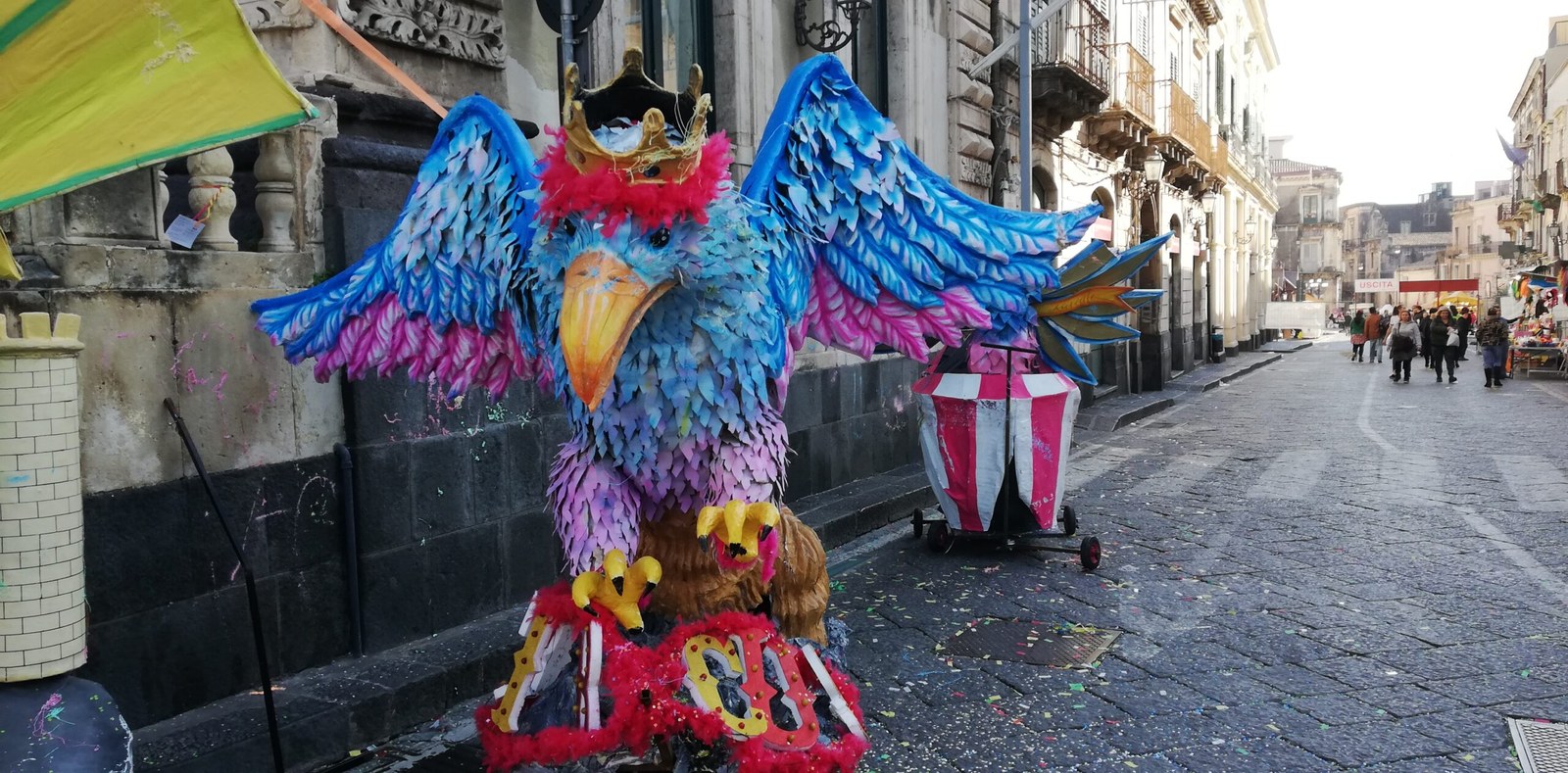
Carnevale di Acireale build-up — January workshops, main parade late Jan or February
Carnevale di Acireale, officially the most beautiful Carnival in Sicily and recognised as such since 1594, runs as a 10-day event ending on Mardi Gras. The dates shift annually with the Easter calendar: in 2026 the main parade runs approximately February 7-17 (Mardi Gras February 17); in 2027, an early-Easter year, the parade falls approximately January 31 to February 9 (Mardi Gras February 9). Through January, the float workshops in the historic centre are open to visitors: papier-mâché allegorical floats and flower-decorated floats in late assembly. Acireale is 17 km north of Catania (25 minutes by car). Disclaimer: 2026/2027 dates approximate; verify with Carnevale Acireale official close to travel.
Sant’Agata countdown — February 3-5 fixed
Effems · CC BY-SA 4.0
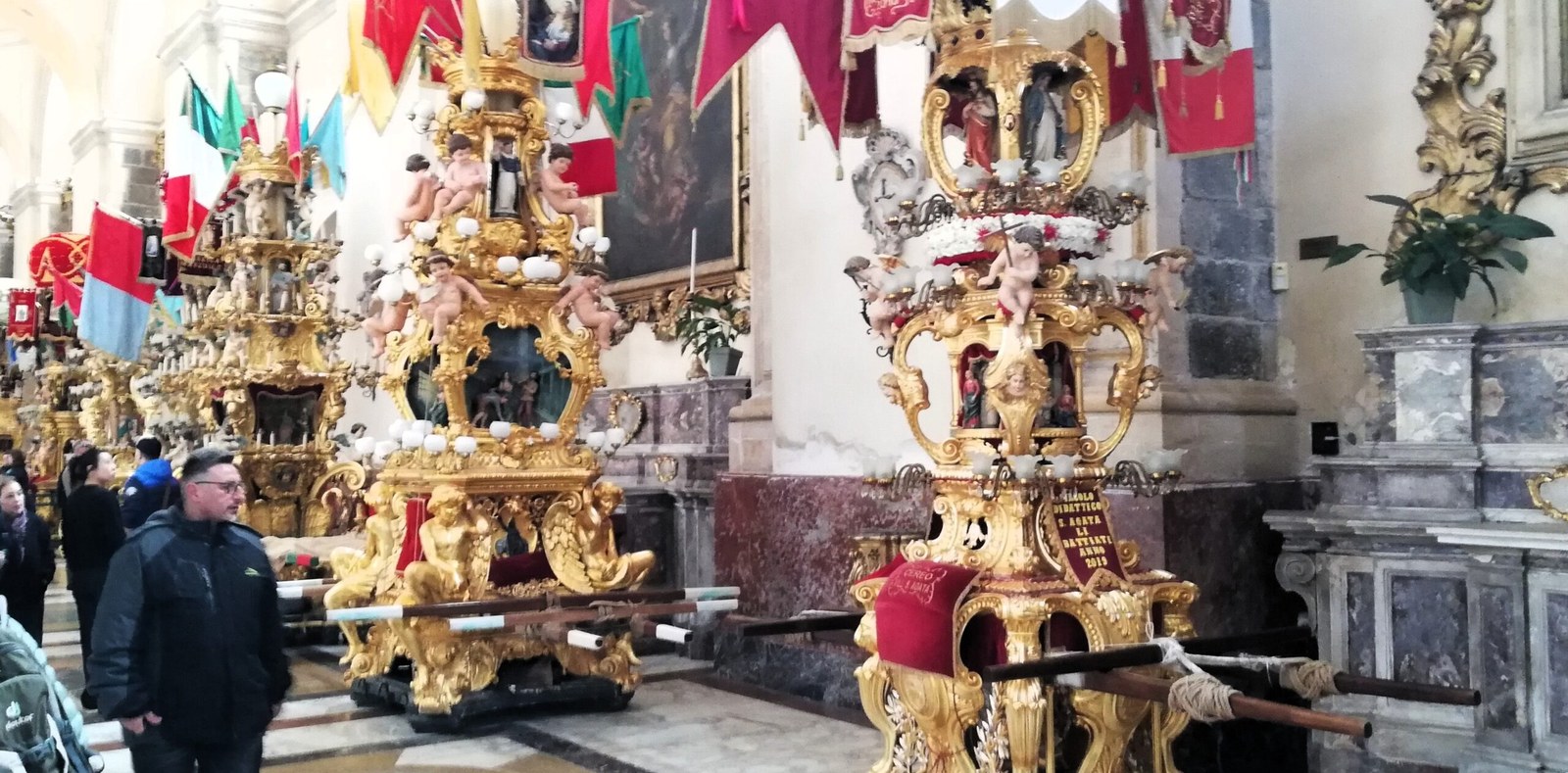
Catania’s Festa di Sant’Agata on February 3-5 is the world’s third-largest Catholic procession after Holy Week in Seville and Corpus Christi in Cuzco, drawing roughly one million pilgrims. It is technically a February event, but the city sets up through the last week of January: the silver bust of the saint is prepared in the Cathedral, the candelore (gilded wooden guild towers) appear in the historic centre, and white-sackcloth devotees (saccu) start to gather. For January travellers, extending the trip to February 5 turns a quiet-season visit into the most intense religious experience in southern Italy. Disclaimer: details and procession schedule at festadisantagata.it.
Almond blossom preview (Mandorlo in Fiore lead-up) — from January 25
From around January 25, almond trees — the first species to bloom in Sicily — start their pink-and-white flowering in the Valley of the Temples in Agrigento, in the Belice valley, and across the south-west countryside. The full Mandorlo in Fiore Festival opens in early February (the festival typically falls in early February or March; dates depend on the year), but late-January visitors catch the first blooms with the temples to themselves. Morning and golden-hour visits give the best photography. The Tripod of Friendship ceremony in front of the Temple of Concordia opens the festival; check the festival calendar for exact dates.
Presepi Viventi (Living Nativities) — until January 6
Sicily’s Living Nativities — village re-enactments of the nativity scene with locals in costume — run through the Christmas-Epiphany window, closing on January 6. The signature is Custonaci (Trapani province), staged inside a natural cave; Caltagirone uses the ceramic-tile alley as a backdrop; Ispica sets its scenes inside the rock-cut Cava Ispica; Salemi hosts the largest village-wide version. Free admission, evenings only, weather-dependent. For January 1-6 trips, plan an evening drive to one of these villages.
Sagra della Sfincia di Priescia — January 6 in Montelepre
Montelepre, in Palermo province, holds the Sagra della Sfincia di Priescia on January 6 each year, celebrating its sweet ricotta-filled fried pastry. Free village festival with food stalls in the historic centre. It is one of the few Epiphany sagre on the island and a good complement to the Befana day for travellers who want the rural Sicily layer.
Modica chocolate winter peak and Sicily-wide sagre
The Modica chocolate season runs strongest from Christmas to Easter, with the cold-process Aztec method tasting tours (Antica Dolceria Bonajuto, Sabadì) at peak booking through January. Easter-shaped chocolates begin appearing in shop windows from late January. Blood-orange (arancia rossa) season in Catania province (Tarocco, Moro, Sanguinello varieties) is at its sweetest in January, with granita with brioche served warm on cafè terraces. Citrus festivals run in Ribera (Lemon Festival) and Lentini (orange country) through the month.
Etna skiing: where, how, how much
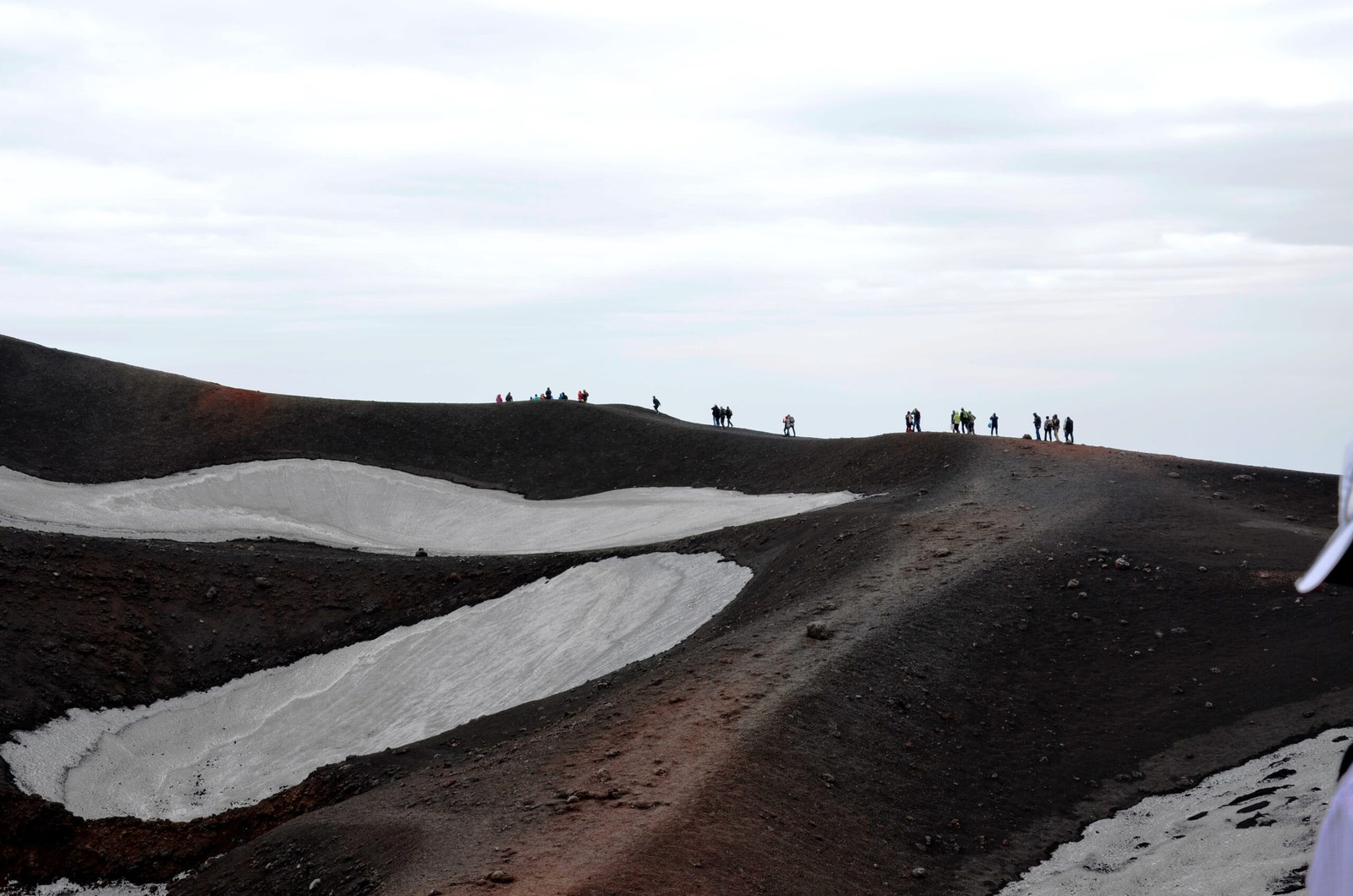
Mount Etna is the only place in Italy where you can ski with the Mediterranean in view. Two resorts, one volcano: Rifugio Sapienza on the southern flank (1.910 m, 4 lifts, 10 km pistes, beginner-friendly) and Piano Provenzana on the north (1.810 m, 5 lifts, 6 km pistes, more advanced). Day passes run €30-40, equipment rents on-site, and from Catania it’s a one-hour drive in either direction.
Yulka-lucia · CC BY-SA 4.0
Etna Sud — Rifugio Sapienza (1.910 m)
The southern flank is the larger of the two stations and the easier to reach for first-time visitors. Rifugio Sapienza sits at 1.910 m with parking, restaurants, ski school, equipment rental and the base of the Funivia dell’Etna cable car (which continues to 2.500 m for advanced terrain). 4 lifts serve roughly 10 km of pistes, mostly beginner and intermediate. The drive from Catania (35 km, around 1 hour via the SS122 then Via Etnea-Sud through Nicolosi) is paved all the way; chains are typically required only after fresh snowfall. Sapienza’s facilities and gentler slopes make it the natural choice for families and beginners.
Etna Nord — Piano Provenzana (1.810 m)
The northern flank is smaller, more technical, and notably less crowded. Piano Provenzana sits at 1.810 m, accessed through the village of Linguaglossa, with 5 lifts serving 6 km of pistes — including some of the steepest skiing on the volcano. Drive time from Catania is around 1 hour 15 minutes (60 km via the autostrada to Fiumefreddo, then SS120 to Linguaglossa, then up). The Provenzana side is favoured by intermediate and advanced skiers and by ski tourers heading to the upper craters, and Linguaglossa village offers post-ski wine tasting in the heart of Etna DOC country.
When to ski Etna and live conditions
The reliable window runs late December to mid-March, with January typically delivering the best snow cover. Snow at altitude can fall as early as November and linger into April in heavy years. Volcanic activity occasionally closes lifts (Etna’s summit area is monitored by INGV); high winds can also pause the cable car. Always check live status before driving up: Funivia dell’Etna for the south, the operator websites for Provenzana north, and local Linguaglossa or Nicolosi tourism offices for road conditions.
Day passes, rentals and lessons
- Location
- Piazzale Rifugio Sapienza, Nicolosi Maps
- Site
- rifugiosapienza.com
- Essential fact
- Sapienza 1.910 m base / 4 lifts / 10 km pistes · Provenzana 1.810 m base / 5 lifts / 6 km — most reliable snow in January.
- Price
- €30–40 (day pass)
Day passes run roughly €30-40 at both stations (cheaper midweek, more on weekends and holidays). Full ski rental — skis, boots, poles — runs €25-30 per day; snowboards similar. Lessons are around €40 per hour private or €25 per hour group, with several certified schools on each side. Disclaimer: prices indicative for January 2026 based on current operator listings; verify before booking. If you don’t want to commit to a full day, the cable car alone (Funivia dell’Etna, around €60 round-trip without skiing) takes you to 2.500 m for the snow-and-sea panorama.
Beyond Etna — Madonie skiing at Piano Battaglia
The Madonie National Park hosts a smaller ski station at Piano Battaglia (1.500-1.800 m) on the northern range, with 3 lifts and a snowshoe network. It is more local than Etna and has the advantage of an attractive Madonie hill-village base (Petralia Soprana, Polizzi Generosa) for evening dinner and accommodation. From Palermo the drive is around 1 hour 30 minutes; from Catania around 2 hours 30 minutes. For travellers based in Palermo, Piano Battaglia is the natural ski option.
After-ski — Catania granita and Acireale thermal baths
Sicilian after-ski runs differently from Alpine traditions. From the south flank, descend to Catania for granita with brioche (yes, even in winter; the Sicilian version is more like sorbet than slush), an aperitivo at Cafè del Duomo on Piazza Duomo, or a long dinner of pasta alla Norma. From the south flank you can also stop at Acireale for the Santa Venera al Pozzo thermal baths, just 25 minutes from Sapienza. From the north, descend to Linguaglossa for a wine tasting at one of the Etna DOC cantine in Castiglione di Sicilia or Passopisciaro — the same vineyards that produce the Carricante and Nerello Mascalese.
Best places to visit in Sicily in January
Catania as east-coast base with Sant’Agata countdown atmosphere, Mount Etna for skiing, Palermo for the Arab-Norman circuit and the opera season, Valley of the Temples for the empty park and almond preview, Taormina at year-deepest hotel discounts, Acireale for the Carnival workshops, Syracuse and Ortigia in their calmest month, Val di Noto for chocolate and blood-orange granita, Cefalù for the Norman Cathedral, Madonie for snowshoeing, Aeolian Islands on reduced ferries, and Modica for the chocolate route.
Catania — the east-coast January base
- Location
- Catania, Metropolitan city of Catania Maps
- Essential fact
- Mildest coastal winter climate in Sicily — 14°C / 7°C average, sea 15°C, 1–2°C warmer than Palermo; 1-hour radius to Etna ski, Taormina, Syracuse and Acireale Carnival.
- Price
- €45–80/night (apartment for two, off-peak)
Catania is our pick for a January base. The city’s coastal climate is the mildest on the island in winter (1-2°C warmer than Palermo most days); the Pescheria fish market runs at full pace year-round (weekday mornings); the Saldi Invernali on Via Etnea opens January 7; the Sant’Agata countdown takes over the historic centre in the last week of the month with candelore appearing and white-sackcloth fittings on sale. Day-trip access is the best on the island: Etna ski 1 hour, Taormina 50 minutes, Syracuse 1 hour, Acireale Carnival 25 minutes, Aci Trezza 25 minutes, Val di Noto 1-1h45. For practical movement see our where to park in Catania guide and our things to do in Catania overview.
Mount Etna — ski season and snow-and-sea panorama
Dror Feitelson · CC BY-SA 4.0
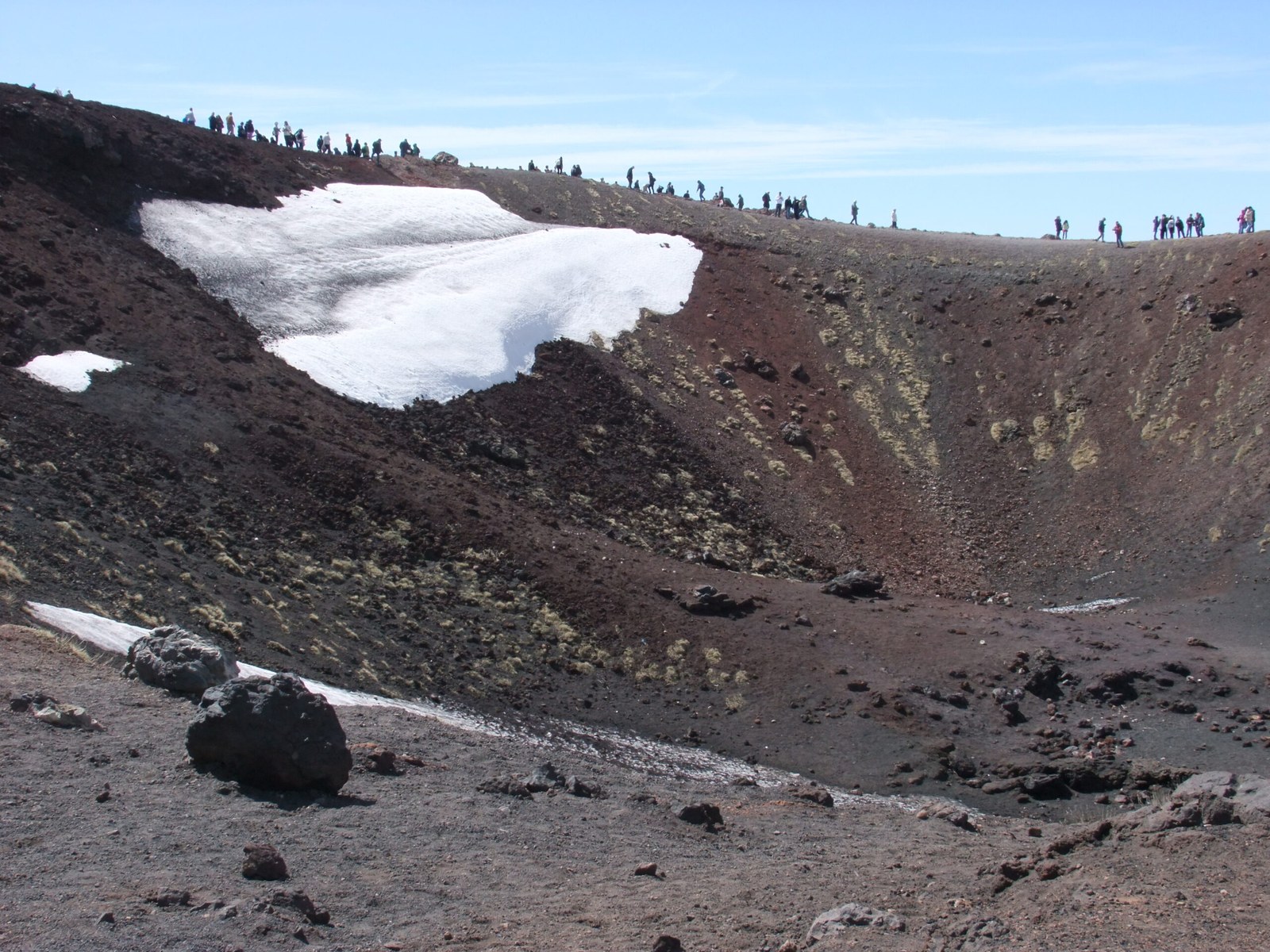
Etna (3.357 m / 11.013 ft) in January is in full ski mode. The volcano splits naturally into two visitor experiences: Rifugio Sapienza (1.910 m, south) for skiing, the Funivia cable car to 2.500 m, and the Silvestri craters walk on snow-free days; and Piano Provenzana (1.810 m, north) for more advanced skiing and ski-touring. Authorised summit hikes are not advisable in January (the upper crater area is closed or dangerous in winter conditions), but the cable car runs weather-permitting, and lower trails around Sapienza stay walkable. For deeper Etna context see our Etna hiking guide.
Palermo — Arab-Norman, opera season, Saldi
Palermo in January runs the UNESCO Arab-Norman circuit at full intensity in jacket-and-jumper weather: the Cathedral, the Cappella Palatina (book ahead, €15), the Norman Palace, the Cathedral of Monreale 10 km out (the largest Christ Pantocrator apse in the Mediterranean), and the medieval food markets Ballarò + Vucciria + Capo (8 km combined, year-round). The Teatro Massimo opera season hits its January-March peak; book 2-3 weeks ahead for evening performances. Mondello beach 11 km out is windswept and quiet; the Saldi on Via Maqueda open January 7. A two-night Palermo stop pairs naturally with one night in Cefalù or a Madonie day-trip.
Valley of the Temples Agrigento — near-empty park and almond preview
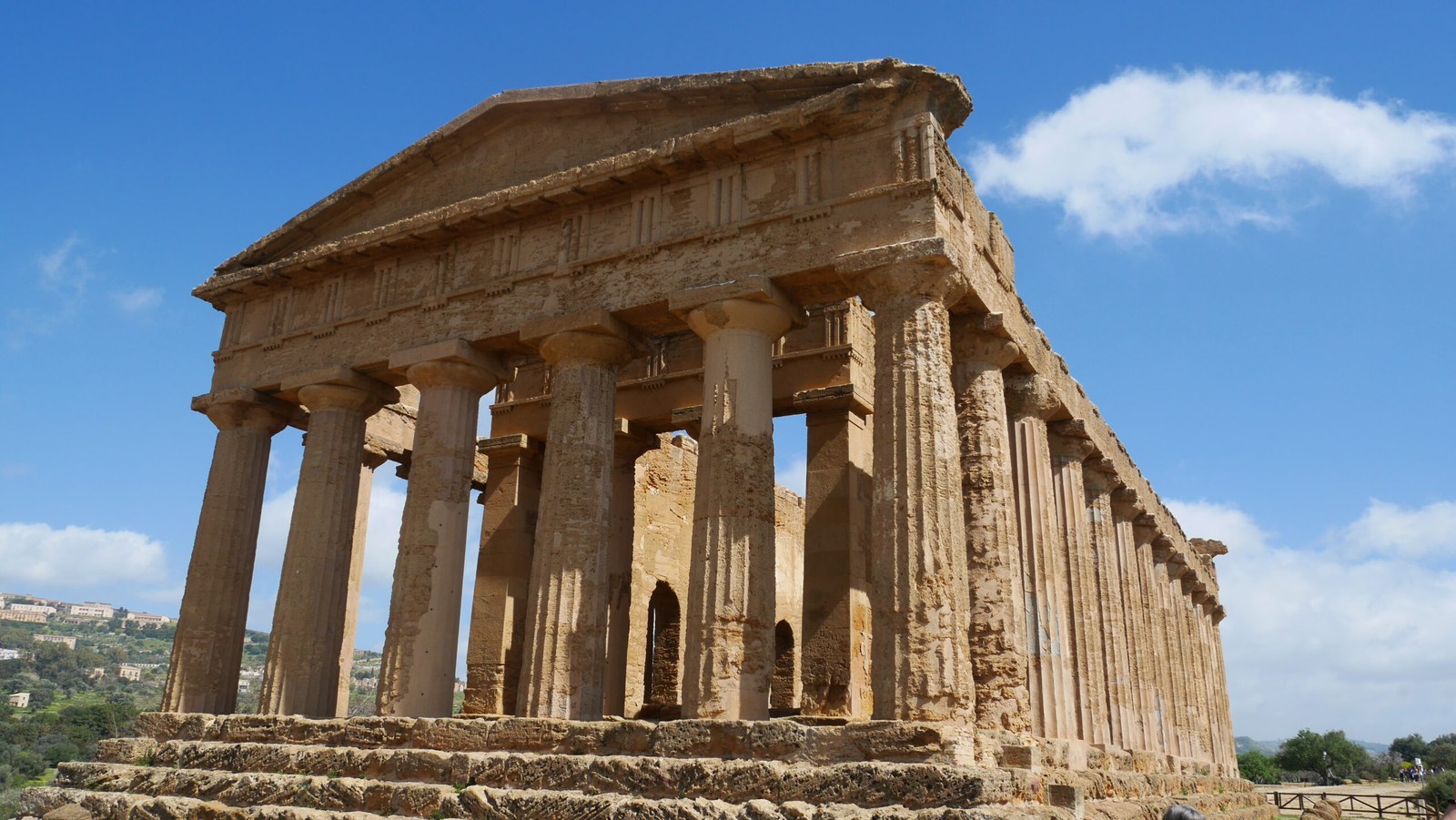
Ed Yourdon · CC BY 2.0
- Location
- Agrigento Maps
- Site
- parcovalledeitempli.it
- Essential fact
- 1.300 hectares, 8 Greek temples (UNESCO); near-empty most January weekdays at 14°C / 6°C, with first almond blossoms from around 25 January previewing Mandorlo in Fiore.
- Price
- €15–18 (ticket, Concordia + Kolymbethra)
The Valley of the Temples — 8 Greek temples on 1.300 hectares, UNESCO — is at its most peaceful in January. Most weekdays the park hosts only school groups, with the Temple of Concordia walkable in solitude. From around January 25, the first almond trees start to bloom, scattering pink-and-white through the eastern temples in a preview of the Mandorlo in Fiore Festival. Allow at least half a day for the eastern temples (Concordia, Hera, Hercules) and the Kolymbethra Garden. Reach Agrigento from Catania in 2 hours 15 minutes by car, from Palermo in 1 hour 45 minutes.
Taormina — year-deepest hotel discounts, Etna view
Taormina in January is at the year’s deepest hotel discount, with seafront 5-star properties dropping 40-60% below August. The Greek Theatre — Etna in the background — is open without queue every day; Corso Umberto stays lively in the afternoon; the Castelmola hilltop hike (1.5 hours, 290 m climb) is mild walking weather; some seafront restaurants in Mazzarò close for winter, but Corso Umberto stays open. Day-trip from Catania (50 minutes); a two-night stay catches both the off-season hotel deals and a wider radius for Etna ski + Castelmola + Naxos.
Acireale — baroque town and Carnival workshops
- Location
- Via Ruggero Settimo 5, Acireale Maps
- Essential fact
- Sicily’s most beautiful Carnival since 1594; papier-mâché allegorical floats and flower-decorated floats assembled in January workshops; baroque historic centre as the parade stage.
- Price
- Free (workshops)
Acireale, 17 km north of Catania on the east coast, hosts Sicily’s most beautiful Carnival (a title officially recognised since 1594). Through January the float workshops in the historic centre are open to visitors: papier-mâché allegorical floats in late assembly, flower-decorated floats being trimmed, masked balls in rehearsal. The town itself is one of the finest baroque centres in eastern Sicily, with the Cattedrale Santa Maria, the Piazza Duomo ensemble and the Basilica di San Sebastiano. The Santa Venera al Pozzo thermal baths, on the western edge of town, offer a year-round warm-water soak with a Roman-era bath archaeological site as backdrop.
Syracuse and Ortigia — calmest month

Esculapio · CC BY-SA 4.0
Syracuse — and especially the historic island of Ortigia (1.2 x 0.7 km) — is at its calmest in January. The archaeological park with the Greek theatre (15.000 capacity, INDA classical season returns May) is visitable without queue; the Tempio di Apollo, the Aretusa Spring with its papyrus, the Cathedral built into a temple of Athena, the Maniace Castle on the southern point, and the morning Vergini market all stay open with light crowds. Restaurants are quiet but open. Drive 1 hour from Catania, or take the regular Trenitalia train (1 hour, €7).
Val di Noto baroque towns — chocolate, granita, quiet streets

Effems · CC BY-SA 4.0
The Val di Noto circuit — Noto, Modica, Ragusa Ibla, Scicli — is one of 8 UNESCO baroque towns rebuilt after the 1693 earthquake. January brings near-zero crowds, the Modica chocolate winter peak (cold-process Aztec method tasting tours at Antica Dolceria Bonajuto and Sabadì), the blood-orange granita season, and Ragusa Ibla floodlit at night. From around January 25 the Easter-chocolate season opens. The hilltop Caffè Sicilia in Noto and the Antica Dolceria in Modica run shorter winter hours; verify before driving for evening dinner.
Cefalù — Norman Cathedral and quiet beach
Cefalù, on the Tyrrhenian coast 70 km east of Palermo, is the most photogenic small-town January stop in Sicily. The Norman Cathedral (1131, UNESCO mosaics) is the headline indoor visit; the 1.5-hour hike up La Rocca (270 m climb) to the medieval castle ruins is comfortable mild-walking weather (12-14°C); the town beach is empty and walkable; the medieval Lavatoio and the harbour stay open. Stay one night, day-trip from Palermo (1 hour by train, €5).
Madonie + Nebrodi — snowshoeing and small-village winter
The Madonie National Park hosts the smaller of Sicily’s ski stations at Piano Battaglia (1.500-1.800 m), with snowshoeing across the upper plateaux when snow allows. The hill villages of Petralia Soprana, Polizzi Generosa and Castelbuono stay alive year-round with traditional trattorie and local sheep-cheese. The neighbouring Nebrodi mountains (north of Etna) are quieter still, with empty trails, occasional snow, and the wild Lago Biviere. Day-trip from Cefalù or Palermo for Madonie; a two-night stay in Petralia or Castelbuono catches the full atmosphere.
Aeolian Islands — reduced winter ferries, lowest prices
The Aeolian ferries from Milazzo run a reduced winter schedule in January: daily hydrofoil service to Lipari (Liberty Lines + Siremar) weather-permitting, with less frequent links to Vulcano, Salina, Panarea and Stromboli. Stromboli‘s sciara del fuoco is still visible from offshore boats after sunset. Vulcano‘s sulphur mud baths stay open year-round (the water is volcanically warm). January accommodation drops 40-50% below August; restaurants run skeleton hours; the islands feel emphatically off-season. Recommended only for travellers who actively want the empty version.
Modica — chocolate route and baroque alleys
Modica, in the south-east baroque circuit, is the chocolate capital of Sicily. The cold-process Aztec method — the only place in Italy where chocolate is made without conching, with sugar still crystalline in the bar — is practised at Antica Dolceria Bonajuto (since 1880) and Sabadì. Tasting tours in winter are at peak booking through January; Easter-shaped chocolates begin appearing late month. The town’s two-tier baroque layout — the upper Duomo San Giorgio and the lower Duomo San Pietro — takes a half day on foot. Stay one night to catch the floodlit baroque after dinner.
Things to do in Sicily in January
Ski Etna, walk the Valley of the Temples without the crowd, watch Carnevale Acireale prep, eat blood-orange granita with brioche, tour the Modica chocolate makers, visit Palermo’s rainproof Arab-Norman gems, take a Sicilian winter cooking class, soak at Acireale’s thermal baths, catch La Befana bonfires on January 6, see Living Nativities until Epiphany, and shop the Saldi Invernali from January 7.
- Ski Mount Etna — day-trip from Catania, two stations (Sapienza south + Provenzana north), day pass €30-40 + rental €25-30; the only Italian volcano where you can ski with sea view.
- Walk the Valley of the Temples without the queue — 8 Greek temples on 1.300 ha, near-empty most weekdays, with the first almond blossoms scattering pink through the eastern temples from around January 25.
- Watch Carnevale Acireale workshops — papier-mâché allegorical floats in late assembly, flower-float trimming, masked-ball rehearsals; the historic centre opens its float ateliers to visitors through January.
- Eat blood-orange granita with brioche — Catania-province IGP arancia rossa (Tarocco, Moro, Sanguinello varieties) at peak sweetness, served on cafè terraces even in winter as Sicilian sorbet-style granita.
- Tour the Modica chocolate makers — cold-process Aztec method at Antica Dolceria Bonajuto (since 1880) and Sabadì; tasting tours at peak January booking, Easter-shaped chocolates from late month.
- Visit Palermo’s rainproof gems — Cappella Palatina mosaics, Cattedrale di Monreale (largest Christ Pantocrator apse in the Mediterranean), Teatro Massimo opera matinée for an evening when the rain comes.
- Take a Sicilian winter cooking class in Catania or Palermo — pasta alla Norma, pasta con le sarde, caponata, blood-orange dessert, the layered cuccia di Santa Lucia (wheat-and-ricotta).
- Soak at Acireale’s thermal baths — Santa Venera al Pozzo (year-round warm-water springs at the western edge of Acireale, on a Roman archaeological site) is 25 minutes from both Catania and the south flank of Etna.
- Catch La Befana on January 6 — the night-of-January 5 bonfires Falò della Befana in Aci Trezza, Mascali and Linguaglossa; sweets stalls in town squares, the last day of Christmas decorations.
- See Living Nativities (until January 6) — Custonaci (Trapani province, in a natural cave, the most photogenic), Caltagirone (in the ceramic-tile alley), Ispica (in the rock-cut Cava Ispica), Salemi (village-wide).
- Hit the Saldi Invernali sales from January 7 — Catania Via Etnea (mid-range and high street between Piazza Stesicoro and Villa Bellini), Palermo Via Maqueda, Taormina Corso Umberto; 30-50% initial discounts.
- Day-trip Acireale Carnival workshops + Etna ski in one day if Catania-based — ski Sapienza in the morning, descend to Acireale for late lunch and float-atelier visit before sunset.
What to wear and pack for Sicily in January
Pack layers. T-shirt, fleece, and a rain jacket for daytime exploration on the coast (13-15°C); add a warm coat, hat, gloves and waterproof boots for inland day-trips and rainy spells. If you’re skiing Etna, bring proper insulated outerwear or rent on-site. A folding umbrella and a foldable rain shell cover the 8-10 expected rainy days. SPF 15+ for Etna snow even in winter.
Daily outfit on the coast
Long-sleeve T-shirts or cotton blouses, a light fleece or merino jumper, jeans or chinos, comfortable walking shoes (waterproof a plus), and a medium-weight coat for evenings. The coast runs 13-15°C by day and 5-9°C at night, with cold snaps and Sirocco days the main variation. One smart-casual evening outfit covers Taormina Corso Umberto, Catania trattorie and Modica baroque alleys. The wardrobe is essentially a Mediterranean late-autumn one, not full winter.
Rain shell, umbrella, and waterproof footwear
January is among Sicily’s wettest months, with 8-10 rainy days typically falling in 1-3-day fronts. Pack a foldable rain jacket and a small umbrella; both pay for themselves in the second week. Waterproof walking shoes are worth their weight on Catania and Palermo cobblestones in rain; leather boots get soaked through quickly. Skip ponchos: the wind on archaeological sites makes them useless.
Etna-specific kit
If Etna skiing is on the plan, pack an insulated ski jacket and pants (or rent on-site for €5-15 per item), a thermal base layer, warm gloves, a beanie or buff, ski socks, and UV-protection sunglasses. The volcanic ash reflects strongly off snow; SPF 30+ is sensible for fair skin even in January. If you’re not skiing but riding the cable car (Funivia dell’Etna to 2.500 m), the same warm-layer kit applies because the upper cabin is exposed to wind. Boots can be rented at the base.
Cold-weather extras
Wool socks, a warm hat, light leather gloves, lip balm (windy coastal afternoons can be drying), and a small thermos for granita-with-brioche stops. A pair of merino base layers is useful for inland day-trips (Enna, Madonie, Castelbuono) where day temperatures can drop to 5-8°C. Sicilian houses are typically less insulated than northern-European ones; a warm jumper for evenings indoors is a wise add.
Smart-casual outfit for restaurants and Carnival events
Carnevale Acireale main parade evenings, Taormina Corso Umberto restaurants, Modica baroque alley dinners, and Catania’s classier trattorie all step up from beach kit: long trousers or a dress, smart-casual shoes (not trainers), one ironed shirt or blouse. Sicily’s evening rhythm gets dressier than the day, even in winter; a 21:30 dinner is normal.
Almost don’t pack
Heavy beachwear, sunscreen above SPF 30 (UV peaks at 3 in January), light flip-flops, and bulky shorts. The cold-water plunge tradition in Aci Trezza, Mondello and Taormina on January 1 is for locals; most travellers will skip it. If you want to swim in any meaningful way, plan around an indoor pool at a wellness hotel or the warm Vulcano mud baths in the Aeolian Islands.
How much does a Sicily January trip cost?
A 7-night Sicily January trip for a couple typically runs €900-1.400 ($980-1.500) — roughly 35-50% less than August and the cheapest stretch of the year alongside November. Flights from Northern Europe drop 45%, accommodation 35-50%, car rental 40%. The premium events (Befana week January 1-6 + Carnevale Acireale main weekends + Sant’Agata Feb 3-5 if your trip extends) lift pricing locally; outside those windows January is the budget-traveller sweet spot.
Sample budget — couple, 7 nights, Catania base, January 7-31 window
| Item | Low / mid (per couple, 7 nights) | Notes |
|---|---|---|
| Flights London → Catania return | £90-180 / $110-220 | Ryanair, easyJet, Wizz; book 6-8 weeks ahead |
| Flights New York/Boston → Catania (1 stop) | $520-720 | Via Rome, Munich or London, mid-week; book 8-12 weeks ahead |
| Apartment Catania centre 7 nights | €330-560 | 2-bedroom, central, with kitchen; -35-50% vs August |
| Rental car compact 5 days | €100-150 | Catania CTA airport pickup; -40% vs August |
| Restaurants + groceries | €280-420 | Mix of trattorie + apt cooking with market shopping |
| Etna ski day (pass + rental) | €55-70 per person | Pass €30-40 + rental €25-30; lessons optional €40/h |
| Funivia dell’Etna cable car (no ski) | €60 per person round-trip | To 2.500 m, weather-permitting |
| Modica chocolate tasting tour | €15-25 per person | Antica Dolceria Bonajuto or Sabadì 1-1.5 h tasting |
| Valley of the Temples + Agrigento | €20 per person | Ticket €15-18 + parking; combined Concordia + Kolymbethra |
| Acireale thermal baths Santa Venera | €15-25 per person | Day pass with sauna + warm pool |
| Total per couple (Jan 7-31) | €900-1.400 | Excluding Befana week premium and Sant’Agata extension |
Off-peak savings breakdown
Compared with August: flights -45% on direct routes from London / Dublin / Frankfurt to Catania CTA, accommodation -35-50%, car rental -40%, restaurants similar year-round (Sicilian menus are not seasonally priced). The Befana week (January 1-6) keeps a small premium on accommodation in Catania, Palermo and Taormina due to extended Italian Christmas-holiday demand; outside it, January 7-31 is the deepest off-peak. Taormina’s seafront 5-star hotels can drop 40-60% below August, the year’s deepest discount.
If your trip extends to February 5 to catch Sant’Agata in Catania, expect a +20-35% spike on Catania accommodation during the three procession days (February 3-5) — book 6-8 weeks ahead for that window. Acireale Carnival main weekends (typically two Sundays in February for 2026) lift Acireale-area accommodation locally but barely affect Catania pricing 25 minutes away.
Where to stay in Sicily in January
A central apartment in a base city beats a coastal resort in January. Kitchen for warm winter cooking, terrace for sunny afternoons, comfort on the rainy days, laundry for hiking and ski gear, and 35-50% savings over multi-night stays vs August. Catania is our pick for a January base — central east coast, mildest coastal winter climate, good airport links, easy Etna ski day-trip, Sant’Agata anchor if your trip stretches to early February.
Why apartment beats hotel in January
An apartment lets you turn the winter market into dinner: blood-orange salads, Etna potatoes, ricotta, salt-cod, roast cauliflower, citrus desserts. It gives you a terrace or balcony for the sunny mid-day stretches (still warm enough for lunch outside on most days), a kitchen for breakfast and rainy-morning lunch, laundry for hiking gear from the Madonie or ski gear from Etna, and the cost mathematics of a multi-night stay (€45-80 per night for two beats €90-160 hotel double in Catania centre, off-peak). It also lets you come and go from ski day-trips and Acireale Carnival workshops without restaurant scheduling.
Best base cities for January
Catania for east-coast access (Etna ski 1 hour, Taormina 50 minutes, Syracuse 1 hour, Acireale Carnival 25 minutes, Val di Noto 1-1h45) and the Sant’Agata countdown anchor. Palermo for the Arab-Norman circuit, the Teatro Massimo opera season, Cefalù day-trips and the Madonie ski option. Taormina for the year’s deepest 5-star hotel discounts and the Greek Theatre with Etna view. Syracuse for the calmest Ortigia and the Val di Noto baroque circuit. For a single-base trip, choose Catania; for a two-base trip, Catania + Palermo splits the island east-west naturally. See also our best area to stay in Sicily guide.
Catania as the January base
Catania’s coastal climate runs 1-2°C warmer than Palermo through January; the historic centre between Via Etnea, Piazza Duomo, Pescheria and Castello Ursino is fully walkable on most days; off-peak accommodation runs 35-50% below August; and the city is the natural day-trip hub for Etna ski + Acireale Carnival + Taormina off-peak + Syracuse. From Catania-Fontanarossa airport you can reach the city centre in 15 minutes by AMT Alibus (€4) or fixed-tariff taxi (€25). For travellers extending into early February, Catania doubles as the Sant’Agata grandstand — the procession passes through Via Etnea, Via Garibaldi and Piazza Duomo.
Plan your Sicily January stay in Catania
Sicily in January rewards the traveller who builds the trip around a single base and day-trips outward. Our three apartments in Catania centre — mild coastal climate, walkable to the Pescheria fish market and Via Etnea, 15 minutes from CTA airport, and a one-hour drive to Etna’s ski stations — are designed exactly for this kind of off-season trip. Each comes with a kitchen for the winter market, a terrace for the bright afternoons, and laundry for ski gear. See our apartments in Catania homepage for January 2026 availability and Sant’Agata-extension pricing.
How to get to Sicily in January
Flights from the UK, Ireland and the US
January flight prices typically run 40-50% lower than August, the year’s deepest discount alongside November. From the UK, Catania-Fontanarossa (CTA) has direct flights from London (Gatwick, Stansted, Heathrow), Manchester and Bristol — some seasonal routes (Edinburgh, Birmingham) reduced or paused for winter. From Ireland, Dublin runs direct year-round. From continental Europe, direct from Frankfurt, Munich, Amsterdam, Paris, Brussels, Vienna, Warsaw, Copenhagen. From the US, no non-stop flights; one-stop via Rome, Munich, Frankfurt or London — typical $520-720 return mid-week with 8-12 weeks lead time. Carriers include Ryanair, easyJet, Wizz, Vueling, ITA Airways, British Airways, Lufthansa, Aer Lingus and KLM.
Arriving at Catania-Fontanarossa airport
Catania-CTA is 7 km from the historic centre. The AMT Alibus runs every 25 minutes from outside Arrivals (€4 single, ~25 minutes to Stazione Centrale via Piazza Borsellino); a fixed-rate taxi to the centre is €25. For day trips a rental car is recommended unless you stay in Catania or Taormina without leaving the urban corridor. Be aware of ZTL (limited traffic) zones in historic centres — Taormina, Syracuse-Ortigia, Catania, Modica, Ragusa Ibla, Trapani all have them, and the cameras work. For parking strategy in Catania see our where to park in Catania guide.
Ferry and train from mainland Italy
The mainland-to-Sicily ferry crossing operates year-round at Villa San Giovanni → Messina (20-minute crossing, every 20-40 minutes). Trenitalia direct trains from Rome to Catania-Syracuse-Palermo are loaded onto train ferries and continue onto the island. Daytime road trip from Rome to Catania is roughly 9 hours including the ferry; from Naples 6 hours. Aeolian Islands ferries from Milazzo run a reduced winter schedule in January (daily hydrofoil to Lipari, weather-permitting; less frequent links to other islands).
For the early-summer months see our Sicily in June guide (Taormina Film Festival, swimming season begins) and our Sicily in July guide (Festino di Santa Rosalia, Etna optimal, sea 24-26°C).
Frequently asked questions about Sicily in January
Is Sicily worth visiting in January?
Yes — if you trade beach for culture, skiing and quiet streets. Etna ski season is at its most reliable, the Valley of the Temples and the Val di Noto baroque towns are at zero crowd, the Modica chocolate makers run their winter peak, and accommodation is at the year’s deepest discount alongside November. The trade-off: 8-10 rainy days, sea too cold to swim, ferry schedules to the Aeolian Islands reduced, and short daylight (sunrise around 7:15, sunset 17:15). For most travellers it is the best month for cultural Sicily and for budget Sicily.
Can you ski in Sicily in January?
Yes — on Mount Etna, with the Mediterranean in view. Two stations: Rifugio Sapienza (1.910 m, south flank, 4 lifts, 10 km pistes, beginner-friendly) and Piano Provenzana (1.810 m, north flank, 5 lifts, 6 km pistes, more advanced). The reliable window runs late December to mid-March, with January typically the best snow. Day passes €30-40, full ski rental €25-30, lessons €40/h. From Catania the drive is 1 hour to either station. The smaller Madonie station at Piano Battaglia (1.500-1.800 m) is the alternative for travellers based in Palermo.
Is the sea warm enough to swim in Sicily in January?
Only for cold-tolerant swimmers. Sea temperatures average 14-16°C, dropping to 14°C by month-end. Most beach lidos are closed; the open coast is unsupervised. Local cold-water swimmers and the New Year’s Day plunge tradition in Aci Trezza, Mondello and Taormina keep the practice alive, but most travellers will find it uncomfortable without a wetsuit. Scuba diving operators on the east coast (Riviera dei Ciclopi, Aci Castello) run year-round with 5 mm or 7 mm wetsuits.
Is January or February better for Sicily?
It depends on what you’re after. January wins on price (35-50% off August, cheapest month alongside November), on Etna ski reliability, and on near-empty archaeological sites. February wins on Carnevale Acireale main parade (in most years), Sant’Agata in Catania (Feb 3-5), and the full Mandorlo in Fiore festival in Agrigento. For travellers who can take a 10-day window, the natural play is late January through early February: catch Saldi opening, Etna ski and the Valley of the Temples in week one, and Sant’Agata + Carnival workshops in week two. See also our Sicily travel guide.
What is Sant’Agata and is it in January?
Sant’Agata is the patron saint of Catania, and her feast on February 3-5 is the world’s third-largest Catholic procession after Holy Week in Seville and Corpus Christi in Cuzco, drawing approximately one million pilgrims. Technically it is a February event, but the city sets up through the last week of January: the silver bust of the saint is prepared in the Cathedral, the candelore (gilded wooden guild towers) appear in the historic centre, and the white-sackcloth devotees (saccu) start to gather. For January travellers, extending the trip to February 5 turns a quiet-season visit into the most intense religious experience in southern Italy.
Is January cheaper than November in Sicily?
Roughly the same — both are the year’s two deepest off-peak windows. November runs slightly milder (16°C / 9°C average vs January’s 14°C / 7°C) with similar rainfall and noticeably warmer sea (18°C vs 15°C); January wins on Etna ski reliability and on the Christmas-holiday tail (Befana atmosphere through Jan 6). Accommodation pricing is within 5-10% of each other; both run 35-50% below August. For ski-curious travellers January is the better month; for shoulder-season travellers who still want a chance at warm afternoons, November is the safer bet.
The information in this guide was correct at the time of writing. Data can change from season to season without notice: before you travel, always check the official channels and websites for updates. We review this guide periodically, but the official channels are always the authoritative source. We also cannot guarantee that the suggested routes or the attractions described are always reachable or accessible: roads, trails and sites may be closed, damaged, altered or unsafe. Assessing the practicability and safety of itineraries and attractions always remains your own responsibility.