

Choosing Sicily or Sardinia for your 2026 Italian island vacation comes down to five honest tradeoffs: cost (Sardinia runs 20-40% more expensive), beaches (Sardinia wins on Caribbean-clear water, Sicily wins on variety), food (Sicily wins on depth and diversity), culture (Sicily layers Greek, Roman, Arab and Norman heritage; Sardinia owns the prehistoric Nuragic civilization), and transport (Sicily has trains, Sardinia almost always needs a rental car). Full disclosure: we live and host apartments in Catania, on Sicily’s east coast, so we are biased toward Sicily — but we will tell you exactly when Sardinia is the better choice.
Both are UNESCO-rich Mediterranean giants. Sicily is the largest island in the Mediterranean at 25.711 km²; Sardinia is second at 24.090 km². They sit roughly 290 km apart with no land bridge and no daily ferry between them. Most travelers visit one. The minority who visit both build a 10-day itinerary around an overnight ferry or a 75-minute flight. This guide walks through every comparison axis that matters — size, cost, beaches, food, culture, transport, season — and tells you which island wins for first-timers, families, honeymooners, beach purists, foodies and slow travelers.
Sicily or Sardinia The 30-second comparison
Sicily is the larger, cheaper, more historically layered island, with public transport that lets you skip the rental car. Sardinia is the smaller, more expensive, beach-exclusive island that requires a rental car to see what it does best. Choose Sicily for variety, history and budget; choose Sardinia for beach perfection, slow travel, and exclusive resort culture.
| Sicily | Sardinia | |
|---|---|---|
| Area | 25.711 km² (9.927 sq mi) — largest in the Mediterranean | 24.090 km² (9.301 sq mi) — second largest |
| Population | ~5 million | ~1.6 million |
| UNESCO sites | 7 (Aeolian Islands, Val di Noto, Villa Romana del Casale, Etna, Agrigento, Arab-Norman Palermo, Syracuse) | 1 (Su Nuraxi di Barumini) |
| Coastline | 1.484 km | 1.849 km |
| Highest peak | Mount Etna 3.357 m (active volcano) | Punta La Marmora 1.834 m |
| Cost | Lower — better budget value | 20-40% higher across accommodation, dining, car rental |
| Transport | Trains + buses + rental car all viable | Rental car essentially mandatory |
| Best for | Culture, food variety, budget, first-timers | Beach exclusivity, slow travel, repeat Italy visitors |
If you want one sentence to remember: Sicily gives you more for less; Sardinia gives you less, more perfectly. The rest of this guide is the detail behind that line.
Which is bigger, Sicily or Sardinia?
Sicily is bigger than Sardinia. Sicily covers 25.711 km² (9.927 sq mi), making it the largest island in the Mediterranean Sea. Sardinia covers 24.090 km² (9.301 sq mi), the second largest. The difference is roughly 1.621 km² — about the size of Greater London. Sicily also has more than three times Sardinia’s population (~5 million vs ~1.6 million), which makes it feel substantially busier on the ground.
The size difference matters less than the population gap. Sardinia at the same area is far emptier: long stretches of Costa Verde beach without a building in sight, mountain villages in the Barbagia of just a few hundred residents, and a rural-to-urban ratio you won’t find on Sicily. Sicily compresses Greek temples, baroque towns, an active volcano, two major cities and a Mediterranean island chain into the same surface; Sardinia uses the surface for breathing room.
A common misconception we get from US guests: Sardinia is not part of Sicily. They are two separate autonomous regions of Italy with different histories, dialects, foods, and political identities. Both have special-statute autonomy within Italy. Sicilian and Sardinian are recognised as separate languages, not regional Italian. They share a sea, a country and a sun-shaped flag context — nothing else.
Is Sicily cheaper than Sardinia?
Yes, Sicily is consistently cheaper than Sardinia — by roughly 20-40% across accommodation, dining and car rental. Sardinia’s exclusive resort culture (especially the Costa Smeralda), the cost of shipping goods to a less populated island, and a luxury-leaning tourism mix push prices well above Sicilian levels. The gap widens in July-August and narrows in shoulder season.
2026 daily budget snapshot — couple, mid-range, peak summer
| Category | Sicily | Sardinia | Differential |
|---|---|---|---|
| Mid-range apartment per night (couple) | €90-130 | €140-220 | +50-70% |
| 4-star hotel per night | €140-220 | €220-380 | +55-75% |
| Dinner for two at a typical trattoria | €50-70 | €70-100 | +30-45% |
| Granita and brioche / espresso breakfast | €4-6 | €5-7 | +15-20% |
| Compact rental car per day (Aug) | €55-80 | €80-130 | +45-65% |
| Ferry to mainland with car (1 trip) | €140-220 (Messina-Villa S.G.) | €180-350 (Cagliari/Olbia-Civitavecchia) | +30-60% |
| Daily total per couple (mid-range) | €220-320 | €310-490 | +30-55% |
Disclaimer: prices indicative and subject to change. Costa Smeralda starred resorts in August can run €1.500-3.500 per night, lifting the Sardinia average sharply for that pocket of the island.
Where Sardinia gets expensive
Costa Smeralda in August is its own price universe: a 4-star hotel in Porto Cervo lists at €600-900 per night, beach club lounger pairs at €120-200 per day, marina restaurants at €120-180 per head. Outside the Costa Smeralda corridor, prices stay high in Olbia, San Teodoro, Villasimius and Stintino — the main coastal resort towns. Ferries from the mainland with a car cost more than the Sicily equivalent because the Sardinian routes (Civitavecchia-Olbia, Genoa-Porto Torres) are longer than the Strait of Messina crossing.
Where Sicily stays affordable
Sicilian breakfast is unbeatable for value: granita and brioche at €4-6, espresso at €1-1.50. The Pescheria of Catania sells fresh swordfish and sea urchin direct from fishermen. Trenitalia regional trains connect Catania-Taormina-Syracuse-Noto-Modica-Ragusa-Agrigento for €5-15 per leg. Apartment rentals in Catania sit 30-50% below Taormina prices for the same comfort, which is the basis of the east-coast-base strategy this guide recommends.
When Sardinia matches Sicily on price
Late May, early June and late September: shoulder months when Sardinian beach hotels drop 35-50% below August rates and Costa Smeralda properties run promotions. Inland Sardinia — the Barbagia, Ogliastra villages, agriturismo in the Marmilla — is consistently cheaper than coastal Sicily of equal quality, because it gets a fraction of the demand.
Which has better beaches, Sicily or Sardinia?
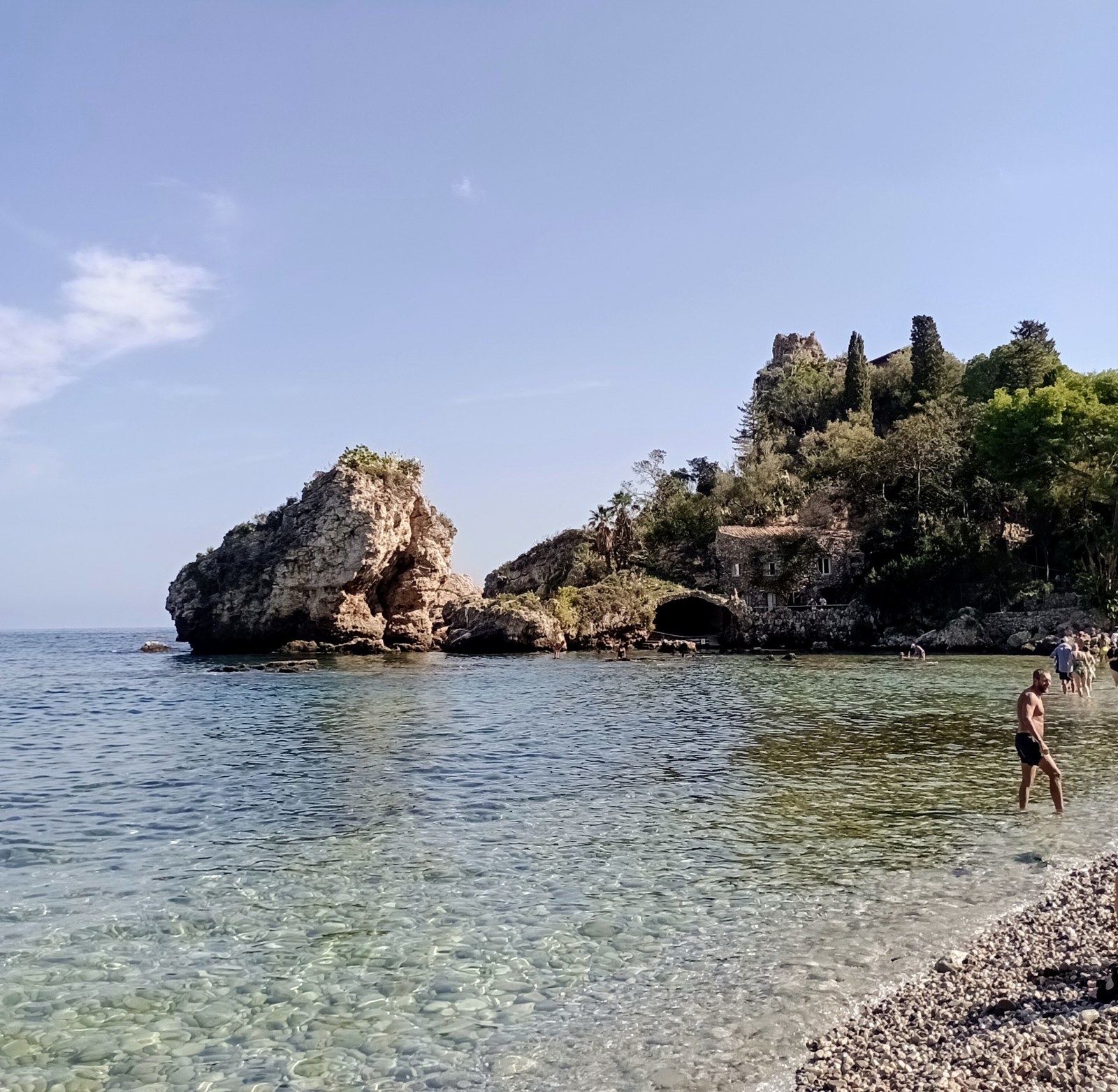
Sardinia wins on beach perfection — turquoise water, fine white sand, fewer crowds. Sicily wins on beach variety — black volcanic sand at the Aeolian Islands, golden curves at San Vito Lo Capo, white limestone cliffs at Scala dei Turchi, the dramatic Isola Bella in Taormina, and the city-edge La Plaja in Catania. If you want one Caribbean-style postcard moment, Sardinia. If you want different coastlines in one trip, Sicily.

Ökologix · CC0
Sardinia’s strongest beach cards
Cala Goloritzè on the east coast is the postcard: a UNESCO-protected pebble cove with a sea-arch and water that genuinely looks photoshopped, accessible only by an hour-long descent or by boat. La Pelosa at Stintino is the Caribbean analog — powdery white sand, water transparent for 100 metres — with a reservation system and a daily visitor cap to manage crowds. The Costa Smeralda beaches (Capriccioli, Liscia Ruja, La Celvia) deliver the high-end aesthetic, while La Maddalena archipelago — Spiaggia Rosa, Cala Coticcio, Spargi — gives boat-day options. Cala Mariolu on the Gulf of Orosei is the second-most photographed bay on the island.
Jeanne Griffin · CC BY-SA 4.0
Sicily’s strongest beach cards
San Vito Lo Capo in north-west Sicily is a 1 km golden crescent under Monte Monaco — the closest the island gets to a Caribbean beach. Isola Bella below Taormina is the most photographed island-attached cove in Italy. Scala dei Turchi near Agrigento is a stepped white limestone cliff that drops into a pebble beach — visually unique. The Aeolian Islands deliver dramatic black volcanic sand at Stromboli and Lipari. Mondello is Palermo’s beach, an Art Nouveau bay 12 km from the city. La Plaja — the closest beach to our apartments — is a 4 km flat sandy stretch ideal for families. The south-east coast (Marina di Modica, Marzamemi, Fontane Bianche) is the warm-water belt of the island.
Crowd reality on both islands
Both are swamped from 15 July to 25 August. Sardinia’s beaches are smaller and more confined, so they hit critical density faster: La Pelosa rations entries, La Maddalena boat tours sell out 7-10 days ahead. Sicily’s beaches are longer and more numerous, so peak crowding hits the iconic spots (Isola Bella, San Vito Lo Capo) hardest while leaving plenty of room on the south-east. Late May, early June, late September are the sweet spots for both.
Bottom line: if a beach photo is the single thing you want from the trip, Sardinia delivers more reliably. If you want beaches as part of a varied vacation with cities and history and food, Sicily’s mix is harder to beat. For Sicily-only beach detail see our Sicily beach holiday guide.
Which has better food, Sicily or Sardinia?
Sicily wins on food, by most measures and most travelers’ verdicts: more variety, more cultural layers (Greek, Arab, Norman, Spanish), more iconic dishes, and a stronger street-food culture. Sardinian food is excellent but narrower — built around shepherding traditions, cured meats and the celebrated Blue Zone diet. Both have remarkable wines.

Andy Li · CC0
Sicilian icons
Arancini (fried rice balls, ragù or butter or pistachio), pasta alla Norma (Catania’s signature with eggplant, tomato, ricotta salata, basil), caponata (sweet-sour eggplant), cannoli (ricotta-filled pastry tubes), granita with brioche as breakfast (almond, lemon, pistachio, coffee, mulberry), pasta con le sarde (Palermo, with sardines and wild fennel), swordfish involtini, pesce spada alla ghiotta, cassata siciliana, frutta martorana (almond paste fruit), Bronte pistachio in everything sweet. Wines: Etna DOC (Nerello Mascalese reds and Carricante whites from volcanic vineyards), Nero d’Avola, Marsala, Passito di Pantelleria dessert wine.
Sardinian icons
Porceddu (slow-roasted suckling pig over juniper wood), culurgiones (potato-and-mint stuffed pasta with a wheat-ear closure), fregola (toasted pearl pasta, often with clams), pane carasau (paper-thin shepherds’ flatbread), bottarga di muggine (cured mullet roe, grated on pasta), pecorino sardo in three ages, casu martzu (the live-maggot cheese, controversial and technically illegal), seadas (fried cheese pastry with honey). Wines: Cannonau (the Blue Zone wine, the local Grenache, robust red), Vermentino di Gallura (mineral white from northern Sardinia), Mirto liqueur as digestif.
Where each shines
Sicily for street food (the Pescheria of Catania, Ballarò and Vucciria in Palermo), pastry culture (centuries-old monastic recipes), and seafood diversity (Mediterranean tuna, swordfish, anchovies, sea urchin, shrimp). Sardinia for shepherds’ food, cheese, cured meats, and the Blue Zone longevity narrative. If you are a foodie planning a vacation around eating, Sicily packs more chapters per day. If you want a meditative meal of pane carasau, pecorino, cured ham and Cannonau in a stone-walled cantina, Sardinia.
Which has better culture and history?
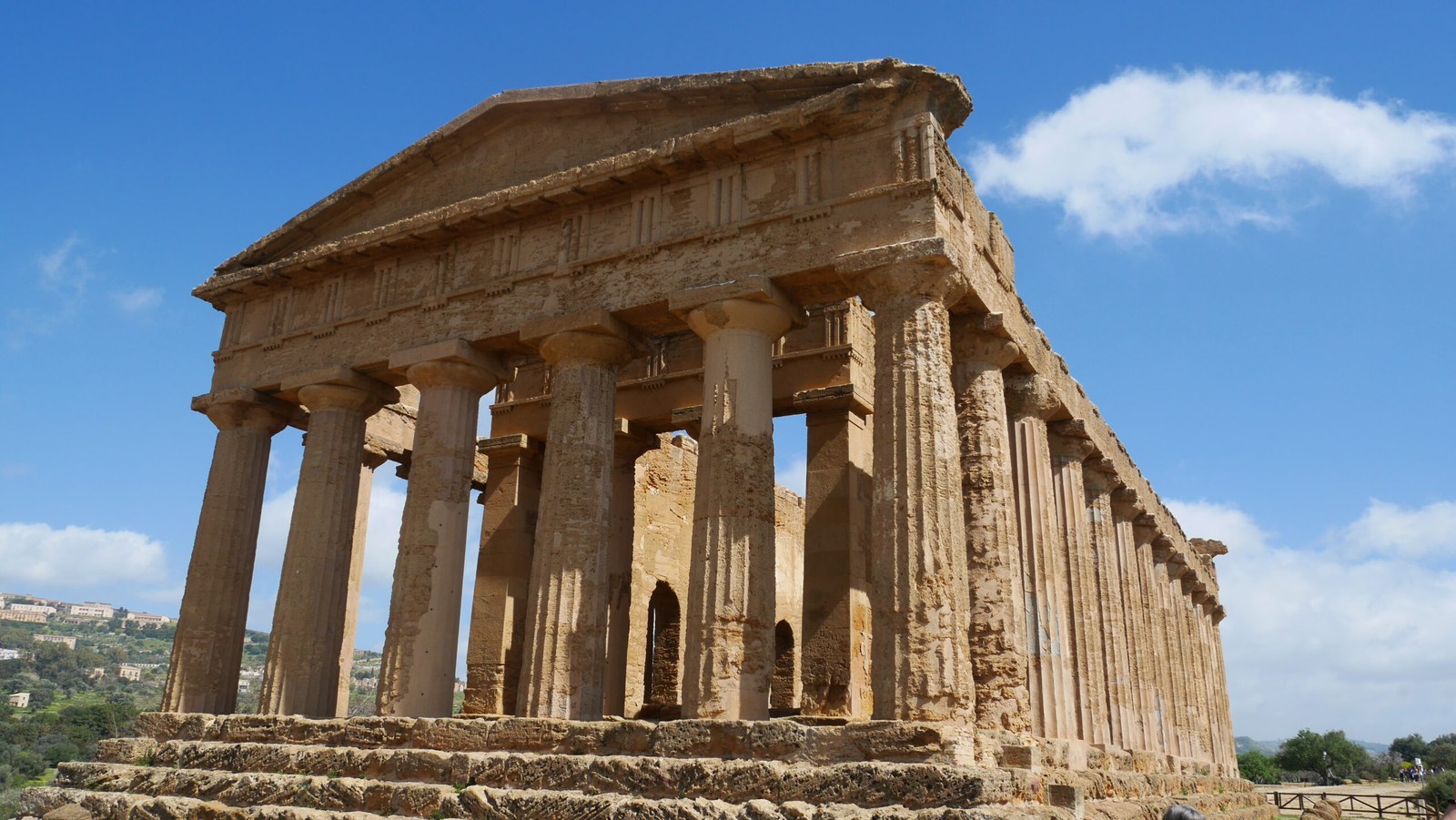
Sicily has more layers — Greek temples, Roman villas, Arab-Norman mosaics, Spanish baroque, all in one island, and seven UNESCO World Heritage sites. Sardinia has uniqueness — the Nuragic civilization, with stone towers found nowhere else on earth, and a Catalan-speaking enclave in Alghero. Sicily for breadth, Sardinia for prehistoric depth.
Ed Yourdon · CC BY 2.0
Sicily’s heavyweights (7 UNESCO)
Valley of the Temples in Agrigento — seven Doric temples on a ridge, the best Greek archaeology outside Greece. Villa Romana del Casale — 3.500 m² of Roman mosaics including the famous bikini girls. Arab-Norman Palermo — the Cappella Palatina, Cathedral of Monreale, and Zisa palace, where 12th-century Christian and Islamic aesthetics meet. Val di Noto baroque — the seven baroque towns rebuilt after the 1693 earthquake (Noto, Ragusa, Modica, Scicli, Catania, Caltagirone, Militello). Mount Etna as a UNESCO natural site. The Aeolian Islands. Syracuse with the Greek Theatre and the rock-cut Necropolis of Pantalica. To this you can add the largest Greek archaeological park in Europe at Selinunte (UNESCO-pending) and Pantelleria‘s landscape.

Norbert Nagel · CC BY-SA 3.0
Sardinia’s signature (1 UNESCO + uniqueness)
Su Nuraxi di Barumini is the UNESCO Nuragic complex, the best-preserved of roughly 7.000 Nuraghe stone towers built across Sardinia between 1.700 BC and 500 BC by a civilization that left no written records. There is nothing like it anywhere else — not in Italy, not in Europe, not on the Mediterranean rim. Tharros is a Phoenician-Roman ruin on a peninsula. Castelsardo and Bosa are medieval colored villages. The Catalan-speaking enclave at Alghero is a 14th-century survivor — the city was repopulated from Catalonia after the Aragonese conquest. Costa Smeralda is a 1960s creation of the Aga Khan with no historical claim, but its low-rise stone-and-juniper architecture is its own legacy.
7 versus 1 — how to read it
Sicily has 7 UNESCO sites; Sardinia has 1. The single Sardinian site is something Sicily lacks (a Bronze Age civilization with surviving architecture). UNESCO count favors Sicily for the cultural-tourist looking for variety. Uniqueness favors Sardinia for the traveler who has already seen Greek temples and Norman cathedrals and wants something different. Both islands speak autonomous regional languages alongside Italian: Sicilian, Sardinian (Sardo), plus Catalan in Alghero, Tabarchino Genoese-Ligurian on the south-west Sardinian islets — uncommon linguistic depth either way.
The White Lotus effect on Sicily tourism
Season 2 of The White Lotus (HBO/Sky, filmed in Taormina and the Four Seasons San Domenico Palace) gave Sicily a dramatic surge of Anglo-American search interest from late 2022 into 2024. While the show did not change the underlying case for Sicily, it validated Taormina as a bucket-list destination for a demographic that might otherwise have defaulted to Sardinia for a luxury Italian escape. If you’ve watched the series, Sicily’s east coast will feel instantly recognisable.
Which is easier to get around: trains, cars, ferries?
Sicily is easier without a car. Trenitalia regional trains connect Catania, Taormina, Syracuse, Noto, Ragusa, Modica, Agrigento, Palermo, Cefalù; bus lines fill the gaps. Sardinia almost always requires a rental car: trains are sparse and slow, the best beaches sit at the end of unpaved tracks, and bus connections to coastal villages are skeletal in shoulder season. The car-free traveler should pick Sicily.
Sicily transport at a glance
Direct flights to Catania-Fontanarossa (CTA) and Palermo (PMO) from most European hubs — CTA is the busier of the two and the natural east-coast gateway. Trenitalia regionals run the east coast (Messina-Catania-Syracuse), the south-east loop (Catania-Caltagirone-Gela), and the north (Palermo-Cefalù-Messina). The Catania-Taormina trip is 50 minutes by train and costs €4-5. The Alibus connects CTA airport to Catania centre in 25 minutes for €4. AST and SAIS Trasporti buses cover the rest. Renting a car remains the fastest way to combine east-coast cities with Etna and the south-east; we recommend it for trips longer than 5 days.
Sardinia transport at a glance
Three main airports: Cagliari Elmas (CAG) in the south, Olbia-Costa Smeralda (OLB) in the north-east, Alghero Fertilia (AHO) in the north-west. Trenitalia regional and ARST trains operate Cagliari-Olbia (about 4 hours, infrequent) and Cagliari-Sassari, but the rail map covers a small fraction of the island and most cardinal beaches are unreachable by train. Buses are limited and seasonally variable. A rental car is essentially mandatory for any trip outside the immediate Cagliari city centre. Coastal road trips are the standard model: Olbia-La Maddalena, Cagliari-Costa Rei, Alghero-Bosa.
Can I visit both Sicily and Sardinia in one trip?
Yes, but it requires planning. Sicily and Sardinia sit roughly 290 km of open sea apart, and there is no daily direct ferry between them most of the year. Two practical options exist: a direct flight (~1h15m, mostly seasonal), or an overnight ferry Palermo-Cagliari (~12 hours, year-round) with Grimaldi Lines. Plan at least 4 days on each island and a half-day for the journey itself. For most first-timers, a Sicily-only trip with greater depth beats a split trip with logistics overhead.
Option A — Direct flight
Volotea runs seasonal direct flights between Catania-Cagliari and Palermo-Cagliari (typically May-October), 75 minutes, fares €60-180 per person depending on date. Ryanair operates seasonal Palermo-Cagliari with similar pricing. Outside the summer window flights drop or disappear; you may need a connection through Rome Fiumicino, which adds 4-5 hours total travel time. Flight is the right choice if you are short on time and traveling light.
Option B — Overnight ferry Palermo-Cagliari
Grimaldi Lines operates the Palermo-Cagliari overnight ferry year-round, departing Palermo around 19:00 and arriving Cagliari around 07:00 the next morning — roughly 12 hours. Fares range €80-200 per person for a deck seat or shared cabin, plus €100-180 if you bring a car. The route is the only direct sea link between the two islands. It works well if you are doing a road trip and want continuity. The cabin upgrade is worth it.
Suggested 10-day combined itinerary
Days 1-5 east Sicily: arrive Catania, base in our apartments, day-trip Etna (one day), Taormina + Castelmola (one day), Syracuse + Ortigia (one day), Noto + Modica + Ragusa Ibla (one day), full Catania day. Day 6 transfer: morning train Catania-Palermo (3h direct), afternoon walk Palermo, board overnight ferry to Cagliari. Days 7-10 east/north Sardinia: option A south Sardinia (Cagliari + Costa Rei + Villasimius), option B north Sardinia by rental car (Cagliari pickup, drive to Olbia, Maddalena boat day, drive to Alghero, fly home from AHO). Day 10 fly home.
Why a Sicily-only trip is often better for first-timers
Sicily’s entity density per day is genuinely higher: in 5 days based in Catania you can hit Etna, Taormina, Syracuse, Noto, Ragusa Ibla, Modica, Catania itself, and the Pescheria street food. Doing Sardinia justice from a 4-day window means picking one corner (south or north) and skipping the other. The split itinerary spends a day in transit and tends to hollow both halves. If this is your first Italian-island trip, Sicily-only with our 7-day Sicily itinerary is the higher-yield choice.
Which is better for first-time visitors, families, and honeymooners?
First-timers → Sicily (more iconic sights per square km, easier transport, lower cost). Families with young kids → split (Sardinia for shallow safe beaches like La Pelosa; Sicily east coast for kid-friendly Etna visits + Naxos beaches + family-priced apartment rentals). Families with teens or older kids → Sicily (more to see and do). Honeymoons → split by personality: Sicily for active honeymoon (Etna sunset, Taormina-Ortigia route); Sardinia for relax-on-beach honeymoon (Costa Smeralda, Cala Goloritzè). Repeat Italy visitors and slow travelers → Sardinia (Barbagia, Asinara, Maddalena rhythm).
Looking for the broader regional comparison beyond the two Italian islands? Our Italy honeymoon guide stacks Sicily and Sardinia against Amalfi, Tuscany, Venice and seven other Italian regions, with sample 7 to 14 day itineraries for couples. If your shortlist is no longer Italian only, our Sicily or Greece comparison gives the clearer Mediterranean decision by beaches, food, culture and logistics.
First-time visitors
Sicily wins decisively. Higher icon density means a 7-10 day trip can hit Greek temples (Agrigento), an active volcano (Etna), three baroque towns (Noto, Modica, Ragusa Ibla), a Greek-amphitheatre town (Taormina), an island in the city (Ortigia), and a major street-food market (Pescheria of Catania, or Ballarò Palermo) without straining the schedule. Public transport reduces friction. Lower cost means more meals and experiences on the same budget.
Families with young children (under 8)
Genuinely split. Sardinia’s beach culture is hard to beat for a stroller-and-bucket trip: La Pelosa is shallow for 80 metres, Costa Rei has gentle surf, Cala Sapone on Sant’Antioco is calm. Sicily’s east coast counters with apartment rentals at family-friendly prices, kid-suitable Etna visits via the Sapienza Refuge cable car (no hike required), and the La Plaja sandy stretch at Catania edge. The deciding question is whether you want a beach-only week (Sardinia) or a beach-plus-discovery week (Sicily).
Families with teens or adults
Sicily wins. More to see and do per day, more food variety, an active volcano that can be hiked safely, baroque towns that walk well at any pace, and street food markets that anchor the kind of trip teens remember.
Honeymoons
Personality split. Active honeymoon → Sicily: Etna sunset hike, Taormina rooftop dinner, swim at Isola Bella, vineyard day on Etna’s north slope, baroque village stay. Relax-on-beach honeymoon → Sardinia: Costa Smeralda or a quieter Cala Goloritzè base, agriturismo dinners, slow boat days. See our dedicated Sicily honeymoon guide for the active option in detail.
Repeat Italy visitors and slow travelers
Sardinia wins for travelers who have already done Sicily, Tuscany, Amalfi and Rome. The interior Barbagia with its centuries-old shepherding villages, Asinara National Park, Maddalena archipelago boat days, and the slow rhythm of an agriturismo week are unlike anything else in Italy. Sicily gives you more chapters; Sardinia gives you a deeper one.
Foodies and beach purists — the simple call
Foodies → Sicily, no contest. Beach purists → Sardinia, no contest.
When is the best time to visit Sicily or Sardinia?
Both islands peak May-June and September-October: warm enough for swimming, dry, and crowd-tolerable. July-August = beach perfection on Sardinia but expensive, hot and crowded everywhere; consider only if school holidays force the timing. Winter (November-March) = Sicily wins easily — mild, atmospheric, Christmas markets, Etna with snow; Sardinia largely closes outside Cagliari city centre.
Spring (April-May)
Wildflowers, almond blossoms in Agrigento (early February if you are early), mild temperatures (18-23°C), low crowds and prices. Both islands at their photogenic best for landscape lovers. Sea temperatures still cool until late May.
Early summer (June)
Sea warming into the 22-24°C range, crowds still light, prices reasonable, days at their longest (15+ hours daylight). Best balance of beach + sightseeing on both islands.
Peak (July-August)
Hot, crowded and expensive. Inland Sicily routinely hits 38-42°C in August; Sardinia stays cooler thanks to maestrale wind. Prices peak, ferries pack, beach access requires early morning arrival. Avoid unless school dictates.
Shoulder (September-October)
Sea still warm (24-26°C in September), harvest in food markets (grapes, pistachio, honey), prices dropping 25-40% from August, lighter crowds. The single best window for both islands. October stays warm enough for swimming on the Sicilian south-east; Sardinia cools faster but stays photogenic.
Winter (November-March)
Sicily mild and atmospheric — Christmas markets in Palermo and Catania, presepi viventi, Etna with snow, baroque towns at their quietest. See our dedicated guides on Sicily in October, Sicily in November and Sicily in December for granular monthly detail. Sardinia outside Cagliari is largely closed: most coastal hotels, restaurants and ferry routes shut down between November and Easter. Winter favors Sicily decisively.
When not to visit Sardinia?
Avoid July and August unless your budget allows for peak Costa Smeralda pricing (expect to pay €200–€500 per night for a mid-range room in Olbia or Porto Cervo, and €30+ for a beach sunbed). Crowds are intense at all major beaches, and the interior reaches 38–40°C. Also avoid November through February if you want the coast: most beach restaurants, hotels, and ferry services outside Cagliari shut down for the season. The sweet spots are May–June and September–October: the sea is swimmable, prices are reasonable, and Sardinia feels genuinely peaceful.
Where to stay: Catania for Sicily, Cagliari or Olbia for Sardinia
On Sicily, base in Catania: it is central on the east coast, has the busiest direct-flight airport, sits between Etna, Taormina, Syracuse and the Val di Noto baroque towns, and offers the best balance of cost, food and authenticity. On Sardinia, choose Cagliari (south, city + Poetto beach + Costa Rei day trips) or Olbia (north, Costa Smeralda + Maddalena archipelago) depending on which coast you target. Alghero works for the west coast and the Catalan-Sardinia angle.
Why Catania as Sicily base
Central east coast with the busiest direct-flight gateway in Sicily (Catania-Fontanarossa CTA): direct flights from London, Manchester, Dublin, Frankfurt, Munich, Amsterdam, Paris, New York seasonal, Madrid. Walking distance to the Pescheria fish market for breakfast, the Duomo, Via Etnea, and the volcanic-stone baroque centre. 50 minutes by train from Taormina, 1h10 from Syracuse, 1h30 from Noto, day-trip distance from Etna, the Aeolian Islands ferry port and Ragusa Ibla. Apartment rentals run 30-50% below Taormina prices for equivalent quality.
Cagliari versus Olbia for Sardinia
Cagliari wins for travelers who want a city + city beach combination: the Poetto (8 km of urban sand), Castello historic district on the bastion, day trips to Villasimius, Costa Rei, Pula. Olbia is the Costa Smeralda gateway: closer to Porto Cervo, Porto Rotondo, and the Maddalena archipelago boat tours, but more expensive in summer. Alghero for the west: Catalan-Sardinian heritage, Capo Caccia cliffs, easy access to Bosa and Stintino‘s La Pelosa. Pick north or south based on which beaches headline your trip.
Apartment over hotel for Sicily
For trips of 4 nights or more, an apartment beats a hotel on Sicily: kitchen flexibility (cook the swordfish you bought at the Pescheria for €15 instead of €40 at a restaurant), laundry on multi-week stays, family-fit, lower per-night cost, and authentic neighborhood location. Our three apartments in central Catania — Etna, Ionio, Zagara — are the basis for the Catania-base strategy this guide recommends. For a Sicily trip in 2026, our pick is a central apartment in Catania as your eastern base.
Frequently asked questions about Sicily and Sardinia
Is Sardinia or Sicily safer?
Both are very safe by European travel standards. Violent crime against tourists is rare on both islands. The main concerns are standard: pickpocketing in the busiest tourist zones (Catania Pescheria, Palermo Vucciria, Cagliari city centre on weekends), occasional car break-ins at remote trailhead parking, and unattended-bag theft on busy beaches. Use a small day bag, do not leave valuables in a parked car, and treat both islands like any other Italian city.
How far apart are Sicily and Sardinia?
About 290 km (180 mi) of open Tyrrhenian Sea between the closest points. There is no land bridge. The shortest sea crossing on a regular ferry is the Palermo-Cagliari Grimaldi Lines route, roughly 12 hours overnight. By plane the journey is 75-80 minutes between Catania-Cagliari or Palermo-Cagliari, when the seasonal flight is operating.
Can you drive between Sicily and Sardinia?
Not directly — there is no land route. The only way to bring a car between the two islands is the overnight Palermo-Cagliari ferry with Grimaldi Lines, which carries vehicles for an additional €100-180 depending on season and cabin choice. Most travelers either rent on each island separately or fly between the two.
Which has better hiking, Sicily or Sardinia?
Different rather than better. Sardinia has the legendary Selvaggio Blu — a multi-day coastal trek along the Gulf of Orosei, considered one of Italy’s hardest, with no marked trail, requiring rope sections. Sicily has Mount Etna (multiple routes, 1.900 m to summit-area), the Madonie Park (mid-altitude limestone trails), the Nebrodi (forested ridges with fallow deer reintroduction), and Aeolian Islands volcanic crater walks (Stromboli ascent at sunset, Vulcano crater rim). Sardinia for one extreme route, Sicily for variety.
Are there nightclubs and nightlife on both islands?
Sicily has year-round urban nightlife in Catania (university town, busiest piazza scene), Palermo (Vucciria evenings), and Taormina (high-end summer venues). Sardinia’s nightlife is concentrated on the Costa Smeralda in summer (Porto Cervo high-end clubs, June-September only) and in Cagliari year-round (Marina district). Outside summer, Sardinian nightlife outside Cagliari winds down considerably; Sicilian cities run year-round.
Is Sicily or Sardinia better in May?
Both are excellent in May. Sicily edges ahead for shoulder warmth: the south-east coast (Marzamemi, Marina di Modica, Fontane Bianche) holds 22-25°C daytime with sea around 19-21°C by mid-month, swimmable for warm-blooded swimmers. Sardinia in May is photogenic but the sea is still 17-18°C until early June. Sicily in May is also still affordable; Sardinia in late May starts climbing toward summer prices.
Why do Americans go to Sardinia?
American interest in Sardinia was largely shaped by Aga Khan’s development of Costa Smeralda from the 1960s, which made the island synonymous with European luxury travel in US media. The celebrity-marina circuit in Porto Cervo, the yachting culture, and consistent coverage in Condé Nast Traveler and Travel + Leisure have kept Sardinia on the US bucket list as Italy’s “quiet luxury” option. For Americans already familiar with Sicily’s history from school, Sardinia represents something more exotic — prehistoric Nuraghe civilisation, a distinct language, Caribbean-clear water without the crowds of the Amalfi Coast.
The information in this guide was correct at the time of writing. Data can change from season to season without notice: before you travel, always check the official channels and websites for updates. We review this guide periodically, but the official channels are always the authoritative source. We also cannot guarantee that the suggested routes or the attractions described are always reachable or accessible: roads, trails and sites may be closed, damaged, altered or unsafe. Assessing the practicability and safety of itineraries and attractions always remains your own responsibility.