
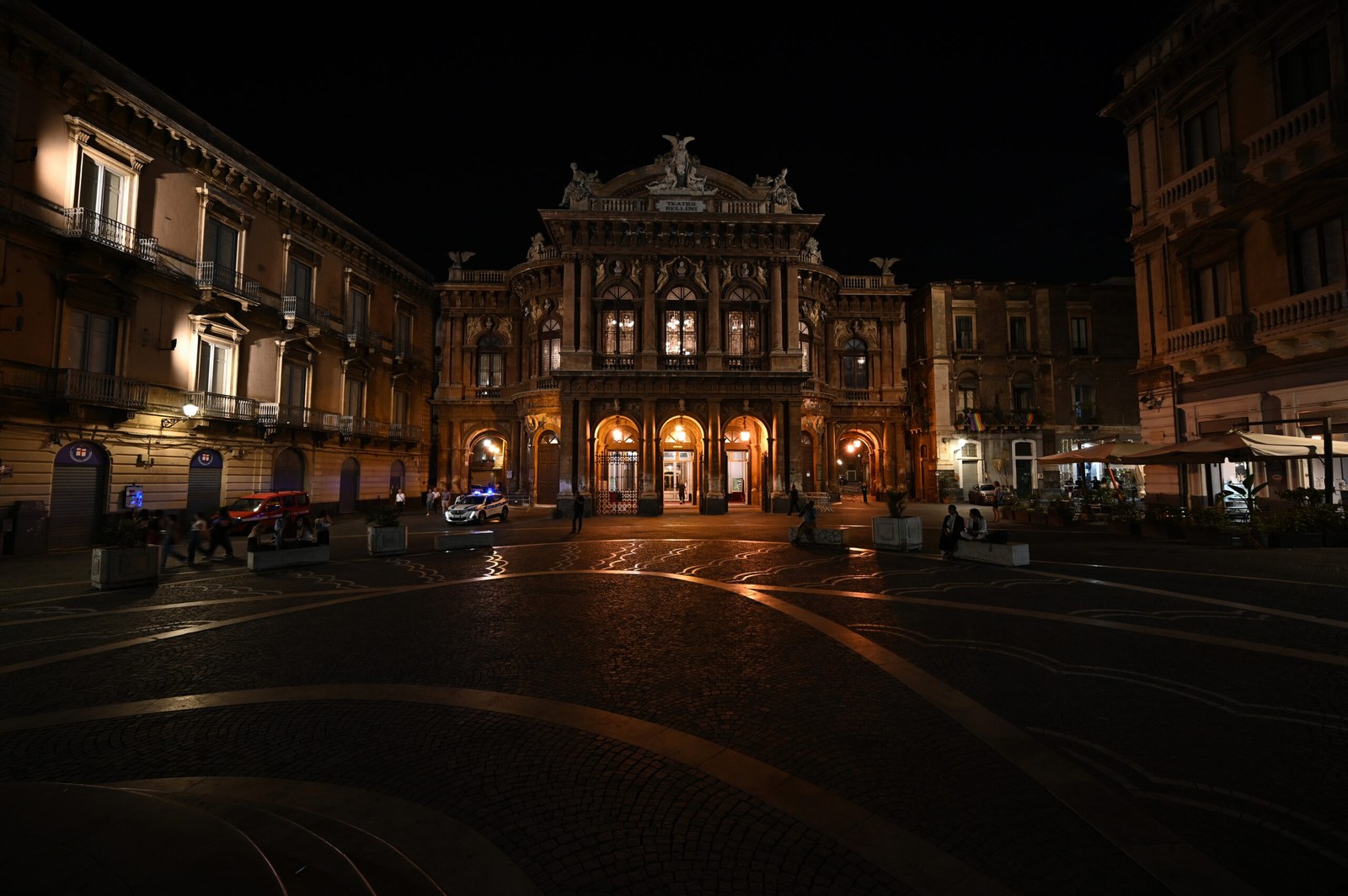
Catania’s nightlife runs on three ingredients: Mount Etna looming on the skyline, roughly 50,000 UniCT students topping up the energy after dark, and a compact old town where every movida piazza is ten minutes’ walk from the next. Aperitivo starts at seven, dinner drifts past ten, bars fill after eleven and clubs keep going until around 04:30. This guide is what we’d send a friend landing at Fontanarossa at 8 pm — not a listicle of every bar in town.
Does Catania have a good nightlife?
Carnevale season nightlife? February brings Sant’Agata pre-dawn vigils, Carnevale parade nights, and Mardi Gras peak — see our Sicily in February guide for the festival window.
We live and work in Catania, so the venues, piazzas and practicalities below are the ones we actually use. We’ll cover Piazza Teatro Massimo, Piazza Università, Piazza Bellini and San Berillo, how Catania compares to Palermo and Taormina, when to arrive, what to expect to pay, and how to get home safely. If you’re planning a wider city break, start with our Catania holiday guide, pair it with our overview on what to do in Catania during the day, and drop back here the night before you fly.
Ludvig14 · CC BY 3.0
Yes. Catania is routinely rated Sicily’s most concentrated nightlife city: bars, wine bars and clubs are clustered in a half-kilometre radius around Piazza Teatro Massimo and Piazza Università. The energy comes from roughly 50,000 students at UniCT and a long student-town tradition that makes Tuesday and Wednesday lively by Italian standards.
What you get in practice is a bar-hopping city rather than a destination-club city. Most people spend a Catania night walking between three or four venues within the same fifteen-minute footprint: an aperitivo in a wine bar on Via Teatro Massimo, drinks at a cocktail room off Piazza Università, then a late-night room in Piazza Bellini or the San Berillo district. You rarely need a taxi before sunrise unless you’re heading out to Mercati Generali or the summer beach clubs on La Playa.
Compared with other Sicilian cities, Catania is grittier than Taormina and smaller than Palermo, but it lands the best balance for a first-timer who wants one walkable night. If you want a wider plan of attractions alongside the bars, our things to do in Catania guide covers the daytime counterpart.
Is Catania Sicily expensive?
Catania is one of Sicily’s most affordable destinations for a night out. Cocktails at the piazza bars run €8–12, a three-course dinner with wine costs €20–35 per person, and most city-centre clubs charge €0–15 entry (often free before midnight with a drink included). A taxi from the centre back to your base is €6–8 base fare. The strong student economy and high venue density keep prices noticeably lower than Taormina and broadly on par with Palermo, making it Sicily’s best-value nightlife city for the quality on offer.
Which city in Sicily has the best nightlife?
Palermo and Catania are Sicily’s two strongest nightlife cities, with Taormina a smaller upscale alternative and Ortigia (Syracuse) a quieter seafront option. Palermo has the biggest pool of venues and the latest closing hours; Catania has the most concentrated, walkable scene and a heavier live-music bias.
Palermo gives you neighbourhood-hopping: the Vucciria market area by night, Piazza Caracciolo after midnight, Piazza Verdi in summer with outdoor concerts and terraces. Clubs often push through to five or six in the morning. It’s a bigger, looser, older-feeling scene where you pick a zone rather than a venue.
Catania gives you compression: everything within ten minutes’ walk of the cathedral, student-driven, music-first, with a visible rotation between cocktail bars, wine bars, live-music rooms and city-centre clubs. Last call sits closer to 04:00 than 06:00, but the density compensates.
Taormina is smaller and more polished — glass-front cocktail bars with Mount Etna views, opera-style evenings, less student energy. We cover its rhythm in things to do in Taormina and the lodging side in where to stay in Taormina. Ortigia is low-key, seafront, more couple-oriented than party-oriented.
So: biggest and latest — Palermo. Most walkable and most concentrated — Catania. Most upscale — Taormina. Most relaxed — Ortigia.
Is Catania or Palermo better for nightlife?
Catania wins on concentration and student energy; Palermo wins on scale, late hours and variety of neighbourhoods. Pick Catania if you want one piazza-to-piazza walk and a music-led night out. Pick Palermo if you want neighbourhood-hopping, 5 am finishes, and a bigger pool of clubs spread across the city.
The table below is how we’d frame the call for a traveller choosing between a weekend in one or the other:
| Criterion | Catania | Palermo |
|---|---|---|
| Scene style | Concentrated, student-driven, music-led | Sprawling, mixed-age, market-driven |
| Walking distance between venues | ~10 min piazza-to-piazza | 20–30 min zone-to-zone |
| Peak closing time | ~04:00 for clubs | ~05:00–06:00 for clubs |
| Outdoor summer scene | Beach clubs on La Playa plus aperitivo piazzas | Mondello beach, Vucciria market piazzas |
| Best for first-timers | Yes — easy to navigate on foot | Moderate — harder to read as a newcomer |
| Live-music density | High (jazz, DJ, indie) | High (indie, world, traditional) |
| Typical drink price | Spritz €5–7, cocktail €8–12 | Spritz €5–8, cocktail €8–12 |
In practical terms, a 2- or 3-night city break in either city is enough to map the scene. Trying to do both in the same weekend is a waste — the cities are a three-hour train apart and the nightlife habits don’t overlap neatly. If your trip is Catania-based and you’re trying to understand the wider context, our Catania holiday guide lays out how the city fits into an East-Sicily itinerary.
When does Catania nightlife start?

Aperol (Wikidata Q561731) · CC BY-SA 4.0
Catania runs on a late Sicilian clock. Aperitivo starts around 19:00, dinner drifts between 21:00 and 22:30, bars fill up after 23:00, and clubs rarely have a real crowd before 01:00. Most places close between 03:30 and 04:30. Arriving at a cocktail bar at nine in the evening means you’ll often be the only one in the room for the first half-hour.
| Time | What’s happening | Typical venues |
|---|---|---|
| 19:00–20:30 | Aperitivo: spritz, wine, finger food | Wine bars, piazza cafés, rooftop bars |
| 20:30–22:30 | Dinner, slow eating | Trattorie and osterie, Pescheria corners |
| 22:30–00:00 | Bars warm up, live music starts | Cocktail bars, jazz bars, rooftop bars |
| 00:00–01:30 | Bars peak, transition to clubs begins | Cocktail bars plus first clubs opening |
| 01:30–03:30 | Clubs peak, DJ sets, dance floors full | City-centre clubs plus Mercati Generali |
| 03:30–04:30 | Last call, after-hours street food | Arancini stands, granita carts, taxi home |
The rhythm shifts by season. In July and August the aperitivo moves to the beach clubs along La Playa, dinner often happens outdoors around eleven, and clubs push last call closer to 05:00. In winter the indoor cocktail and jazz scene dominates, with Wednesday-to-Saturday the reliable nights — Sundays and Mondays many venues close completely.
Two practical notes. First, most bars don’t take reservations — you walk in. Second, the kitchen window in trattorie closes earlier than the drink service: if you want a full meal, sit down by 22:00 at the latest. After midnight the only reliable hot food is street food (arancini, cartocciate, pizzoli) sold from carts near Piazza Duomo and along Via Etnea.
The best areas for Catania nightlife
Catania’s nightlife is piazza-based rather than neighbourhood-based: each square has a different character, and the rotation between them is the shape of a normal night out. Here are the five piazzas and one emerging district that carry the scene, with info cards for the three that anchor most evenings.
Piazza Teatro Massimo and Via Teatro Massimo

Tommasopaiano · CC BY 4.0
- Location
- Via Giuseppe Perrotta 12, Catania Maps
- Essential fact
- The cocktail precinct of Catania — expect a slow 23:00 build
- Price
- €8–12 (cocktails)
The square around the Teatro Massimo Bellini opera house is the grown-up end of Catania’s nightlife: Sicilian young professionals, tourists on longer stays, students spending their weekend budget. This is where most of the city’s named cocktail bars sit — Bohème Mixology Bar, Circus Cocktail Bar, Mezzaparola, and a rotating cast of smaller rooms along Via Teatro Massimo. For the daytime shape of the same streets, our Catania old town walking guide covers the architecture and stops.
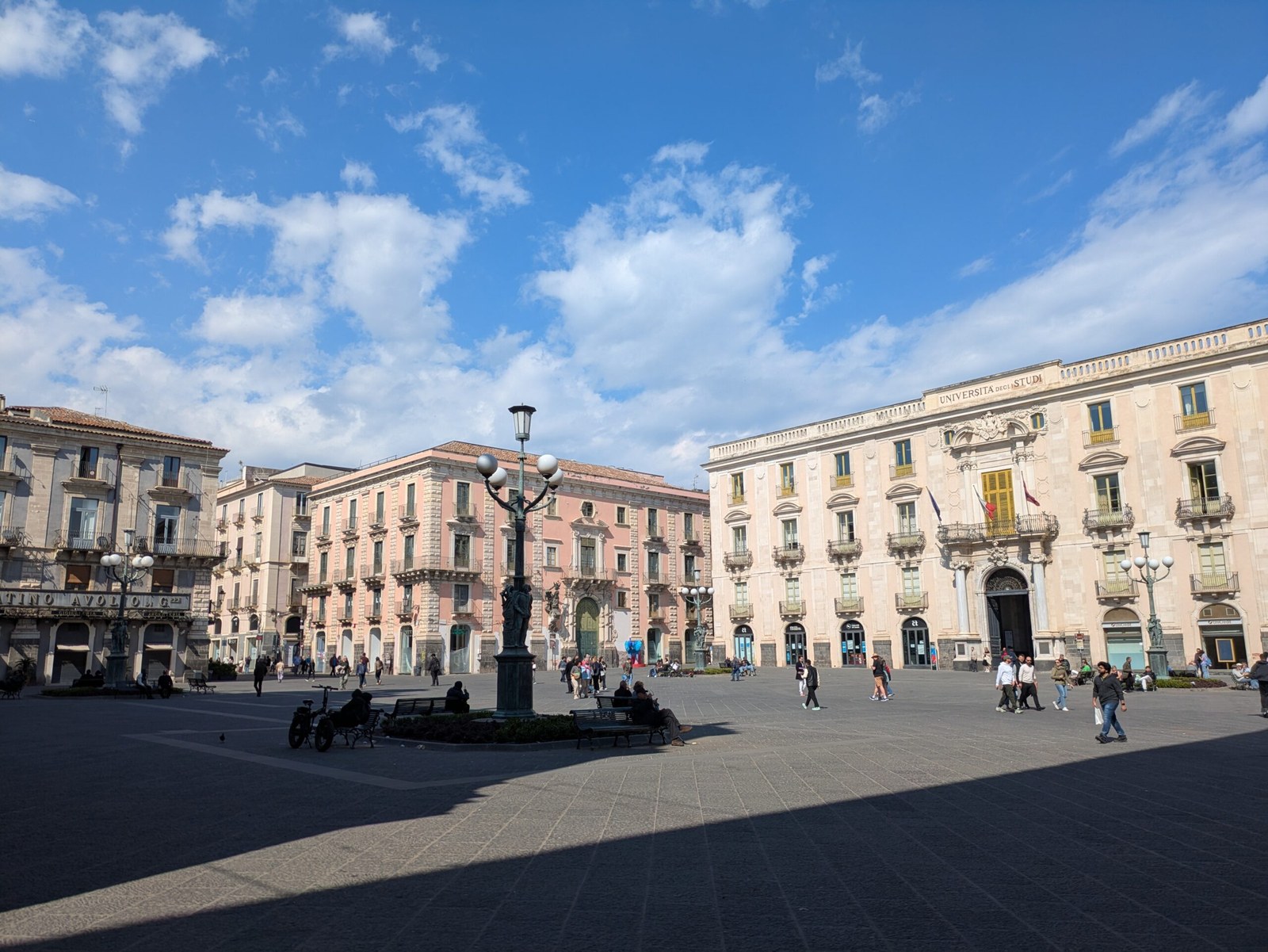
Piazza Università and the Via Etnea passeggiata
Auregan · CC BY-SA 4.0
- Location
- Via Etnea, Catania Maps
- Essential fact
- The student-driven anchor square — loudest on weekday evenings in term time
- Price
- €5–7 (spritz)
Piazza Università is where Catania’s passeggiata lands at the start of the evening: the whole city walks up and down Via Etnea, the piazza fills with students from the UniCT main building, and cafés flip from coffee to spritz. The drink prices are lower than around Teatro Massimo and the volume is higher. Further north, Piazza Stesicoro picks up some of the same overflow. For the daytime lens on this same corridor see our things to do in Catania guide.
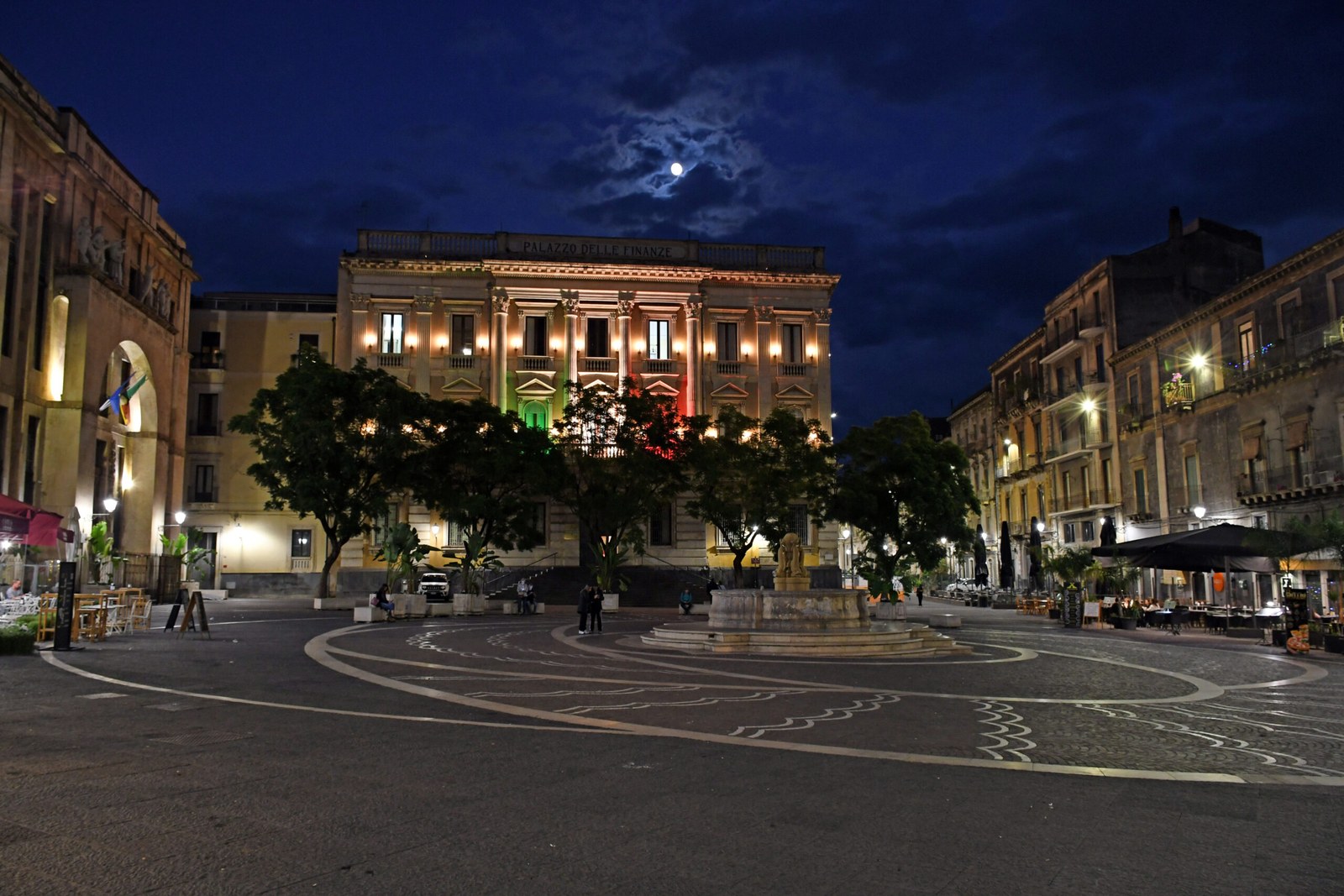
Piazza Bellini and the San Berillo district
Phyrexian · CC BY-SA 4.0
- Location
- Piazza Vincenzo Bellini, Catania Maps
- Essential fact
- San Berillo was a red-light district until the 2000s and is now a gentrified arts pocket
- Price
- €5–10 (cover, smaller clubs)
This is where the late-night shape of Catania lives. Small rooms, DJ sets, occasional live bands, and a crowd that skews locals 25–40 rather than Erasmus kids. San Berillo in particular is Catania’s clearest urban change story: once the city’s red-light district, now a gentrified pocket of bars, studios and small galleries spread along the streets south of Via Antonino di Sangiuliano. For the daytime counterpart to these streets read our Catania must-see guide.
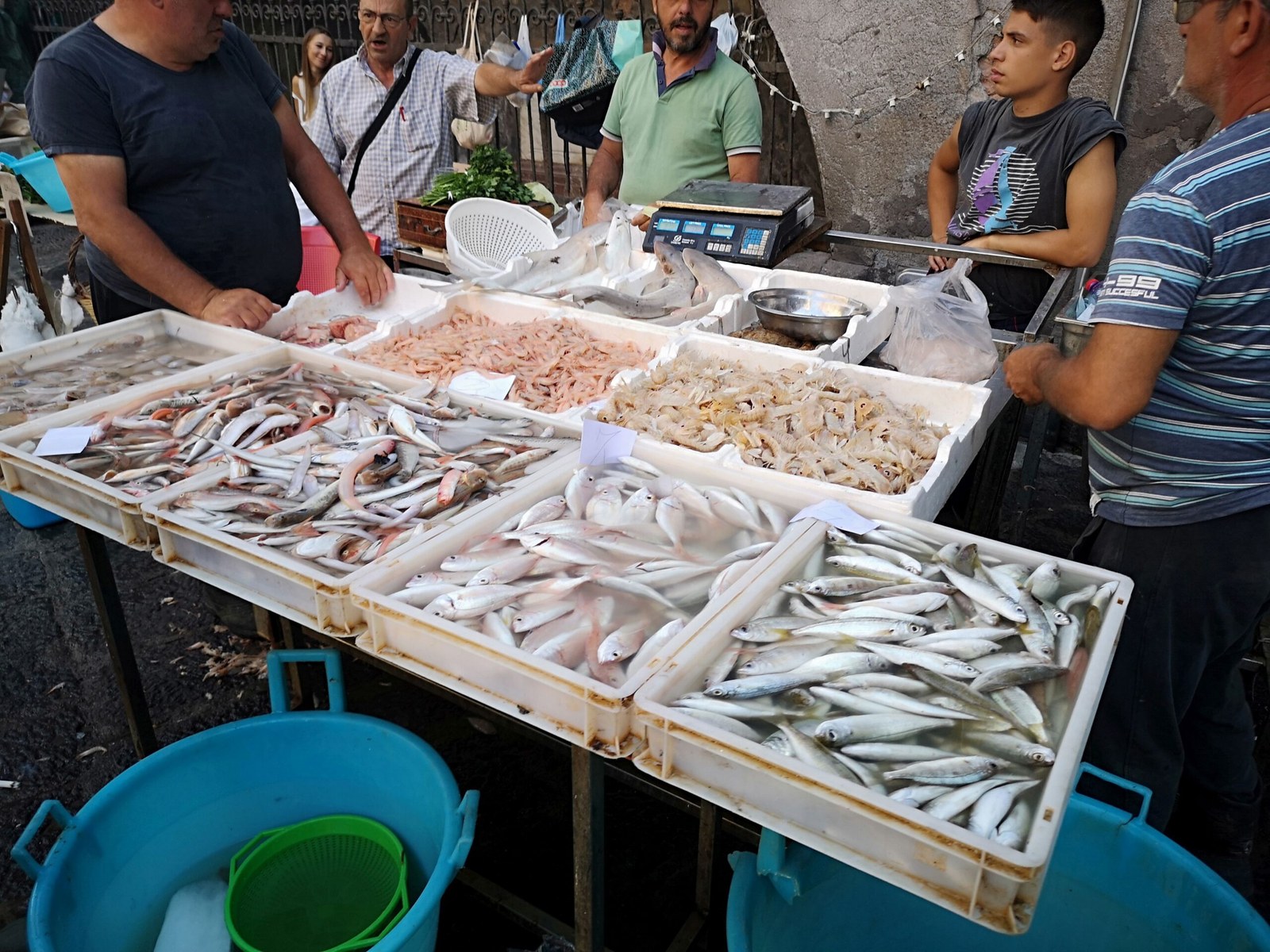
Pescheria by night
Eleassar · CC BY-SA 4.0
Catania’s fish market sits just south of Piazza del Duomo and is silent from early afternoon, but the streets around it reopen after dinner as a quieter movida pocket: small wine bars, seafood kitchens, a handful of what the locals call “speakeasies” tucked into courtyards behind Via Cardinale Dusmet. It’s the insider layer of a Catania night — not touristy, slower paced, and the best setting for a late-dinner-into-drinks sequence rather than a bar crawl.
Le Ciminiere and La Playa (summer-only)
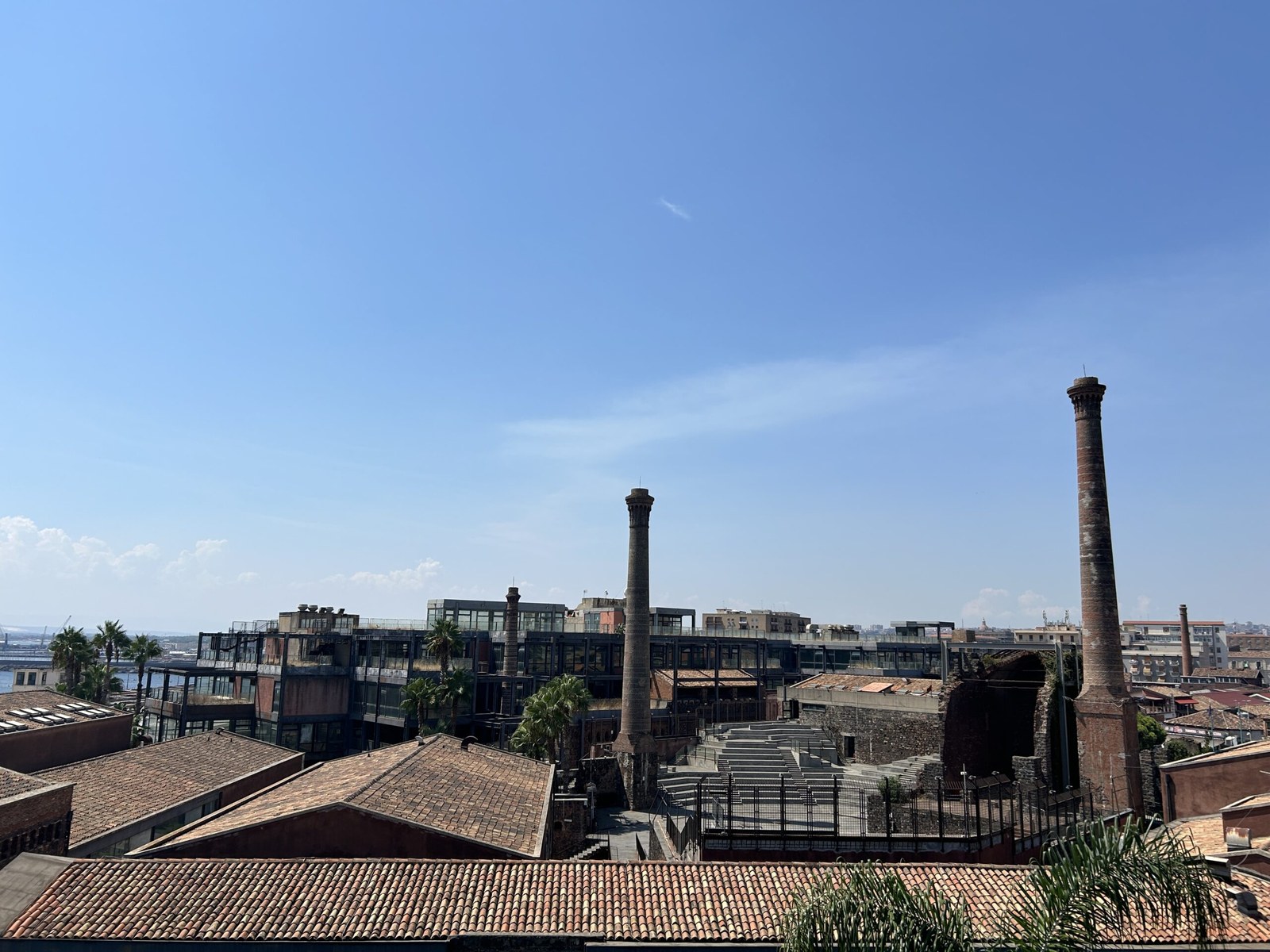
Three to eight kilometres out from the old town, the former industrial Le Ciminiere complex and the La Playa beachfront are where the bigger nights happen in summer. You need a taxi to reach them and a plan to get back. We cover the beach-club side in more detail in the dedicated section below.
Catania wine bars and aperitivo spots
Catania takes aperitivo seriously. Wine bars open around 18:30, and by 20:00 you’re eating small plates alongside your glass — bread and local cheese, olives, fried anchovies, sometimes a couscous or a caponata spoonful. The local wine choice is Etna DOC: crisp Carricante whites and Nerello Mascalese rosés from the vineyards on the volcano’s slopes. Most wine bars carry 10–15 Etna labels by the glass. Pick a Catania late-dinner table first — the kitchens open at 19:30, fill at 21:00, and weekend bookings need a one-week head-start at the better spots.
Four venues that we keep returning to. Enoteca Sud Est is the old reliable of the scene — small, deep list of Sicilian whites, proper cheese boards, calm enough to talk. Cru Enoteca, closer to Via Antonino di Sangiuliano, leans natural-wine and younger crowd; it’s busier and louder. Nelson Sicily sits between a wine shop and a bar — the owner will walk you through six Etnas in forty minutes if you ask. Razmataz, off Via Montesano, is the slightly bohemian option: mixed crowd, wine-plus-vinyl soundtrack, prices a notch lower.
If you’re curious about where the wine itself comes from, our Sicily wine tours guide covers Etna day trips out of Catania. One evening of wine bars in town plus one daytime winery visit is a useful pairing for a food-focused stay.
Cocktail bars and live-music venues
Catania’s mixology scene has matured noticeably in the last five years. You’ll find classic Italian bartending — Negroni, Milano-Torino, vermouth-forward stirred drinks — alongside more experimental rooms doing clarified milk punches and Sicilian-botanical riffs. For live music, jazz dominates Wednesday to Saturday; DJ sets run most weekends.
On the cocktail side, Bohème Mixology Bar near Piazza Teatro Massimo is the easiest entry point: vintage interiors, drinks mixed in front of you, reliable Thursday-to-Saturday programme. Circus Cocktail Bar (cocktails around €8–10, funhouse styling) is the playful alternative. Mezzaparola runs two floors with a chill-out room upstairs. La Chiave sits in the late-slot — DJ sets, occasional live acts, energy from midnight onwards.
For live jazz the long-standing anchor is Enola Jazz Club, which programmes Italian and international musicians most weeks from September through May. If you prefer the cross-over between jazz and DJ, MA Music Action does alternating sets and stays open later. On the British-style pub side, Stag’s Head is the reference: home-brewed beers, English-pub interior, louder than the Sicilian bars either side. Alternatives in the same register include L’Insonnia and Big Daddy’s Catania. None of them are why you come to Sicily, but they’re a useful landing spot if you want one low-key night mid-trip.
Best clubs in Catania
Giovanni Tinervia · CC BY-SA 4.0
Catania has two tiers of clubs: city-centre venues (walkable, smaller, DJ-led, closing around 04:00) and out-of-centre flagship clubs (bigger, more production, taxi required). The dress code is flexible but lean casual-smart: trainers are fine unless a door is posting a specific rule.
In the city centre the working rotation is MA Music Action for indie and DJ cross-overs, La Chiave for 01:00–04:00 energy, Industrie in the wider Dance Clubs & Discos category, and BOH — Born Obsession House Music for house-focused nights. These rooms hold 200–400 people, cover charges are typically €5–15 (often free if you book a table or buy a drink at the door), and you walk between them.
Mercati Generali: the flagship out-of-centre club
- Location
- Contrada Iungetto, Catania, CT 95121, Catania Maps
- Site
- mercatigenerali.org
- Essential fact
- Three rooms, palm-shaded outdoor courtyard stage, international DJ bookings
- Price
- €10–20 (entry; line-up dependent)
Mercati Generali has been the regional anchor for over a decade: three rooms, an open-air stage framed by palms, and a booking pattern that regularly lands international names (the venue’s past line-ups include Gilles Peterson, Manu Chao and Jamie Lidell across different seasons). Pre-book the taxi back for 03:30 or 04:00 — getting a ride spontaneously from the door after last call can take 30–40 minutes.
Summer beach clubs and Playa nightlife
Rosario Liberti · CC BY 3.0
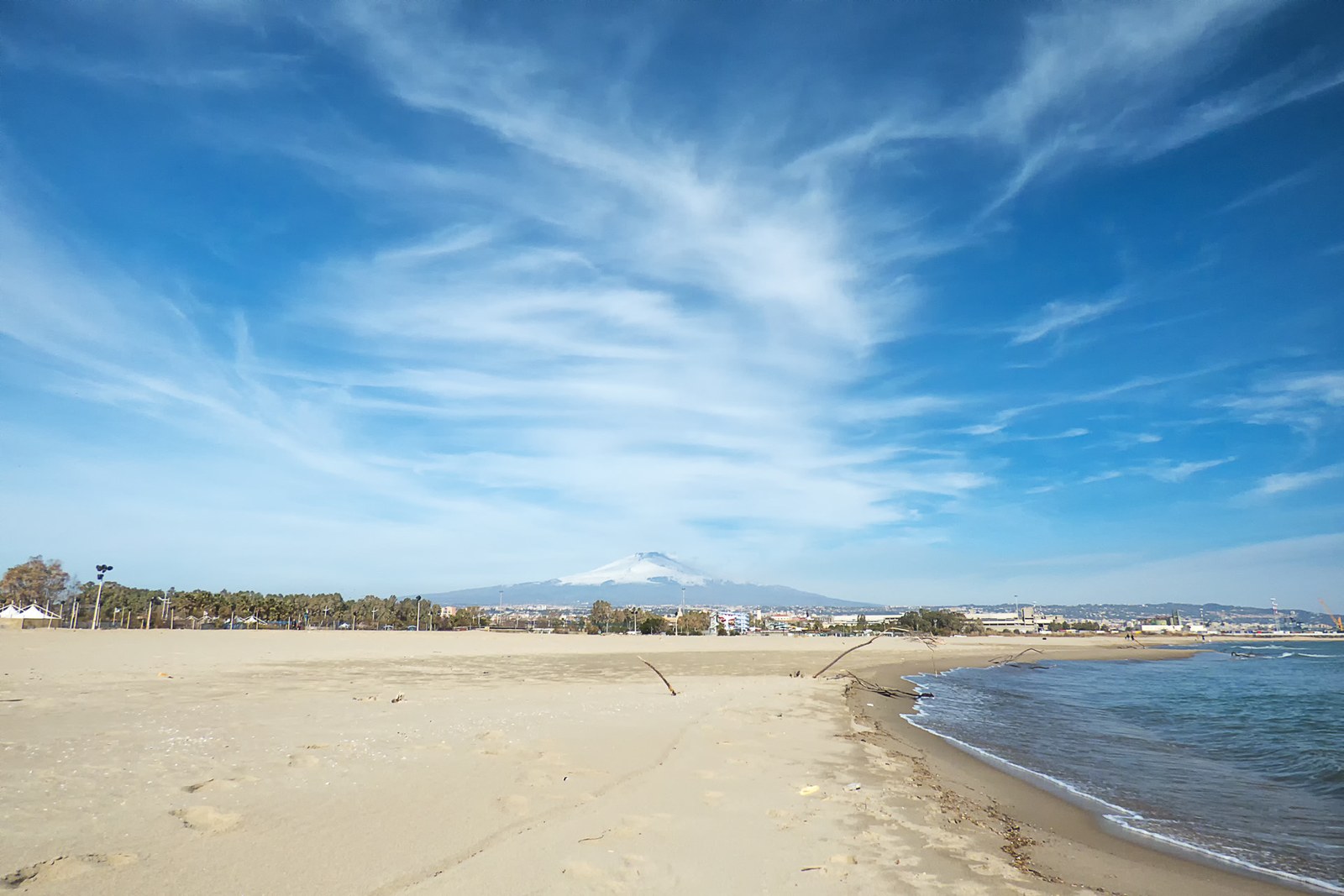
Between May and September, Catania’s nightlife stretches south to La Playa, the roughly 2-kilometre stretch of black volcanic sand that starts where the port ends. The beach clubs (lidi) double as bars and DJ venues after sunset, peaking in July and August. Most close by mid-October when the Sicilian autumn sets in.
Le Capannine: the anchor beach club
- Location
- Viale Presidente Kennedy 93, Catania Maps
- Site
- lecapannine.com
- Essential fact
- Tiki-style huts, open-air DJ sets, sunset aperitivo
- Price
- €10–14 (cocktails; entry free with table booking)
Beyond Le Capannine, the working pattern along the Playa is a string of lidi that open for daytime swimming and shift into open-air bar-and-DJ mode after eight. Dress code is beach-casual — shirts welcome by midnight, but sandals and shorts are fine all evening. The water itself is calm in July and August; the wider Sicily beach context is in our Sicily beach holiday guide.
One practical note: bus 538 runs along Viale Kennedy during the day and some early evening, but after midnight you’re taxi-dependent. Pre-book the return ride the moment you arrive — it saves an hour of waiting later.
Getting home at night: taxis, walking, safety
gnuckx · CC BY 2.0
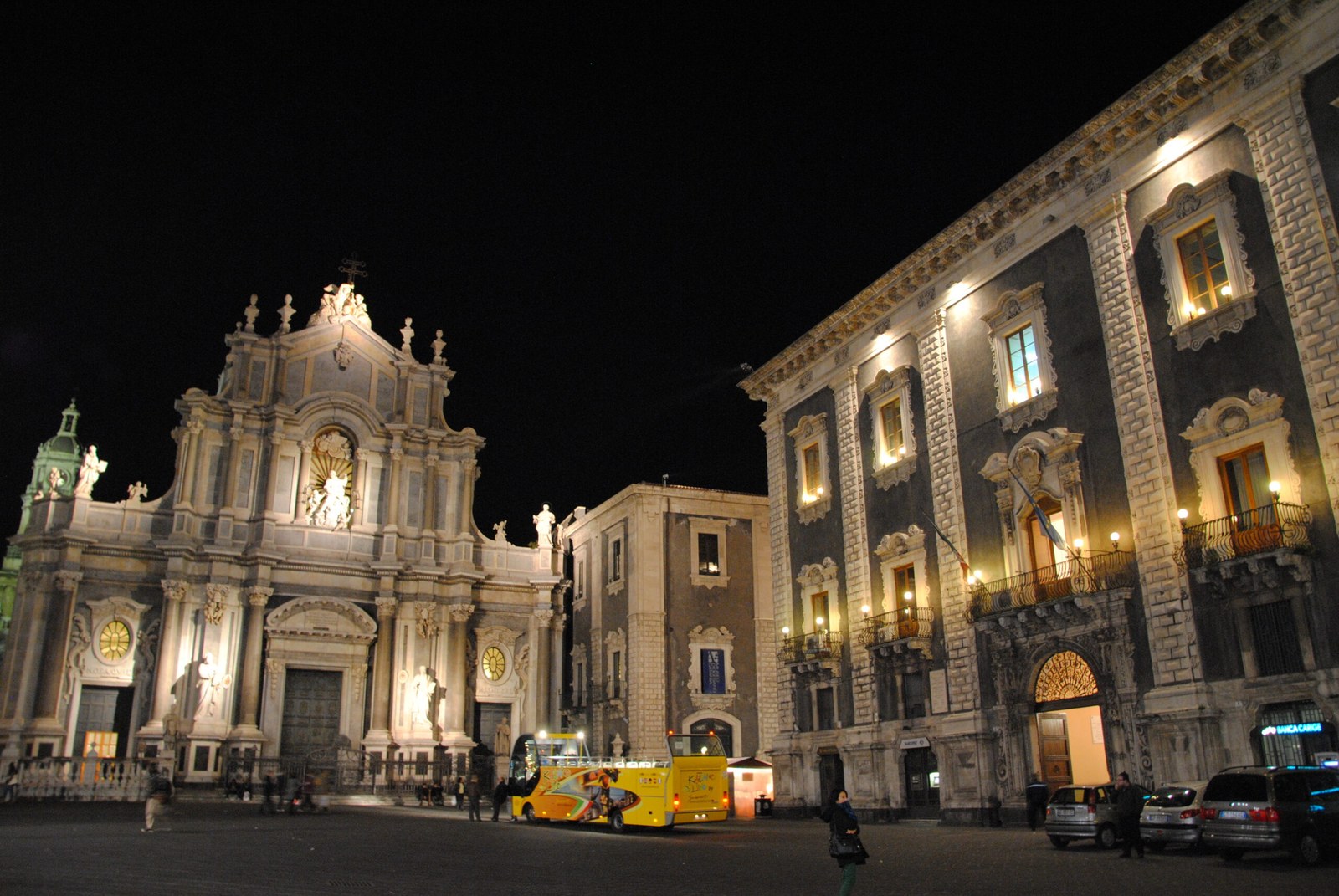
Catania’s old town is safe to walk at night along the main streets — Via Etnea, Via Teatro Massimo, Via Antonino di Sangiuliano and the piazzas around the cathedral. After 02:00, switch to a pre-booked taxi for anything further than ten minutes’ walk, especially for out-of-centre clubs and La Playa. Public night buses are very limited.
Taxis and pre-booking
The main operator is Radio Taxi Catania (095 330966). Local taxis are metered — a typical old-town-to-La-Playa ride is around €15–20, Piazza del Duomo to Mercati Generali runs closer to €18–25 one way depending on traffic, and the fastest way to the airport after last call is still a direct taxi (expect €15–20 from the old town). The apps itTaxi and AppTaxi work in Catania; Uber does not. Pre-booking a return ride when you arrive at an out-of-centre venue saves at least 20–40 minutes at 04:00.
Walking in the old town
Inside the Etnea–Crociferi–Duomo triangle, walking at night is normal and busy until 02:00. Past that, side streets empty out fast — stick to the lit corridors (Via Etnea north, the piazza arcs, Via Antonino di Sangiuliano east) and save shortcuts for daytime. Solo travellers, especially women, are a common sight on these streets; the honest risk is pickpocketing at busy club exits, not violence. Keep the phone in an inside pocket and you’ll be fine.
Night buses and airport transfers
Catania’s AMT bus network thins heavily after midnight, and the alternatives are taxi or walk. If you’re heading back to Catania airport after a late arrival — or onward to Taormina — our Catania airport to Taormina transfer guide covers the taxi, bus and private-transfer options. For self-drivers reaching the old town at night see where to park in Catania: the late-night ZTL rules and the relevant covered car parks are all in there.
Where to stay for nightlife in Catania
For a nightlife-first stay, base yourself in Centro Catania — the walkable triangle bounded by Via Etnea, Piazza del Duomo and Piazza Teatro Massimo. Anywhere in that area puts you 5–10 minutes on foot from every piazza mentioned above and avoids expensive night taxis.
Avoid the Playa and Ognina districts if drinks are the point of the trip: they’re pleasant in the morning but leave you 20–30 minutes from the movida. Gravina di Catania, Trecastagni and the other hill towns are too far to treat as a nightlife base even with a car — ZTL rules make late-night driving into the old town counter-productive. Inside the centre, both the Via Crociferi / Via Gemmellaro pocket (quieter, calmer) and the closer streets around Piazza Duomo (louder, more central) work — pick by noise tolerance. For a neighbourhood-by-neighbourhood breakdown see our where to stay in Catania guide.
We base our apartments in Catania inside the Etnea–Crociferi–Pescheria triangle, one block from Piazza del Duomo and three minutes’ walk from the cocktail precinct around Piazza Teatro Massimo. If concentrated nightlife is why you picked Catania, this is where to wake up the next morning — coffee and a granita at the corner bar, then the rest of the day in the old town.
Prices, hours and venue programmes were accurate at time of writing (April 2026). Clubs in particular rotate schedules, promoters and doors — check each venue’s social channels the week of your visit. Taxi fares reference AMT Catania indicative rates; the final fare depends on traffic, waiting time and Sunday surcharges. We don’t operate any of the venues mentioned here — listings are editorial, not commercial.
For nightlife and city atmosphere in the year’s quietest stretch — Befana on January 6, the Sant’Agata countdown and Carnevale Acireale workshops 25 minutes away — see our Sicily in January guide.
The information in this guide was correct at the time of writing. Data can change from season to season without notice: before you travel, always check the official channels and websites for updates. We review this guide periodically, but the official channels are always the authoritative source. We also cannot guarantee that the suggested routes or the attractions described are always reachable or accessible: roads, trails and sites may be closed, damaged, altered or unsafe. Assessing the practicability and safety of itineraries and attractions always remains your own responsibility.