
If you’re trying to figure out where to stay in Catania, the honest answer is that it depends on your trip. We live in Catania — not in the tourist sense, but year-round: we navigate the ZTL every week, know which streets flood in October and which rooftop bar stays open past midnight in February. When friends visit and ask where to book, we never give a single answer. Catania is a proper city, not a resort village, and the right neighbourhood depends entirely on what kind of trip you’re planning. The centro storico around Piazza Duomo is a different experience from the quiet seafront of Ognina, which is a different experience again from the fishing-village calm of Aci Trezza fifteen minutes up the coast. This guide covers all the best places to stay in Catania, Sicily — area by area, profile by profile — so you book the right one first time.
For island-wide planning beyond Catania — best time, regions and how to get around — see our Sicily travel guide.
Still shaping the broader trip? Our Catania holiday guide sets the context for this page — UK flights, weather, best time to go, 3/5/7-day itineraries and practical tips — so you know if Catania is the right fit before you pick a neighbourhood.
For a catalog of Catania must-see sights organised by type — baroque squares, UNESCO churches, castles and views — see our guide to must-see sights in Catania.
Why base yourself in Catania?
Catania is not the prettiest town in East Sicily — Taormina wins that contest — but it’s the most practical base for almost every type of trip, and that practicality is the main reason most visitors end up booking accommodation in Catania rather than in the smaller resort towns. Here’s the honest comparison. For a wider introduction to the city, see our Where is Catania guide.
For honeymoon-specific itineraries with Catania as the single base, see our Italy honeymoon guide ranking 11 Italian regions and making the case for Sicily.
If you want a real city with street food, markets, nightlife and day-trip flexibility — Catania is your answer. Fontanarossa airport is 7 km from the centre, Catania Centrale connects you by train to Taormina (50 min), Syracuse (65 min) and Noto (100 min), two motorway junctions put every corner of East Sicily within 90 minutes by car, and mid-range apartments cost half of what Taormina charges. You can visit Taormina, the Etna and Syracuse as day trips and sleep in a city that actually has things to do after 22:00.
If cliff-top views and a compact walkable hilltop are what you’re after — consider Taormina instead. It’s 50 minutes north by bus and has a completely different feel: medieval, scenic, quieter.
If you want ancient Greek ruins, a calmer pace and a waterfront old town — Syracuse might suit you better. We plan to cover it in a separate guide. For a broader comparison of every base in Sicily, see our guide to the best areas to stay in Sicily.
Is it better to stay in Catania or Taormina?
If your decision is also between the two Sicilian capitals rather than just Catania vs Taormina, see our Catania vs Palermo overview — a side-by-side breakdown of vibe, food, day-trip radius, and price ranges across both cities.
Catania is the practical base — bigger, cheaper, with the airport, real nightlife, and direct trains to every Sicily highlight in 60–90 minutes. Taormina is the scenic resort — prettier and quieter, but small, expensive, and best treated as a 1–2 night escape from a Catania base. For trips of 5+ nights, Catania wins; for a short, scenery-focused getaway, Taormina.
| Aspect | Catania | Taormina |
|---|---|---|
| Mid-range cost / night | €70–110 | €180–280 |
| Atmosphere | Real city, lava-stone Baroque, working markets | Hilltop resort, polished, panoramic |
| Nightlife | Bars open till 2–3 AM, student scene, late food | Quiets after dinner, few late venues |
| Restaurants | Hundreds of trattorie, street food, Pescheria fish market | Tourist menus, fewer locals, premium pricing |
| Day-trip access | Direct trains/buses to Etna, Syracuse, Noto, Ragusa | Limited rail; most day trips route back via Catania |
| Airport distance | 7 km / 20 min by Alibus (€4) or taxi (€25) | 60 km / 1 h transfer (€90+ private) |
| Best for | 5+ nights, day-tripping, food-focused, mid budget | 2–3 nights, scenery, romance, premium budget |
| Typical length of stay | 4–7 nights | 1–3 nights |
Stay in Catania if…
- You’re spending 4 or more nights in Sicily and want to day-trip Mount Etna, Syracuse, Noto and Taormina itself.
- You want real Sicilian food at local prices — the Pescheria fish market at dawn, late-night arancino kiosks, family-run trattorie off Via Etnea.
- You arrive at Catania Fontanarossa and want a 20-minute, €4 Alibus ride to your apartment instead of a 1-hour, €90+ private transfer to Taormina.
Stay in Taormina if…
- You’re on a short 2–3 night trip focused on views and Mediterranean scenery, not on exploring east Sicily.
- You’re prioritising romance and panoramic terraces over price and have budget for €200+ per night.
- Your itinerary is essentially the Greek Theatre, Corso Umberto and beach time at Isola Bella, with no day trips planned.
For most travellers visiting Sicily for the first time, the smart play is to base in Catania, day-trip Taormina (40 minutes by train, €4–7) and pocket the difference. Pair this with our 7-day Sicily itinerary using Catania as a base for a worked example of how the trade-off plays out across a full week.
What is the best area to stay in Catania, Sicily?
The best area to stay in Catania, Sicily depends on what matters most to your trip. Centro Storico — the baroque quarter around Piazza Duomo and La Pescheria — is the best place to stay in Catania for first-time visitors who want walkability and atmosphere. Via Etnea suits nightlife and budget-conscious travellers. Aci Trezza, 15 minutes north, is the best area for families and beach holidays. The full breakdown is in the neighbourhood section below.
| Traveller type | Best area to stay | Why |
|---|---|---|
| First-time visitors | Centro Storico (Piazza Duomo) | Walk to every landmark, best restaurant density, 0 transport needed |
| Families with kids | Aci Trezza or Borgo-Sanzio | Sea access + family-safe streets; Borgo has flat roads and car parking |
| Couples & romance | Centro Storico — Via Crociferi end | Baroque atmosphere, evening aperitivo on Piazza Teatro Massimo, 2–3 night sweet spot |
| Nightlife & young travellers | Via Etnea & Villa Bellini | Bars, clubs, gelaterias on foot; cheapest area with good transport links |
| Budget travellers | Borgo-Sanzio or Aci Trezza | 30–50% cheaper than centro; metro (Borgo) or bus (Aci Trezza) to the Duomo |
| Self-drive / near airport | San Giovanni La Punta or Ognina | No ZTL stress; Ognina has seafront + 10 min from Fontanarossa airport by car |
A note on San Berillo and Civita: these two micro-quartieri sit inside the centro storico perimeter. Civita is the elevated lava-rock quarter above the Duomo — steep lanes, spectacular views over the port, very little tourist infrastructure; worth it for travellers who want solitude inside the historic centre. San Berillo is a regenerating neighbourhood west of Via Etnea — raw, cheaper, increasingly populated by independent restaurants and creative spaces, but not suited to first-time visitors. Both are car-free zones under the same ZTL regime as the rest of the old town.
If you’re still deciding between staying in the city or on the coast, jump to the Aci Trezza & Aci Castello section below — it’s the one area most guides skip entirely.
Where to stay in Catania?
The best place to stay in Catania is the Historic Centre (centro storico) — the Baroque quarter around Piazza Duomo, Piazza Università and La Pescheria market — for most first-time visitors: walkable, atmospheric and rich in restaurants. The wider City Center corridor along Via Etnea towards Villa Bellini suits couples and nightlife travellers. Anyone wanting a coastal stay with genuine Beachfront access chooses Aci Trezza, 15 minutes north, or Ognina on the eastern edge of the city. Full comparison of all five options in the neighbourhood guide below.
Where to stay near Catania?
If you prefer a quieter coastal base just outside the city, the best options near Catania are Aci Trezza and Aci Castello on the Riviera dei Ciclopi, roughly 10–15 km north (15 minutes by bus or car). Both offer genuine Beachfront access, lower accommodation prices and a fishing-village atmosphere without the noise of the centre. Ognina, at the eastern edge of Catania, is a mid-point: still within city limits, seafront location, 3 km from Piazza Duomo. For a wider region view, see our best areas to stay in Sicily guide.
The 5 neighbourhoods of Catania at a glance
Most English-language guides either lump everything into “centro storico” or include satellite towns 30 km away. We cover five genuinely distinct areas within the Catania urban area — each with its own character, price point and trade-offs. Once you’ve picked a base, our cheat-sheet of Catania restaurants by area: Pescheria, Duomo, Via Etnea and Ognina sorts fourteen picks by walking distance from each neighbourhood.
| Area | Cost | Walk to Duomo | Beach | Restaurants | Nightlife | Transport | Family | Car-friendly | Charm | Views |
|---|---|---|---|---|---|---|---|---|---|---|
| Centro storico | €€€ | you’re in it | rocky (Li Cuti) | ★★★★★ | ★★★★ | ★★★★ | ★★★ | ❌ ZTL | ★★★★★ | ★★★★ |
| Via Etnea & Villa Bellini | €€ | 10 min | ❌ | ★★★★ | ★★★★★ | ★★★★★ | ★★★★ | ★★★ | ★★★★ | ★★★ (Etna) |
| Borgo-Sanzio | € | 20 min | ❌ | ★★★ | ★★ | ★★★ | ★★★★ | ★★★★ | ★★★ | ★★ |
| Ognina | €€ | 30 min / bus | ★★★★ | ★★★★ | ★★ | ★★★ | ★★★ | ★★★★ | ★★★★ | ★★★★ |
| Aci Trezza & Aci Castello | €€ | bus / car 15 min | ★★★★★ | ★★★★ | ★★ | ★★★ | ★★★★★ | ★★★★★ | ★★★★★ | ★★★★★ |
Centro storico (Piazza Duomo, Via Crociferi, La Pescheria)

jim · CC BY-SA 3.0
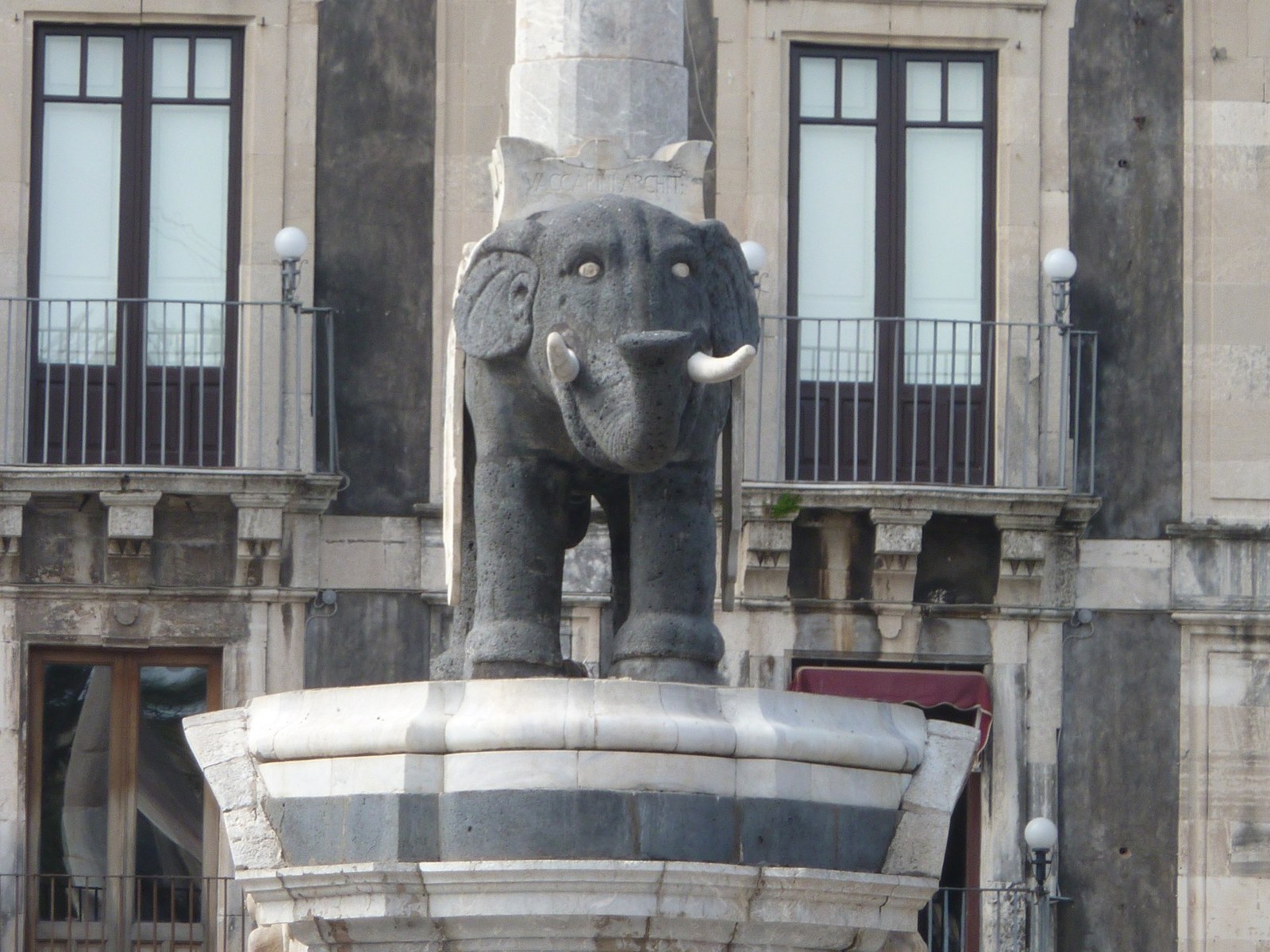
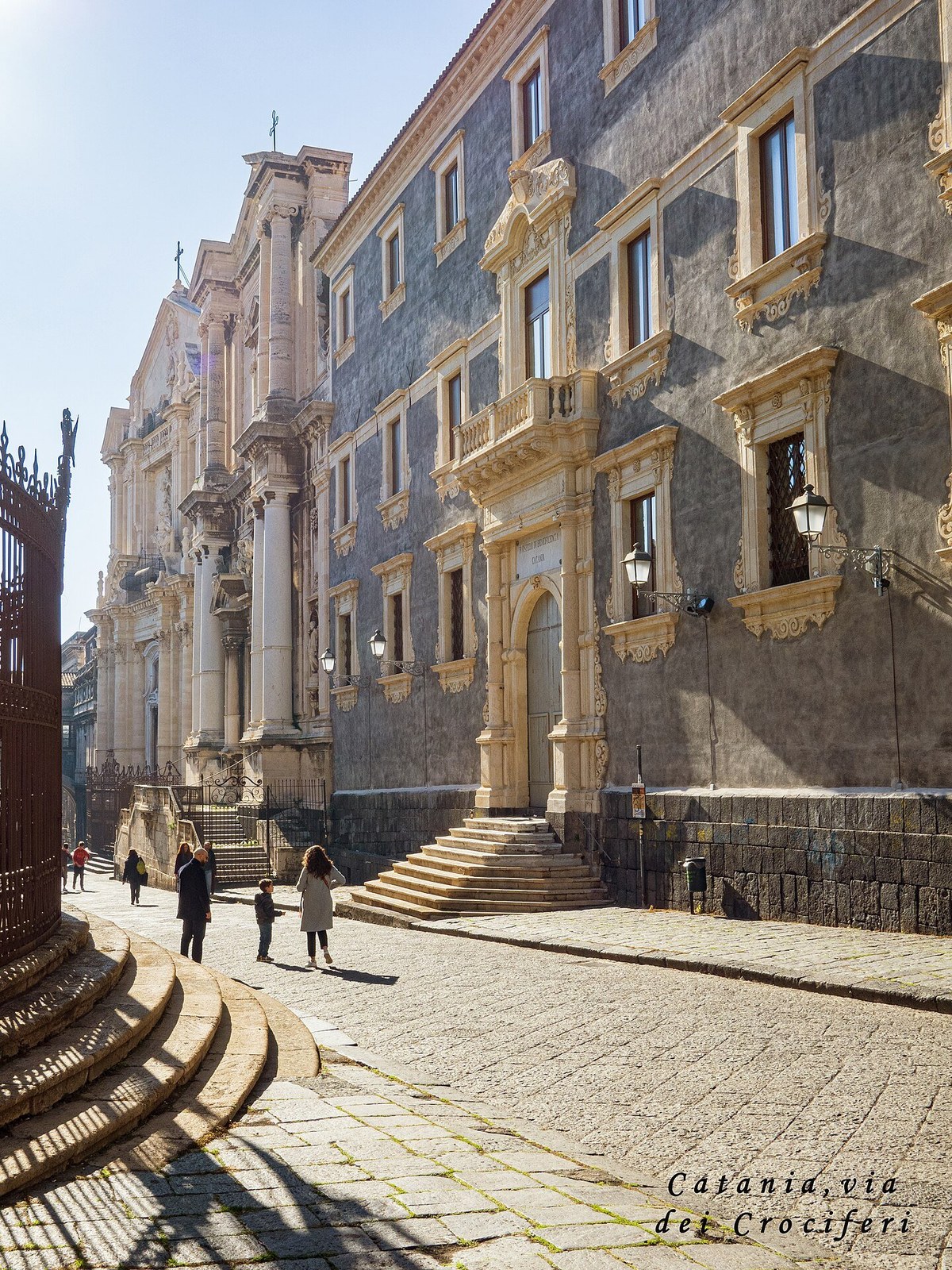
The baroque heart of Catania, rebuilt almost entirely after the 1693 earthquake and now a UNESCO World Heritage buffer zone. Piazza Duomo with the Fontana dell’Elefante is the anchor; from there, Via Etnea runs north as the main axis, Via Crociferi runs east as the most photogenic baroque street in Sicily, and La Pescheria — the open-air fish market — fills the streets south of the cathedral every morning except Sunday. The Teatro Massimo Bellini, the Roman amphitheatre under Piazza Stesicoro, and the Monastery of San Nicolò l’Arena are all within a 10-minute walk.
Pros:
- Walk out your door and you’re surrounded by it — the market noise, the baroque facades, the espresso bars that have been open since 1940. No bus, no planning, just step outside.
- The highest restaurant density in the city: from €2 arancini at the market stalls to full Sicilian seafood dinners on Piazza Teatro Massimo.
- Catania after dark is underrated. Via Landolina and Piazza Teatro Massimo fill up with aperitivo crowds from 19:00; the vibe is local, not tourist.
- Catania Centrale train station is a 10-minute walk south — trains to Taormina, Syracuse, Messina without touching a car.
Cons:
- The entire old town is a ZTL (restricted traffic zone), enforced h24 with automatic cameras. You cannot drive or park here. Hotels can request a temporary permit for luggage drop-off (max 12 hours), but your car stays outside the zone. More on this below.
- Noise. Via Etnea and the streets around the Duomo are loud until well past midnight, especially on weekends. If you’re a light sleeper, ask for a room facing a courtyard, not the street.
- The nearest beach (San Giovanni Li Cuti) is a small rocky cove, not a sandy stretch. For proper beach days, you’ll need to head to Aci Trezza or south to La Playa.
- Cobblestones and uneven lava-stone paving: difficult with pushchairs and wheeled luggage.
Via Etnea & Villa Bellini
giggel · CC BY 3.0
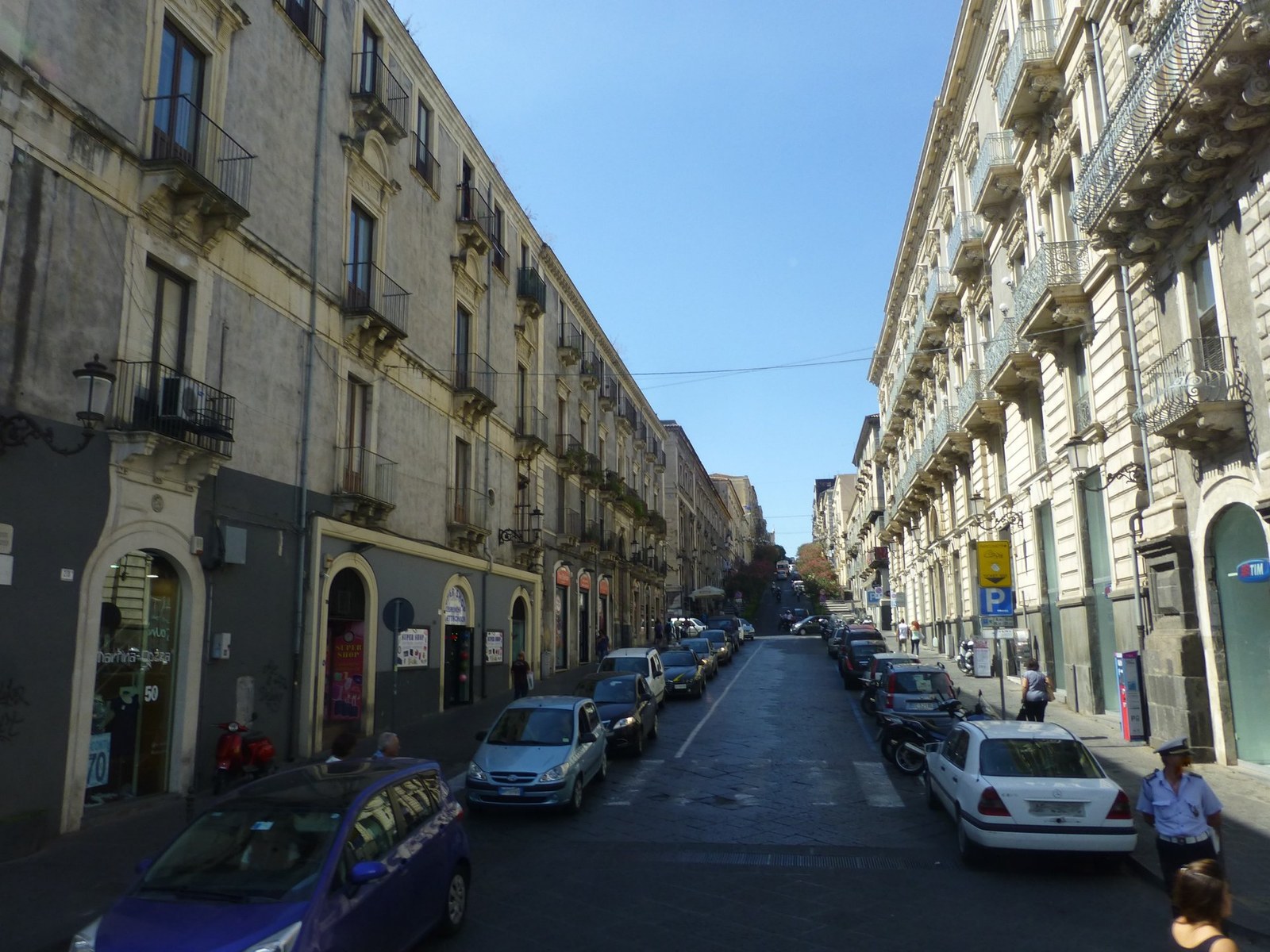
Via Etnea is Catania’s main artery — a straight line from Piazza Duomo northward towards the Etna, lined with shops, gelaterias and cafés for nearly 3 km. The stretch we’re talking about for accommodation starts at Piazza Stesicoro (where the Roman amphitheatre sits beneath the pavement) and runs north past Villa Bellini, the city’s best public park: 70,000 square metres of paths, bandstand, botanical curiosities and a hilltop with a clear view of the volcano. The Metro FCE stops at Stesicoro and Borgo, connecting this area to the rest of the city.
Pros:
- The best nightlife in Catania runs along this axis. Bars, clubs and late-night gelaterias are within walking distance — no taxi home needed.
- Villa Bellini is a genuine asset: morning runs, afternoon shade, a playground for children, and one of the few places in Catania where you can sit on grass.
- Metro Stesicoro puts you 2 stops from Borgo-Sanzio and connects to the Catania Centrale railway hub.
- Slightly quieter than the centro storico once you pass Piazza Stesicoro northward, but still walkable to the Duomo in 10 minutes.
Cons:
- Via Etnea itself is noisy and chaotic — buses, scooters, crowds. The side streets are calmer; ask for accommodation one block off the main road.
- No beach access — the sea is a 30-minute walk or a bus ride east.
- Still partially within or adjacent to the ZTL: check with your host whether your specific address is inside or outside the restricted zone before arriving by car.
Borgo-Sanzio (budget-friendly residential)
Unukorno · CC BY-SA 4.0
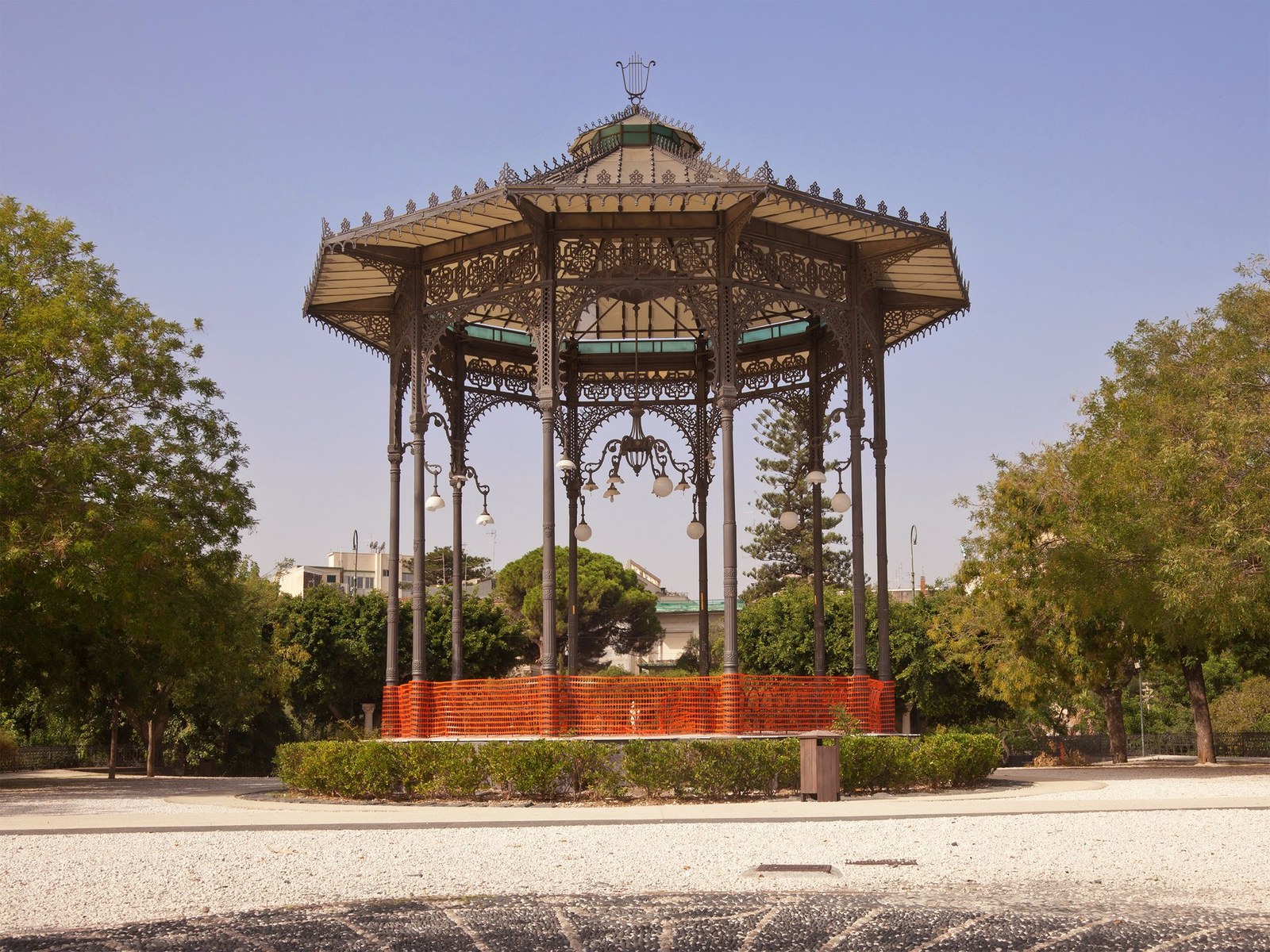
Borgo-Sanzio sits west of the centro storico, between Villa Bellini and the Cibali football stadium. It’s a residential neighbourhood where Catanesi actually live — bakeries that sell bread by the kilo, hardware shops, barber shops, the kind of streets where you nod at your neighbour. There’s no tourist infrastructure, which is exactly why the prices are low.
Pros:
- The cheapest accommodation in the Catania urban area. Apartments and B&Bs run 30–50% less than the centro storico for equivalent quality.
- Metro Borgo station connects to Stesicoro (centro) in 2 stops — fast, reliable, €1 ticket.
- Authentic local atmosphere: you’re living in Catania, not visiting it. Excellent for longer stays of 5 nights or more.
- Easy car access: no ZTL, street parking available, flatter streets than the centro.
Cons:
- No charm in the tourist sense — functional residential streets, not baroque palazzi. If atmosphere matters to you, this isn’t it.
- 20-minute walk to the Duomo. Not far, but it’s enough to make spontaneous evening trips to the centro feel like a decision rather than a stroll.
- Very little nightlife or restaurant scene. You’ll eat well at local trattorie, but there’s no variety or buzz.
Ognina (the seafront district)
Castielli · CC BY-SA 4.0
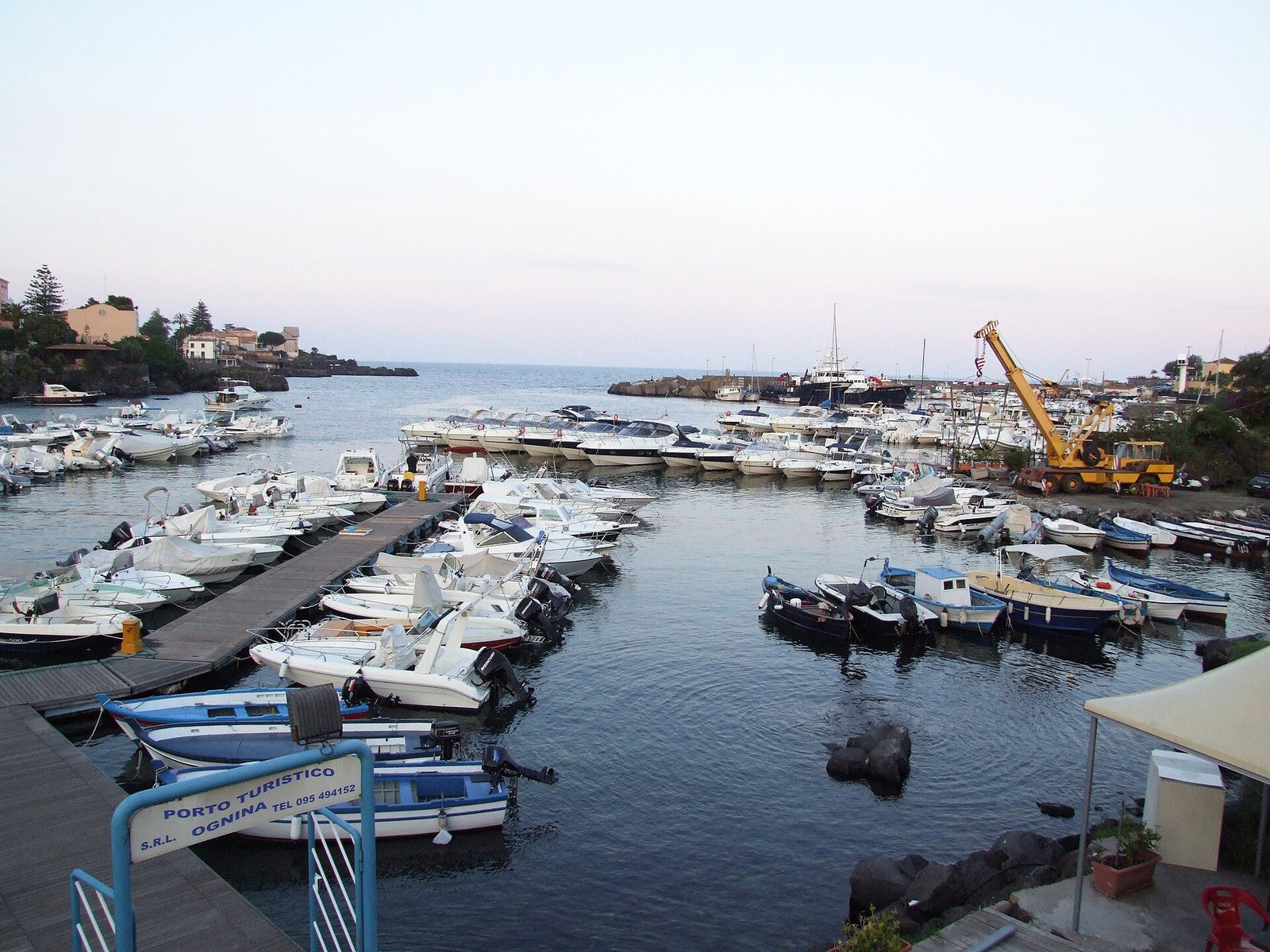
Ognina is the eastern edge of Catania, where the city meets the Ionian Sea. A small fishing harbour, a rocky volcanic coastline with natural pools, the pebble beach of San Giovanni Li Cuti, and a string of seafood restaurants along the waterfront — this is where Catanesi go on summer evenings when the centro is too hot and too crowded. It’s about 3 km from Piazza Duomo: a 30-minute walk along the lungomare, or a 15-minute bus ride.
Pros:
- Sea air, sea views, and the sound of waves instead of traffic. If your idea of a good morning starts with coffee overlooking the water, Ognina delivers.
- Seafood restaurants at local prices — the harbour trattorias serve fresh catch to a predominantly Catanese crowd, not a tourist one.
- The natural pools and rocky lava-stone coastline are unique — you won’t find this landscape anywhere else in Sicily. Swimming is excellent if you don’t mind entering the water from rocks.
- Quieter than the centro, especially at night. Good for anyone who needs sleep more than nightlife.
Cons:
- No sandy beach. The coastline is volcanic rock. Beautiful, but not what families with small children typically want.
- 30 minutes on foot to the centro storico — you’ll need to bus or walk along the seafront promenade each time you want to see the Duomo or the Pescheria.
- Limited nightlife. The restaurants close by 23:00 and the area goes quiet.
- Not as well connected by public transport as the Via Etnea corridor — bus frequency drops in the evening.
Aci Trezza & Aci Castello (seaside village alternative)
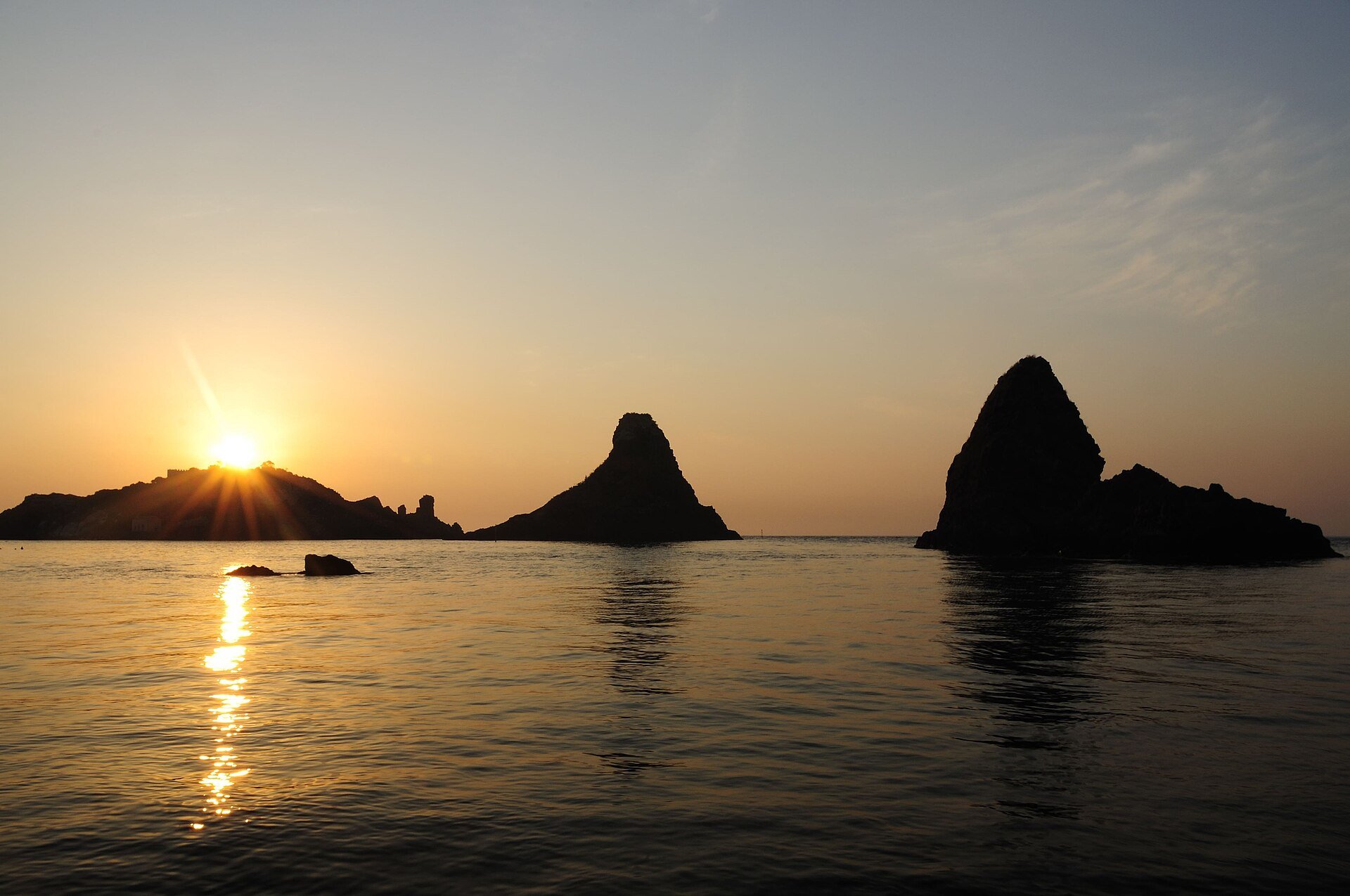
gnuckx · CC BY 2.0
This is our equivalent of Castelmola for Taormina: the area that almost no English-language guide treats as a proper place to stay, but that we think deserves serious consideration. Aci Castello and Aci Trezza are two small coastal towns on the Riviera dei Ciclopi, roughly 10 km north of Catania centre — 15 minutes by car or bus (AMT line BRT).
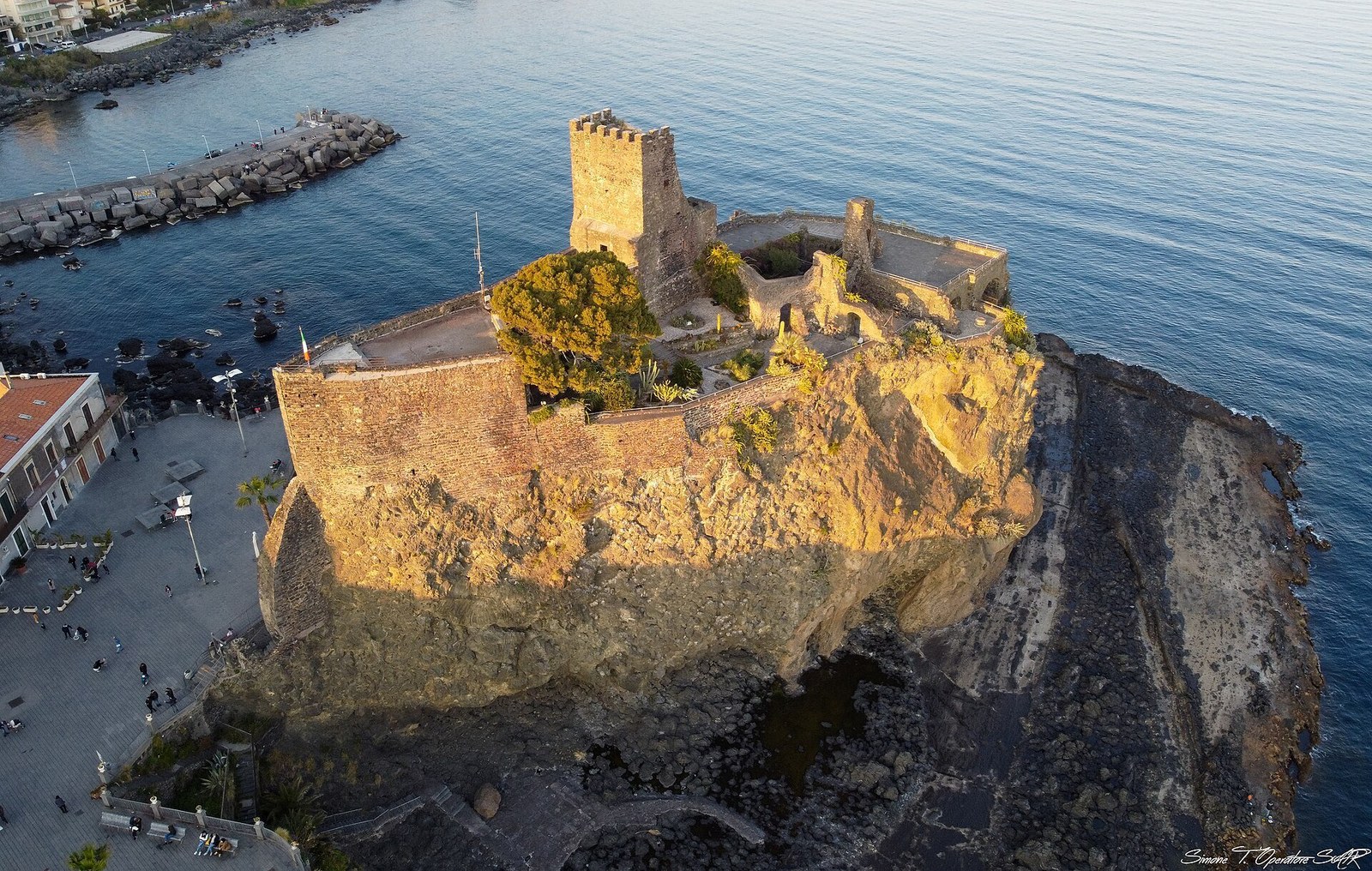
Aci Castello has a Norman castle built on a volcanic rock overlooking the sea, a diving spot, and a cluster of restaurants along the waterfront. Aci Trezza, one kilometre further north, is the fishing village made famous by Giovanni Verga’s novel I Malavoglia — the Faraglioni dei Ciclopi (the Cyclops Rocks from Homer’s Odyssey) rise from the sea right in front of the harbour, and the village feels like it hasn’t changed much in decades. Colourful fishing boats, nets drying on the quay, seafood restaurants where the fish was swimming that morning.
Pros:
- The best coastal scenery within easy reach of Catania. The Faraglioni at sunset are worth the trip alone.
- Accommodation costs 30–50% less than Catania centro. A sea-view apartment here costs what a windowless room near the Duomo costs.
- Family-friendly: pebble beaches with clear water, flat streets, small-town safety, and restaurants where children are welcome (this is Sicily — children are always welcome).
- Car-friendly: free street parking, no ZTL, no congestion. If you’ve rented a car for your Sicily trip, this is one of the easiest places to actually use it.
- Proper beach access — both Aci Castello and Aci Trezza have lidos, rocky bathing platforms and natural pools with crystal-clear water.
Cons:
- You’re not in Catania. The bus to the centre takes 15–20 minutes, and the last departure is around 22:30. If you want to experience Catania’s nightlife, you’ll need a car or a taxi back.
- Limited restaurant variety — a dozen seafood places, a couple of pizzerias, and that’s it. Excellent quality, limited choice.
- No nightlife after dinner. Both villages go quiet by 23:00 outside of August.
- Sandy beaches are not here — the coastline is volcanic pebble and rock. Beautiful for swimming, but bring water shoes.
Which part of Catania is best to stay in?
For a street-level view of what’s inside that walkable perimeter, our walking guide to Catania’s old town sequences the ten landmarks you’ll see from any accommodation in the historic centre — useful before you book to understand what each neighbourhood actually puts on your doorstep.
For most visitors, the centro storico around Piazza Duomo is the best area to stay in Catania, Sicily — the fish market, the baroque churches on Via Crociferi and the aperitivo scene on Piazza Teatro Massimo are all on your doorstep. If you’re travelling with a family or want a quieter coastal setting, Aci Trezza offers dramatic scenery and lower prices 15 minutes north by bus. For nightlife, the Via Etnea / Villa Bellini corridor is hard to beat.
Which neighbourhood fits you? 5 traveller profiles
Prelvini · CC BY 4.0
Couples & romance
Recommended: Centro storico (aperitivo on Piazza Teatro Massimo, evening stroll down the illuminated Via Crociferi, dinner by candlelight in a converted palazzo) or Aci Trezza (sunset over the Faraglioni, seafood dinner on the harbour, no crowds). Avoid: Borgo-Sanzio — functional and charmless, not what a romantic trip needs.
Families with kids
Recommended: Aci Trezza or Aci Castello (beach, flat streets, family restaurants, free parking, small-town calm) or Via Etnea / Villa Bellini (park with playground, gelaterias, metro connection, wide pavements). Avoid: Centro storico in August (crowded, hot, cobblestones and pushchairs don’t mix) and Ognina (rocky coast, no sandy beach for children).
Families with an infant have a different priority order from families with older children. Our Catania with a baby guide explains why a short return route, lift access, kitchen facilities and easy pushchair streets matter most.
First-time visitors
Recommended: Centro storico, within walking distance of Piazza Duomo. Your first visit to Catania should be immersive — step out, see things, step back in. Don’t complicate it with bus schedules. Avoid: Ognina or Borgo-Sanzio on a first visit — you’ll miss the energy that makes Catania special.
Budget travellers
Recommended: Borgo-Sanzio (lowest prices in the urban area, metro to centro in 5 minutes) or Aci Trezza (cheaper than centro, more scenic, proper beach). Avoid: Centro storico in June–September — prices spike, and the premium buys you location, not quality.
Nightlife & young travellers
Recommended: Via Etnea / Villa Bellini area (bars, clubs, late-night gelaterias, all walking distance — no taxi home) or the northern end of the centro storico around Piazza Teatro Massimo (cocktail bars, live music, aperitivo culture). Catania’s nightlife is genuine and local — it’s not manufactured for tourists. Avoid: Ognina and Aci Trezza — both go quiet after dinner.
Where to stay in Catania with family?
Aci Trezza or Aci Castello for beach access, flat streets and free parking. Within the city, Via Etnea / Villa Bellini for the park, gelaterias and metro connection. Both options avoid the cobblestones and crowds of the centro storico.
Where to stay in Catania on a budget?
Borgo-Sanzio for the lowest urban prices with metro access, or Aci Trezza for a scenic coastal option at 30–50% less than the centro storico. Both are well connected and safe.
What you need to know before booking
This is the section that no other English-language guide on Catania covers properly, and it’s the one that will save you the most frustration. We’ve sourced every detail from AMTS (the municipal transport and parking authority) and the City of Catania’s official traffic regulations.
The ZTL: can you drive into Catania’s old town?
Short answer: no, not without a permit. Catania’s ZTL (zona a traffico limitato) covers the entire centro storico and is active 24 hours a day, 365 days a year. This is not seasonal or time-restricted like some other Sicilian cities — it’s permanent. Automatic cameras at the entry points cross-check plates against a white-list, and fines are issued within 15 days.
The perimeter streets — Via Sangiuliano, Via Euplio Reina, Via Vittorio Emanuele and the others that form the boundary — are not part of the ZTL and can be driven freely. The restriction applies to the internal streets only.
On top of the ZTL, three fully pedestrianised areas exist: Piazza Duomo, the first stretch of Via Etnea (from Via Dusmet to Piazza Stesicoro), and Via Crociferi with Piazza Bellini. No vehicles at all, at any time.
If you’re staying at a hotel or B&B inside the ZTL, your host can request a temporary access permit (up to 12 hours) from AMTS for luggage loading and unloading. Ask them to arrange this before your arrival. The permit is free, but your car cannot remain parked inside the zone — you’ll need to move it to a car park outside the perimeter afterwards.
Parking if you arrive by car
Blue-stripe parking (AMTS managed) operates on weekdays 08:00–14:00 and 15:00–21:00. Sundays and public holidays are free. Two fare zones exist: Zone A (centro storico perimeter) at €0.90 for the first hour, €1.00/h thereafter, and Zone B (outer ring) at €0.90/h flat. After 21:00, the city runs Movida Park in the centro area: €1.00/h from 21:00 to 02:00, with the period from 02:00 to 08:00 free. This matters if you’re driving into town for dinner — park on a blue stripe after 21:00, pay the Movida rate, and the stretch from 02:00 until the next morning is on the house.
If you prefer a covered car park, the main options are Parcheggio Europa (Piazza Europa, north side of the centre, modern underground structure), Parcheggio Villa Bellini (Via Etnea 290, directly opposite the park) and Piazza Lupo Garage (Piazza Pietro Lupo, open 24 hours — useful for late arrivals). For a park-and-ride approach, the Borsellino interchange at Nesima lets you leave the car and take the Metro FCE into the centre (Stesicoro station, 3 stops).
Payment methods at blue-stripe meters: cash, card, or the free AMTS Smart Parking app (no commission). EasyPark and Telepass Pay also work but carry a small surcharge.
Arriving from Fontanarossa airport
Simone Tinella · CC BY-SA 4.0
Catania-Fontanarossa (CTA) is 7 km south of the city centre — one of the closest major airports to a city centre in Italy. The Alibus (AMT) departs from outside the arrivals hall every 25 minutes, stops at Catania Centrale train station and terminates at Piazza Stesicoro in the heart of the city. Tickets cost €4 and can be bought on board or from the automatic machines at the airport. Journey time is 20–30 minutes depending on traffic.
If you want a wider orientation before you choose a neighbourhood — what the city is, what to eat, what to skip — our Catania tourism overview covers the full picture in one read.
A taxi to the centro storico uses a flat-rate meter and costs approximately €25–30. Private transfers run €35–50 per car and can be pre-booked. Walking from the airport is not practical — there’s no continuous pavement and the road is a dual carriageway.
Getting around Catania
The centro storico is entirely walkable — roughly 1.5 km from Piazza Duomo to Piazza Stesicoro, flat terrain on lava-stone paving. Beyond the centre:
- Metro FCE — a single line running from Nesima to Stesicoro, with stops at Borgo (for Borgo-Sanzio) and Catania Centrale. Useful for park-and-ride and for reaching the train station. Frequency: every 15–20 minutes on weekdays.
- Bus AMT — the urban network covers Ognina, Aci Castello, Aci Trezza (BRT line), the airport (Alibus) and the beach south of the city (La Playa). Tickets €1 for 90 minutes.
- Trenitalia — from Catania Centrale, trains run to Taormina-Giardini (50 min), Syracuse (65 min), Messina (90 min) and Palermo (3 h). If you’re doing day trips without a car, the train network covers the essentials.
- Walking — the most underrated option. The lungomare from the centro to Ognina is a flat 3 km seafront walk. Via Etnea from the Duomo to Villa Bellini is a 10-minute stroll. Catania is a walkable city if you stay in the right area.
How many nights do you need in Catania?
Catania rewards staying longer than most visitors plan. It’s not a one-sight town — the layers reveal themselves over days, not hours.
| Profile | 1 night | 2 nights | 3 nights | 5+ nights |
|---|---|---|---|---|
| Couples | rushed | ⭐ sweet spot | ideal | use as base for day trips |
| Families | tight | OK | ⭐ ideal | perfect base for East Sicily |
| First-time visitors | very tight | ⭐ minimum | ideal | explore beyond the city |
| Budget travellers | OK as transit stop | ⭐ ideal | great value | best bang for buck in Sicily |
| Nightlife | enough for one night out | ⭐ ideal | plenty | the city reveals itself slowly |
The sweet spot for most visitors is 2 to 3 nights. That gives you a day exploring the centro storico and the Pescheria, half a day at the coast (Ognina or Aci Trezza), and time for either an Etna excursion or a day trip to Taormina or Syracuse. If you’re staying in Sicily for 5 nights or more, Catania as your single base with day trips is often the most practical and cost-effective setup — you unpack once, and the whole east coast is within reach. Our 7-day Sicily itinerary shows how the pieces fit together.
Where to avoid staying in Catania
Not every part of Catania is a good base. Some areas are genuinely worth avoiding; others are fine places to live but wrong choices for a short trip. Here’s what we tell friends.
- The old San Berillo quarter. Immediately south-west of Via Etnea, this historic district is run-down and poorly lit at night — avoid staying here. Don’t confuse it with San Berillo Nuovo, two blocks further west, which is a lively residential area with good restaurants. Forum posts warning about “San Berillo” mean the old quarter; the new one is fine.
- Librino, San Cristoforo and the outer suburbs. Cheap for a reason: no tourist attractions, poor bus connections, and a long taxi ride to anything worth seeing. The money you save on the room you spend on transport and frustration. If budget matters, Borgo-Sanzio or Aci Trezza give you low prices with actual connections to the centre.
- Via Etnea if you’re a light sleeper. Via Etnea is the busiest street in Catania. Traffic, scooters, bar crowds — it doesn’t calm down until 01:00, later on weekends. Stay one block off the main road for the same location without the noise.
- Expecting sandy beaches in Catania city. The city’s coastline is volcanic rock. Beautiful and unique, but not a sandy stretch. The closest sand is La Playa (south of the port, reachable by bus — decent but not scenic) or the Riviera dei Ciclopi (Aci Trezza, 15 min north — pebble, not sand, but crystal water). If a sandy beach is non-negotiable, you need a different base.
- Renting a car for a city-only stay. If your entire Catania trip involves the centro storico, the Pescheria, Via Etnea and a day trip by train, you don’t need a car. The ZTL blocks the centre, parking costs add up, and the Alibus from the airport costs €4. Rent a car only for the day you drive to Etna or the Val di Noto — pick it up in the morning, drop it off at night.
- Overlooking Aci Trezza because it’s “not Catania”. It’s 15 minutes away, the bus runs regularly, the accommodation is cheaper and the setting is dramatically more scenic. For families and anyone with a car, it’s often the better choice.
Is Catania safe for tourists?
Yes, with standard urban precautions. The centro storico, Via Etnea, Villa Bellini, Ognina, Aci Trezza and Aci Castello are safe day and night. Avoid the old San Berillo quarter after dark, and there’s no tourist reason to visit the outer suburbs (Librino, San Cristoforo). See is Catania safe for the full guide. Petty theft (pickpockets on buses, bag-snatching on scooters) exists as in any Mediterranean city — keep valuables close and you’ll be fine.
Is it safe to walk around Catania at night?
Yes. The main tourist areas — centro storico, Via Etnea, Piazza Stesicoro, the Villa Bellini perimeter and the Ognina seafront — are well-lit and lively until late, especially on Friday and Saturday nights. Via Landolina and Piazza Teatro Massimo stay busy past midnight with the aperitivo and dinner crowd. The only area to avoid on foot after dark is the old San Berillo quarter south-west of Via Etnea, which is poorly lit and largely deserted at night. The outer suburbs (Librino, San Cristoforo) have no tourist attractions and no reason to walk through. Stick to the five neighbourhoods in this guide and walking at night is perfectly safe.
Is Catania a good place to stay in Sicily?
Yes — Catania is Sicily’s second city and the island’s main transport hub. Fontanarossa airport is 7 km from the centre with direct connections from London, Dublin, Berlin and most European hubs. From Catania you can reach Mount Etna (40 min), Taormina (50 min), Siracusa (70 min) and Noto (90 min), making it an efficient base for exploring eastern Sicily without moving accommodation. The UNESCO Baroque centro storico, the La Pescheria fish market, a vibrant student nightlife scene and one of Italy’s most distinctive street-food cultures give it strong credentials as a destination in its own right. Accommodation prices in the B&B and apartment categories run 20–40% below Taormina equivalents. For a region-wide perspective on where to base yourself, see our guide to the best area to stay in Sicily.
Best time to visit Catania
Off-season (November–February): mild by northern European standards (10–15°C), fewer tourists, lower prices. The highlight is the Festa di Sant’Agata (3–5 February) — one of the largest religious processions in the world, a UNESCO-recognised event that transforms the city for three days. If you can time your visit for early February, do it. No beach swimming, but Catania in winter has its own energy.
Shoulder season (April–May and October): the ideal window. Warm enough for coastal swimming (18–25°C), everything open, prices 20–40% below peak. The city is lively but not overwhelmed.
Peak season (June–September): hot. Catania in July and August regularly hits 35–40°C, and the sirocco wind from North Africa can push it higher. The sea is warm, the nightlife is at its peak, and the city empties during afternoon hours as everyone retreats indoors. Book accommodation with air conditioning — it’s not optional.
What’s the cheapest month for Catania accommodation?
The cheapest month for accommodation in Catania is November, with December and January close behind. November through February, excluding the Festa di Sant’Agata week (early February, when prices spike) and Christmas–New Year, rates run 40–60% below peak season, and properties that are fully booked in July will have wide availability.
Apartments vs hotels vs B&Bs vs guesthouses in Catania
In sintesi: four legal categories of accommodation in Catania coexist, each with its own rhythm. Holiday apartments suit families and stays of four nights or more. Hotels are the no-friction option for short trips. Bed and breakfasts sit between the two — host-managed, breakfast included, central. Guesthouses (Italian “affittacamere”) are rooms-only stays without breakfast, often the cheapest option. The choice is rarely about budget alone.
| Category | B&B | Hotel | Guesthouse (affittacamere) | Holiday apartment |
|---|---|---|---|---|
| Italian legal name | Bed & Breakfast | Albergo | Affittacamere | Casa vacanze |
| Breakfast | Included, host-prepared | Included or paid extra | Rarely included | Self-catering kitchen |
| Host contact | Daily, breakfast time | 24/7 reception | Check-in only | Check-in + on-call |
| Rooms per property | 1–6 | 20+ | 1–6 | 1 full unit (1–3 bedrooms) |
| Typical €/night (2 guests) | €50–130 | €70–250 | €30–70 | €60–180 |
| Best for | First-timers, couples, short stays | Business, last-minute, no-friction | Solo travellers, budget | Families, groups, stays 4+ nights |
Bed and breakfasts are family-run homes with up to six rooms and breakfast included — the host is usually a local who knows where the real arancini are (hint: not the first stall at the Pescheria). They concentrate in the centro storico and along Via Etnea, prices sit between hotel and apartment, and the breakfast is often the high point of the day: granita di mandorla with brioche col tuppo in summer, ricotta cassatelle on weekends. For a category-specific deep dive on areas, prices and what to look for, see our Catania bed and breakfast guide.
Hotels offer convenience and service. For couples on a short stay (two or three nights), a mid-range hotel in the centro storico eliminates friction. Catania has a strong boutique hotel scene in restored Liberty-era and Baroque palazzi around Via Etnea, Piazza Duomo and Via Crociferi — expect €120–250 per night for a designed room with a rooftop or terrace overlooking the cathedral. Larger 4-star and chain hotels cluster near the airport (10 minutes by car) and in the modern uptown — convenient for early flights, less convenient for everything else.
Guesthouses — affittacamere in Italian — are the cheapest legal short-stay category in Italy: 1–6 rented rooms in a private home, no obligation to serve breakfast, lighter regulation than B&Bs. Expect €30–70 per night for a private room with a shared bathroom, sometimes with a tiny kitchenette. They suit solo travellers and budget couples who plan to eat out for breakfast (a granita and brioche at a Catanese pasticceria runs €3–4 anyway). Less host care than a B&B, less anonymity than a hotel.
Holiday apartments are the natural choice for families and groups of three or more. A two-bedroom apartment in Borgo-Sanzio or Aci Trezza costs less per night than a single hotel room in the centro, and you get a kitchen — a serious saving when breakfast for four at a bar costs €30. The trade-off: no reception, no daily cleaning, and check-in can be awkward (key safes, codes, meeting the host). We host families, couples and honeymooners year-round in our three apartments in via Santissima Trinità, central Catania — see our holiday apartments in Sicily for availability and direct booking.
Price ranges are indicative and based on Booking and TripAdvisor listings as of early 2026 and vary by season — Sant’Agata week (early February), August and Christmas–New Year are peak; November–January (excluding holidays) is cheapest.
Ready to explore Catania?
Now that you’ve seen the best places to stay in Catania, the next step is filling your days. Catania has more to offer than most visitors expect — from the Pescheria at dawn to the Etna at sunset — and it sits at the centre of the richest day-trip network in Sicily. For an action-led overview, see our complete guide to what to do in Catania, covering walking routes, half-day plans and nighttime options.
For a broader view of where to base yourself across the island, our guide to the best areas to stay in Sicily puts Catania in context with Taormina, Syracuse and Palermo. If you are still choosing the destination itself, our Sicily or Greece comparison explains when Sicily is the stronger Mediterranean base.
For practical parking details — ZTL boundaries, blue-stripe rates, car park locations — see our guide to parking in Catania.
Travelling with kids? Catania is one of the strongest east-Sicily family bases — flat centro storico, no car needed, Etna and Taormina under an hour away. Our Sicily family holiday guide sets out the wider area-by-area picture.
Where to stay in Catania
If you’ve read this far, you already know which neighbourhood suits your trip. The next step is finding the right apartment. We manage three holiday flats in Catania’s centro storico — walking distance from Piazza Duomo, the Pescheria and Via Etnea — with the same local knowledge that went into this guide. No agency, no middleman: you’re booking directly with the people who wrote these tips. See our three holiday apartments on our Sicily-wide hub, or browse our apartments in Catania for the full picture.
Prices, timetables and ZTL regulations mentioned in this guide were verified against official AMTS and City of Catania sources as of early 2026. Public transport fares, parking rates and traffic rules can change — check amts.ct.it or your accommodation host for the latest information before your trip.
Once you have picked a neighbourhood, see our guide to the things to do in Catania — the 13 sights worth your time, plus Mount Etna and the Ionian coast.
Which area is best for nightlife?
If concentrated nightlife is a deciding factor, Centro Catania is the clear winner — the cocktail precinct around Piazza Teatro Massimo, the student aperitivo energy of Piazza Università and the late-night rooms in Piazza Bellini and San Berillo are all within ten minutes’ walk of each other. We break down the bars, the clubs and the practical side in the Catania nightlife guide.
Day-trip planning: a central Catania apartment doubles as the base for eastern Sicily. See how to plan day trips from your Catania apartment — the ten best excursions ordered by distance, with public-transport feasibility for each destination.
The information in this guide was correct at the time of writing. Data can change from season to season without notice: before you travel, always check the official channels and websites for updates. We review this guide periodically, but the official channels are always the authoritative source. We also cannot guarantee that the suggested routes or the attractions described are always reachable or accessible: roads, trails and sites may be closed, damaged, altered or unsafe. Assessing the practicability and safety of itineraries and attractions always remains your own responsibility.