
Sicily in March is the island’s hidden sweet spot — warm enough for sightseeing, cheap enough for off-peak budgets, and dressed in almond petals from Agrigento to the Etna foothills. Daytime averages on the coast hover around 16°C (61°F), nights cool to 9°C (48°F), and the Sagra del Mandorlo in Fiore — Sicily’s flagship spring festival, founded in 1934 — opens the season in early March in the Valley of the Temples. Mount Etna keeps its snow cap above 1.800 m, the Catania blood-orange harvest is at its peak, and the great UNESCO sites empty out: the Valley of the Temples averages roughly 50 visitors a day in March against more than 4.000 in August. Based in Catania, we live this month every year — here’s exactly what to expect, when to go, and how to plan around Holy Week and Easter.
March in Sicily splits cleanly. The first three weeks — from March 1 to about March 22 — are the year’s second-cheapest travel window after January, with apartment and flight prices 50-60% below August. Then comes Easter: in 2027 Palm Sunday falls on March 28 and Easter on April 4, so Holy Week processions in Trapani, Caltanissetta, Enna and Marsala spill into the last March days, accommodation in baroque towns and Taormina spikes, and restaurants book out. If you can travel before March 22 you get the season at its most generous; if you build the trip around the processions, book ten weeks ahead.
What is the weather like in Sicily in March?
Sicily in March averages 16°C (61°F) by day and 9°C (48°F) at night on the coast, with sea temperatures around 14-15°C (57-59°F) and roughly 8 rainy days per month. Inland and on Mount Etna it stays markedly colder; snow above 1.800 m holds through the month and the two Etna ski resorts run their last weeks. Sunshine averages about 8 hours per day.
Heading earlier in the season? February anchors the Sicilian winter festivals — read our Sicily in February guide for Sant’Agata, twin carnivals (Acireale + Sciacca), and Etna ski peak conditions.
Pushing into late spring? May extends the dry shoulder window with the Infiorata and Cantine Aperte landing inside the same four weeks — read our Sicily in May guide for festival dates and Etna spring conditions.
The month splits into a cooler first half — an extension of February, with the almond bloom at its peak and average highs around 14°C — and a softer, brighter second half once the spring equinox lands on March 20-21. Coastal Catania, Taormina and Syracuse stay in the long-sleeve-and-jacket range through the whole month, but inland Enna (931 m elevation) and Caltagirone drop to single-digit nights and the Etna foothills can see frost on clear mornings. By the last week of March, the south-east coast (Marina di Ragusa, Marzamemi) is typically 1-2°C warmer than the rest of the island and crocuses, wild gladioli and yellow oxalis carpet the Valley of the Temples.
Sicily March weather table — 4 weeks × 4 regions
| Week | East coast (Catania, Taormina, Syracuse) | West coast (Palermo, Trapani) | Inland (Caltagirone, Enna) | Etna altitude (1.500-2.000 m) |
|---|---|---|---|---|
| 1-7 Mar | 14°C / 8°C, sea 14°C, partly cloudy | 14°C / 8°C, sea 14°C, partly cloudy | 11°C / 4°C, occasional rain | 0°C / -5°C, snow consistent |
| 8-14 Mar | 15°C / 8°C, sea 14°C, mostly sun | 15°C / 8°C, sea 14°C, mostly sun | 12°C / 5°C, mostly sun | 1°C / -4°C, ski lifts open |
| 15-21 Mar | 16°C / 9°C, sea 15°C, mixed sun and rain | 16°C / 9°C, sea 15°C, mixed | 13°C / 6°C, mixed | 2°C / -3°C, ski tail end |
| 22-31 Mar | 18°C / 11°C, sea 15°C, mostly sun | 17°C / 10°C, sea 15°C, mostly sun | 15°C / 8°C, mostly sun | 4°C / -1°C, snow patchy |
Disclaimer: values are typical multi-year averages compiled from regional meteorological data; conditions vary year on year. Rain in March tends to cluster in 2-3-day fronts rather than spread evenly across the month, with the wettest stretch usually in the first half. The Tramontana wind — a dry north wind that gusts at 40-60 km/h — can blow without warning on the west coast and on exposed archaeological sites such as Selinunte and Segesta; pack a fitted-hood waterproof, not a packable poncho.
Will it rain a lot in Sicily in March?
By Sicilian standards yes, by northern-European standards no. Expect roughly 8 rainy days, totalling 50-65 mm of rain, more concentrated in the first half. Showers are usually short and convective rather than all-day grey, and when fronts do arrive they typically last 24-72 hours and clear cleanly. UV climbs through the month: on a clear March 25 in Agrigento the index can hit 6-8, enough to burn fair skin in 30 minutes. Pack SPF 30 even if your travel date sounds early in the season.
Can you swim in Sicily in March?
Only on warm-spell days for cold-tolerant swimmers. The sea around Sicily holds 14-15°C through March — clearly cool, not refreshing. The east coast (Catania, Taormina, Syracuse) and south-east (Marina di Ragusa, Fontane Bianche) stay marginally warmer than the west. Local swimmers known as “i polari” still take a dip year-round at Catania’s San Giovanni Li Cuti and Taormina’s Isola Bella, but most beach lidos are closed and there are no lifeguards. Plan March as a cultural and food-and-wine month — for a true beach trip see our Sicily beach holiday guide.
How does Sicily compare to mainland Italy in March?
Sicily runs 4-5°C warmer than Rome and 6-8°C warmer than Florence or Milan in March. Daytime in Catania (16°C) is roughly the same as April in Rome. Sea temperatures are 2-3°C warmer than the Adriatic side of the peninsula. If you want spring sun in Italy without flying further south, Sicily — together with Sardinia and the Amalfi Coast — is the warmest mainland-Europe option reachable with a 2-3 hour flight.
Is March a good time to visit Sicily?
Yes if you want spring blooms, deserted UNESCO sites, blood-orange harvest, off-peak prices and authentic Sicilian Easter traditions. Not ideal if you want guaranteed beach weather or bustling beach resorts open. March is the year’s second-cheapest month after January, with prices climbing only in Easter week (year-dependent: 2027 Mar 28–Apr 4, 2028 Apr 9–16).
Pros of visiting Sicily in March
- Almond petals and wildflowers. The almond bloom peaks late February into early March; poppies, Sicilian snapdragons and yellow oxalis carpet the Valley of the Temples through the month.
- Near-empty UNESCO sites. The Valley of the Temples averages around 50 visitors a day in March versus 4.000+ in August — an 80× crowd reduction.
- Deep off-peak savings. Apartment rates -50-60% versus August (outside Easter week), flights -45%, car rental -50%.
- Blood-orange harvest peak. Tarocco and Moro from the IGP Plain of Catania are at their best, and so is the granita di arancia rossa.
- Etna with snow plus lava-flow hikes. The volcano is reliably snow-capped above 1.800 m; the lower slopes are walkable; the Nicolosi and Linguaglossa ski lifts run their last weeks.
- Spring festivals. The Sagra del Mandorlo in Fiore, San Giuseppe vampe and tavolata, and Holy Week processions in Trapani, Caltanissetta, Enna and Marsala come back to back.
- Soft spring light. Long blue-sky afternoons after fronts pass; baroque limestone glowing; the best month after October for landscape photography.
Cons of visiting Sicily in March
- Sea is cool. 14-15°C: only cold-tolerant swimmers go in; lidos closed.
- Rain fronts cluster. 24-72 hour storm windows, especially in the first half — rare to ruin a whole trip but plan flexible-day sightseeing.
- Some Aeolian and minor-island ferries reduced. Daily but on lighter winter timetables; whale-watching tours start in April.
- Easter week price spike. Year-dependent: in 2027 the surge runs March 28–April 4, with accommodation +30-50% in Taormina, Modica and the baroque towns, and restaurants booking out 6-8 weeks ahead.
- Cooler nights inland. Single-digit lows in Enna, Caltagirone and the Etna foothills — pack a warm mid-layer.
March split — off-peak window vs Easter week
March behaves like two different months for booking. March 1-22 (and any extension into March 27 if Easter is late) is the cheapest March can deliver: airports quiet, apartments empty, museums full-capacity, restaurants wide-open. The Easter week is the opposite: Holy Week processions draw domestic visitors to Trapani (Misteri Good Friday), Caltanissetta (Real Maestranza), Enna (confraternities) and Marsala (Misteri); Taormina and the Val di Noto baroque towns fill with northern-Italian families on Easter Monday Pasquetta picnics; flights run holiday-season pricing. Your trip dates in 2027 put you mostly inside the off-peak window if you fly out by March 27.
Compared to February
March averages 1-2°C warmer than February on the coast, almond bloom shifts from peak in mid-February to peak around the first weekend of March in Agrigento (when the festival is held), daylight gains an hour and a half, and the Etna ski season approaches its end rather than its peak. Both months are off-peak; March wins on light and sightseeing weather, February on absolute lowest prices and the Acireale carnival.
Compared to April
April is 2-3°C warmer, sea climbs to 16°C, and Easter (when it falls in April) brings the post-holiday weeks of late April back to off-peak with shoulder-season prices. April adds the start of beach-weather travel in the second half, but March is cheaper and quieter outside Easter week, and gives you the almond bloom and the Mandorlo festival that April does not.
Almond blossom, carnival & spring traditions in Sicily
Sicily’s spring season opens with the almond bloom around Agrigento in late February, peaks with the Sagra del Mandorlo in Fiore in early March, runs through St Joseph’s Day on March 19 with bonfires and elaborate altars, and culminates with Holy Week processions in Trapani, Caltanissetta, Enna and Marsala. Public life slows on Palm Sunday and Easter; restaurants book out the Friday before Easter.
Giacomo Palermo · CC BY-SA 4.0
Sagra del Mandorlo in Fiore (Almond Blossom Festival), Agrigento
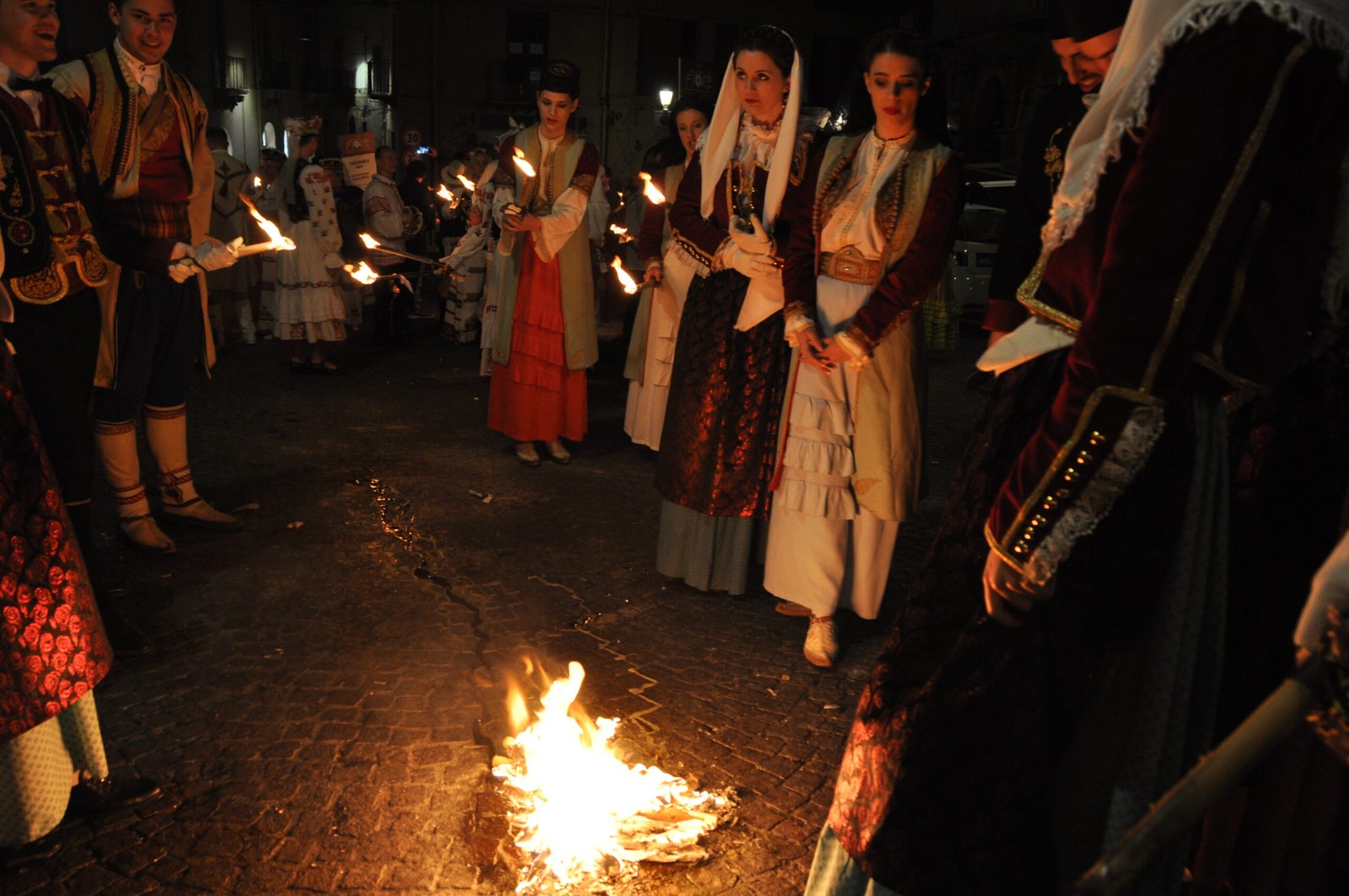
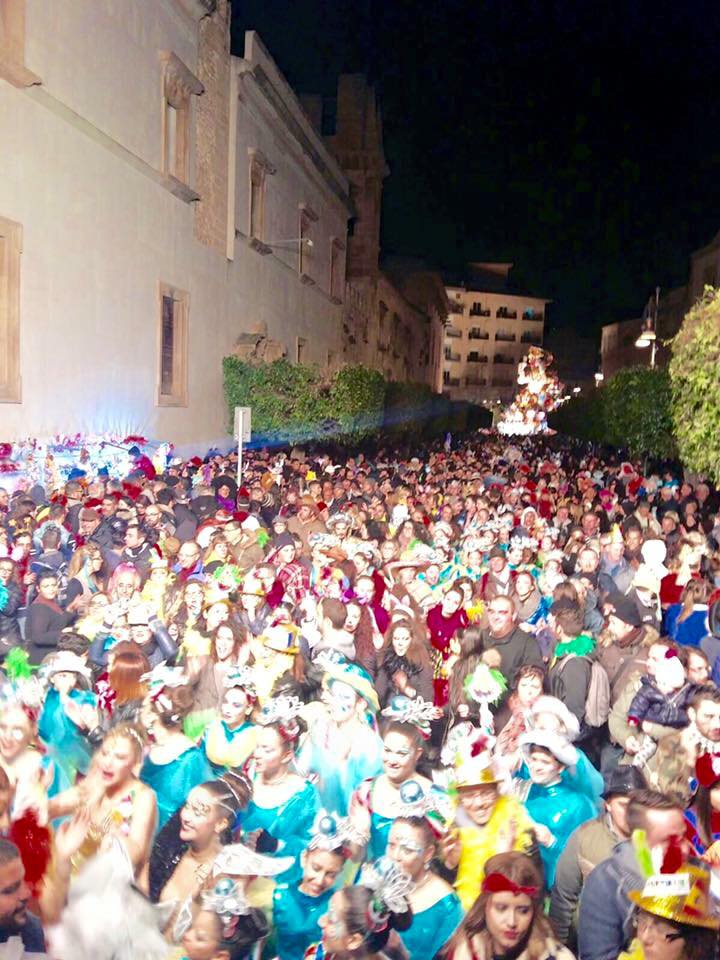
The Sagra del Mandorlo in Fiore — Sicily’s flagship spring festival — was founded in 1934 and has run almost continuously since. It opens in the last days of February and runs through the first week of March in Agrigento, with parades, folkloric music and dance from international groups, the awarding of the Tempio d’Oro, and outdoor events held in and around the Valley of the Temples — the Tempio della Concordia and the Tempio di Hera Lacinia frame the procession route. Most outdoor events are free; the closing-night gala is ticketed. Verify the 2027 dates from the Comune di Agrigento calendar published in late November 2026, and book Agrigento accommodation 6-10 weeks ahead.
Carnival of Acireale and Sciacca
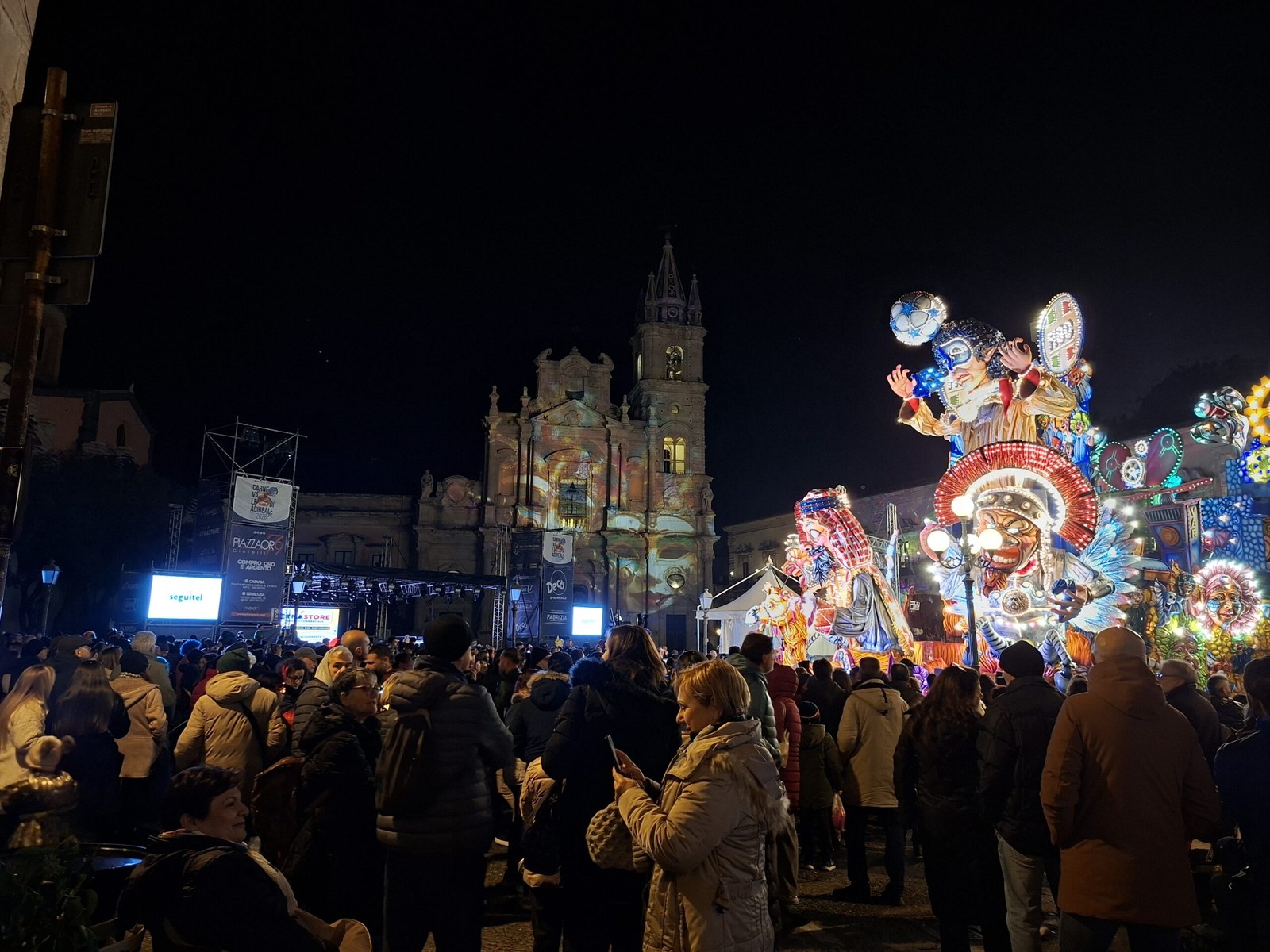
Sicily’s two biggest carnivals are Acireale — “the most beautiful in Sicily”, with 250+ years of tradition and an emphasis on cartapesta paper-mâché floats, allegorical satire, flower floats and folk concerts in Piazza Duomo — and Sciacca — the largest, founded in the mid-1500s and now drawing around 200.000 visitors per edition with float parades, brass bands and theatre. Carnival is year-dependent because it ends with Martedì Grasso (Shrove Tuesday) two weeks before Lent: in years with an early Easter (such as 2027, where Easter is April 4) Carnival ends in early February; in years with a late Easter (such as 2028, where Easter falls April 16) it spills into the first days of March. If your March trip is planned around Carnival, check the year’s Easter date first.
FlowerAM · CC BY-SA 4.0
Festa di San Giuseppe (St Joseph’s Day) on March 19
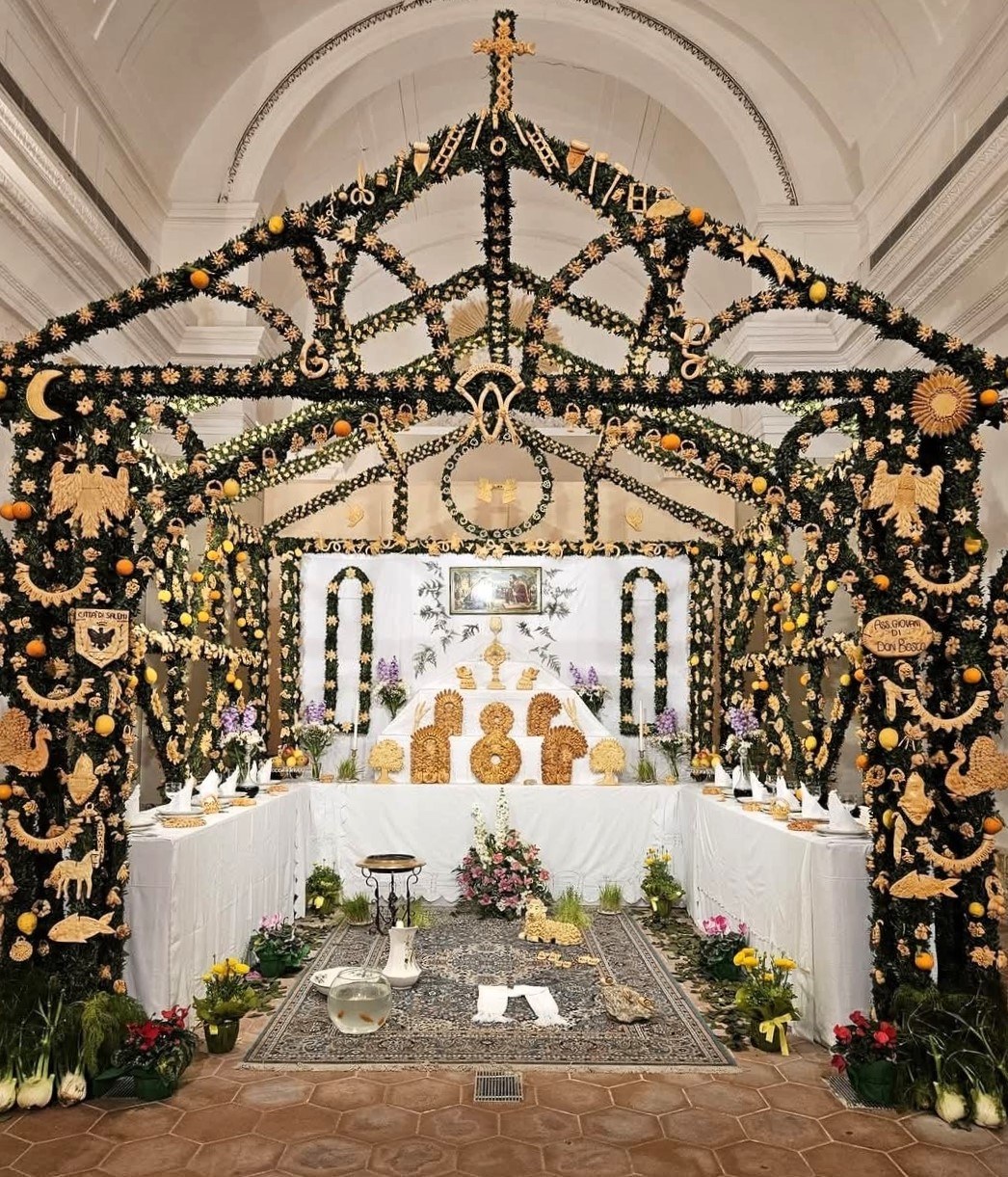
March 19 — fixed every year — is the year’s most distinctive Sicilian feast and one many travellers don’t know exists. In Salemi (Trapani province) families build huge cocce — multi-tier altars piled with sculpted ritual breads, oranges, lemons, fava beans, laurel and aromatic boxwood — and invite neighbours, the elderly and the poor to share a long lunch in front of them; in many east-Sicilian towns including Catania, Acireale and the Etna villages, vampe (huge street bonfires of olive prunings and pallets) are lit on the night of March 18-19 and chestnut roasts and improvised dinners gather around them. Pasticcerie sell sfincia di San Giuseppe (a fried leavened dough piped with sweet ricotta) and zeppole di San Giuseppe (a choux ring with cream and amarena cherry); a fava bean kept in your pocket through the year is said to mean you’ll never be broke.
Effems · CC BY-SA 4.0
International Women’s Day (8 March) and the mimosa
March 8 is the Festa della Donna: street vendors sell sprigs of mimosa from morning, men give them to mothers, daughters and partners, and many trattorie offer small mimosa-themed menus or aperitivi. It’s the only day of the year when mimosa is the everyday Italian flower, and a small detail that gives a March trip a date-stamp impossible to fake from photos — if you walk into Pescheria in Catania on March 8 the entire fish market is yellow.
Holy Week / Settimana Santa
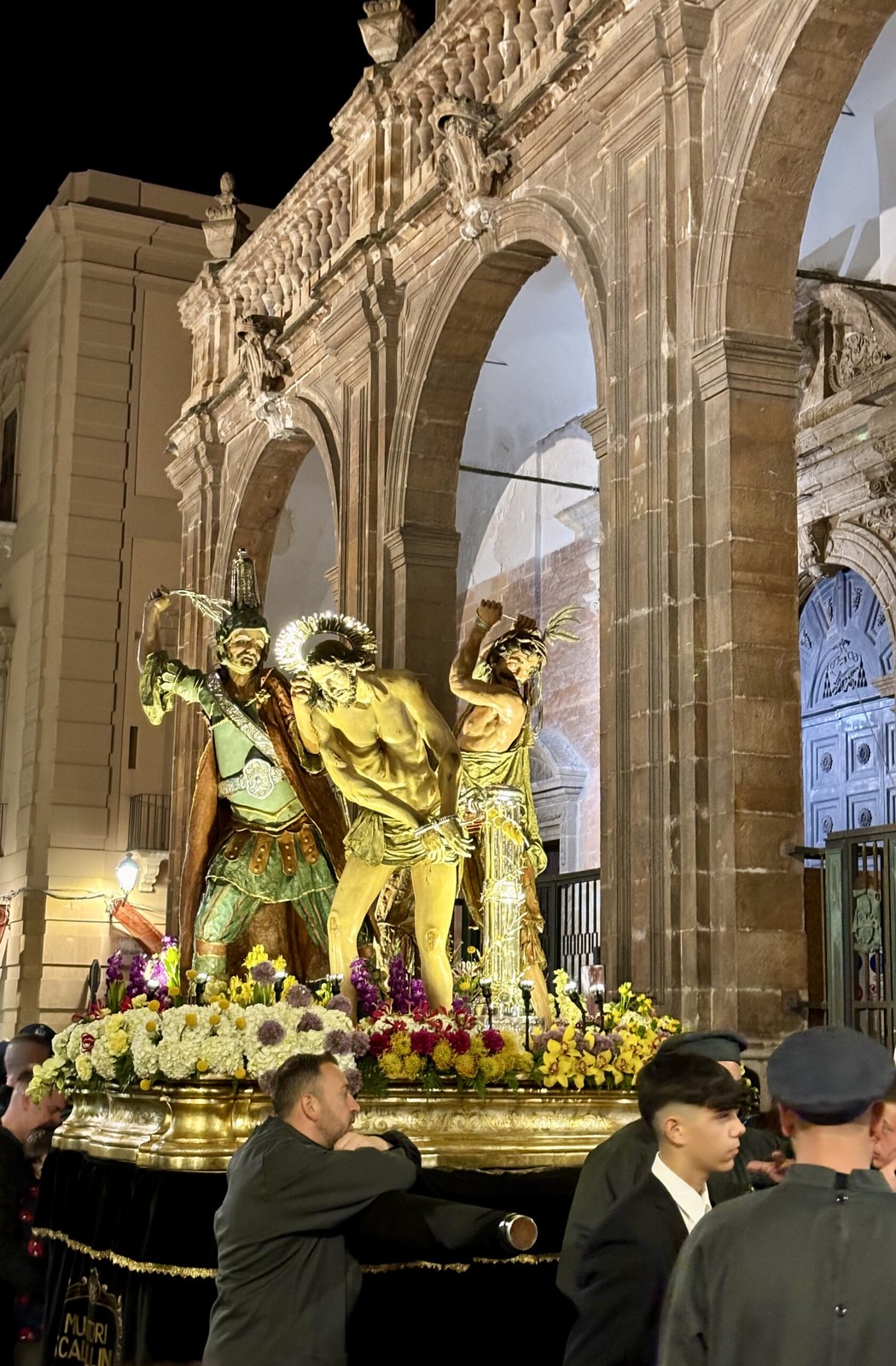
Holy Week begins on Palm Sunday: in 2027 it falls on March 28, in 2028 on April 9, in 2029 on March 25. When it falls in March, the late month fills with processions and the towns in question fill with domestic visitors. The headliner is the Misteri di Trapani — a single procession of 20 wooden sculptural groups, dating from 1612, that leaves the Chiesa del Purgatorio on Good Friday afternoon and returns at dawn on Holy Saturday: 18 hours in continuous slow motion through the city, the longest religious procession in Italy. Equally striking are the Real Maestranza in Caltanissetta (Holy Wednesday and Good Friday with the Black Christ), the hooded confraternities of Enna (around 24 confraternities crossing the Castello and the Duomo on Good Friday), the Marsala Misteri on Maundy Thursday, and the cymbal-led Diavolata of Adrano (Easter Sunday). Verify dates each year: book accommodation in Trapani 8-10 weeks ahead.
DarioGrima · CC BY-SA 4.0
Spring foods — blood oranges, fava, artichokes, Easter sweets
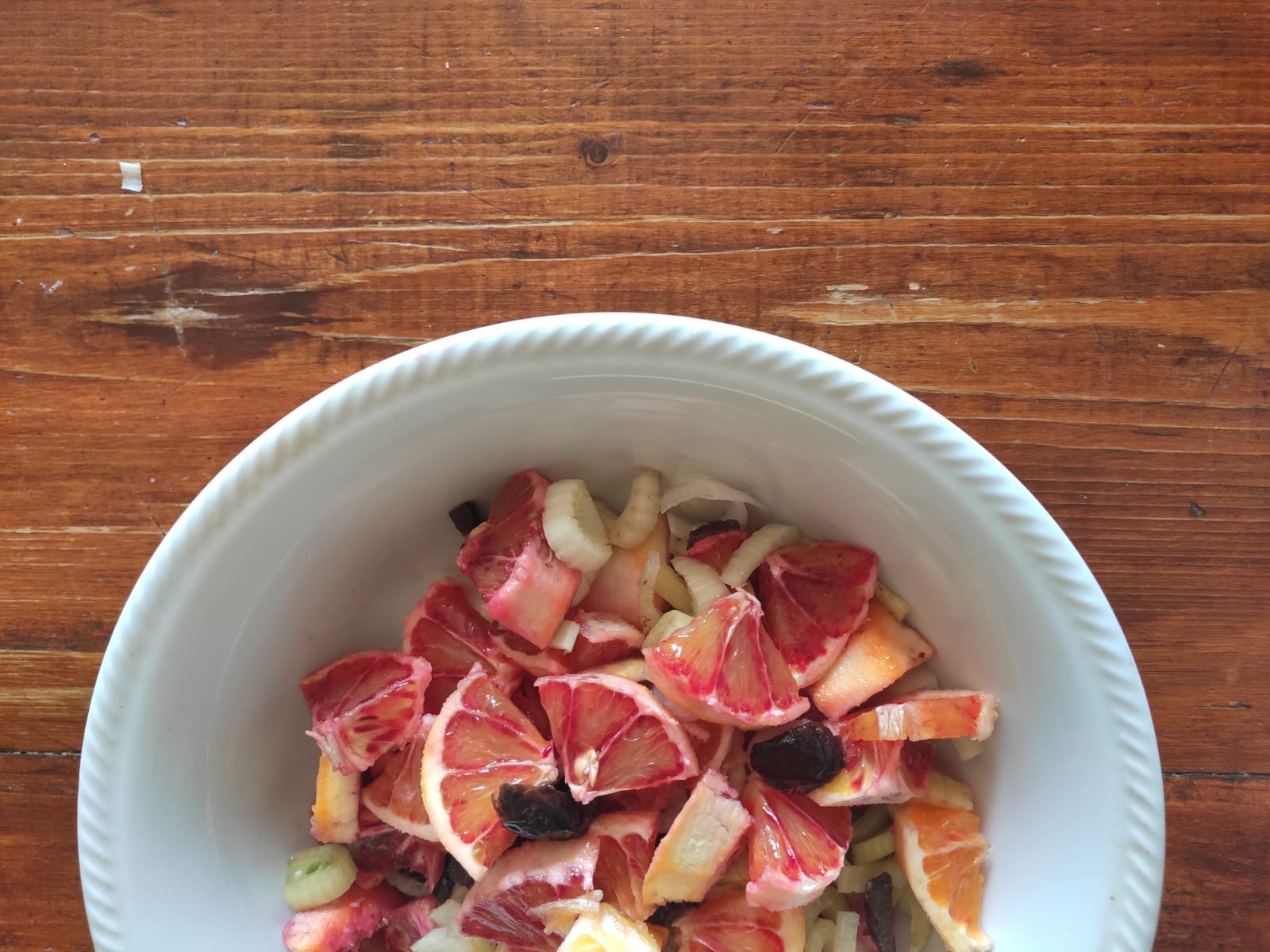
March is the peak month for Sicilian blood oranges (Tarocco and Moro varieties from the IGP Plain of Catania) — deep red flesh, intense, slightly raspberry-toned juice, and the year’s best granita di arancia rossa in any pasticceria. Fresh fava beans appear in markets through the month, paired with pecorino on March 19; wild asparagus shows up at Sunday markets in the Etna foothills; artichokes (carciofi violetti) are at peak. Easter sweets begin appearing in pasticcerie from mid-March: cassata siciliana (sponge with ricotta, candied fruit and frosted marzipan), pupi di zuccaro (sugar dolls), agnellini di pasta reale (marzipan lambs) and the Easter buccellato ring of the Madonie villages.
Oliviero Scalia · CC BY-SA 4.0
March events and festivals in Sicily
The March calendar in Sicily packs the almond blossom, carnival, San Giuseppe and Holy Week into roughly four weeks. The list below covers the main events; some dates shift each year with Easter, others are fixed.
EndrexSoft · CC BY-SA 4.0
- Sagra del Mandorlo in Fiore — Agrigento, last days of February into the first week of March (verify the year’s dates with visitsicily.info). Folkloric parades, costumes from international groups, free outdoor events in the Valley of the Temples.
- Carnival of Acireale — ending Martedì Grasso (year-dependent). Paper-mâché floats parade through Piazza Duomo and Corso Umberto.
- Carnival of Sciacca — same window as Acireale, ending Shrove Tuesday. Around 200.000 visitors per edition; brass bands and decorated floats.
- International Women’s Day (Festa della Donna) — March 8, fixed. Mimosa sprigs sold streetwide; mimosa-themed restaurant menus.
- Festa di San Giuseppe (St Joseph’s Day) — March 19, fixed. Vampe and tavolata in Salemi, sfincia and zeppole in pasticcerie across the island.
- Spring Equinox — March 20 or 21. The official start of astronomical spring; daylight crosses 12 hours.
- Festa di San Benedetto — March 21, Catania. Lower-key parish feast in the historic centre.
- Palm Sunday / Domenica delle Palme — year-dependent (March 28 in 2027, fall in March 2030 and 2027 or in April depending on the year). Olive branches blessed in churches; processions of confraternities in Trapani, Enna and Marsala.
- Misteri di Trapani — Good Friday into Holy Saturday (year-dependent). 18-hour, 20-group procession.
- Caltanissetta Real Maestranza — Holy Wednesday + Good Friday (year-dependent). Master-craftsmen procession + Black Christ procession.
- Marsala Misteri — Maundy Thursday (year-dependent). Live tableaux Holy Week procession.
- End of Etna ski season — late March, snow-dependent. Funivia dell’Etna at Nicolosi (south) and the Linguaglossa lifts (north) typically close in the last week.
Best places to visit in Sicily in March
Sicily in March rewards a base-and-spoke trip more than a circumnavigation: the daylight, the rain windows and the off-peak savings all favour a 7-10 night stay in Catania or Palermo with one or two day trips. The places below are the ten that best deliver in March; we list Catania first as our recommended base, then a circuit you can build around it.
Need a concrete plan to map onto these recommendations? Our Sicily 5-day east-coast plan from Catania covers Etna, Taormina, Syracuse and Val di Noto from a single base — a perfect fit for the mild March weather and lower spring crowds.
Agrigento and the Valley of the Temples
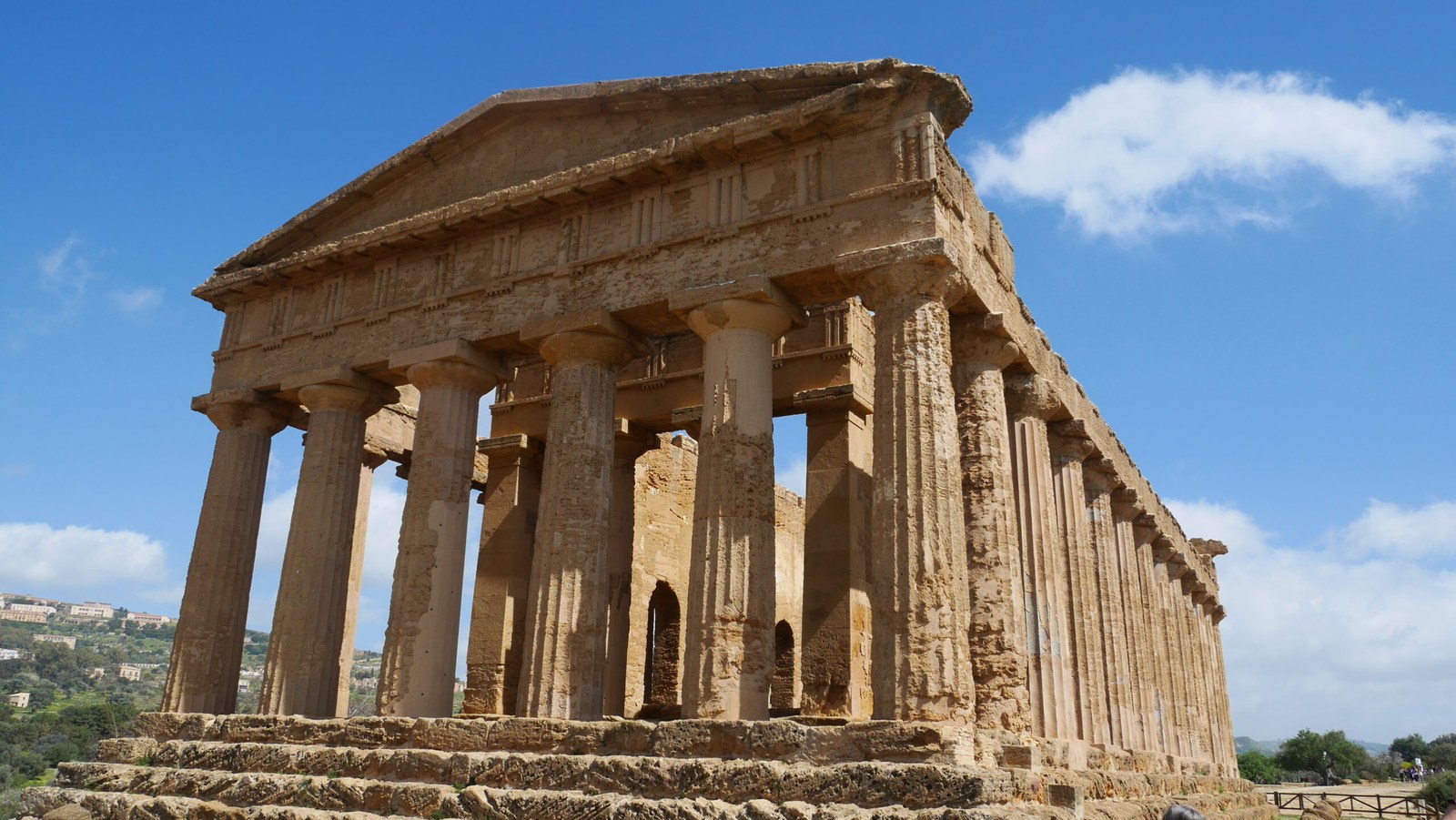
The single best place to be in Sicily in March. Eight Greek temples, 1.300 hectares, almond petals on the temple steps, wildflowers (poppies, Sicilian snapdragons, yellow oxalis) carpeting the slopes — and around 50 visitors a day on a March weekday against more than 4.000 in August. The Tempio della Concordia is the best-preserved Doric temple in the Mediterranean. Combine with the Mandorlo festival if your dates align, allow a half day at minimum.
Ed Yourdon · CC BY 2.0
Catania
The east-coast base. Off-season 50-60% savings, mild coastal climate, Pescheria fish market in full swing, and a 1-hour driving radius reaching Etna, Taormina, Syracuse, Modica and the baroque towns. Walk Via Etnea, the black-lava-and-white-baroque Piazza del Duomo, and the Castello Ursino at golden hour. The blood-orange harvest is at its peak in the open markets along Via Manzoni.
Palermo
The west-coast base. Walk the medieval food markets — Ballarò, Vucciria, Capo, totalling roughly 8 km of street stalls when joined — visit the Cattedrale and the Cappella Palatina mosaics, and take a 10-km bus or taxi to the Cathedral of Monreale (€15 ticket; the most extraordinary Norman-Byzantine mosaics in Italy) or a 1-hour train to Cefalù.
Syracuse and Ortigia
The Greek heart of Sicily. The Greek Theatre at the Neapolis Park (capacity 15.000) is empty in March — the INDA classical theatre season opens in early May — and Ortigia island, 1.2 by 0.7 km, fits the Apollo Temple, the Aretusa Spring, the Cathedral built into a temple of Athena, and the seafront promenade in a single half-day walk.

Esculapio · CC BY-SA 4.0
Mount Etna
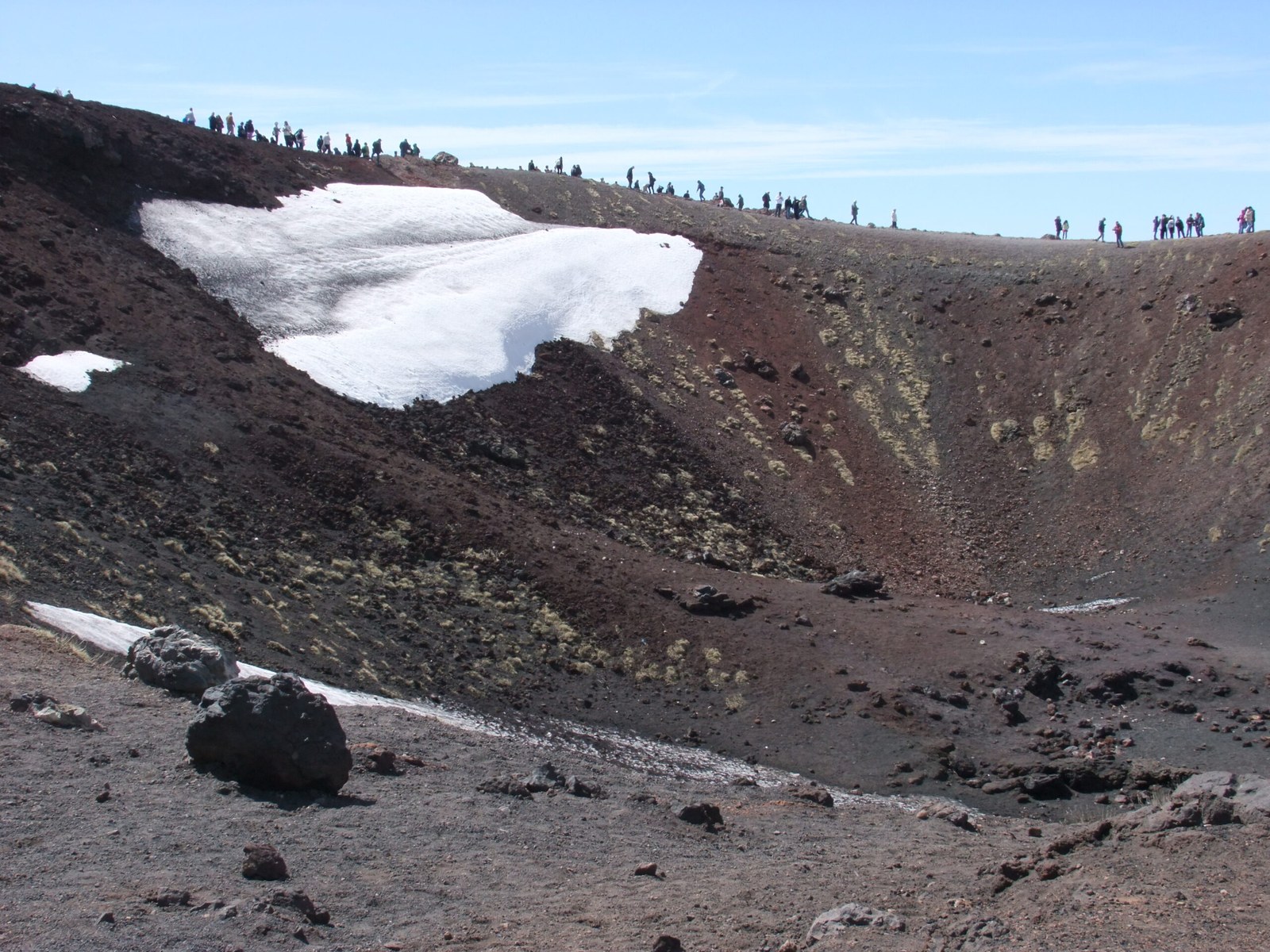
Sicily’s 3.357 m / 11.013 ft active volcano keeps a snow cap above 1.800 m through March; the Funivia dell’Etna at Nicolosi (south slope) and the Linguaglossa lifts (north slope) run their last weeks of skiing, while the lower lava-flow trails and the Silvestri Crater at 1.980 m are walkable and largely empty. Authorised guides can take you to roughly 2.743 m / 9.500 ft in March; the summit cones (3.357 m) are off-limits.
Dror Feitelson · CC BY-SA 4.0
Taormina
The Greek Theatre with Etna for backdrop, Corso Umberto walking, and a Castelmola hilltop hike up the medieval stair-path. Off-season prices apply through March in 2027 except the last week, when Easter sets in.
Cefalù
A 1-hour train from Palermo. The Norman Cathedral with its UNESCO mosaics, the medieval fishing village, and the La Rocca hike (1.5 hours, 270 m climb) to the ruins of an ancient castle and one of the most photographed views on the island.
Val di Noto baroque towns
The eight UNESCO baroque towns of south-eastern Sicily — Noto, Modica, Ragusa Ibla, Scicli, Caltagirone, Catania (already covered), Militello and Palazzolo Acreide — were rebuilt after the 1693 earthquake in a coherent honey-limestone style. March is when you walk them: empty, soft-light, and with the blood-orange granita just out at every bar.

Effems · CC BY-SA 4.0
Marsala wine region and the Stagnone Lagoon
The west coast: salt pans and old windmills along the Stagnone lagoon (averaging just 1 m deep), and the Phoenician archaeological park on Mozia island, reachable by a 5-minute boat and walked in a 2-km loop. March is when off-season cantine in Marsala open without booking surcharges.
Aeolian Islands — Salina and Filicudi
The minor Aeolian islands are at their quietest. Hike Monte Fossa delle Felci (962 m, the Aeolian high point, on Salina) or Filo dell’Arpa on Filicudi (an extinct volcano crater rim). Ferries from Milazzo run on a reduced winter schedule but daily; the capers fields and Malvasia vineyards are still bare and won’t flower until June.
Things to do in Sicily in March
March is a sightseeing and walking month, not a beach month. The list below sits at the intersection of weather, off-season opening hours and local seasonality — the activities that only work in early spring, plus the year-round headliners at their March-best.
- Walk the Valley of the Temples among almond petals and wildflowers — allow at least half a day; opening 8:30 to sunset.
- Catch the last ski runs on Etna — Nicolosi south and Linguaglossa north, day pass €30-45, season usually closes the last week of March.
- Hike Etna’s lava-flow trails with snow vistas — the Sapienza Refuge area at 1.900 m, hikers limited to 2.743 m / 9.500 ft in March, Silvestri Crater accessible.
- Time your trip for the Almond Blossom Festival in Agrigento — free outdoor events, week-long, peak weekend.
- Cycle the Madonie or the Belice greenway — the converted railway path Castelvetrano-Selinunte runs 18.7 km, paved and flat, with sea views the whole way.
- Taste blood oranges, sfincia di San Giuseppe and fresh fava beans — March is peak harvest for the IGP Plain of Catania red oranges.
- Visit the great archaeological sites crowd-free — Selinunte (270 hectares, the largest Greek park in Europe), Segesta (a single Doric temple with 30 km of visibility from the ridge), Villa Romana del Casale (UNESCO mosaics), Neapolis Park in Syracuse.
- Watch a Holy Week procession — Trapani Misteri (Good Friday), Caltanissetta Real Maestranza (Holy Wednesday and Good Friday), Enna confraternities (Good Friday), Marsala Misteri (Maundy Thursday).
- Tour Etna DOC wineries with snow-capped backdrop — March is off-season for cantine on the volcano’s slopes; tastings are typically without booking surcharge.
- Take the boat to Mozia across the Stagnone salt lagoon — combine with the salt pans, the windmills and a Marsala wine tasting.
What to wear and pack for Sicily in March
Layer for 16°C day to 9°C night, pack a waterproof shell with a fitted hood (the Tramontana wind shreds ponchos), walking shoes with grip, and one warm mid-layer for evenings or Etna. A light scarf, a smart-casual outfit for Easter dinners, and SPF 30 cover everything else.
The daily outfit
A T-shirt with a mid-weight sweater, light trousers or jeans, walking shoes with grip, and a scarf for evening. By the second half of the month a single base layer plus the sweater is enough on a sunny coast day. Inland, add light gloves and a beanie for early-morning starts (Mandorlo, archaeological sites).
Waterproof shell
A proper rain jacket with taped seams and a fitted hood. The Sicilian coastal wind in March — especially the Tramontana on west-coast and exposed archaeological sites such as Selinunte, Segesta and the Valley of the Temples promontory — shreds packable rain ponchos in about 40 seconds. The shell does double duty as a wind layer above 1.500 m on Etna.
Footwear
One pair of walking shoes with grip is non-negotiable: cobblestones and lava-stone alleys in the baroque towns and Catania become slick after a shower. Add one smart-casual pair for Easter dinners or a Holy Week procession. Hiking boots only if you’re going up Etna or doing the Filo dell’Arpa or Monte Fossa delle Felci.
Etna-specific gear
An insulated jacket, warm gloves, weatherproof boots and a thermal base layer. Sunglasses and SPF 30+ are critical: UV climbs sharply above 1.500 m, even when the air feels cold, and the snow reflection multiplies sunburn risk. If you ski, rent at the lift station: it is consistently cheaper than bringing skis on a flight.
Smart-casual outfit for Easter
If your dates touch Easter week, pack one set of smart-casual clothes (a shirt and decent trousers, or a dress) for an Easter lunch reservation; many trattorie expect smart-casual on March 28 to April 4 in 2027 and refuse trainers in dining rooms during Holy Week.
How much does a Sicily March trip cost?
A 7-night Sicily March trip for a couple typically runs €1.000-1.700 outside Easter week — roughly 50-60% less than August. Within Easter week (year-dependent: 2027 March 28–April 4), expect prices to spike 30-50% above March average, particularly accommodation in Taormina, Modica and the Val di Noto.
| Item | Off-peak Mar 1-22 (couple, 7 nights) | Easter week (couple, 7 nights) | August same week |
|---|---|---|---|
| Return flights London-Catania | £100-180 | £200-320 | £260-420 |
| Central apartment Catania | €350-560 | €520-840 | €820-1.300 |
| Compact rental car (7 days) | €140-220 | €200-320 | €280-450 |
| Food and drinks | €280-400 | €340-460 | €340-460 |
| Experiences (Etna day trip + Mandorlo + Holy Week excursion) | €140-280 | €180-320 | €200-380 |
| Total estimate | €1.030-1.700 | €1.490-2.450 | €1.940-3.180 |
Disclaimer: third-party prices (flights, accommodation, car rental, tours) are indicative only and can move 20-40% with lead time, day-of-week and currency. Always verify at the time of booking on the operator’s site.
Off-season savings breakdown
- Flights: -45% versus August on Catania routes from the UK, Ireland, Germany and the Benelux outside Easter week.
- Accommodation: -50-60% on apartments and hotels March 1-22; +30-50% above March average during Easter week.
- Car rental: -50% versus August. Lock in 6-8 weeks ahead for the best rates; Easter week sells out.
- Restaurants: similar pricing year-round; sets and tasting menus are widely available without booking surcharge outside Easter.
Where to stay in Sicily in March
A central apartment in a base city beats a coastal hotel in March: kitchen for blood-orange and fresh-vegetable cooking, comfort on rainy days, laundry for hiking gear, and 50-60% savings over multi-night stays. Catania is our pick — central east-coast, mild coastal climate, good airport links, easy Etna and Val di Noto day trips.
Why an apartment beats a hotel in spring shoulder
- Kitchen for blood-orange juice in the morning, fava beans for dinner, sfincia from the corner pasticceria for breakfast.
- Rainy-day comfort. March’s 24-72-hour fronts pass: a sofa, a kitchen and a balcony with espresso beat a small hotel room.
- Laundry for outdoor clothing — especially after a Sapienza Refuge day or a Mandorlo afternoon in mud.
- Multi-night savings. Five to ten nights in a central apartment in March cost less than half a coastal hotel.
- No breakfast surcharge. Sicilian breakfast (espresso, brioche con tuppo, granita di arancia rossa) is best at a corner bar at 1-2 euros per head.
Best base cities for March
Catania is the primary east-Sicily base: airport with direct UK and Irish flights, central Mediterranean climate, and a 1-hour driving radius reaching Etna, Taormina, Syracuse, Modica and the Val di Noto. Palermo is the right base if your trip is west-side weighted (Mandorlo, Monreale, Segesta, Cefalù, Erice, Marsala) and you want easy access to the Almond Blossom festival in Agrigento. Syracuse-Ortigia works for a baroque-and-Greek itinerary built around the Val di Noto. Smaller bases like Taormina work for a slow, no-car March week, though several Taormina hotels reopen only in mid-March.
Catania as March base — why it works
The case for Catania in March is straightforward:
- Central location: 45 min to Taormina, 60 min to Syracuse and Ortigia, 90 min to Modica and Ragusa Ibla, 75 min to Etna’s south slope at Nicolosi, 2 hours to the Valley of the Temples and Mandorlo Festival.
- Coastal climate buffer: 1-2°C milder evenings than inland — useful in the first half of March, when interior towns drop to 4-6°C at night.
- Airport on doorstep: 7 km from the historic centre, well-connected through March on direct UK, Irish, German and Dutch routes.
- Walkable centre: Via Etnea, Piazza Duomo with the Liotru and the Pescheria fish market, Castello Ursino — all within a 25-minute walk of each other.
- Food density: Pescheria is at peak (March is the best month for sea bream and red mullet); blood-orange granita everywhere; the first artichokes; sfincia di San Giuseppe in pasticcerie from mid-month.
- Easter base advantage: 90 minutes to Caltanissetta Real Maestranza, 2 hours to Enna confraternities, 3 hours to Trapani Misteri — all reachable on a Holy Week day trip without re-basing.
If you want a central, well-equipped apartment within walking distance of Piazza Duomo and Via Etnea — with a proper kitchen, washing machine, and March off-peak rates that beat any hotel — you can browse our three units at apartments in Catania for March 2027.
How to get to Sicily in March
Two international airports serve Sicily: Catania-Fontanarossa (CTA) on the east coast and Palermo-Falcone Borsellino (PMO) on the north-west. For an east-Sicily trip Catania is the obvious choice; for a west-Sicily trip Palermo. A small third airport, Comiso (CIY), serves the south-east with reduced flight frequency in March.
Flights from the UK, Ireland and the US
March flight prices typically run 40-50% lower than August in the off-peak window (March 1-22) and surge during the Easter window. From the UK, Catania has direct flights from London (Gatwick, Luton, Stansted, Heathrow), Manchester, Bristol and Edinburgh. From Ireland, Dublin runs direct routes year-round. From the US, no non-stop flights operate, but one-stop connections via Rome, Munich, Frankfurt or London are competitive on March off-peak pricing — typical UK→Catania £100-180 return, US→Catania $400-680 return mid-week with 6-8 weeks lead time. Carriers include Ryanair, easyJet, Wizz, Vueling, ITA Airways, British Airways, Lufthansa and Aer Lingus. Easter-week seats sell out 8-10 weeks ahead.
Arriving and getting around
Catania airport is 7 km from the historic centre; the AMT Alibus runs every 25 minutes (€4 single, ~25 minutes), or a taxi is a fixed €25. For day trips, a rental car is recommended unless you’re staying in Catania or Taormina without leaving the urban corridor. Be aware of ZTL (limited traffic) zones in historic centres — Taormina, Syracuse-Ortigia, Catania, Modica, Ragusa Ibla all have them, and the cameras work. For parking strategy in Catania (where ZTL applies and street parking is paid), see our where to park in Catania guide.
Ferry and train from mainland Italy
The mainland-to-Sicily ferry crossing operates year-round at Villa San Giovanni → Messina (20-minute crossing, every 20-40 minutes). Trenitalia direct trains from Rome to Catania-Syracuse-Palermo are loaded onto train ferries and continue to Sicily, with onward rail service on the island. Daytime road trip from Rome to Catania is roughly 9 hours including the ferry; from Naples 6 hours. Aeolian Islands ferries from Milazzo run on lighter winter schedules but operate daily.
For a deeper winter alternative with Etna ski reliability and the year’s deepest off-peak prices, see our Sicily in January guide.
For the early-summer months see our Sicily in June guide (Taormina Film Festival mid-June, swimming season opening) and our Sicily in July guide (Festino di Santa Rosalia, Etna optimal summit, sea 24-26°C).
Frequently asked questions about Sicily in March
Can you swim in Sicily in March?
Only on warm-spell days for cold-tolerant swimmers. The sea around Sicily averages 14-15°C in March — clearly cool, not refreshing. The east coast (Catania, Taormina, Syracuse) and south-east (Marina di Ragusa, Fontane Bianche) are marginally warmer than the west. Most beach lidos are closed and there are no lifeguards. A swimsuit is optional; plan March as a cultural and sightseeing month.
Does it snow in Sicily in March?
On Mount Etna, yes — reliably above 1.800 m through March, with the upper cone snow-capped through early April. Both Etna ski resorts (Nicolosi south, Linguaglossa north) typically run their last weeks of skiing and close in the last days of March. On the rest of the island, no — coastal cities receive snow only in exceptional cold spells once every 5-10 years. The Madonie and Nebrodi mountains see occasional dustings above 1.000 m. Coastal lows stay above freezing.
Is Sicily empty in March?
Quieter than at any other time of year except January and February. The tourist crowd index is roughly 3/10 in March off-peak versus 10/10 in August; rises to 6-7/10 during Easter week. Major sites (Valley of the Temples, Taormina Greek Theatre, Ortigia, Cappella Palatina, Selinunte) feel near-empty on weekdays in the first three weeks; the Mandorlo Festival, the San Giuseppe altars in Salemi and the Holy Week processions are the busiest single windows.
Which is the warmest part of Sicily in March?
The south-east coast — Ragusa, Syracuse, Marina di Modica, Marzamemi, Pozzallo — averages 1-2°C warmer than the rest of the island, with daytime highs of 16-18°C in the second half of March. The east coast (Catania, Taormina) is a close second. Inland and the Etna foothills are noticeably colder, with single-digit nights through the first half. The west coast (Palermo, Trapani) tracks 0.5-1°C cooler than the east on average and is windier.
Should I visit Sicily in March or April?
Choose March if you want the deepest off-peak prices outside Easter, the almond bloom, the Mandorlo Festival, San Giuseppe traditions and a quiet Valley of the Temples. Choose April if you want 2-3°C warmer days, Easter celebrations on the calendar, Mediterranean light at peak, and the start of beach-weather travel in the second half. Many travellers split: arrive in late March to catch a Holy Week procession, stay through Easter, then enjoy the calmer second half of April. For the full April picture — weather by week, Easter calendar 2026-2030, Holy Week processions, Cerda Artichoke Festival and Liberation Day — see our Sicily in April guide. For an autumn shoulder alternative with the Cous Cous Fest, Etna vendemmia and a 25°C sea, see our Sicily in September guide.
Is Easter a good time to visit Sicily?
Yes if you want the most theatrical religious processions in Italy — Trapani Misteri (Good Friday, 18 hours, 20 sculptural groups), Caltanissetta Real Maestranza, Enna confraternities, Marsala Misteri — and authentic Sicilian Easter cooking (lamb, marzipan agnellini, cassata). Not ideal if you want the lowest prices: Easter week is the year’s first full pricing surge, with accommodation +30-50% and restaurants requiring 6-8 weeks of lead time. Book Trapani 8-10 weeks ahead and Taormina 6-8 weeks ahead.
The information in this guide was correct at the time of writing. Data can change from season to season without notice: before you travel, always check the official channels and websites for updates. We review this guide periodically, but the official channels are always the authoritative source. We also cannot guarantee that the suggested routes or the attractions described are always reachable or accessible: roads, trails and sites may be closed, damaged, altered or unsafe. Assessing the practicability and safety of itineraries and attractions always remains your own responsibility.