

Catania, Sicily, is a port city on the island’s east coast in southern Italy, sitting at the foot of Mount Etna — Europe’s tallest active volcano at 3,357 metres. Founded by Greek colonists in 729 BCE, it faces the Ionian Sea roughly 60 km south of Taormina and 210 km east of Palermo. With a population of about 300,000 (metro area over 1 million), it is Sicily’s second-largest city and the island’s main air gateway through Fontanarossa Airport. Rebuilt in dramatic Baroque style after the catastrophic 1693 earthquake, Catania today is raw, lively and unmistakably Sicilian — a city of black lava-stone palaces, open-air fish markets and Etna-view rooftop bars. We live here, and this guide covers everything you need to know: where exactly Catania is, how to read it on a map, its 2,700 years of history, what makes it worth visiting, and how to get here.
Once you know where Catania sits, the next decision is what to actually do on the ground: see our Catania holiday guide 2026 for itineraries, where to stay, how to get from the UK and how many days you need.
Where exactly is Catania, Sicily?
Catania sits at 37.50°N, 15.09°E on Sicily’s Ionian coast, directly south of Mount Etna. It is 60 km south of Taormina, 80 km north of Syracuse, and 210 km east of Palermo — making it the natural hub for exploring all of eastern Sicily.
Look at a map of Italy and find the football-shaped island at the toe of the boot: that is Sicily. Catania is on the island’s east coast, roughly halfway between the northeastern tip (Messina, where the ferry crosses from the mainland) and the southeastern corner (Syracuse). The city occupies the broad Piana di Catania, Sicily’s largest plain, which stretches inland from the coast toward the slopes of Etna.
Dispe · CC BY-SA 4.0
What makes Catania’s location exceptional is the volcano. Mount Etna rises 3,357 metres directly to the north, and on a clear day its summit is visible from every rooftop terrace in the city. The volcano shapes everything here: the soil of the surrounding vineyards, the black basalt stone used to build the Baroque churches, even the local character — Catanesi are famously resilient, having rebuilt their city at least seven times after eruptions and earthquakes.
The city is the capital of the Metropolitan City of Catania, a province of 58 municipalities with a combined population of over 1 million. Despite being the second city of the island after Palermo, the Catania metropolitan area is actually more densely populated, making it one of the largest urban agglomerations in southern Italy.
Is Catania in Sicily or Italy?
Both. Catania is a city in Sicily, and Sicily is an autonomous region of Italy. Sicily is the largest island in the Mediterranean, lying off the tip of the Italian peninsula; the island is politically and culturally Italian. So when someone asks “is Catania in Sicily or Italy?”, the precise answer is that Catania is in Sicily, which is part of Italy. Catania is Sicily’s second city (after Palermo, the regional capital) and serves as the economic and transport hub for eastern Sicily.
Distances from Catania
| Destination | Distance | By car | By train |
|---|---|---|---|
| Taormina | 60 km | 55 min (A18) | 50 min (Trenitalia) |
| Syracuse (Ortigia) | 80 km | 1 h (E45) | 1 h 15 min |
| Ragusa / Modica | 110 km | 1 h 30 min | 3 h (via Syracuse) |
| Messina | 95 km | 1 h 15 min (A18) | 1 h 30 min |
| Palermo | 210 km | 2 h 30 min (A19) | 3 h (Trenitalia IC) |
| Mount Etna (Rifugio Sapienza) | 35 km | 50 min (SP92) | — (bus AST seasonal) |
Catania on the map: where it sits in Sicily
The interactive map below shows Catania’s position on Sicily’s east coast, key reference cities (Taormina, Syracuse, Palermo, Messina), Fontanarossa Airport, and the summit of Mount Etna. Zoom in to explore the old town centre.
Catania occupies a strategic spot at the intersection of Sicily’s two main motorways: the A18 (Messina–Catania, linking to Taormina) and the A19 (Catania–Palermo, crossing the interior). The Fontanarossa Airport (CTA), just 7 km south of the centre, is Sicily’s busiest — handling over 10 million passengers a year — and the primary entry point for international visitors to eastern Sicily.
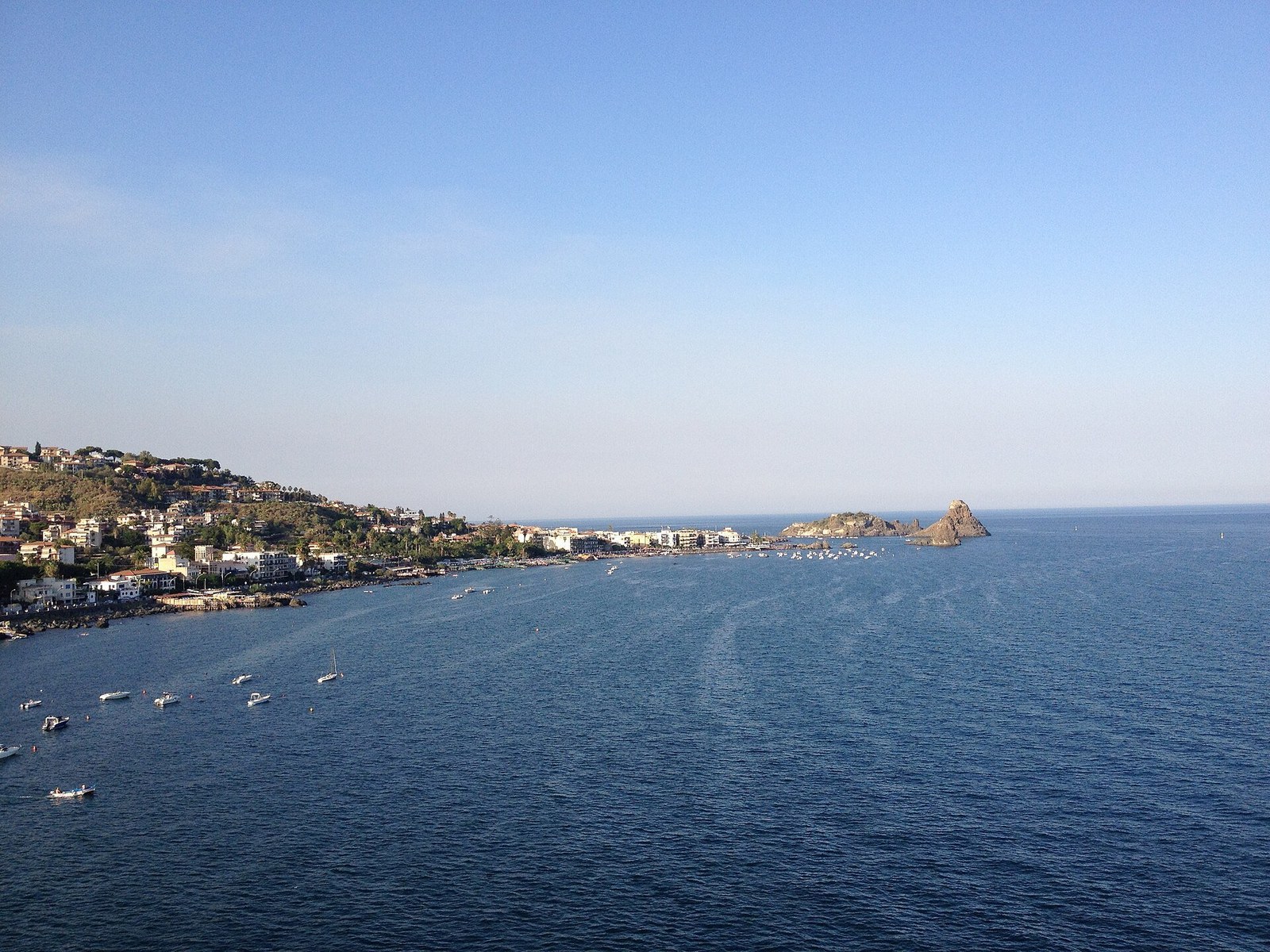
Geographically, the city sits on a gently sloping lava plain that descends from Etna’s southern flanks to the Ionian shore. The Riviera dei Ciclopi — a stretch of dramatic basalt sea stacks tied to the myth of Odysseus and the Cyclops Polyphemus — begins just 10 km north at Aci Trezza and Aci Castello. To the south, the long sandy beach of La Plaja extends toward the Simeto river estuary.
What is the history of Catania?
Catania was founded in 729 BCE by Greek colonists from Chalcis, became a Roman colony in 263 BCE, endured Arab, Norman and Spanish rule, was nearly wiped out by Mount Etna’s 1669 eruption and the 1693 earthquake (magnitude 7.4, 16,000 dead), then rose again in Sicilian Baroque splendour — earning UNESCO World Heritage status in 2002. Over 2,700 years, the city has been destroyed and rebuilt at least seven times.
Greek and Roman Catania (729 BCE – 5th century CE)
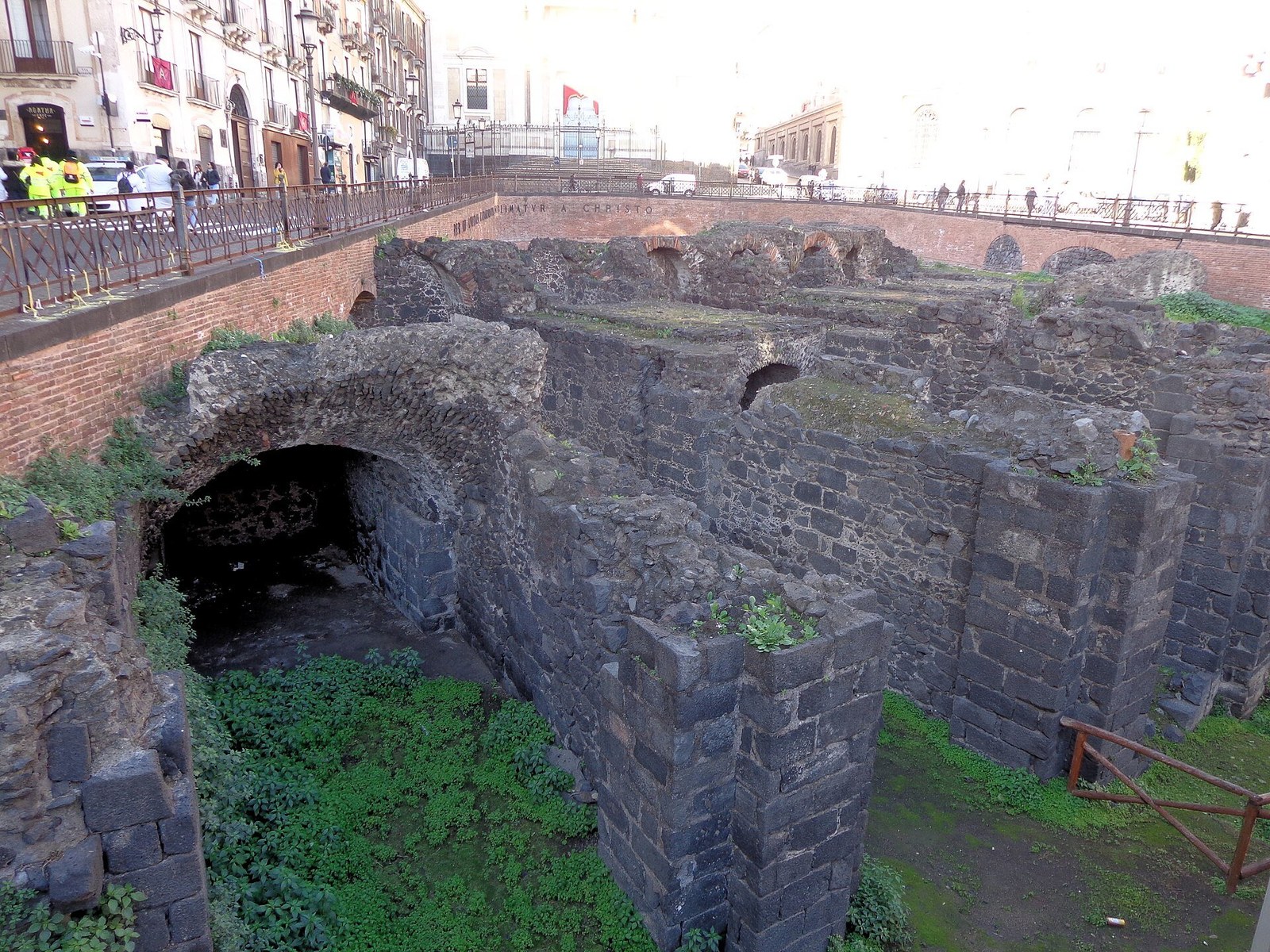
Chalcidian Greeks from the island of Euboea founded Katáne in 729 BCE, making it one of the oldest Greek colonies in Sicily. The tyrant Hieron I of Syracuse deported the population in 476 BCE and renamed the city Aetna, but the original settlers returned within a generation. Under Roman rule from 263 BCE, Catania prospered as a grain-exporting hub: the Roman amphitheatre in Piazza Stesicoro (Sicily’s largest, seating 15,000) and the Greco-Roman theatre near Via Vittorio Emanuele date from this era.
Effems · CC0
From Arab rule to the 1693 earthquake
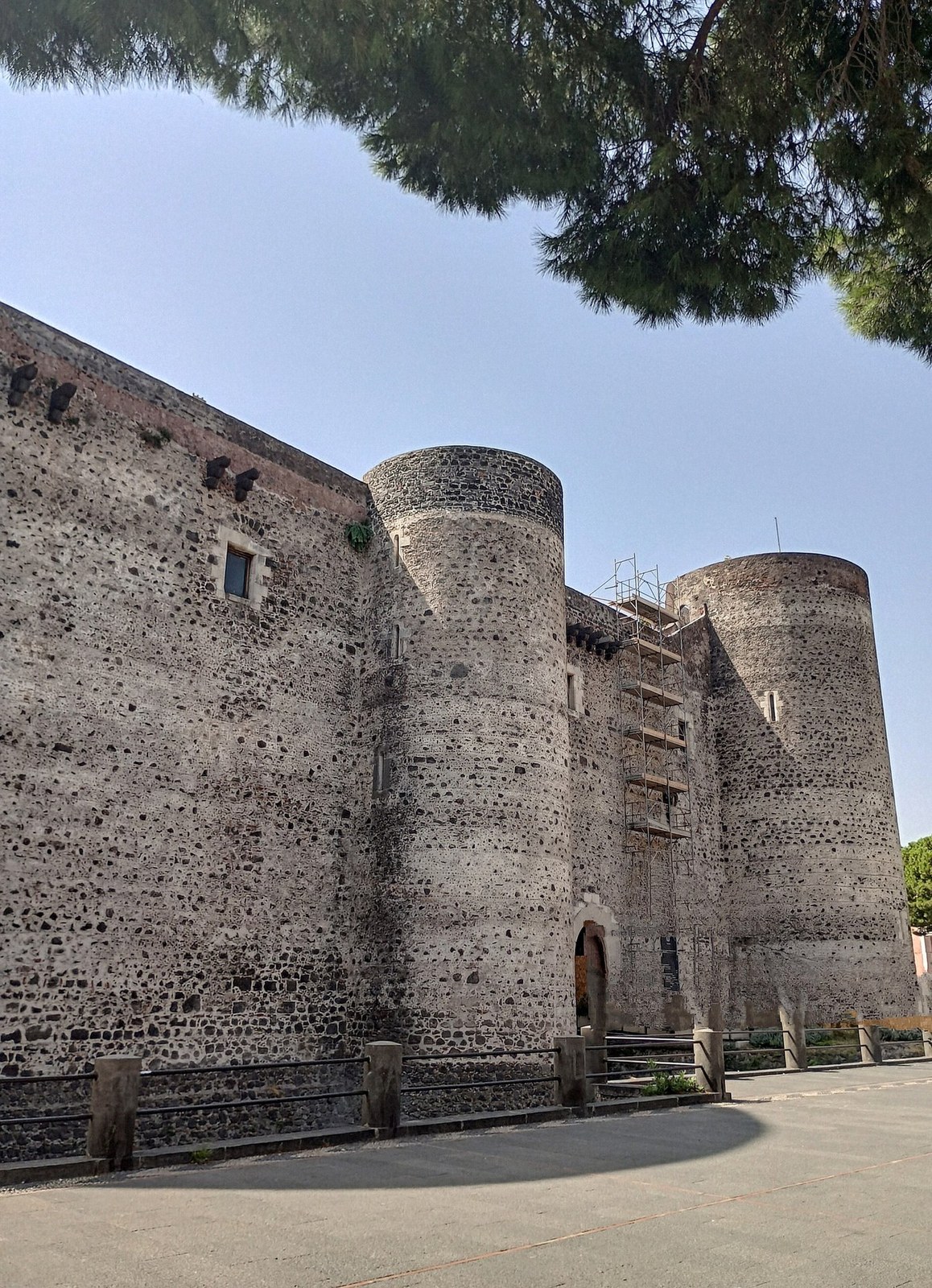
After the fall of Rome, Catania passed through Byzantine, Arab (9th century) and Norman (11th century) hands. The Arabs gave the city its elephant nickname — likely from an ancient lava sculpture — while the Normans founded the Cathedral of Sant’Agata in 1094. Emperor Frederick II built Castello Ursino in 1239 as a coastal fortress; today it sits 500 metres inland because Etna’s 1669 lava flow pushed the coastline seaward.
That eruption was devastating but survivable. The earthquake of 11 January 1693 was not: registering an estimated magnitude 7.4, it killed 16,000 of Catania’s 20,000 inhabitants and levelled virtually every building. It remains one of the deadliest natural disasters in European history.
Jeanne Griffin · CC BY-SA 4.0
Baroque rebirth and modern Catania
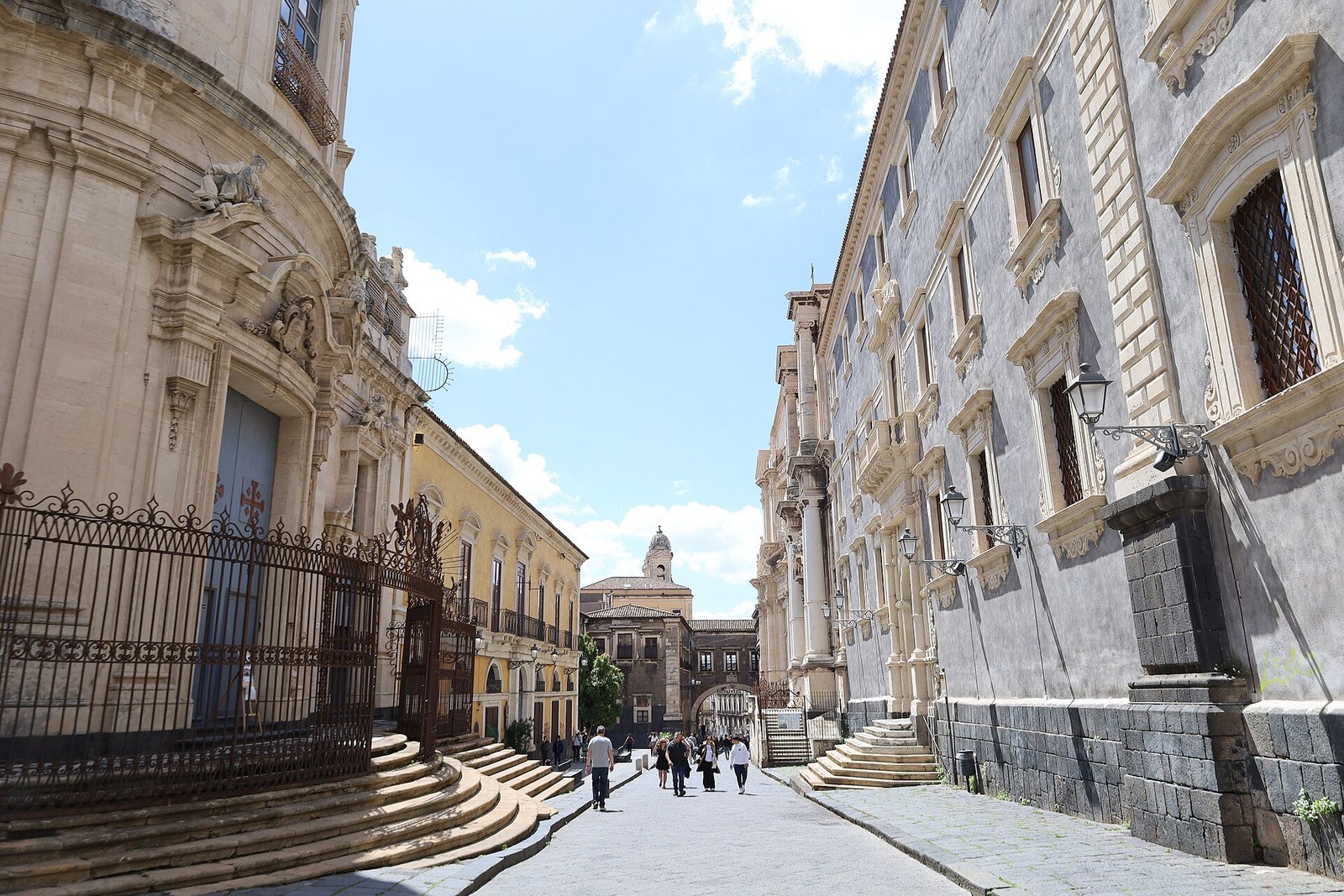
From the rubble of 1693 rose a new city rebuilt in the Sicilian Baroque style that defines Catania today. Architect Giovanni Battista Vaccarini led the reconstruction using the dark basalt lava stone that gives Catania its distinctive black-and-white palette. Via Crociferi, Piazza Duomo, the Monastero dei Benedettini (today a university campus and one of Europe’s largest Benedictine monasteries) — all date from this feverish 18th-century rebuilding. In 2002, UNESCO inscribed Catania’s historic centre as part of the Late Baroque Towns of the Val di Noto.
Antony-22 · CC BY-SA 4.0
In the 19th century, Catania became a hotbed of the Risorgimento, joining unified Italy in 1861. During World War II, Allied bombing in 1943 destroyed much of the port and industrial quarter. Post-war reconstruction turned the city into Sicily’s commercial engine — today Catania is home to the island’s largest university (60,000+ students), a growing tech district dubbed the “Etna Valley”, and a food culture that rivals Naples.
What is Catania best known for?
Mount Etna, Baroque lava-stone architecture (UNESCO), La Pescheria fish market, opera composer Vincenzo Bellini, pasta alla Norma, and the Feast of Sant’Agata — the third-largest Catholic procession in the world.
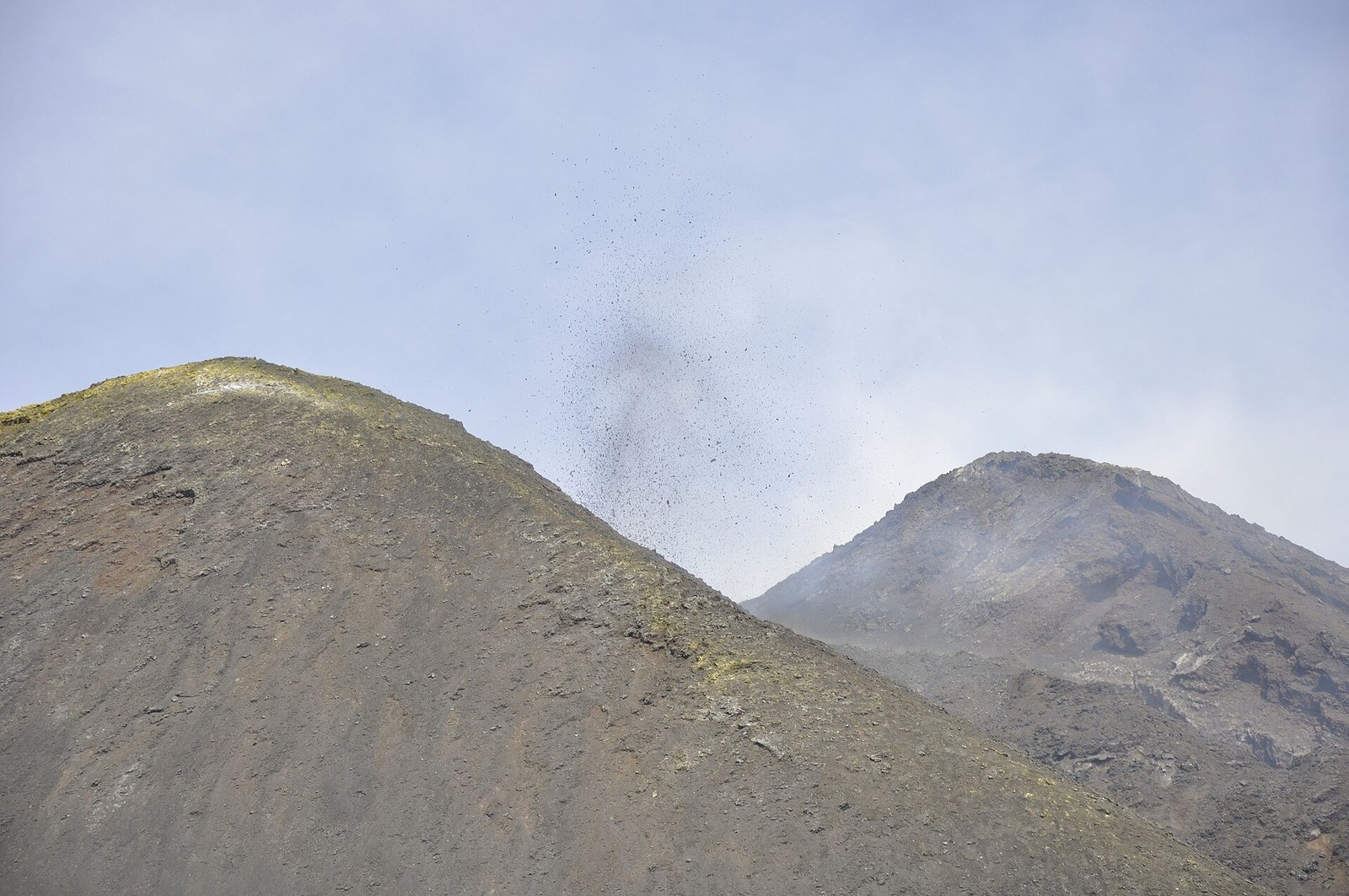
Mount Etna dominates everything. Europe’s tallest active volcano (3,357 m) is visible from every corner of the city and can be reached in under an hour for Etna wine tours, summit crater hikes, or winter skiing. The volcano is both threat and gift: its eruptions destroyed the city repeatedly, but its mineral-rich soils produce some of Italy’s finest wines and pistachios.
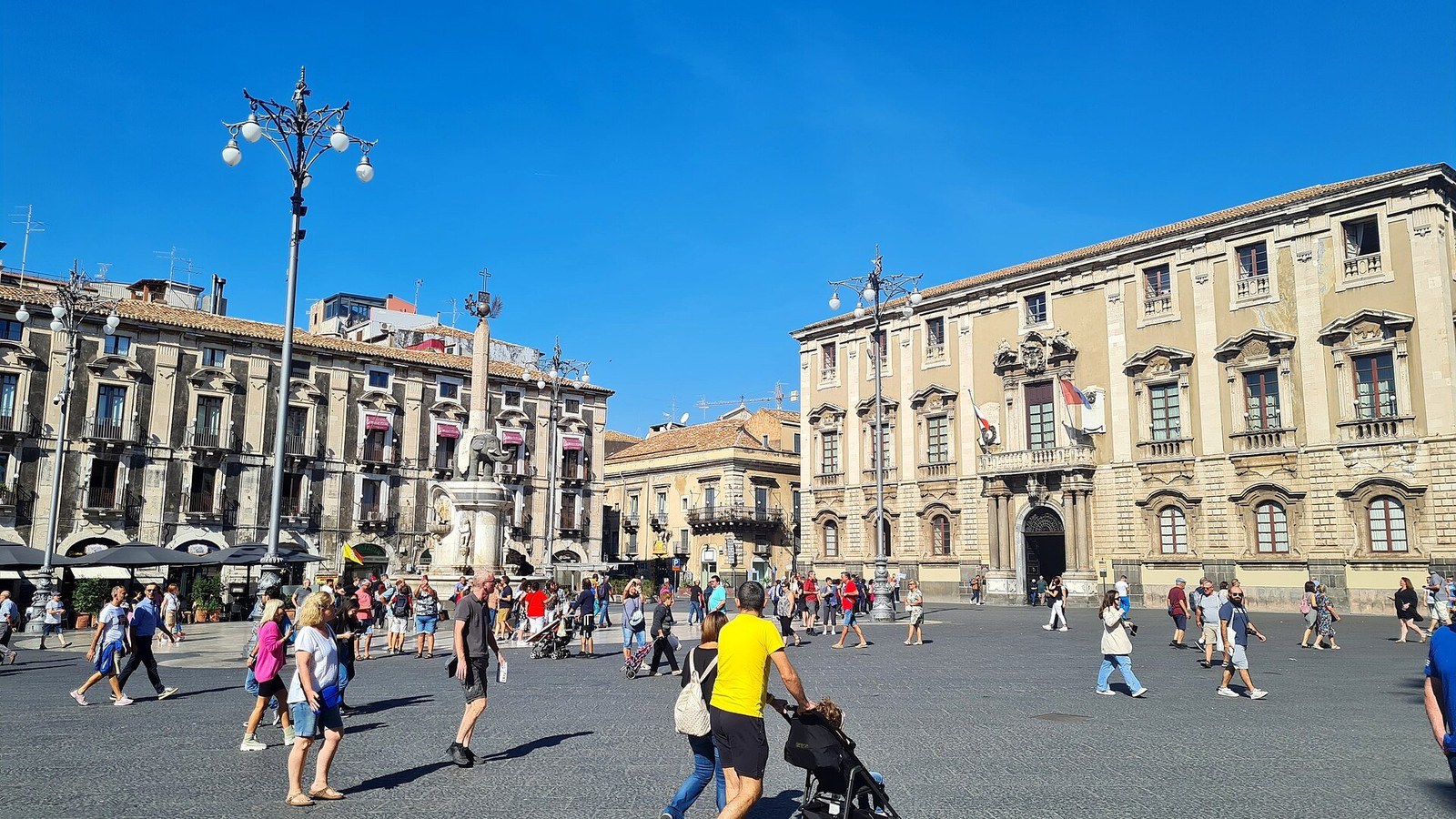
Baroque architecture is Catania’s visual signature. The entire historic centre was rebuilt after 1693 in exuberant late Baroque, using black basalt (from Etna’s lava flows) contrasted with white limestone. Catania’s old town — Via Crociferi, the Duomo, the Benedictini monastery — is a UNESCO World Heritage Site and one of the finest Baroque ensembles in Europe.
Derbrauni · CC BY 4.0
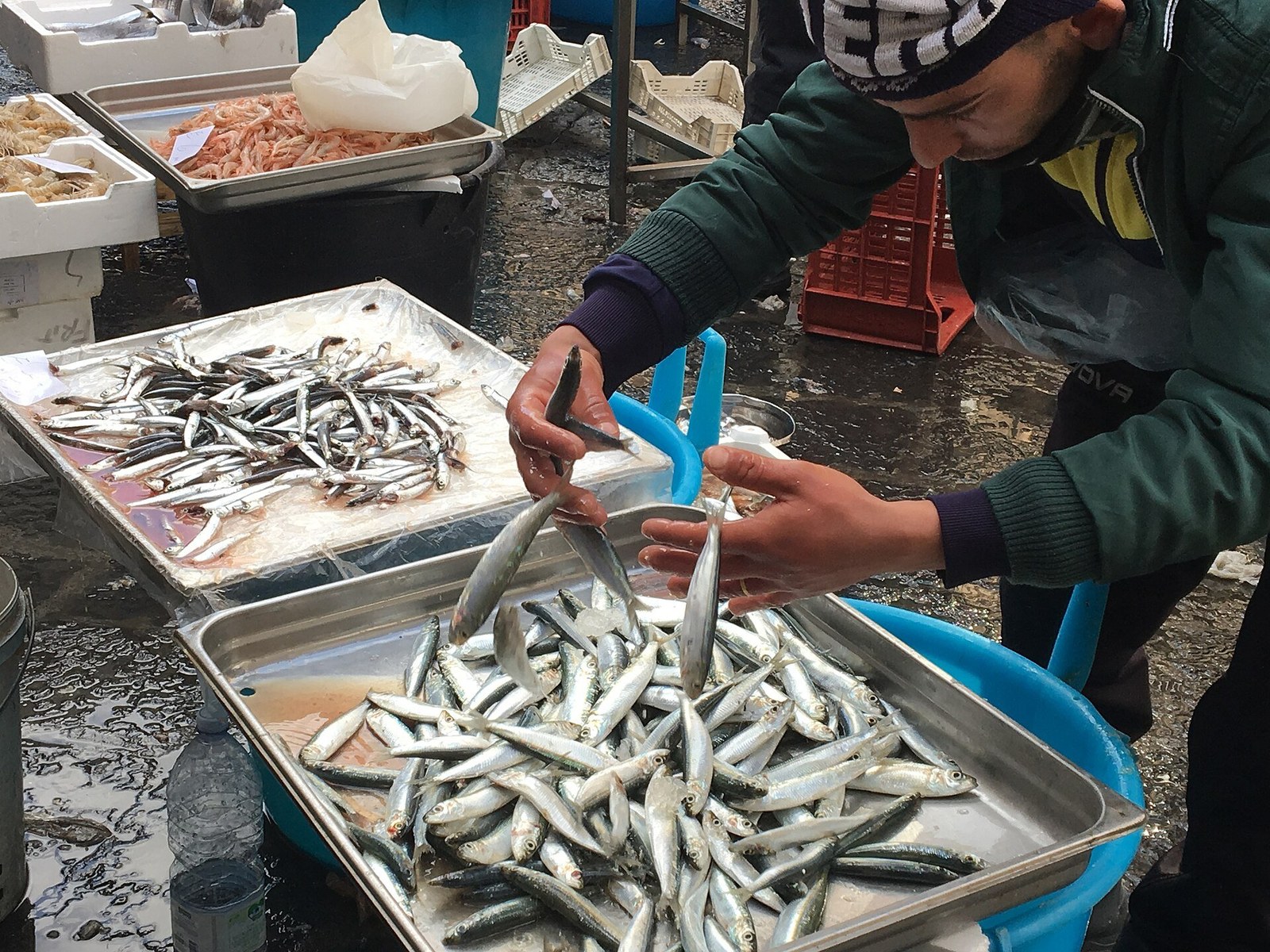
La Pescheria, the open-air fish market behind Piazza Duomo, has been the heart of the city’s identity for centuries. Every morning (except Sundays) fishmongers sell swordfish, sardines and sea urchins against a backdrop of shouting, splashing and theatrical knife work. It is the single most photographed scene in Catania.
Vincenzo Bellini (1801–1835), born in a house on Piazza San Francesco, composed Norma, La Sonnambula and I Puritani. The Teatro Massimo Bellini, Catania’s grand opera house inaugurated in 1890, is named in his honour. Even the city’s signature dish is a musical tribute: pasta alla Norma (rigatoni with tomato, fried aubergine, salted ricotta and basil) was supposedly named because its flavours were “a Norma” — a masterpiece, like the opera.
The Feast of Sant’Agata (3–5 February) is Catania’s emotional peak: over 1 million devotees follow the silver reliquary bust of the patron saint through the streets in a torchlit procession lasting two nights. UNESCO recognises it as an Intangible Cultural Heritage.
For a complete guide to Catania’s attractions, see our things to do in Catania and must-see sights guides.
Where to go in Catania?
The essential stops in Catania, Sicily are: Piazza del Duomo (elephant fountain and cathedral), La Pescheria fish market (open daily except Sunday), Via Crociferi for Sicilian Baroque architecture, Castello Ursino, and the Benedictine Monastery of San Nicolò l’Arena. For Mount Etna, book a guide for the summit craters or take the cable car from Rifugio Sapienza (35 km, 50 min by car). Day trips to Taormina (60 km, 55 min), Syracuse (80 km, 1 h) and the Val di Noto baroque towns are all under 2 hours.
From the UK: direct flights from London Gatwick, Stansted and Luton reach Catania Fontanarossa Airport (CTA) in about 2 h 45 min–3 h with Ryanair and easyJet. Sicily uses the euro (€) and is in the Schengen Area (no visa for UK citizens post-Brexit for stays up to 90 days). See our full guide to things to do in Catania for itineraries and opening times.
Is Catania worth visiting?
Yes — Catania offers Sicily’s best food scene, dramatic Baroque streets on black lava stone, vibrant nightlife, and the most convenient base for Mount Etna, the Riviera dei Ciclopi, Taormina and the Val di Noto baroque towns. It is cheaper and far less touristy than Taormina or Cefalù.
Who should visit Catania? If you care about food, street culture, history and using a real working city as your base rather than a resort town, Catania is for you. It lacks the manicured, postcard-perfect aesthetic of Taormina or Cefalù — and that is precisely its appeal. The city is gritty, loud, and rewarding in a way that polished tourist destinations cannot replicate.
Xsmilery · CC BY-SA 4.0
Practical reasons to base yourself here:
- Airport access — Fontanarossa (CTA) is 7 km away, with direct budget flights from across Europe
- Day-trip hub — Etna (50 min), Taormina (55 min), Syracuse (1 h), Taormina attractions and the Val di Noto (1.5 h) are all within easy reach
- Budget-friendly — accommodation, dining and parking cost 30–50% less than Taormina
- Food capital — arancini, granita with brioche, horse-meat sandwiches at I Ferrà, and the Pescheria seafood restaurants are unmatched on the island
- Nightlife — the bars and clubs around Via Teatro Massimo and Piazza Università stay open past 2 AM
Honest caveat: Catania can feel chaotic on first encounter. Traffic is heavy, scooters ignore red lights, and some streets near the station look rough. Embrace the energy or use it as a base for quieter day trips — either way, it repays the effort.
How to get to Catania
Catania Fontanarossa Airport (CTA), 7 km south of the centre, has direct flights from London, Manchester, Dublin, Berlin, Paris and 40+ European cities via Ryanair, easyJet and Wizz Air. The Alibus shuttle costs €4 and takes 25 minutes to Piazza Stesicoro.
By air: Catania Fontanarossa Airport (CTA)
Fontanarossa handles over 10 million passengers a year, making it Sicily’s busiest airport by a wide margin (Palermo’s Falcone-Borsellino handles about 8 million). Budget carriers dominate: Ryanair, easyJet, Wizz Air and Vueling operate year-round routes from the UK, Ireland, Germany, France and Scandinavia. Flight time from London is roughly 3 hours.
From the airport, the Alibus (line 457) runs every 25 minutes to Catania Centrale station and Piazza Stesicoro (€4 one-way, buy on board or via AMT Catania app). A taxi to the centre costs approximately €25 (fixed rate, confirm before departure). For Taormina, see our Catania airport to Taormina transfer guide.
Can you fly direct to Catania from the UK?
Yes. Catania Fontanarossa (CTA) has year-round direct flights from London Gatwick, Stansted and Luton via Ryanair and easyJet, plus routes from Manchester, Bristol, Edinburgh and Dublin. Flight time from London is approximately 2 hours 40 minutes. Summer sees additional charter services from regional UK airports. Winter frequencies drop but direct services continue — check Ryanair and easyJet for current schedules before booking any connection.
By train
Catania Centrale station sits on Piazza Papa Giovanni XXIII, a 10-minute walk from Piazza Duomo. Trenitalia runs direct services from:
- Palermo — InterCity, 3 h, from €13.90
- Syracuse — Regionale, 1 h 15 min, from €7.50
- Messina — Regionale Veloce, 1 h 30 min, from €9.40
- Taormina-Giardini — Regionale, 50 min, from €5.10
By bus
Interbus/Etna Trasporti and SAIS connect Catania with Taormina (1 h 15 min, €5.40), Messina, Syracuse and smaller towns. Flixbus links Catania to Palermo (2 h 45 min) and mainland Italy. Buses depart from Via d’Amico, near the train station.
By car
The A18 motorway (free) runs north from Catania to Messina via Taormina. The A19 (free) heads west to Palermo through the interior. The E45/SS114 follows the coast south to Syracuse. Driving in Catania’s centre is not recommended — the ZTL (limited traffic zone) is active, street parking is scarce, and one-way systems are confusing. Use one of the supervised car parks instead: see our Catania parking guide.
Catania weather: when to visit
Mediterranean climate with hot, dry summers (30–35°C, July–August) and mild, rainy winters (10–15°C, December–February). The best months for sightseeing are April–June and September–October, offering 22–28°C with manageable crowds.
Seasonal overview
| Season | Avg high / low | Rain days / month | Sea temp | Best for |
|---|---|---|---|---|
| Spring (Apr–Jun) | 20–28°C / 10–18°C | 3–5 | 16–22°C | Sightseeing, hiking Etna, wildflowers |
| Summer (Jul–Aug) | 30–35°C / 22–25°C | 1–2 | 25–27°C | Beach, nightlife (hot & crowded) |
| Autumn (Sep–Oct) | 22–28°C / 15–20°C | 4–7 | 22–25°C | Wine harvest, fewer crowds, warm sea |
| Winter (Nov–Mar) | 12–16°C / 6–10°C | 6–9 | 14–17°C | Budget travel, Sant’Agata (Feb), Etna skiing |
Catania enjoys over 300 sunny days a year — one of the highest counts in Europe. Even in winter, several consecutive days of sunshine are the norm. October is a particularly sweet spot: warm enough to swim in the first half, perfect for Etna wine-country excursions, and prices drop sharply from summer peaks.
Walter Isack (isiwal) · CC BY-SA 3.0
Where to stay in Catania
Catania’s historic centre is the ideal base: you’ll be within walking distance of Piazza Duomo, La Pescheria, Via Etnea’s shops and the late-night bars around Piazza Università. From here, Mount Etna is a 50-minute drive, Taormina under an hour by car or bus, and the airport a quick 25-minute shuttle ride away.
Staying in the centre of Catania means experiencing the city the way locals do — morning espresso at a corner bar, a lap of the Pescheria before lunch, a sunset passeggiata along Via Etnea with Etna glowing in the background. For a detailed neighbourhood breakdown, read our complete guide to where to stay in Catania.
If you’d like a home base with space, privacy and local tips at the ready, have a look at our apartments in Catania — in the historic centre, walking distance to everything mentioned in this guide.
The information in this guide was correct at the time of writing. Data can change from season to season without notice: before you travel, always check the official channels and websites for updates. We review this guide periodically, but the official channels are always the authoritative source. We also cannot guarantee that the suggested routes or the attractions described are always reachable or accessible: roads, trails and sites may be closed, damaged, altered or unsafe. Assessing the practicability and safety of itineraries and attractions always remains your own responsibility.