

The confusing part is not whether tap water in Sicily is safe. It is why so many Sicilians still carry six bottle packs home from the supermarket.
The short answer is practical: municipal tap water in Sicily is generally safe to drink, but taste, hard water, chlorine, old apartment plumbing and local habits make many visitors hesitate.
This guide explains when you can drink it, when you should ask first, and how to handle fountains, restaurants and bottled water without turning a simple glass of water into a travel problem.
Quick Answer: Is Tap Water Safe to Drink in Sicily?
Yes, tap water in Sicily is generally safe to drink in normal municipal supply areas. Italy follows EU drinking water rules, and water supplied through public networks is monitored for human consumption. You can usually use it for drinking, brushing your teeth, making coffee and cooking pasta.
The important caveat is local: follow any notice from your host, hotel, municipality or water provider. If a building uses an old private tank, if the water has unusual colour or smell, or if there is a temporary local notice, use bottled water until you have checked.
The European Commission drinking water page explains the EU framework for safe water intended for human consumption. In Catania, SIDRA publishes water quality information and notes that the private building system can affect quality after the meter.
Why Do Locals Still Buy Bottled Water?
Locals often buy bottled water for taste, not because the tap is automatically unsafe. In Sicily, water can taste hard, mineral, chlorinated or slightly metallic, especially if you are used to soft water at home.
There is also a cultural habit. Restaurants normally serve bottled water, families often keep large bottles at home, and many people prefer a predictable taste. That preference can look alarming to travellers, but it is not the same as a health warning.
In older apartments, the issue may be the building rather than the city network. Pipes, roof tanks and condominium maintenance matter. If your host says not to drink the tap water in that specific flat, follow that advice even if the municipal supply is generally potable.

DMarx22 · CC BY-SA 4.0
Can You Drink Tap Water in Catania?
In Catania, tap water from the municipal network is generally drinkable, and SIDRA states that it carries out chemical, physical, biological and microbiological controls using accredited methods. For a traveller in a normal hotel or apartment, the usual answer is yes.
The local difference is taste. Catania sits under Etna, and water in the area can feel harder and more mineral than water in northern Europe. Some visitors like it; others prefer bottled water for drinking and use tap water for coffee, teeth brushing and cooking.
If you are staying in the historic centre near Piazza Duomo, Via Etnea or the Pescheria, ask one direct question at check in: Is the tap water in this apartment okay to drink? That question is more useful than asking whether Sicily as a whole has safe water.
If Catania is your base, combine this practical note with our guides to things to do in Catania and whether Catania is safe, because water, heat and walking distances matter most in summer.
What About Palermo, Syracuse, Taormina and Smaller Towns?
Palermo also has monitored municipal water. AMAP publishes a water quality profile for Palermo and the municipalities it manages, including microbiological values such as coliforms, E. coli and enterococci in its published table.
Martin Teetz · Public Domain
Syracuse needs a more local answer. In Ortigia, travellers often mention taste or salinity concerns, and some accommodations may recommend bottled water. That does not mean every tap in Syracuse is unsafe; it means you should ask your host in that building.

Zde · CC BY-SA 4.0
Taormina is used to international visitors, and ordinary hotels and restaurants operate inside the same Italian water safety framework. In smaller villages, rural villas and beach houses, always ask locally, especially if the property uses a private tank or has seasonal water pressure issues.
Public Fountains in Sicily: What Acqua Potabile Means
Drink only from fountains or taps meant for drinking water. In Italy, the key phrase is acqua potabile, which means drinkable water. The warning phrase is acqua non potabile, which means not drinkable.
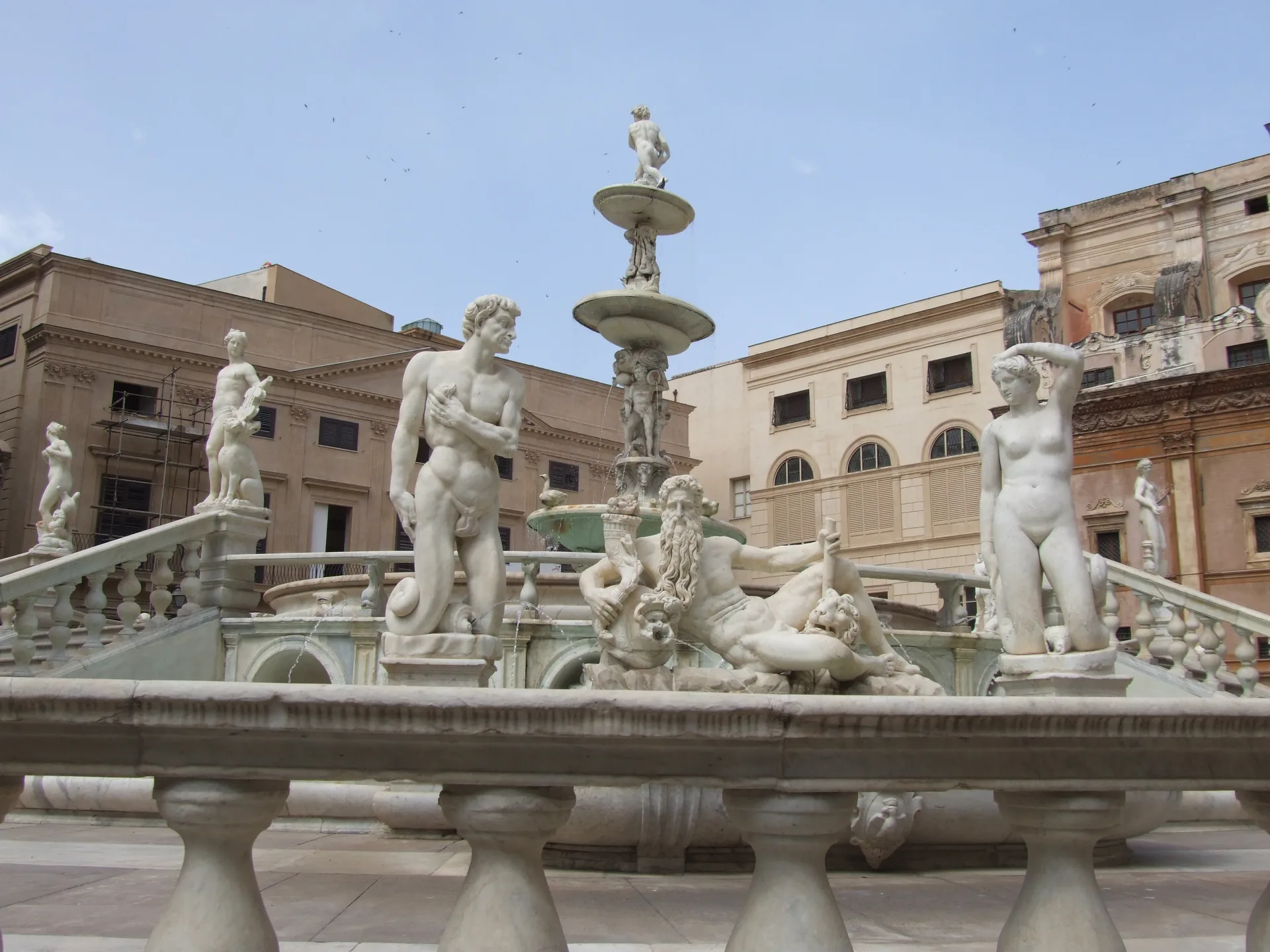
Do not drink from decorative fountains just because they contain clean looking water. Historic fountains, basins and sculpture fountains are visual landmarks, not refill stations unless there is a proper drinking spout and no warning sign.
For summer sightseeing, carry a refillable bottle anyway. If you are planning clothes, shoes and day bag space, our what to pack for Sicily guide covers the practical side of heat, walking and hydration.
Tap Water in Restaurants and Cafes
Do not expect free tap water to arrive automatically in Sicilian restaurants. The normal table order is bottled water, either naturale (still) or frizzante (sparkling).
You can ask for tap water, but the answer may be no, especially in traditional trattorie. This is a restaurant habit, not proof that the local tap water is dangerous. Many places simply work on bottled water as the standard service model.
Useful phrases are simple: acqua naturale, still water; acqua frizzante, sparkling water; una bottiglia d’acqua, one bottle of water. If language is a concern, read our guide to English in Sicily before you go.
When Should You Avoid Tap Water or Ask First?
Avoid tap water when there is a local non potability notice, when your host tells you not to drink it, or when the water comes from a private tank whose maintenance you cannot verify.
Also use bottled water if the water is brown, cloudy, strongly unusual in smell, or if building works have just affected the pipes. Let the tap run briefly after a long period of non use, especially in an apartment that has been empty before your arrival.
For babies, medical conditions or very sensitive stomachs, choose the conservative option and use bottled water for drinking. This is not because Sicily is unsafe; it is the same sensible approach you would take in any unfamiliar place.
Bottled Water, Filters and Reusable Bottles
Bottled water is cheap and available everywhere in Sicily, from supermarkets to small corner shops. A large supermarket bottle usually costs far less than a bottle ordered at a restaurant table.
A filter bottle is useful if you dislike chlorine or mineral taste, but it is not required for ordinary municipal safety. The better reason to carry a reusable bottle is practical: summer heat, long walks and day trips make hydration a real planning issue.
If you are driving between towns, keep water in the car but do not leave plastic bottles baking in the sun all day. Our guide to driving in Sicily covers other road trip habits that are easy to miss before arrival.
Practical Checklist for Travellers
Use this simple rule: public network usually yes, private building or local warning requires checking. That one sentence solves most confusion around tap water in Sicily.
| Situation | What to do |
|---|---|
| Hotel in a city | Ask reception if the room tap is fine to drink. |
| Apartment rental | Ask the host about that specific building and any tank system. |
| Restaurant | Expect bottled still or sparkling water as the standard option. |
| Public fountain | Drink only if it is clearly a drinking fountain and not marked non potabile. |
| Rural villa | Ask first, especially if water comes from a tank or private supply. |
| Hot summer day | Carry a refillable bottle and buy extra water before long transfers. |
If you remember only one Italian phrase, make it this: L’acqua del rubinetto si puo bere? It means, can you drink the tap water?
Frequently Asked Questions (FAQ)
Can foreigners drink tap water in Italy?
Yes, foreigners can usually drink tap water in Italy where the water comes from the normal municipal supply. If you have a sensitive stomach, start with small amounts or use bottled water for drinking and tap water for brushing your teeth.
Can you brush your teeth with tap water in Sicily?
Yes, in normal hotels and apartments you can brush your teeth with tap water in Sicily. If a host gives a specific warning for that property, follow it.
Is tap water in Sicily salty?
It can taste mineral, hard, chlorinated or occasionally slightly salty in some areas. Taste is not the same as safety, but if the taste is unpleasant, bottled water is easy to buy.
Can you drink tap water in Catania?
Yes, Catania tap water is generally drinkable from the municipal network. The practical caveat is the building system: old pipes, tanks or local works can change what comes out of a specific tap.
What does acqua non potabile mean?
Acqua non potabile means not drinkable water. If you see that sign on a fountain or tap, do not drink from it.
Where to Stay in Catania
If you are using Catania as a base, staying in the centre makes practical questions easier: shops are close, restaurants are walkable, and you can ask your host directly about the building’s tap water. An apartment also gives you a kitchen, a fridge and space to keep bottled water or refill bottles without planning every stop around a bar. For a central base, compare our apartments in Catania before you finalise the trip.
The information in this guide was correct at the time of writing. Data can change from season to season without notice: before you travel, always check the official channels and websites for updates. We review this guide periodically, but the official channels are always the authoritative source. We also cannot guarantee that the suggested routes or the attractions described are always reachable or accessible: roads, trails and sites may be closed, damaged, altered or unsafe. Assessing the practicability and safety of itineraries and attractions always remains your own responsibility.