
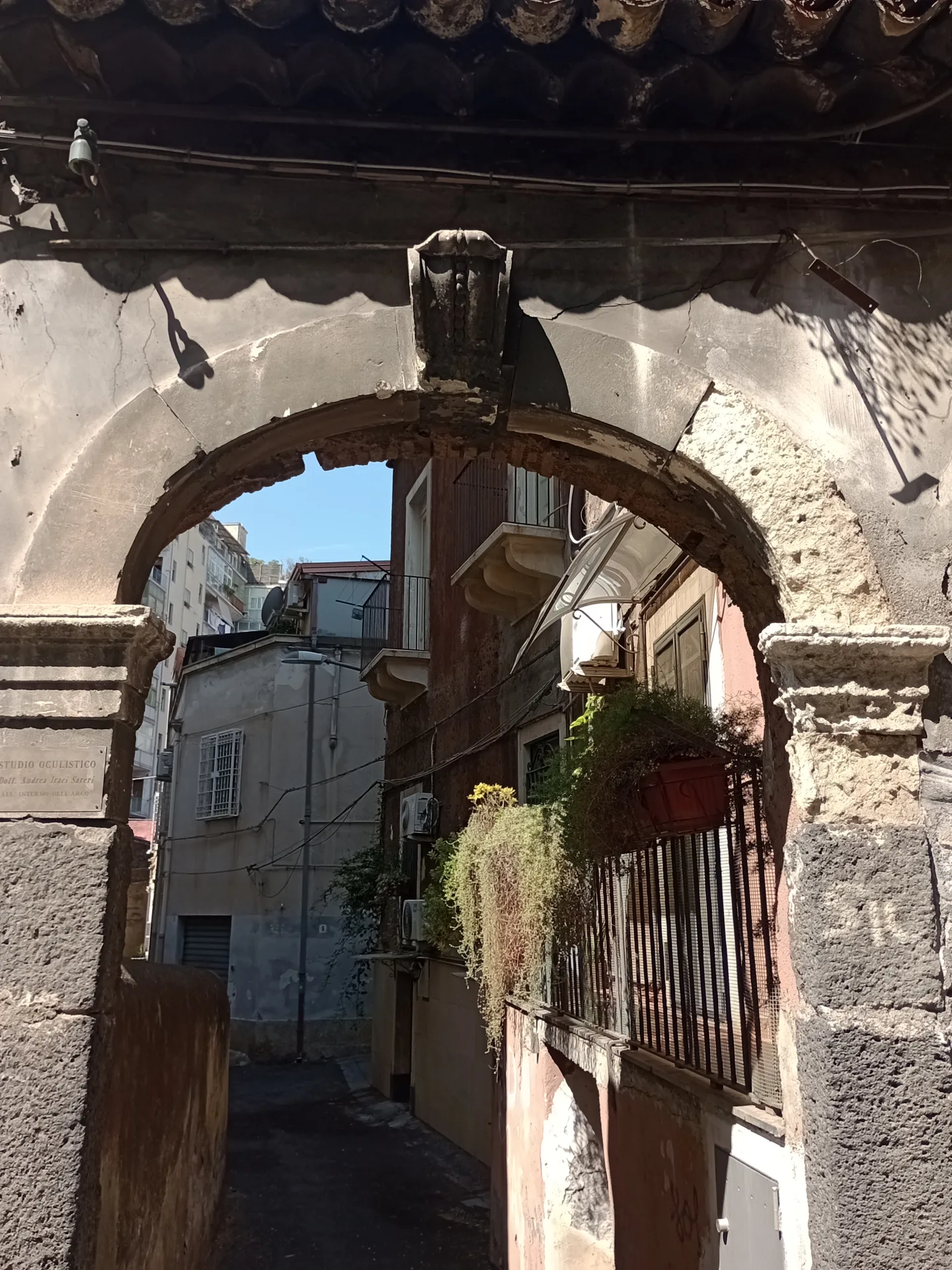
The first time I walked into a bar in Catania and ordered a cappuccino in English, the barista smiled and replied in perfect English, with a better accent than mine. The next morning, in a bakery two streets away, I pointed at a pistachio cornetto because the woman behind the counter spoke zero English and my Italian at the time was limited to “ciao” and “grazie.” That, in two moments, is the real language situation in Sicily.
Some travellers arrive convinced nobody speaks English and they will spend the entire trip playing charades. Others assume everywhere in Europe is like Amsterdam and they will glide through Catania, Palermo, and the Val di Noto with zero Italian. Both are wrong. Sicily has its own language landscape, shaped by tourism, education, age, and geography. This guide tells you exactly where English works, where it does not, and what to do about it.
Here is the honest, city-by-city breakdown of English in Sicily, written by someone who actually lives here and has tested it in bakeries, taxis, markets, and train stations across the island.
Quick Answer: Do They Speak English in Sicily?
Yes, English is widely spoken in Sicily’s major tourist areas, hotels, and among younger Sicilians, especially in cities like Catania, Palermo, and resort towns like Taormina. Most people working in tourism and hospitality speak at least basic conversational English, and many are fluent.
However, English is much less common in rural villages, local markets, and among older generations (60+). In these settings, you will mostly hear Italian and the local Sicilian dialect. A translation app and a handful of basic Italian phrases will get you through any situation. The bottom line: you can absolutely enjoy Sicily without speaking Italian, but a little effort goes a long way.
Where English Is Spoken in Sicily
English in Sicily follows a predictable pattern: the closer you are to tourism infrastructure, the more English you will find. Here is where you can reliably communicate in English.
Tourism and Hospitality
Hotel staff, B&B hosts, tour guides, and workers at major attractions generally speak good to excellent English. This is especially true in four-star and five-star hotels, internationally-branded chains, and professionally-run guided tours. Smaller family-run B&Bs and agriturismi may have more limited English, but owners usually know enough to handle check-in, breakfast, and basic requests. Restaurants in tourist-heavy zones (think Piazza Duomo in Catania, Corso Umberto in Taormina, or Ortigia in Syracuse) almost always have English menus and at least one English-speaking staff member.
Airports and Transport Hubs
Catania Fontanarossa Airport (CTA), Palermo Falcone-Borsellino (PMO), and Trapani Birgi (TPS) all operate in English. Signage is bilingual Italian-English, information desks have English-speaking staff, and car rental desks (Hertz, Avis, Europcar, Sicily by Car) handle everything in English. Train stations in major cities (Catania Centrale, Palermo Centrale, Messina Centrale) have ticket machines with English language options and staffed counters where you can usually find someone who speaks English.
Younger Sicilians
Many young Sicilians, especially university students in Catania, Palermo, and Messina, learn English in school and are keen to practise it. The University of Catania has over 40,000 students, and you will find English speakers among them in cafés, bars, and bookshops around the city centre. The same is true in Palermo and to a lesser extent in smaller university towns like Enna. Young Sicilians often consume English-language media (Netflix, YouTube, music) and many speak surprisingly good English even if they are shy about it at first.
Where English Is Rare (and How to Handle It)
Step away from the tourist centre of any Sicilian city, and the language landscape changes fast. Here is where you should not expect English, and what to do when you hit the barrier.
Small Villages and the Countryside

Strakhov · CC BY 2.0
In rural Sicily, towns under 5,000 people, mountain villages on the slopes of Etna, inland agricultural communities; English is essentially absent. Locals speak Italian and often Sicilian among themselves. The post office, the village bar, the hardware store: nobody will speak English, and they will not expect you to speak Italian either. This is not rudeness; it is simply that tourism has not reached these places in the same way it has reached Taormina. Smile, use gestures, and have Google Translate ready.
Local Markets and Street Vendors
The Pescheria fish market in Catania, Ballarò market in Palermo, and any street market in Sicily run on Italian (and Sicilian). Vendors, especially older ones, may not speak a word of English beyond numbers and prices. Pointing works perfectly well. Learn “quanto costa?” (how much does it cost?) and “grazie” (thank you), and you will be fine. Markets are also where a smile and a friendly “buongiorno” make a big difference: Sicilian vendors appreciate the effort even if your accent is terrible.
Older Generations (60+)
Sicilians over 60 rarely speak English. They grew up in an era when French was the dominant foreign language taught in Italian schools, and many left education early to work. In tourist-facing jobs (hotel reception, museum ticket desk), older staff may know some English, but in everyday interactions (the tobacconist, the pharmacy, the bus driver), expect Italian only. This is not a problem; it is an opportunity to use your phrasebook.
What to Do When Nobody Speaks English
Stay calm. Sicilians are famously warm and will genuinely try to help even when they do not understand a word you are saying. Three things always work: a smile, hand gestures (Sicilians are world-class at this), and your phone with Google Translate in camera mode. Download the Italian offline pack before your trip. If you are really stuck, look for someone under 30; they are your best bet for finding an English speaker in any setting.
English in Catania: A Local’s Take
Catania is a tale of two language zones, and they sit barely 300 metres apart. In the city’s historic centre (Piazza Duomo, Via Etnea, the area around the Pescheria market and Ursino Castle) you can get by with English most of the time. Restaurants along Via Santa Filomena, the bars around Piazza Teatro Massimo, and the cafés on Via Crociferi are used to international visitors and have English menus, English-speaking waiters, and sometimes even English signage. If you are sticking to the tourist centre and planning to visit the main things to do in Catania, you will manage fine with English alone.
But walk ten minutes north of Via Etnea into the residential streets of Borgo or Cibali, or cross into the San Berillo neighbourhood, and English disappears almost completely. These are everyday Catania, where people live, shop at the local alimentari, and drink coffee at bars that have not seen a tourist in years. Here, Italian is the only option. This is not a warning, it is just how the city works. If you are staying in an apartment outside the immediate tourist core (which many of our readers do, including in the areas around our apartments in Catania), having a few Italian phrases ready will make your stay smoother.
Do Restaurant Staff Speak English in Catania?
In tourist-oriented restaurants around Piazza Duomo and the upper end of Via Etnea: yes, almost always. These places survive on international visitors and their staff speak English as a matter of business. In traditional trattorie, family-run osterie, and neighbourhood pizzerias further from the centre: do not count on it. The food is often better in these places, but you will be ordering by pointing at the menu or using your phone. A good rule of thumb: if the menu is only in Italian and handwritten, the staff probably do not speak English. The pesto pistacchio pasta will still be excellent.
For more on staying safe and comfortable in the city, read our guide on Is Catania safe?, which covers neighbourhoods and practical tips for getting around.
English in Taormina, Syracuse, and Other Tourist Hotspots
Not all of Sicily is equal when it comes to English. Here is the breakdown for the destinations you are most likely to visit.
Taormina: The Most English-Friendly Town in Sicily

José Luiz · CC BY-SA 4.0
Taormina has been an international resort since the 19th century, and it shows. Grand Tour travellers, Goethe, D.H. Lawrence, and now cruise ship passengers and luxury travellers have made English the de facto second language of the town. Hotel staff, restaurant waiters, shopkeepers along Corso Umberto, and even taxi drivers speak functional to fluent English. You can spend an entire week in Taormina without learning a word of Italian and never struggle. The Greek Theatre ticket office, the cable car to Mazzarò beach, and every guided tour operator operate in English as standard. If you are only visiting Taormina, the language barrier will be the least of your concerns. See our things to do in Taormina guide for more.
Syracuse and Ortigia

Власенко · CC BY-SA 3.0
Ortigia, the island heart of Syracuse, is firmly on the tourist map and English is common in its restaurants, bars, and boutique hotels. The Neapolis Archaeological Park (Greek Theatre, Roman Amphitheatre, Ear of Dionysius) has English audio guides and English-speaking staff. On the mainland side of Syracuse, away from Ortigia and the archaeological zone, English becomes patchy. Residential neighbourhoods like Santa Lucia and Akradina feel like a different city. Prepare for Italian-only interactions there.
Val di Noto Towns: Noto, Modica, Ragusa
Noto, Modica, and Ragusa Ibla are increasingly popular with international tourists but English is still inconsistent. In Noto’s Corso Vittorio Emanuele, the main cafés and restaurants will have someone who speaks English. In Modica, chocolate shops and tour-oriented businesses manage English, but regular shops and bars may not. Ragusa Ibla has a growing number of English-friendly restaurants thanks to Inspector Montalbano tourism, but do not expect English in Ragusa Superiore (the modern upper town). These towns reward travellers who come prepared with a few Italian phrases and a translation app.
Palermo
Palermo’s historic centre (Quattro Canti, Piazza Pretoria, the area around the Cathedral and Teatro Massimo) has enough English to get by. Street food tours, which are one of the best ways to experience the city, are almost always run in English. The famous Ballarò and Vucciria markets, however, are Italian-Sicilian territory: pointing and smiling is the universal language there. Palermo’s younger crowd, especially around the university district and the Kalsa nightlife area, speaks decent English and is often happy to help lost-looking tourists.
Italian vs Sicilian: What Travellers Need to Know
One question that comes up often, especially after travellers read about the “Sicilian dialect,” is whether they need to learn Italian, Sicilian, or both. You only need Italian. Sicilian is a separate language, not a dialect of Italian, and it is spoken at home and among locals, never in formal settings and almost never with foreigners. Every Sicilian speaks standard Italian fluently. Sicilian is their regional heritage language, with its own vocabulary, grammar, and literary tradition dating back to the 13th-century Sicilian School of poetry at the court of Frederick II.
You will hear Sicilian spoken in markets, between neighbours, and among older people in villages. It is a beautiful, expressive language with influences from Greek, Arabic, Norman French, Spanish, and Italian, a living record of the island’s history. But you will never need to speak it. If you want to impress, learn “bedda” (beautiful, pronounced “bed-dah”) for a view, a plate of pasta, or a sunset. That single word, said with a smile, will earn you more goodwill than anything else.
The gap between Italian and Sicilian also explains why the question “Are Sicilians more Greek or Arab?” gets asked. It is one of the PAA that appears in Google for this topic. The short answer: culturally, Sicilians are Sicilian first, a unique blend of Mediterranean influences. Genetically and linguistically, the Greek and Arab layers are real but they are just two of many. The food, the architecture, the dialect words, and even the facial expressions carry traces of every civilisation that passed through. If you are curious, visit the Paolo Orsi Archaeological Museum in Syracuse; it tells the story better than any book.
10 Essential Italian Phrases for Your Sicily Trip
You do not need to be fluent. Ten phrases, spoken with a smile, will transform your trip. Sicilians are warm and generous with foreigners who make an effort. Even a badly-pronounced “buongiorno” will get you a warmer welcome than launching straight into English. Here is what to learn.
| Italian | Pronunciation | English |
|---|---|---|
| Buongiorno / Buonasera | bwon-JOR-no / bwon-ah-SEH-rah | Good morning / Good evening |
| Grazie | GRAHT-see-eh | Thank you |
| Per favore | pehr fah-VOH-reh | Please |
| Scusi / Scusa | SKOO-zee / SKOO-zah | Excuse me / Sorry |
| Quanto costa? | KWAN-toh KOH-stah? | How much does it cost? |
| Il conto, per favore | eel KON-toh, pehr fah-VOH-reh | The bill, please |
| Dov’è…? | doh-VEH…? | Where is…? |
| Non parlo italiano | non PAR-loh ee-tah-lee-AH-noh | I don’t speak Italian |
| Parla inglese? | PAR-lah een-GLEH-zeh? | Do you speak English? |
| Un caffè, per favore | oon kahf-FEH, pehr fah-VOH-reh | A coffee, please |
One Sicilian bonus phrase: “bedda” (BED-dah). It means beautiful and can refer to anything: a view, a meal, a person, a moment. Use it liberally. “Che bedda!” (keh BED-dah) = “How beautiful!” It is the single most useful Sicilian word for a traveller.
Best Translation Apps for Offline Use in Sicily
Your smartphone is your most powerful language tool in Sicily, but only if you set it up before you go. Mobile data coverage is good in cities and along the coast, but patchy in the interior, on Mount Etna, and in some Val di Noto towns. Download offline language packs before your trip. Here are the best options.
Google Translate (Best All-Rounder)
Free. Offline mode available. Camera translation for menus and signs. Download the Italian offline pack (about 45 MB) before you leave home. The camera mode lets you point your phone at a menu, a sign, or a train timetable and see the English translation overlaid in real time. It works surprisingly well even with handwritten Italian. Available for Android and iOS.
DeepL (Best Translation Quality)
Free tier available. No offline mode. DeepL produces noticeably more natural translations than Google, especially for longer sentences. Use it when you have data coverage and need to compose a message, understand a detailed review, or double-check something important. The Italian-English translation is among its best language pairs. Web and app versions available.
Microsoft Translator (Good Offline + Conversation Mode)
Free. Offline mode. Conversation mode for real-time dialogue. The conversation feature lets two people speak into the same phone in different languages and see translations in real time. Useful for interactions with taxi drivers, market vendors, or your Airbnb host. Offline Italian pack is about 70 MB. Available for Android and iOS.
Pro Tips for Using Translation Apps
Download offline packs on Wi-Fi before you travel. Screenshot key translations (your hotel address, dietary restrictions, emergency phrases) and save them to your phone’s photo gallery for instant access offline. For restaurant menus, camera mode works best in good lighting. That dimly-lit trattoria will require your phone’s flashlight. And remember: a translation app is a bridge, not a replacement for human warmth. Show the screen, then smile and say grazie. The combination of tech and basic courtesy works everywhere.
How to Order Food Without Speaking Italian
Eating is the main event of any trip to Sicily, and ordering food is where most English-speaking travellers feel the language gap most acutely. The good news: Sicilian restaurants want to feed you, and they will work with you regardless of language. Here is how to navigate every dining situation.
Tourist Restaurants
In the main tourist streets of Catania, Taormina, Syracuse, and Palermo, most restaurants have English menus. Just ask “English menu?” when you sit down. Waiters in these places are used to international customers and will often switch to English automatically when they hear you speaking. Tourist-oriented restaurants are also more likely to accommodate dietary restrictions and allergies in English.
Local Trattorie and Osterie
In neighbourhood restaurants away from tourist zones, menus are Italian-only, handwritten on paper or chalked on a board, and the waiter may speak zero English. This is where Google Translate Camera mode earns its place on your phone. Point, translate, point at the menu item you want, and smile. Key words to recognise: antipasto (starter), primo (first course, usually pasta or rice), secondo (main course, meat or fish), contorno (side dish), dolce (dessert). A full Sicilian meal is four courses. Nobody expects you to eat all of them.
The same phrasebook logic helps with water. If you are unsure in an apartment or rural villa, ask L’acqua del rubinetto si puo bere? and check our practical guide to whether tap water is safe in Sicily.
Dietary Restrictions and Allergies
Learn these phrases and save them to your phone. For vegetarian: “Sono vegetariano/a” (I am vegetarian, male/female). For vegan: “Sono vegano/a.” For allergies: “Sono allergico/a a…” followed by the allergen: latte (milk), uova (eggs), frutta secca (nuts), glutine (gluten), crostacei (shellfish). Sicilian cuisine is naturally rich in vegetable-based dishes (caponata, pasta alla Norma, parmigiana di melanzane), so vegetarians eat very well here. Gluten-free travellers will find “senza glutine” options increasingly available, especially in larger towns.
Frequently Asked Questions (FAQ)
Can you get by with English in Sicily?
Yes, absolutely. In tourist areas, hotels, and restaurants in major cities and resort towns, you can manage fine with English alone. In rural areas, small villages, and local markets, you will need gestures, a translation app, or a few Italian phrases. Tens of thousands of English-speaking tourists visit Sicily every year and have a wonderful time, and you will too.
Do I need to learn Italian before visiting Sicily?
No, you do not need to. Many visitors arrive with zero Italian and enjoy their trip. However, learning about 10 basic phrases (greetings, please, thank you, the bill) will noticeably improve your experience. Sicilians warm up visibly when a foreigner tries to speak their language, even badly. It is not about fluency; it is about respect. Spend 30 minutes with a phrase app before your flight.
How do you say hello in Sicily?
“Ciao” (chow) for informal situations and people you know. “Buongiorno” (bwon-JOR-no) for formal greetings until about 2 pm. “Buonasera” (bwon-ah-SEH-rah) for formal greetings from afternoon onward. In Sicily you will also hear “Salve” (SAL-veh), a polite all-purpose greeting that works any time of day. When leaving, “arrivederci” (ah-ree-veh-DEHR-chee) for formal goodbye, or just “ciao” for informal.
Are Sicilians more Greek or Arab?
Neither; Sicilians are Sicilian. The island’s history includes Greek colonies (8th-3rd centuries BC), Arab rule (9th-11th centuries AD), Norman, Swabian, French, Spanish, and Bourbon domination, plus Italian unification in 1861. Each layer left its mark on the food, architecture, language, and genetics; but the result is a unique Sicilian identity that cannot be reduced to any single influence. The best way to understand it is to visit and see for yourself: Greek theatres, Arab-Norman cathedrals, Spanish baroque churches, and North African-inspired street food all coexist on the same island.
Do taxi drivers speak English in Sicily?
Rarely. Most Sicilian taxi drivers speak little to no English. Have your destination address written down or ready on your phone screen. Showing the address on Google Maps works perfectly. In Catania, taxi drivers serving the airport route are more likely to know basic English than those operating exclusively within the city. Ride-hailing apps like Uber do not operate in Sicily (except Uber Black in Palermo), so you will be using traditional taxis or the FreeNow app (formerly mytaxi).
Can I live in Sicily without speaking Italian?
Short-term (weeks to months): yes, especially in Catania, Palermo, or Taormina. You can rent an apartment, shop at supermarkets (self-checkout removes language friction), eat at tourist-friendly restaurants, and socialise with other English speakers. Long-term (years): you will need Italian. Bureaucracy (residency permits, healthcare registration, utility contracts, bank accounts) runs entirely in Italian. Making Sicilian friends beyond the expat bubble requires the language. The good news: immersion works fast in Sicily because daily life forces you to practise. Many expats reach conversational Italian within a year.
Where to Stay in Catania
If you are worried about the language barrier, your choice of base makes a real difference. Staying in Catania’s historic centre (within walking distance of Piazza Duomo, Via Etnea, and the main tourist restaurants) means you will encounter English speakers every day. Having your own apartment with a kitchen also means you can shop at supermarkets (where you do not need to speak to anyone) and cook some meals at home, taking the pressure off restaurant communication when you are tired.
Our apartments in Catania are in the city centre, a short walk from everything you will want to see. An apartment gives you the flexibility to explore at your own pace, come back for a siesta, and head out again for an evening passeggiata, all without worrying about check-in desks, hotel lobbies, or breakfast buffet small talk in a language you are still learning.
Catania is the ideal base for exploring eastern Sicily. From here, day trips to Taormina (where everyone speaks English), Mount Etna, Syracuse, and the Val di Noto are all within easy reach by car or train. For a broader itinerary, see our 7-day Sicily itinerary.
The information in this guide was correct at the time of writing. Data can change from season to season without notice: before you travel, always check the official channels and websites for updates. We review this guide periodically, but the official channels are always the authoritative source. We also cannot guarantee that the suggested routes or the attractions described are always reachable or accessible: roads, trails and sites may be closed, damaged, altered or unsafe. Assessing the practicability and safety of itineraries and attractions always remains your own responsibility.