
Catania sits beneath Mount Etna on Sicily’s Ionian coast, a UNESCO-listed baroque city rebuilt seven times over earthquakes and lava. Most visitors tick off Piazza del Duomo, the Pescheria fish market and a day trip up the volcano — all worth doing. But the unusual places to see in Catania are the ones that reward curiosity: an underground river you can drink beside, a Byzantine chapel hidden behind a car park, rooftop views that rival the Duomo for nothing. We live in Catania, and these are the 15 hidden gems we take friends to when they want to see the city locals actually love.
What are some hidden gems in Catania?
Catania’s best hidden gems span underground Roman baths beneath Piazza del Duomo, a 6th-century Byzantine chapel lost among apartment blocks, rooftop terraces with 360-degree views of Etna, Art Nouveau palazzi normally locked to the public, a volcanic black-sand beach where fishermen still mend nets, and street-art lanes in a regenerating quarter. Most are free or under 7 euros, walkable from the centre, and practically empty even in peak season. Here are 15 unusual places that turn a standard Catania visit into something you actually remember.
Underground & ancient secrets
Catania hides an entire city underground — rivers, Roman baths and lava tunnels built over by 18 centuries of eruptions and earthquakes. These three sites take you below the modern street level into layers most visitors never suspect exist, all within 5 minutes’ walk of Piazza del Duomo.
1. Underground river at Fontana dell’Amenano
- Location
- Piazza Currò 1, Catania Maps
- Essential fact
- The Amenano river once flowed openly through Greek Catania.
- Price
- Free with drink purchase
The Amenano river once flowed openly through Greek Catania. Today it runs beneath the city, sealed under lava from the 1669 eruption. You can hear it gurgling at the Fontana dell’Amenano on Piazza Currò, where water spills from a marble basin into the darkness below. The real experience, though, is at the Agora Youth Hostel on Piazza Currò 6: descend into the bar built inside a lava tube and sit at a table while the underground river flows just metres away. The vaulted basalt ceiling dates to the 17th century and the temperature drops 8-10 degrees in summer — nature’s air conditioning. Entry to the bar area is free if you buy a drink.
2. Terme Achilliane — Roman baths beneath Piazza del Duomo
- Location
- Piazza del Duomo 8, Catania Maps
- Essential fact
- Directly beneath the Cathedral square lies a 2nd-century Roman bath complex.
- Price
- €6 (combined with Museo Diocesano)
Directly beneath the Cathedral square lies a 2nd-century Roman bath complex. The Terme Achilliane were rediscovered in the 16th century and named after a mosaic once visible on its walls. You enter through a staircase near the Fontana dell’Amenano and descend 6 metres below street level into barrel-vaulted chambers where water still pools on the ancient floor. The baths stretch under much of the Duomo piazza — what you see today is only a fraction of the original complex. Guided visits last about 20 minutes and run on fixed schedules, typically 3-4 slots per day.
3. Cappella Bonajuto — a Byzantine chapel lost in time
Davide Mauro · CC BY-SA 4.0
- Location
- Via Bonajuto 9, Catania Maps
- Essential fact
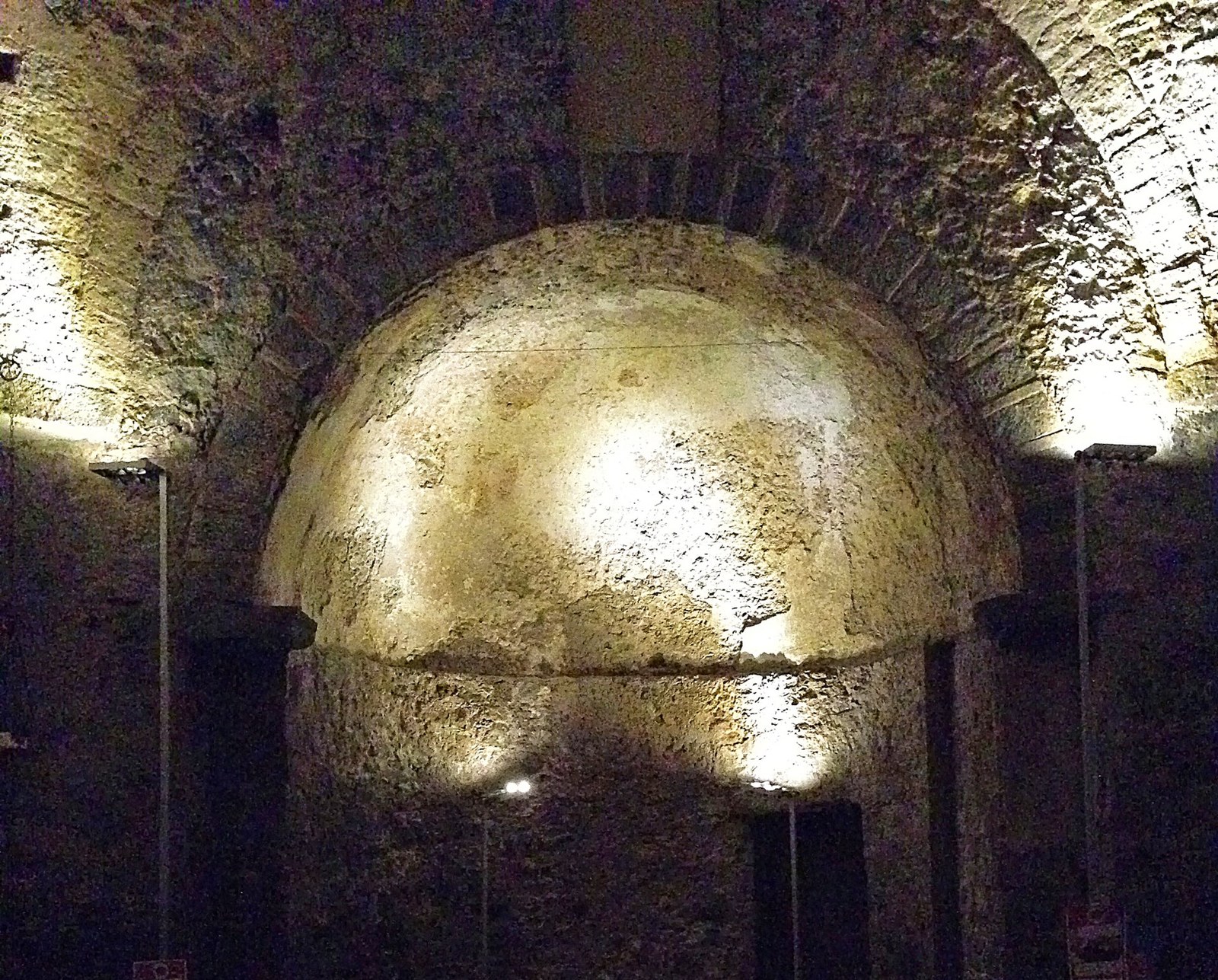
- On Via Bonajuto, squeezed between residential buildings, stands one of Sicily’s rarest structures: a 6th-century Byzantine chapel that survived the 1169 earthquake, the 1669 lava flow and the 1693 earthquake that flattened nearly everything else.
- Price
- Free
On Via Bonajuto, squeezed between residential buildings, stands one of Sicily’s rarest structures: a 6th-century Byzantine chapel that survived the 1169 earthquake, the 1669 lava flow and the 1693 earthquake that flattened nearly everything else. The Cappella Bonajuto is a tri-apsidal plan with thick walls of Roman-era brick and basalt, predating the baroque city by over a thousand years. No frescoes remain, but the raw geometry of the space is striking — small, dark, and heavy with age. It sits inside a courtyard that you could walk past 100 times without noticing. The chapel opens irregularly, often during FAI open-day events or by request to the local cultural association.
Secret viewpoints & hidden architecture
Catania’s best views and architectural surprises hide in plain sight — a cathedral rooftop open to anyone with a museum ticket, an Art Nouveau villa behind a locked gate, and a Benedictine archway built overnight in 1704. All three are in the historic centre, none appear in standard tour itineraries, and together they take about 90 minutes.
4. Museo Diocesano rooftop terrace
SNappa2006 · CC BY 2.0
- Location
- Via Etnea 8, Catania Maps
- Site
- museodiocesanocatania.com
- Essential fact
- Most visitors photograph Piazza del Duomo from street level.
- Price
- €7 (includes museum + terrace)
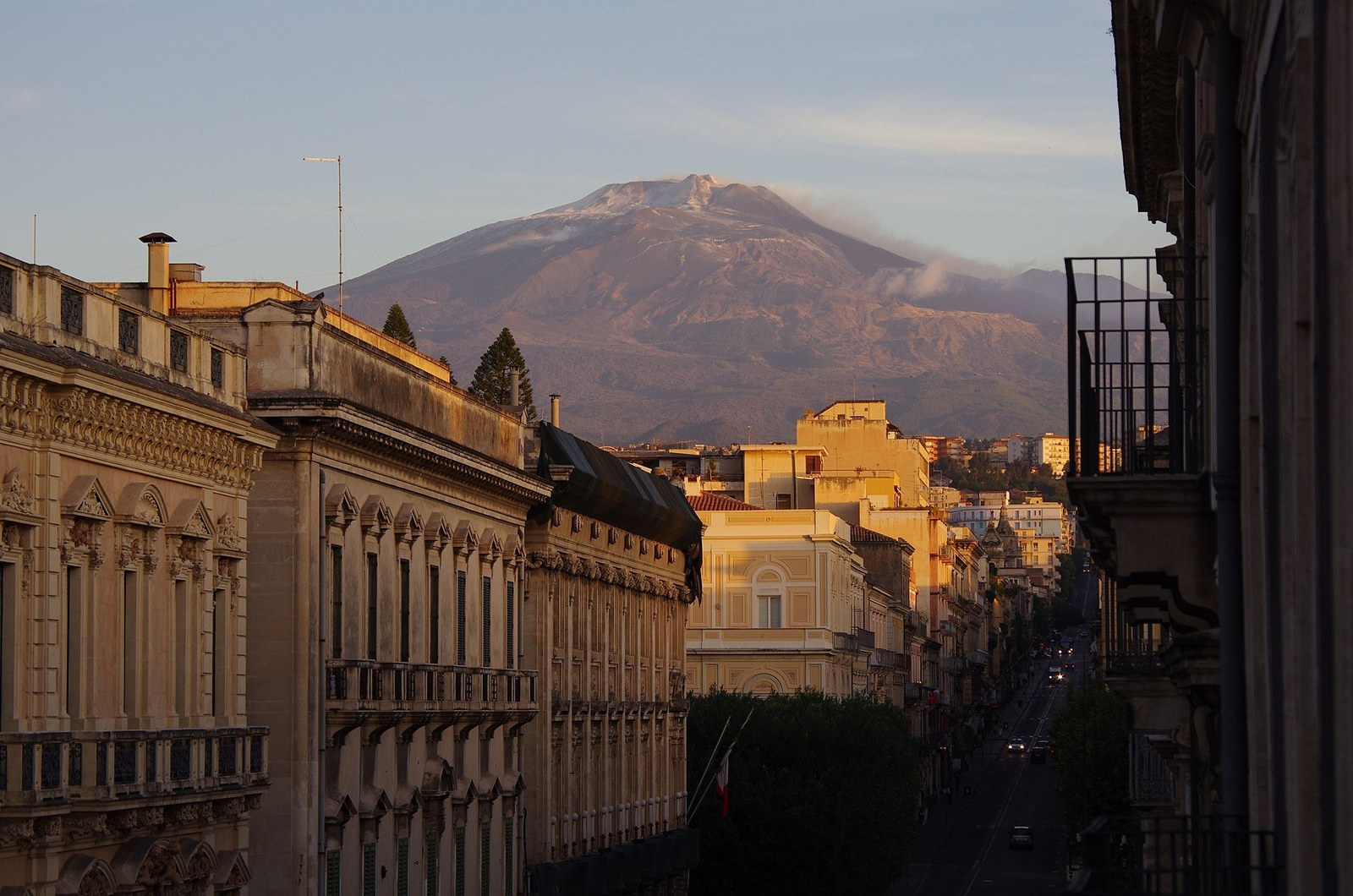
Most visitors photograph Piazza del Duomo from street level. The Museo Diocesano, housed in the 18th-century Palazzo dei Chierici next to the Cathedral, has a rooftop terrace with an unobstructed 360-degree panorama: Via Etnea stretching north to Etna’s summit, the harbour to the east, the cathedral domes below. The museum itself holds religious art and vestments from the 14th-18th centuries across 10 rooms, but the terrace alone is worth the ticket. On clear days, you can trace the entire coastline from Augusta to Taormina. Almost no one goes up.
5. Villa Zingali Tetto — Catania’s Art Nouveau secret
Auregann · CC BY-SA 4.0
- Location
- Via Etnea 742, Catania Maps
- Essential fact
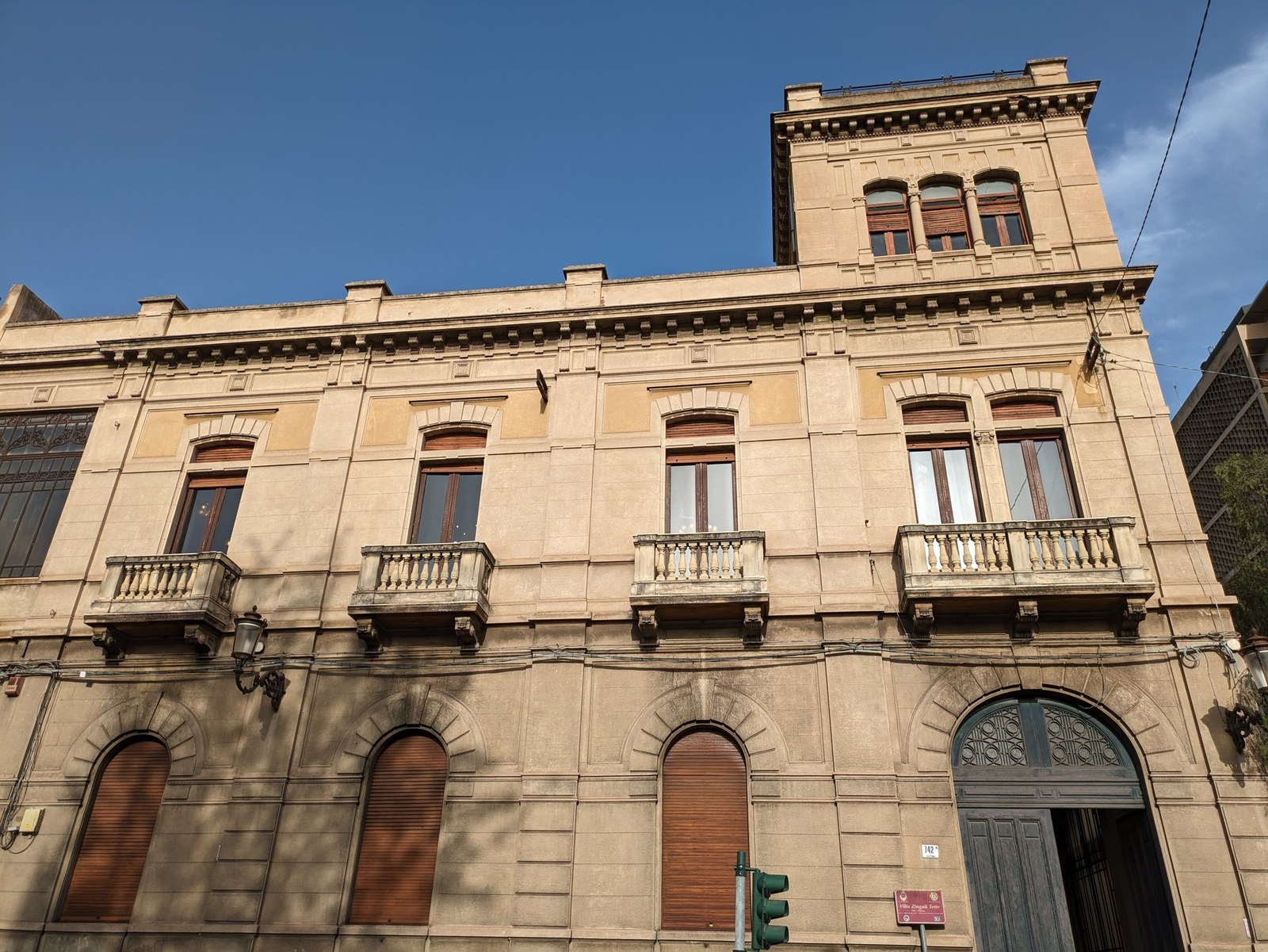
- In a city defined by baroque, Villa Zingali Tetto is a complete anomaly: a Liberty-style (Italian Art Nouveau) villa built between 1925 and 1931 by architect Paolo Lanzerotti for the Zingali Tetto family.
- Price
- €5–8 (FAI donation suggested)
In a city defined by baroque, Villa Zingali Tetto is a complete anomaly: a Liberty-style (Italian Art Nouveau) villa built between 1925 and 1931 by architect Paolo Lanzerotti for the Zingali Tetto family. The facade features wrought-iron balconies with floral motifs, stained-glass windows and majolica tile work that would not look out of place in Barcelona. Inside, original furnishings, hand-painted ceilings and a grand staircase with carved bannisters survive intact. The villa was donated to FAI (Fondo Ambiente Italiano) and opens periodically for guided tours. Its location — in a residential area south of the centre, away from any tourist route — means it receives a fraction of the visitors it deserves.
6. Arco di San Benedetto — built in a single night
- Location
- Benedettine, Via Crociferi 16, Catania Maps
- Essential fact
- Halfway along Via Crociferi — Catania’s most photographed baroque street — an arch spans between the Monastery of San Benedetto and the church opposite.
- Price
- Free
Halfway along Via Crociferi — Catania’s most photographed baroque street — an arch spans between the Monastery of San Benedetto and the church opposite. Local legend says the Arco di San Benedetto was built in a single night in 1704 to defy a city ordinance banning overhead structures across public roads. Whether or not the one-night story is true, the arch physically connects the two Benedictine buildings, allowing the cloistered nuns to cross without touching public ground. Stand beneath it and look up: the underside is coffered with carved lava-stone rosettes. If you are walking the baroque old town route, the arch is on your path between the Greek-Roman Theatre and Monastero dei Benedettini.
Where is the nicest part of Catania?
For most visitors, the historic centre between Piazza del Duomo and Via dei Crociferi is the most beautiful part of Catania — a compact Baroque grid of lava-stone palazzi, ornate churches and open piazzas rebuilt after the 1693 earthquake. For locals, the answer is more personal: the seafront promenade at Ognina (site 15 in this guide), where fishing boats still pull up on black-lava rocks at sunset, or the gardens of Villa Bellini on a weekday morning. For a full walking tour of the Baroque centre with all 10 key stops, see our Catania old town guide.
Is Catania worth visiting for its museums?
Yes — if you skip the predictable ones. Catania’s most compelling museum spaces are not the obvious civic galleries but a converted industrial complex, a composer’s birthplace, and a contemporary art foundation in a baroque palazzo. Combined, they cost under 15 euros and give you 2-3 hours of genuinely surprising content with almost no crowds.
7. Le Ciminiere — from sulphur refinery to museum quarter
Gmihail · CC BY-SA 3.0
- Location
- Viale Africa 12, Catania Maps
- Essential fact
- Le Ciminiere is a 19th-century sulphur refinery converted into Catania’s main museum and exhibition complex.
- Price
- €3–6 per museum (combined tickets)
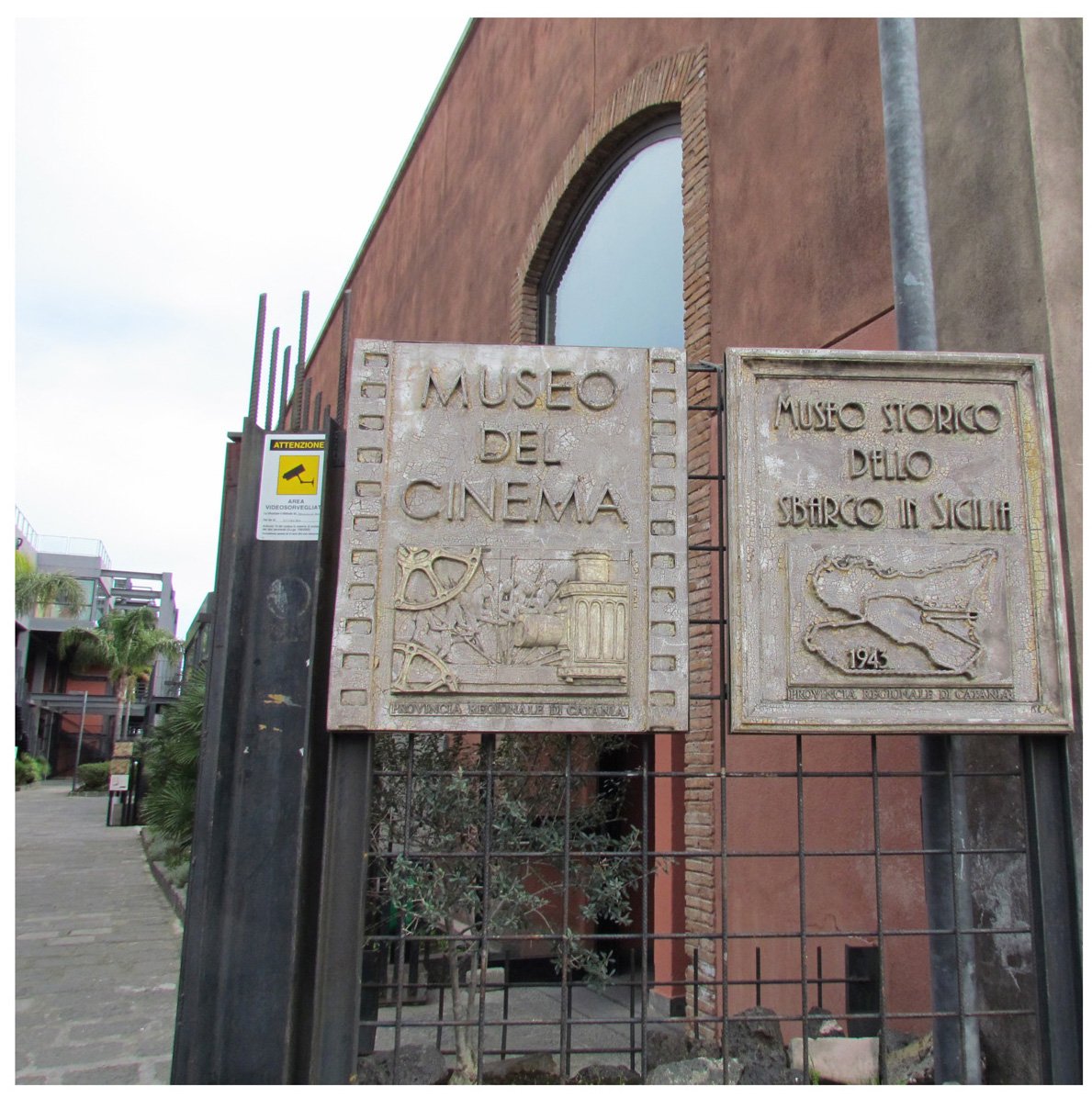
Le Ciminiere is a 19th-century sulphur refinery converted into Catania’s main museum and exhibition complex. The industrial brick-and-iron buildings house several museums under one roof. The Museo del Cinema traces the history of filmmaking with original equipment and projection rooms — fitting for the island that gave the world Verga’s verismo and The Godfather locations. The Museo Storico dello Sbarco in Sicilia 1943 documents the Allied landings during World War II with immersive reconstructions, period vehicles, and personal testimonies. It is one of the best WWII museums in southern Italy and almost unknown outside Catania. The complex also hosts rotating exhibitions and a small but good cafe with outdoor seating among the old chimneys.
8. Casa Museo Giovanni Verga
- Location
- Via Sant’Anna 8, Catania Maps
- Site
- cultura.gov.it/luogo/casa-museo-giovanni-verga
- Essential fact
- Giovanni Verga was born in Catania in 1840 and became the father of Italian literary verismo — the raw, unflinching realism that influenced everything from Sicilian cinema to Vittorio De Sica.
- Price
- €4
Giovanni Verga was born in Catania in 1840 and became the father of Italian literary verismo — the raw, unflinching realism that influenced everything from Sicilian cinema to Vittorio De Sica. His apartment-museum on Via Sant’Anna preserves his writing desk, personal library of over 2,600 volumes, original manuscripts, and the rooms where he wrote I Malavoglia and Mastro-don Gesualdo. The space feels lived-in rather than curated, which is exactly its charm. For anyone interested in literature, this is one of the most authentic writer’s houses in Italy. Combine it with a walk to Piazza Verga, named after him, 5 minutes south.
9. Fondazione Puglisi Cosentino
- Location
- Via Vittorio Emanuele II 120, Catania Maps
- Site
- fondazionepuglisicosentino.it
- Essential fact
- Inside Palazzo Valle — an 18th-century baroque palazzo on Via Umberto I — the Fondazione Puglisi Cosentino runs a contemporary art programme that would sit comfortably in Milan or Berlin.
- Price
- €5 (concessions available)
Inside Palazzo Valle — an 18th-century baroque palazzo on Via Umberto I — the Fondazione Puglisi Cosentino runs a contemporary art programme that would sit comfortably in Milan or Berlin. Past exhibitions have included works by Sol LeWitt, Marina Abramovic, Ai Weiwei, and Jeff Koons. The permanent collection occupies the piano nobile with original frescoed ceilings providing the backdrop. The contrast between baroque architecture and contemporary installation is deliberate and effective. Visitor numbers are low enough that you can spend 45 minutes alone with a Koons sculpture and a 300-year-old ceiling. Check their website for the current exhibition before visiting — the programme changes every few months.
Alternative quarters & local markets
Catania’s most interesting neighbourhoods are the ones tourists walk past — a former red-light district turned street-art gallery, a flea market that captures the city’s real tempo, and a botanical garden hiding on the upper stretch of the main shopping street. These three are free, open-air, and guaranteed to feel nothing like the Piazza del Duomo circuit.
10. San Berillo Vecchio — street art & urban regeneration
- Location
- San Berillo, Catania Maps
- Essential fact
- San Berillo was once Catania’s most notorious quarter — a dense warren of narrow streets between Via Etnea and Corso Sicilia, partly demolished in a controversial 1950s urban renewal project.
- Price
- Free
San Berillo was once Catania’s most notorious quarter — a dense warren of narrow streets between Via Etnea and Corso Sicilia, partly demolished in a controversial 1950s urban renewal project. What survived is now one of Sicily’s most vibrant street-art districts. Murals by local and international artists cover entire building facades. Ferrini district murals tell stories of neighbourhood memory. Gammazita, part bar and part community art space, anchors the cultural revival and hosts exhibitions, concerts and workshops in a reclaimed building on the edge of the quarter. The regeneration is genuine and ongoing — each visit is slightly different as new works appear. Walk east from Via Etnea along Via Catajo or Via Di Prima to enter.
11. Fera ‘o Luni — the Monday flea market
Vic15 · CC BY 2.0
- Location
- Piazza Carlo Alberto, Catania Maps
- Essential fact
- Forget the Pescheria for a moment.
- Price
- Free to browse
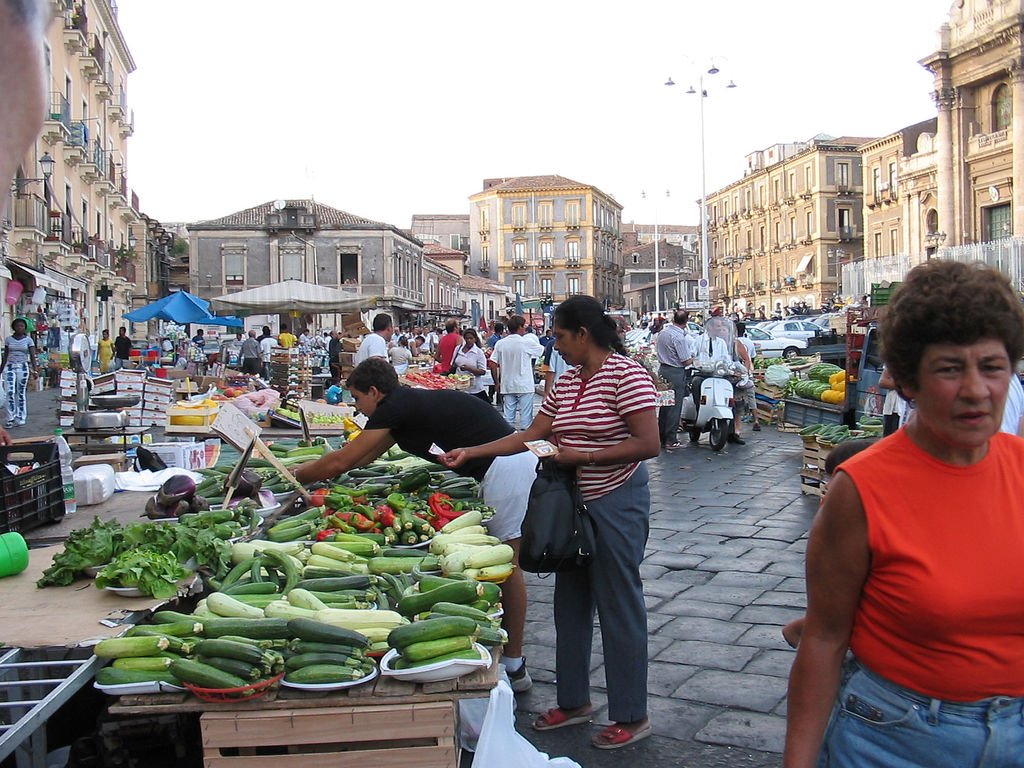
Forget the Pescheria for a moment. The Fera ‘o Luni (Monday Fair) at Piazza Carlo Alberto is where Catania’s everyday life plays out unedited. Despite its name, the market runs every morning, not just Mondays. Stalls sell everything from fresh produce and Sicilian spices to vintage clothes, second-hand tools, and counterfeit handbags — all under awnings strung between apartment balconies. Old women haggle in Sicilian dialect, tailors sew repairs on the spot with battered Singer machines, and the produce section has the best seasonal fruit in the city at half the price of a supermarket. Come before 10:00 for the busiest atmosphere. It is loud, chaotic, and authentically catanese in a way that the more photogenic Pescheria can no longer quite match.
12. Orto Botanico — a hidden garden on Via Etnea
Esculapio · CC BY-SA 4.0
- Location
- Via Etnea 397, Catania Maps
- Site
- officineculturali.net/progetti/orto-botanico-di-catania
- Essential fact
- Almost at the top of Via Etnea, where the shopping crowds thin out, a gate leads into the Orto Botanico — the University of Catania’s botanical garden, founded in 1858.
- Price
- Free
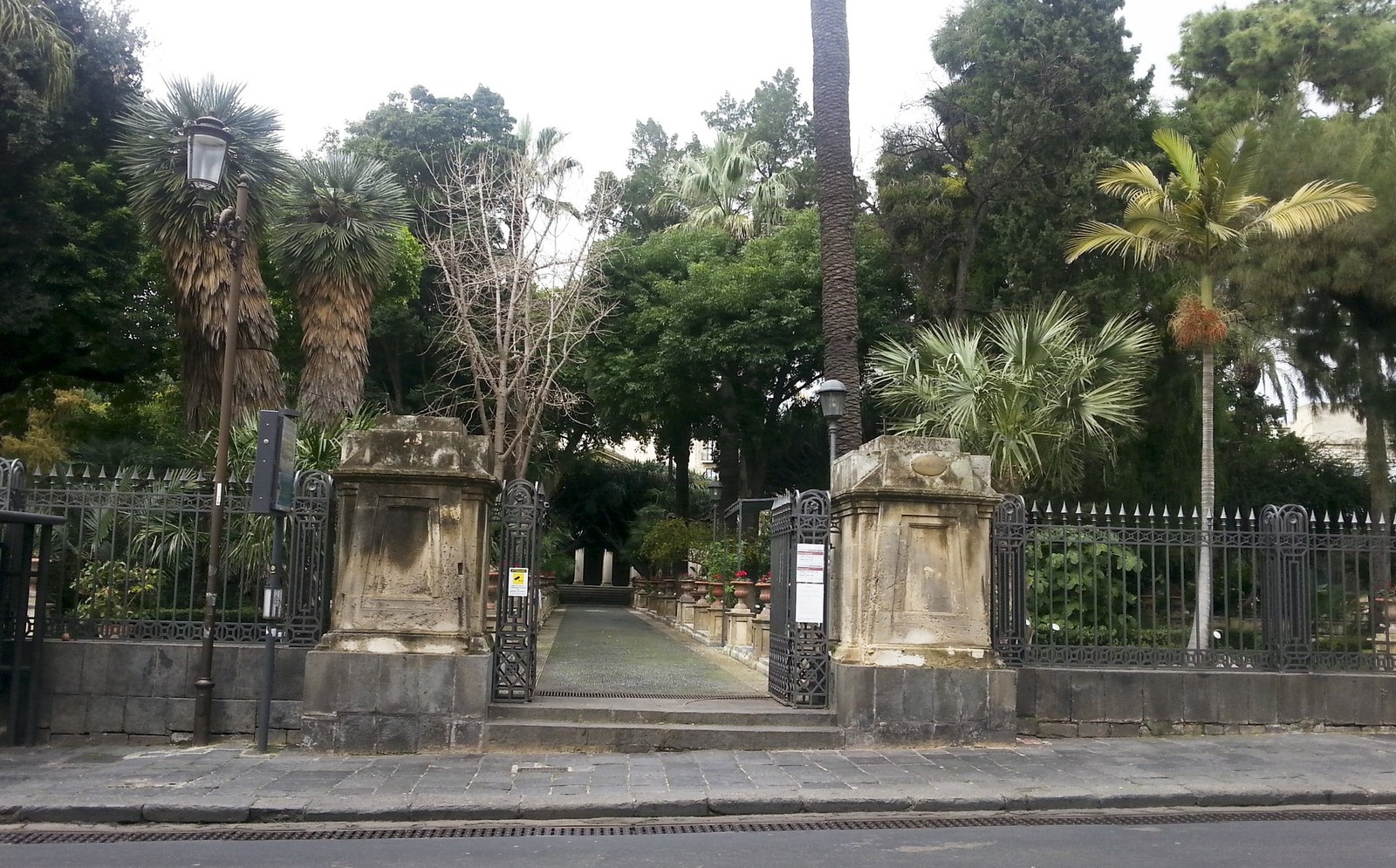
Almost at the top of Via Etnea, where the shopping crowds thin out, a gate leads into the Orto Botanico — the University of Catania’s botanical garden, founded in 1858. The 16,000-square-metre garden holds over 2,000 species including a cactus collection adapted to volcanic soil, tropical greenhouses, and specimen trees from across the Mediterranean. Benches under mature palms offer shade and silence that feel impossible this close to the city centre. The garden is free, rarely crowded, and a 10-minute uphill walk from Piazza Stesicoro. It is one of the few green spaces in central Catania and genuinely one of the city’s best-kept secrets.
What is famous about Catania beyond tourism?
Catania is famous for three things no tour bus covers: its volcanic geology (the entire city is built on solidified lava, with rivers and Roman ruins sealed beneath), its street food culture (arancini, horse-meat, granita with brioche for breakfast — all with dialect names tourists rarely hear), and its operatic heritage as the birthplace of Vincenzo Bellini, whose Norma is still performed at the Teatro Massimo Bellini every season. The last three hidden gems on this list connect to all three: volcanic nature, local legend, and coastal life that continues unchanged.
Volcanic nature & coastal escapes
Catania’s volcanic coastline is its most underrated feature — black-sand beaches made from Etna’s eruptions, medieval wells tied to local legends, and fishing villages that feel decades removed from the city centre. These three spots are within 10-20 minutes by bus or on foot from Piazza del Duomo, and all are free.
13. San Giovanni Li Cuti — the black beach
Auregann · CC BY-SA 4.0
- Location
- Via S. Giovanni Li Cuti, Catania Maps
- Essential fact
- South-east of the city centre, a small cove opens onto a black volcanic beach of basalt pebbles and dark sand deposited by Etna’s eruptions over millennia.
- Price
- Free
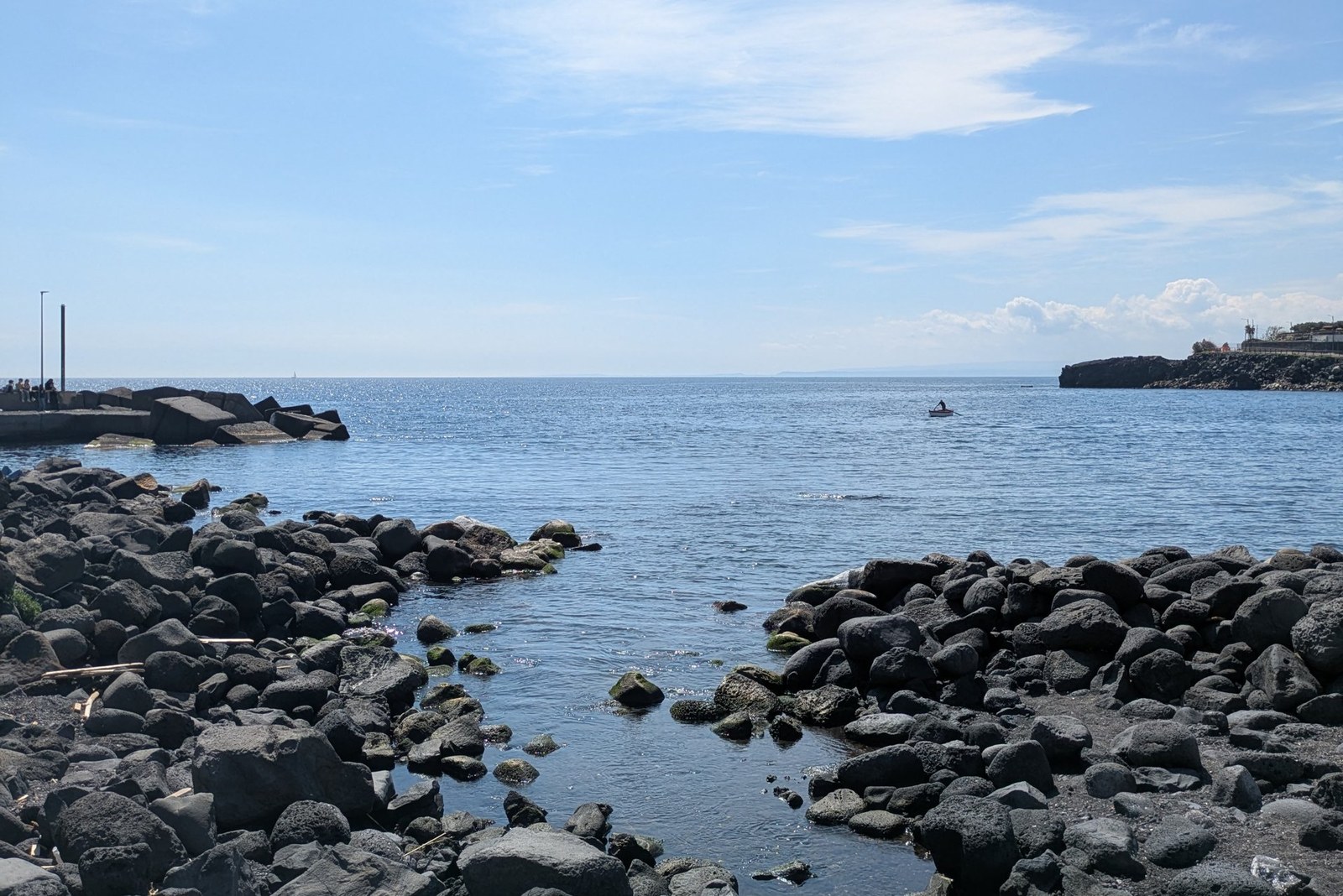
South-east of the city centre, a small cove opens onto a black volcanic beach of basalt pebbles and dark sand deposited by Etna’s eruptions over millennia. San Giovanni Li Cuti has a tiny harbour at its northern end where colourful wooden fishing boats — still used by local fishermen — are pulled up on the dark shore. The contrast between the blue Ionian water and the black volcanic rock is genuinely striking. In summer, locals come here for evening aperitivi at the small bar above the beach; in winter, it is deserted and dramatic. There are no loungers, no umbrellas for hire, and no lifeguard — just the beach, the boats, and the volcano on the horizon. It is the most photogenic spot in Catania that does not appear on a single standard sightseeing list.
14. Pozzo di Gammazita — the well of legends
- Location
- Via S. Calogero 25, Catania Maps
- Essential fact
- Near Castello Ursino, in the residential streets west of Via Garibaldi, a medieval well marks one of Catania’s oldest legends.
- Price
- Free
Near Castello Ursino, in the residential streets west of Via Garibaldi, a medieval well marks one of Catania’s oldest legends. The Pozzo di Gammazita is named after a young woman who, according to tradition, threw herself into the well to escape a French soldier during the Sicilian Vespers uprising of 1282. The well itself is unassuming — a stone-framed opening in a courtyard, easy to miss — but the story is woven into Catania’s identity. The surrounding neighbourhood preserves the scale and atmosphere of pre-baroque Catania, with narrow lanes, low buildings and washing lines crossing the street. The Gammazita cultural association, housed nearby, keeps the legend alive through community events, art exhibitions and an active social programme.
15. Ognina & Stazzo — fishing villages at the city’s edge
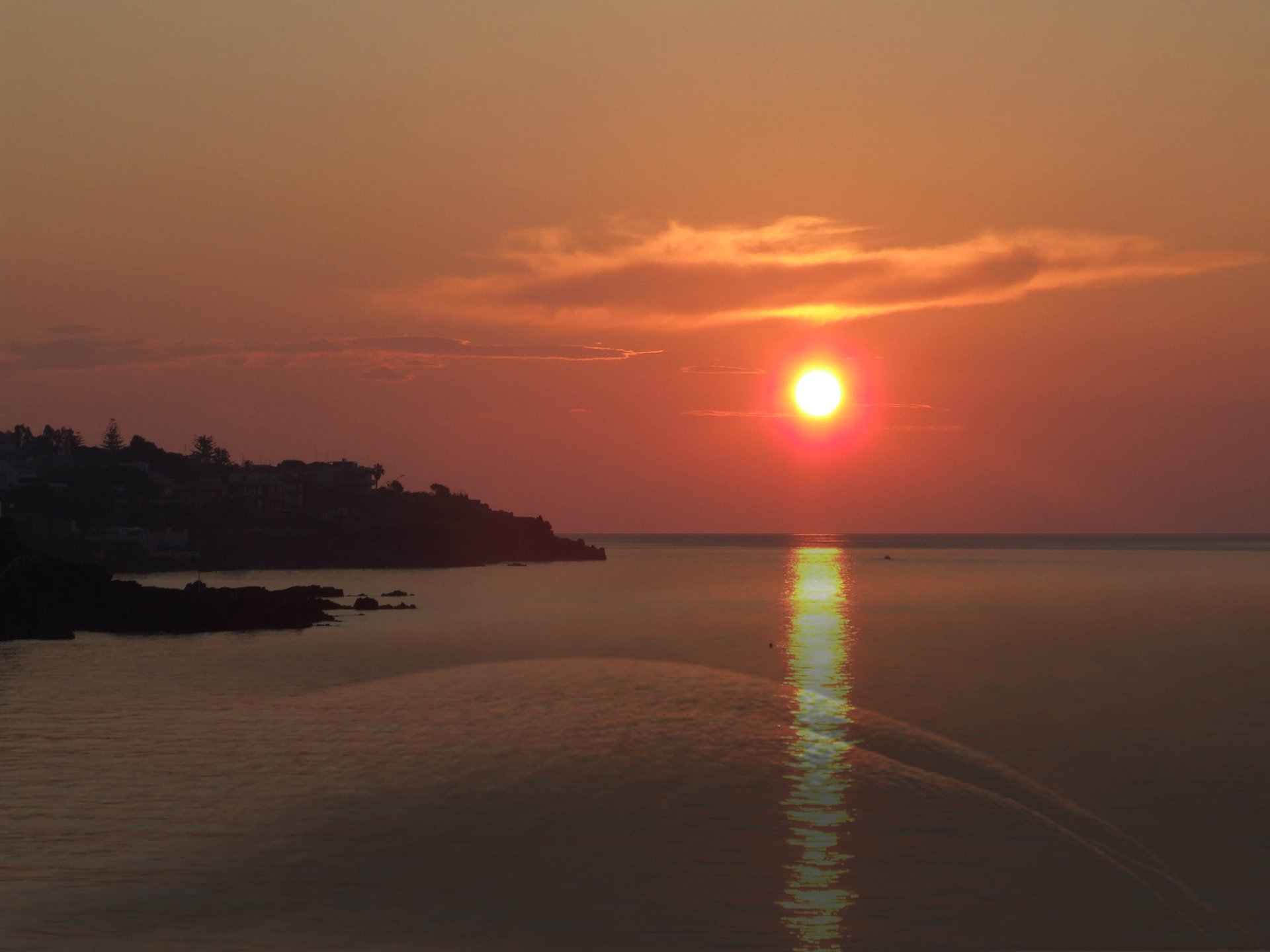
gnuckx · CC BY 2.0
- Location
- Ognina, Catania Maps
- Essential fact
- North of the centre, where the urban grid meets the Ionian coast, two fishing settlements feel like a different era.
- Price
- Free
North of the centre, where the urban grid meets the Ionian coast, two fishing settlements feel like a different era. Ognina has a small harbour with brightly painted boats, a handful of seafood trattorias, and massive lava-rock promontories jutting into the sea — the remains of prehistoric eruptions. Stazzo, a few hundred metres further north, is even quieter: a cluster of houses on basalt cliffs with a swimming platform and views toward Etna and the coast. Neither is more than 20 minutes by bus (AMT line 534 from Piazza Borsellino) or 10 minutes by taxi from the centre. In summer, locals come here for Sunday lunch; the rest of the week, you may be the only visitor.
How many days do you need for Catania’s hidden gems?
You can see 5-6 hidden gems in a single half day, but spreading them over 2-3 days alongside the classic things to do in Catania and the must-see sights makes for a richer trip. The underground sites and viewpoints cluster near Piazza del Duomo; the markets and alternative quarters are 10 minutes west; the coastal spots are 15-20 minutes south-east and north. Here is how to fit them in depending on your schedule.
| Scenario | Time | Gems to prioritise | Best for |
|---|---|---|---|
| Quick dip | 2 hours | Underground river (#1), Museo Diocesano terrace (#4), Arco di San Benedetto (#6) | Cruise stop, layover |
| Half-day explorer | 4-5 hours | All underground (#1-3) + viewpoints (#4-5) + San Berillo (#10) + Fera o Luni (#11) | Free morning or afternoon |
| Full immersion | 2 days | All 15 gems + classic sights. Day 1: centre + underground + museums. Day 2: markets + coast (Li Cuti, Ognina) | Catania-based stay, 2+ nights |
Start early: the Fera ‘o Luni and the fish market (for contrast) are best before 10:00. Save viewpoints (#4-5) for late afternoon when the light softens. San Giovanni Li Cuti (#13) at sunset is the perfect end to a day of exploration. Most importantly: wear comfortable shoes — the volcanic pavements are uneven and the underground sites involve stairs. For parking in Catania, the city centre is largely ZTL restricted — park outside and walk in.
Where to stay in Catania
All 15 hidden gems on this list are within walking distance or a short bus ride from Catania’s historic centre. Staying centrally — between Piazza del Duomo and Via Etnea — puts you within 10 minutes of the underground sites, the museums and the alternative quarters, and 15-20 minutes from the coastal gems. If you want a base that feels like part of the city rather than a tourist enclave, take a look at our apartments in Catania — we are in the centre, minutes from most of the spots in this guide.
The information in this guide was correct at the time of writing. Data can change from season to season without notice: before you travel, always check the official channels and websites for updates. We review this guide periodically, but the official channels are always the authoritative source. We also cannot guarantee that the suggested routes or the attractions described are always reachable or accessible: roads, trails and sites may be closed, damaged, altered or unsafe. Assessing the practicability and safety of itineraries and attractions always remains your own responsibility.