
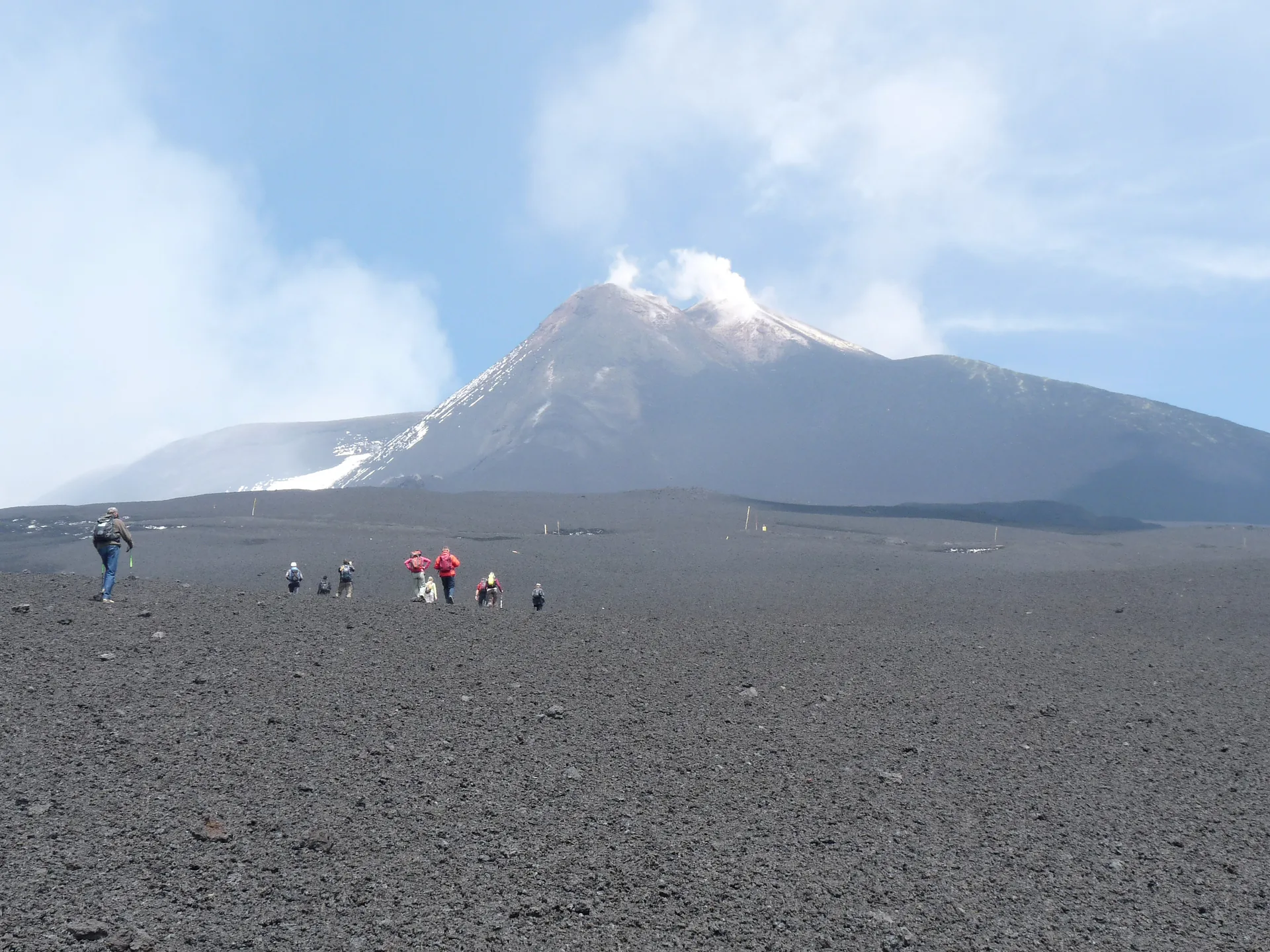
Catania can be warm enough for a T-shirt while Mount Etna feels like a different season an hour later. The mistake is dressing for the coast, then meeting wind, loose volcanic sand and a temperature drop at 1,900 m or higher.
For most Etna visits, wear layers, long trousers, a windproof jacket and closed shoes with grip. If you go above the cable-car area or join a summit-style excursion, upgrade to proper hiking boots, warmer layers, gloves and a hat.
This guide gives you the exact Etna clothing list by season, altitude and type of visit, so you do not overpack and do not arrive underdressed.
The Short Answer: What to Wear on Mount Etna
Wear a breathable base layer, a fleece or warm mid-layer, a windproof jacket, long durable trousers and sturdy closed shoes. Add sunglasses, sunscreen, a hat and a small backpack. In autumn, winter, sunset tours or summit excursions, add gloves, a warm hat and a heavier insulating layer.
That is the simple version. The useful version depends on how high you go. A quick walk around the Silvestri Craters near Rifugio Sapienza is not the same as a guided hike near 2,800 m, and neither is the same as standing in Catania before breakfast.
| Item | Best choice | Avoid |
|---|---|---|
| Top | Breathable T-shirt or long-sleeve base layer | Cotton-only outfit in cold months |
| Mid-layer | Fleece, sweatshirt or light down layer | One bulky city sweater only |
| Outer layer | Windproof jacket, waterproof if forecast is unstable | Open cardigan or light linen shirt |
| Trousers | Long hiking, trekking or comfortable technical trousers | Shorts for higher trails, skirts on windy ash slopes |
| Shoes | Hiking shoes, trail shoes or sturdy trainers with grip | Flip-flops, sandals, smooth white sneakers |
| Accessories | Sunglasses, sunscreen, hat, gloves when cool | No sun protection because the coast feels mild |
Why Etna Feels Colder Than Catania
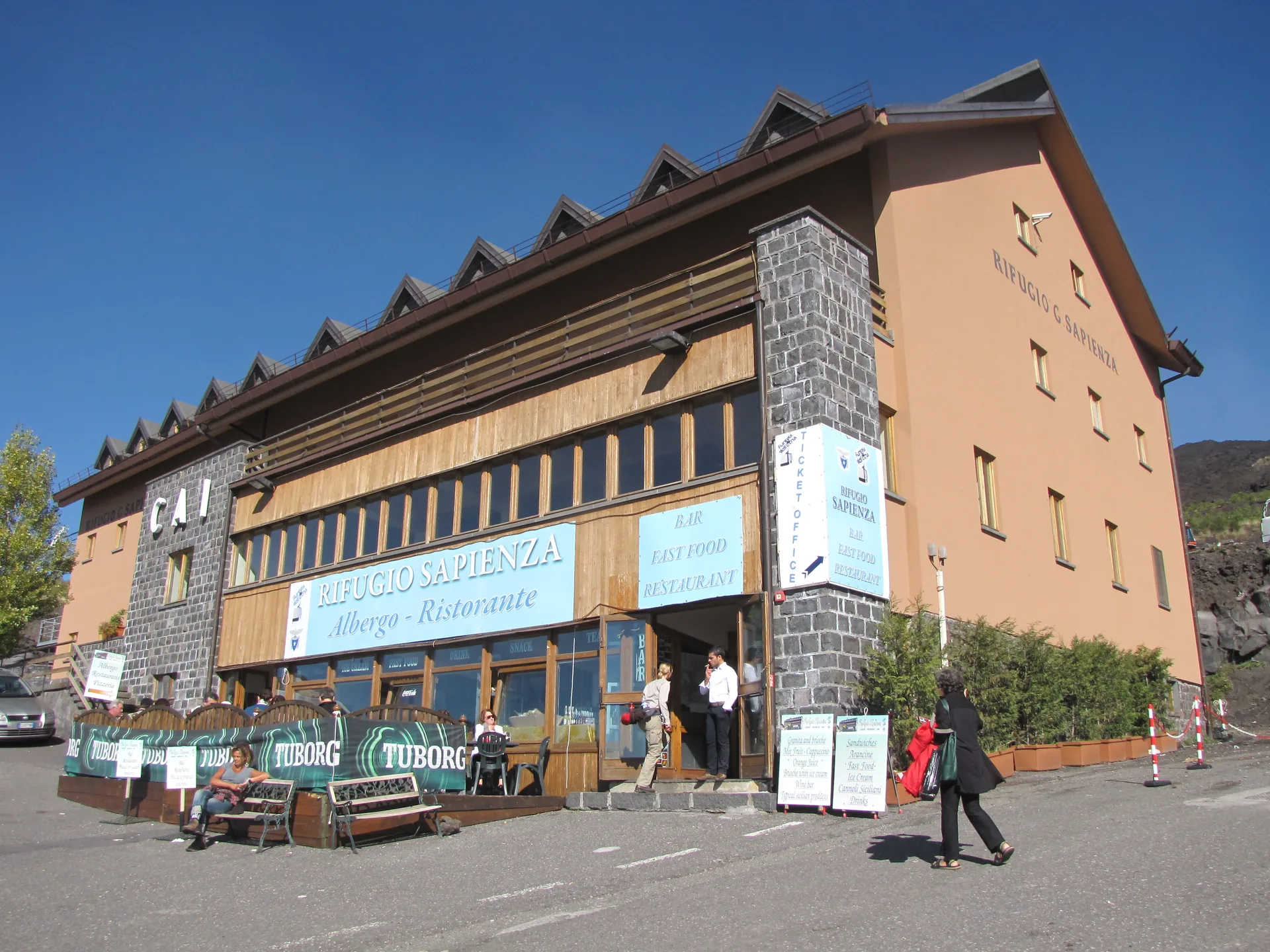
The practical rule is simple: dress for altitude, not for sea-level Sicily. Catania sits on the coast, while Rifugio Sapienza is around 1,900 m and the cable car reaches around 2,500 m. Guided excursions can go higher when conditions and rules allow.
Hein Didden · CC BY-SA 4.0
The difference can feel dramatic because temperature, wind and exposure change together. On a sunny day, the dark lava can reflect heat while the wind still cuts through light clothes. When cloud covers the summit area, the same place can feel cold in minutes.
A useful planning estimate is a 15 to 20°C difference between the coast and the higher Etna area, especially when you include wind chill. If Catania is hot, Etna may still need a wind layer. If Catania is already cool, Etna can feel properly cold.
Shoes for Mount Etna: What Works and What Does Not
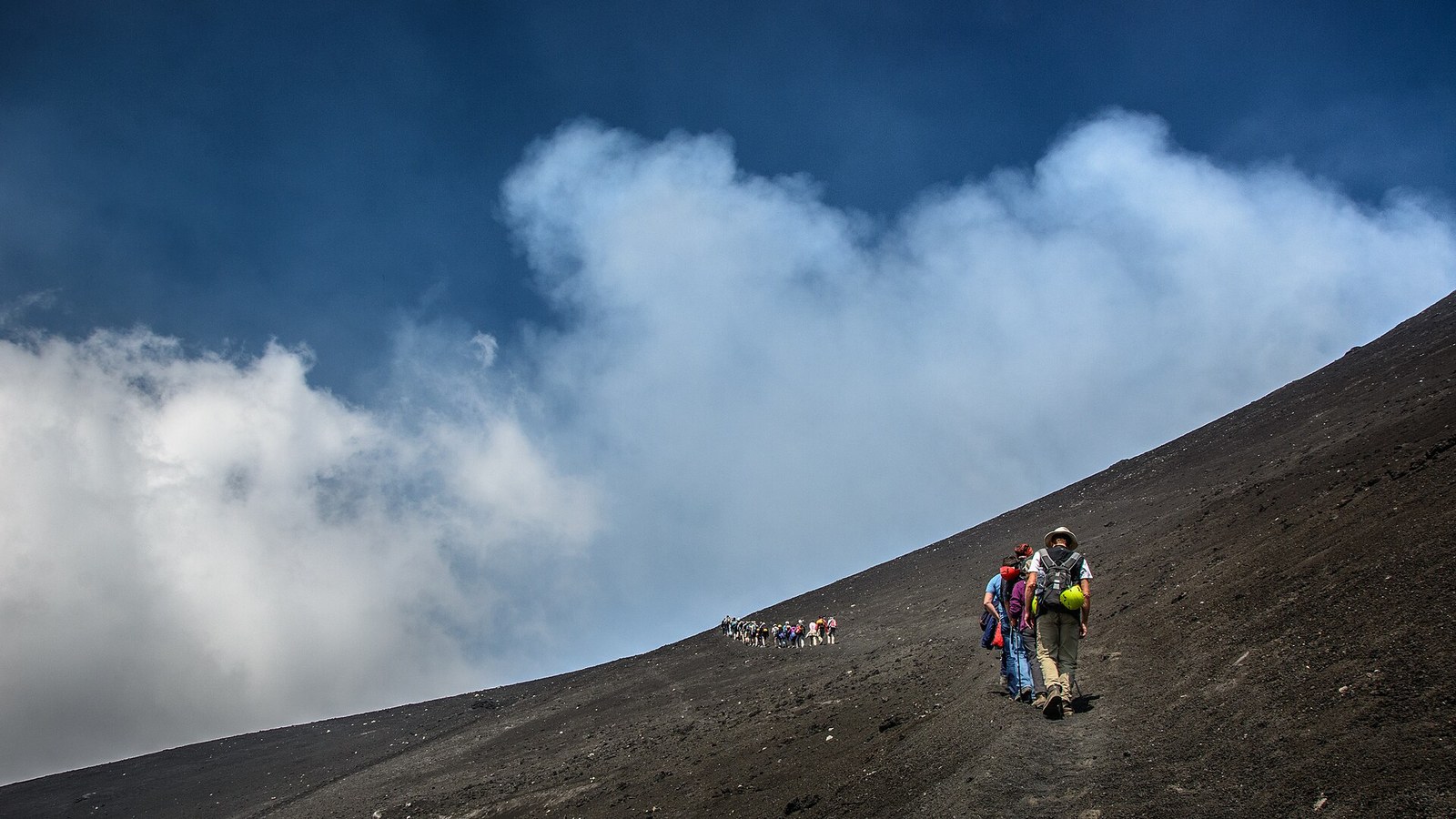
Your shoes matter more than your jacket if you are walking on ash, lava gravel or crater rims. The ground on Etna is loose, dark and abrasive, so smooth soles slide and light shoes get dirty fast.
kuhnmi · CC BY 2.0
For the Silvestri Craters and short viewpoint walks, sturdy trainers with decent grip can be enough in dry weather. They should be closed-toe, stable and already comfortable. White fashion sneakers are a bad idea because volcanic dust marks them quickly.
For hikes, summit-style tours, winter visits or windy days, choose proper hiking boots or trail shoes with ankle support. High socks help keep volcanic sand out of your shoes and prevent rubbing on descents.
Do not wear flip-flops, sandals, ballet flats or thin city shoes. They are uncomfortable on lava gravel and unsafe on loose slopes. If a tour includes serious hiking, ask the operator whether boots are mandatory before you arrive.
What to Wear on Etna by Season
Etna clothing changes by month, but the logic stays the same: start with layers and make the outer layer wind-resistant. The table below assumes a normal tourist day from Catania or Taormina, not a technical winter climb.
| Season | What to wear | Extra note |
|---|---|---|
| Summer, June to September | T-shirt or light base layer, long light trousers, fleece or sweatshirt, windproof jacket, sunglasses, sunscreen | Do not trust sea-level heat. Bring the layer even if you start in shorts in Catania. |
| Spring, April to May | Base layer, fleece, windproof or light waterproof jacket, long trousers, closed shoes with grip | Weather changes quickly. A sunny morning can turn cold near cloud level. |
| Autumn, October to November | Long-sleeve base, fleece or warm sweatshirt, windproof jacket, long trousers, warmer socks | October and November are classic months for underdressing because the coast can still feel mild. |
| Winter, December to March | Thermal base layer, fleece or down mid-layer, winter jacket, warm hat, gloves, trekking trousers or warm technical trousers | Snow and ice can affect access. Dress for mountain winter, not for a city walk. |
| Sunset or early morning | Same as season, plus warmer mid-layer, gloves and hat | Temperatures drop fast when the sun disappears, especially above 1,900 m. |
What to Bring in Your Day Bag
Bring a small backpack because Etna is a layer-on, layer-off day. You may remove a fleece while walking, then need it again as soon as wind picks up or the group stops.
- Water, especially in summer and on dusty trails.
- Sunscreen and sunglasses, because high-altitude sun is stronger than it feels.
- A warm hat or cap, depending on season and wind.
- Light gloves for winter, sunset tours and higher routes.
- Neck gaiter or scarf for wind, cold and volcanic dust.
- Power bank if you use maps, photos and transport tickets on your phone.
- A spare bag for dusty shoes or layers after the excursion.
If you are planning the mountain as a day trip from the city, pair this clothing list with our guide on how to get to Mount Etna from Catania. Transport affects what you can carry, especially if you use the public bus rather than a tour pickup.
Clothing by Visit Type
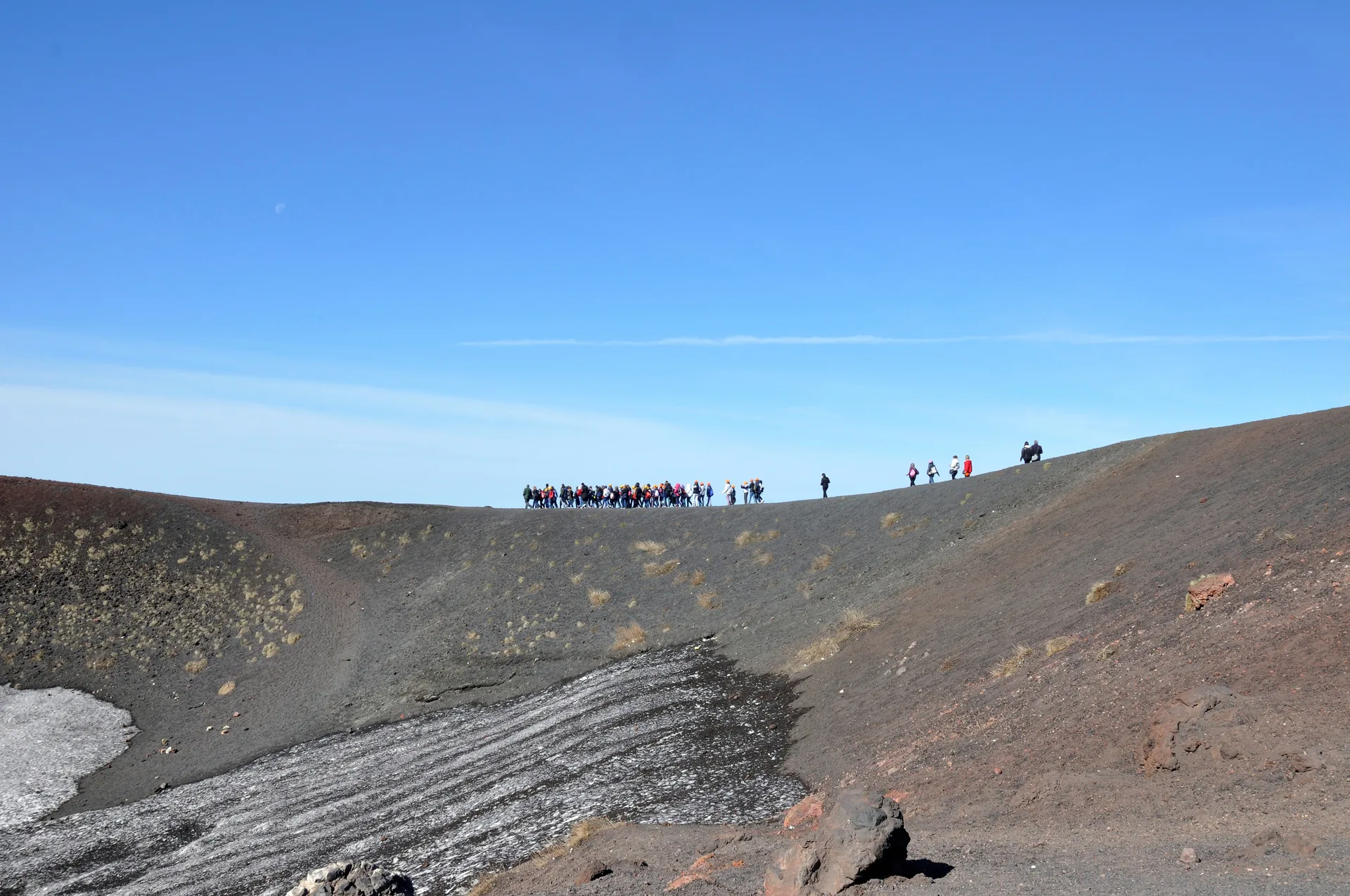
The right outfit depends on what you actually do on Etna. A viewpoint stop, a crater loop and a summit-area hike should not use the same packing list.
Walter Isack (isiwal) · CC BY-SA 3.0 AT
| Visit type | Clothing level | Best choice |
|---|---|---|
| Silvestri Craters and Rifugio Sapienza | Light to moderate | Long trousers, sturdy trainers, fleece, windproof jacket |
| Cable car and 4×4 area | Moderate | Warmer layer, windproof jacket, closed shoes with good grip |
| Guided summit-style hike | High | Hiking boots, technical layers, gloves, hat, weatherproof outer layer |
| Sunset tour | High for cold | Warm mid-layer, windproof jacket, gloves, hat, long trousers |
| Family visit with children | Moderate plus spares | Layers for each child, closed shoes, extra socks, hat, sunscreen |
For real route planning, use this article as the clothing companion to our full guide to hiking Mount Etna. That guide covers routes, costs, the guide rule above the regulated upper areas and how to choose between north and south side.
If you are based in Taormina, the clothing logic is the same, but your day logistics are different. See Taormina to Mount Etna for transport and tour options from that side.
What Not to Wear on Mount Etna
The worst Etna outfits are not always the coldest. They are the ones that fail on volcanic terrain. Loose ash, wind and dark dust punish beachwear and polished city clothes.
- Flip-flops and sandals, because lava gravel gets under your feet and the slopes are unstable.
- Short dresses or loose skirts, because wind and ash make them uncomfortable.
- White shoes, because volcanic dust stains them quickly.
- Denim as your only lower layer in wet or cold weather, because it holds moisture.
- A single heavy coat with no layers, because you cannot adjust when you warm up while walking.
- Shorts for higher routes, because ash can be abrasive and wind chill is real.
Can You Rent Gear on Mount Etna?
Some tours and shops around Etna may offer boots, jackets or other gear, but you should not plan your whole day around last-minute rental. Availability depends on operator, season, size and exact meeting point.
If your excursion goes high or includes rough terrain, ask before booking: are boots included, optional or required? If you already own comfortable hiking shoes, bring them. Familiar footwear is usually better than rented boots you wear for the first time on volcanic gravel.
Frequently Asked Questions
What to wear going up at Mt. Etna?
Wear layers, long trousers, a windproof jacket and closed shoes with grip. Add sunglasses and sunscreen all year. For higher routes, sunset tours and cold months, add hiking boots, gloves and a warm hat.
Is it cold at the top of Mount Etna?
Yes, it can be much colder than Catania or Taormina. The higher Etna area can feel 15 to 20°C cooler than the coast when you include altitude and wind, and summit conditions can change quickly.
What shoes to wear on Mount Etna?
For short dry walks, sturdy trainers with grip can work. For hiking, winter, loose ash or higher excursions, wear hiking boots or trail shoes. Avoid sandals, flip-flops, smooth soles and white fashion sneakers.
Do you need walking boots for Mount Etna?
You do not always need boots for the easy Silvestri Craters area, but walking boots are strongly recommended for proper hikes, summit-style tours, winter conditions and any route on loose volcanic sand.
Where to Stay in Catania Before an Etna Day Trip
If Etna is part of a wider eastern Sicily trip, staying in Catania keeps the day practical: morning departures are easier, tour pickups are common, and you can return to the city for dinner instead of moving base again.
For a central base before or after the volcano, see our apartments in Catania. It is the simplest setup if you want Etna, the historic centre, the airport and other east-coast day trips within reach.
The information in this guide was correct at the time of writing. Data can change from season to season without notice: before you travel, always check the official channels and websites for updates. We review this guide periodically, but the official channels are always the authoritative source. We also cannot guarantee that the suggested routes or the attractions described are always reachable or accessible: roads, trails and sites may be closed, damaged, altered or unsafe. Assessing the practicability and safety of itineraries and attractions always remains your own responsibility.